
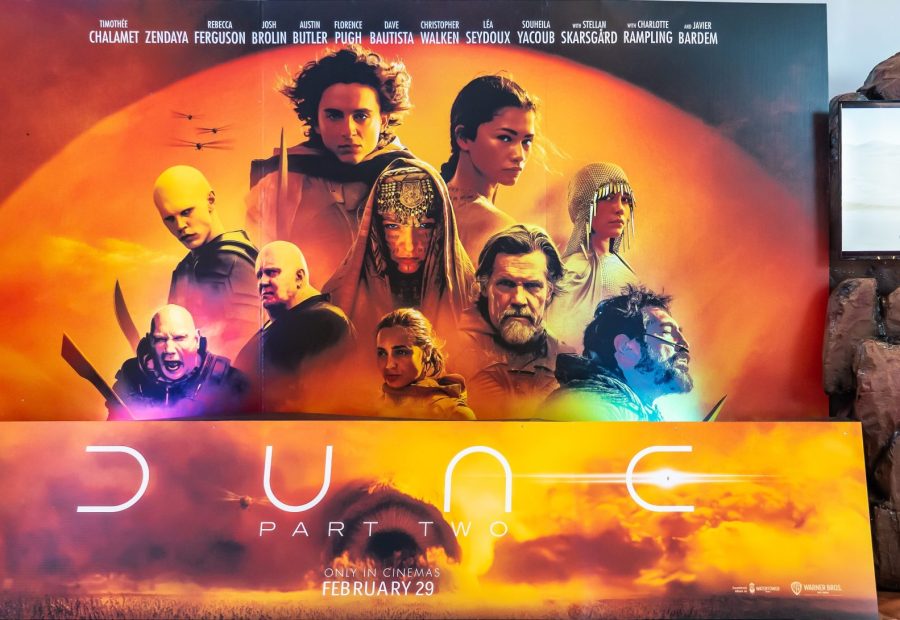
Opening in theaters December 18, 2026
The desert is calling one more time. Denis Villeneuve’s Dune: Part Three will return audiences to Arrakis for the most politically charged and emotionally complex chapter of the filmmaker’s science-fiction epic. Based primarily on Frank Herbert’s Dune Messiah, the film promises to challenge everything viewers thought they understood about Paul Atreides. From its darker story to a formidable ensemble and large-format photography, here are five reasons Dune: Part Three is shaping up to be one of the biggest cinematic events of 2026.
1. Denis Villeneuve Is Completing His Defining Science-Fiction Saga
Few contemporary directors have shaped blockbuster filmmaking as decisively as Denis Villeneuve. Across Dune and Dune: Part Two, he transformed Frank Herbert’s famously dense novel into an accessible yet uncompromising theatrical experience built around political intrigue, religious mythology and immense visual scale.
The third film gives Villeneuve an opportunity to complete Paul Atreides’ central journey on his own terms. However, the director has resisted describing the project as a conventional third chapter. He previously explained that the first two films formed a complete adaptation of the original Dune, while the next movie—drawn from Dune Messiah—would have its own identity rather than simply functioning as another installment in a traditional trilogy, according to Vanity Fair.
That distinction matters. Dune: Part Three is not expected to repeat the rise-to-power narrative of the earlier films. Instead, it will examine what happens after the supposed hero wins.
2. Paul Atreides’ Story Is About to Take a Darker Turn
At the end of Dune: Part Two, Paul has defeated his political enemies, claimed the imperial throne and unleashed a holy war across the universe. A more conventional blockbuster might present that moment as a victory. Herbert’s continuation treats it as the beginning of a catastrophe.
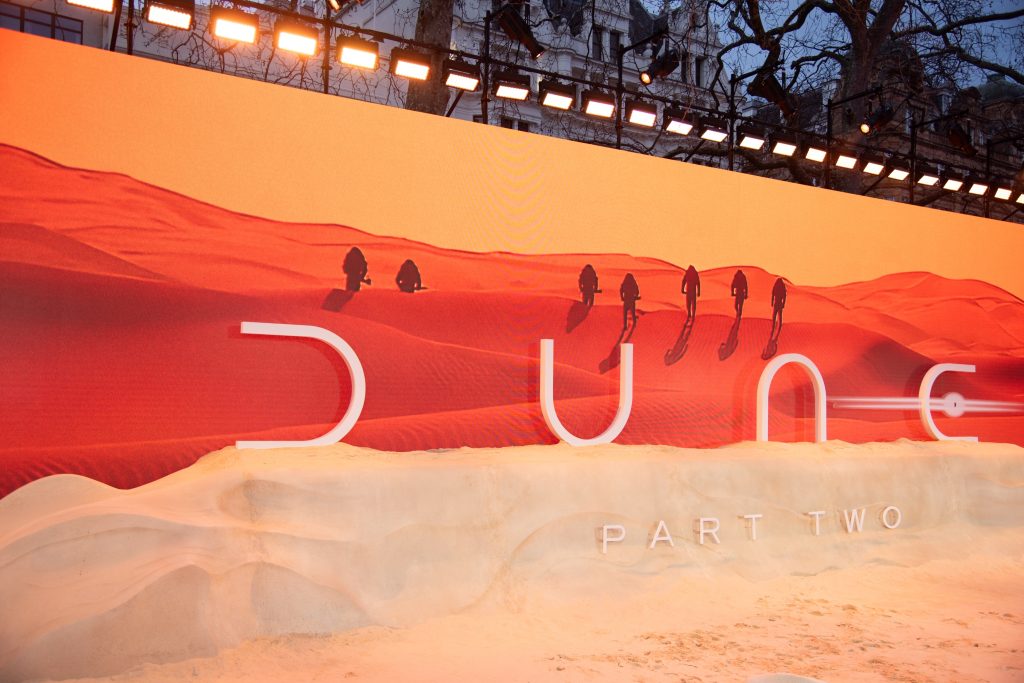
Dune Messiah follows Paul as emperor of the known universe, worshipped as a religious figure by the Fremen but surrounded by enemies and conspirators. The novel’s official description emphasizes that Paul possesses more power than any one person should hold, while the political houses he displaced remain determined to destroy him, according to Penguin Random House.
This gives the film a compelling dramatic question: What happens when a liberator becomes an emperor and a prophecy becomes a machinery of war?
Timothée Chalamet’s performance will therefore need to evolve again. His Paul is no longer the uncertain young nobleman who first arrived on Arrakis. He is now a ruler confronting the human cost of his choices—and the terrifying limits of his ability to see the future.
3. The Cast Is Bigger—and More Intriguing—Than Ever
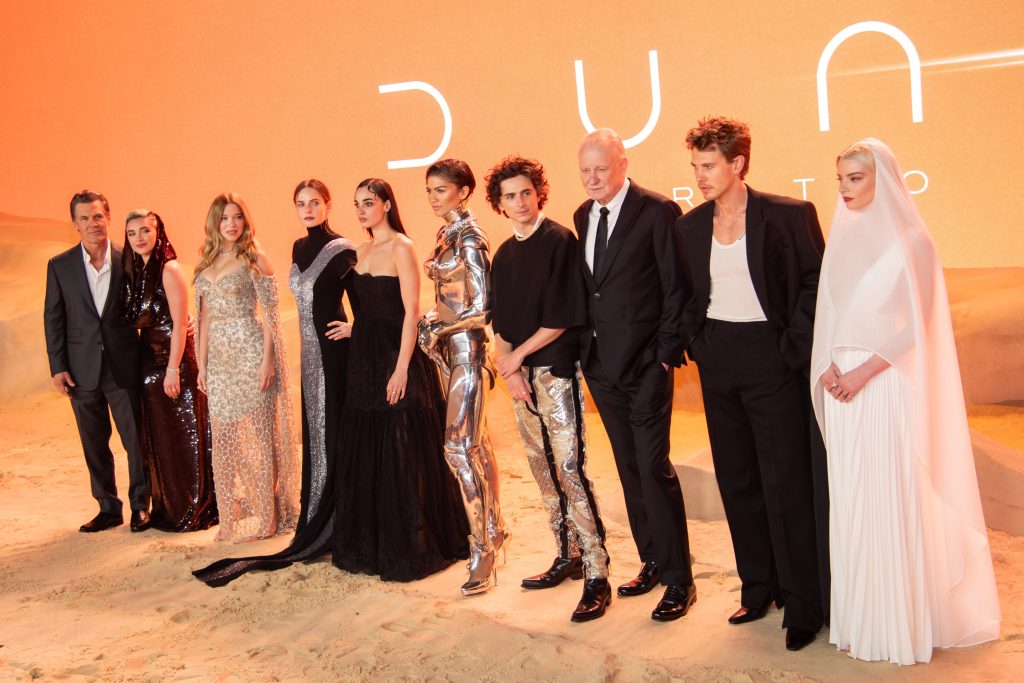
Timothée Chalamet returns as Paul, with Zendaya continuing as Chani and Florence Pugh reprising her role as Princess Irulan. Javier Bardem, Rebecca Ferguson, Anya Taylor-Joy, Josh Brolin and Jason Momoa are also among the major names associated with the film.
The most notable new addition is Robert Pattinson, whose arrival introduces another unpredictable presence into Villeneuve’s universe. Reuters reported that Pattinson plays the mysterious antagonist Scytale, while the returning ensemble places some of Hollywood’s most acclaimed performers inside a story driven by competing loyalties, secret alliances and political manipulation. Reuters
The ensemble is impressive not simply because of its star power. Dune Messiah is a story in which conversations, relationships and carefully concealed intentions can be as dangerous as open warfare. Actors such as Pattinson, Pugh, Zendaya and Chalamet are particularly well suited to that kind of psychological tension.
4. It Is Being Built for the Largest Possible Screen
The first two Dune films demonstrated how large-format presentation can become part of the storytelling rather than merely a marketing feature. Vast deserts, monumental architecture and carefully designed soundscapes made the scale of the Imperium feel physical.
That theatrical ambition continues with Dune: Part Three. The production used large-format film photography and IMAX technology, while returning to the desert landscapes that helped give the previous installments their visual identity. The film is scheduled for an IMAX release, reinforcing its position as a genuine big-screen event.
There is already evidence of extraordinary audience demand. Advance tickets for selected IMAX 70mm presentations reportedly sold out within minutes—months before the film’s release.
The success of Dune: Part Two also established a powerful commercial foundation. The film opened with approximately $178.5 million worldwide and received an especially strong response in premium-format theaters, according to the Associated Press. The audience for Villeneuve’s vision of Arrakis is no longer limited to devoted science-fiction readers; it has become a global theatrical phenomenon.
5. Dune Messiah Could Completely Change How Audiences View Paul
The boldest element of Dune: Part Three may be its willingness to question its own protagonist.
Herbert never intended Paul Atreides to function as a straightforward heroic savior. His story is also a warning about charismatic leaders, political mythology and the danger of surrendering individual judgment to a seemingly destined figure. The new film has the opportunity to make that warning impossible to overlook.
Rather than escalating only through larger battles, the story can deepen the moral consequences of what has already happened. Paul may control an empire, but power does not necessarily give him freedom. His ability to perceive possible futures could become a prison, while the religion constructed around him may prove impossible to control.
That is what separates Dune: Part Three from many franchise conclusions. Its central challenge is not simply defeating another enemy. It is forcing audiences to reconsider whether the hero they supported was ever meant to be a hero at all.
Villeneuve has described the film as a tonal evolution from its predecessors, with greater emphasis on Paul’s moral complexity and the consequences of his rule. If he succeeds, the film could do more than complete a celebrated science-fiction saga. It could reframe the meaning of the entire journey.
Dune: Part Three, directed by Denis Villeneuve and distributed by Warner Bros. Pictures, is scheduled to open in theaters and IMAX on December 18, 2026. Release dates may vary by market.
Disclaimer: This article is for entertainment and informational purposes only. Production details and release dates are based on publicly available reports and may change.






Leave a Reply