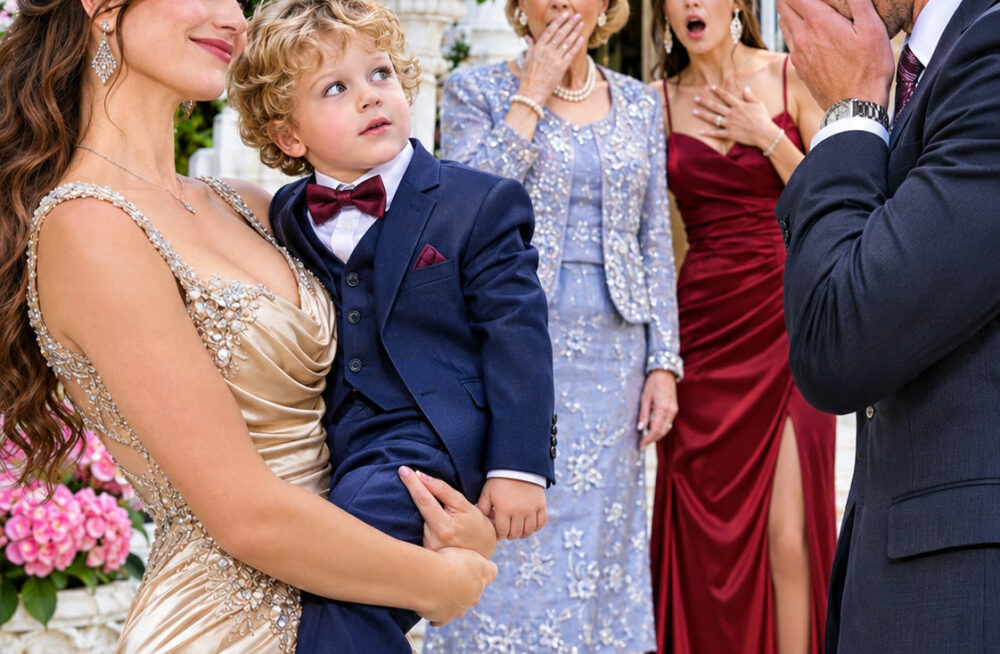
No one in that jewelry shop expected a dirty little pendant to bring the entire room to a halt… until the old jeweler looked at it—and everything fell apart. The homeless girl had barely stepped near the glass display when the glamorous woman turned on her, smiling with a kind of cruelty that didn’t need…
Fiction. This story is a dramatized work created for entertainment. Names, characters, events, and circumstances are fictional.
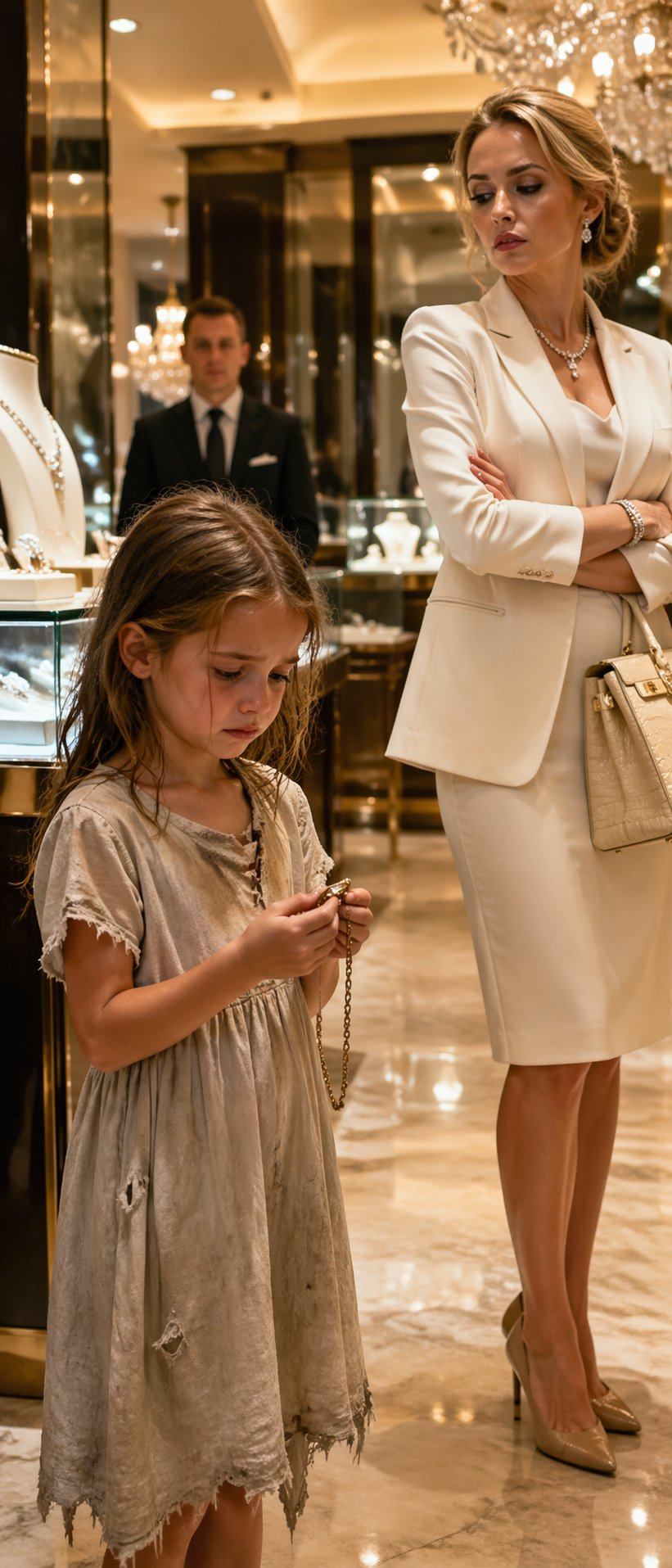
The homeless girl had barely stepped near the glass display when the glamorous woman turned on her, smiling with a kind of cruelty that didn’t need to shout. In one sharp motion, she snatched the pendant from the child’s hand and slammed it onto the counter. “Let’s all see the treasure this little beggar thinks makes her important.”
The boutique froze. Conversations died mid-sentence.
A saleswoman covered her mouth. Someone near the diamond wall lifted a phone. The girl reached forward instantly, tears filling her eyes. “Please…” she whispered, voice shaking. “My mother said only the man who sold the other half should see it…”
The woman laughed, confident she had won the room. But the old jeweler behind the counter didn’t laugh. He looked down at the pendant once… then again. And suddenly, all the color drained from his face. His hands began to shake. The room fell into a heavy silence as he reached for it like he was touching something that didn’t belong to this world. Slowly, carefully, he opened it. Inside was half of an old photograph. A broken half. His breath caught—because behind him, in a frame no customer had ever dared ask about, hung the missing piece.
The girl stood there crying softly, too young to understand why everything had stopped. The woman’s smile began to fade. The jeweler pulled the framed photograph from the wall with trembling hands and placed it beside the pendant. The two halves fit perfectly. No doubt. No mistake. His lips parted, his eyes filled with tears, and in a voice that barely held together, he whispered, “I made this pair… for my daughter and her newborn… before they vanished.”

The room shifted. The woman stepped back. The child stared at him, trembling. Then the jeweler looked at her face—really looked this time—and something inside him froze. “No,” the woman said quickly, forcing a laugh that didn’t land. “That proves nothing.” But no one was listening to her anymore. Every eye in the shop was locked on the old man as his hands shook so badly he nearly dropped the frame. He looked from the girl… to the photograph… then back again, as if eight years had collapsed into a single moment.
He stepped closer. “What was your mother’s name?” he asked, his voice barely working. The girl swallowed hard. “She said… if I was ever hungry… I should find the shop with the gold chandelier… and show this only to the man who remembers the lullaby.” The jeweler stopped breathing. Someone in the room burst into tears. The woman’s face went completely white. He leaned forward, eyes shaking with disbelief. “What lullaby?” The child looked down, trying to be brave, and whispered the first line.
The sound that left him wasn’t a word. It was something breaking. He dropped to his knees in front of her, tears spilling freely now. “My daughter used to sing that,” he whispered. “To her baby… to my granddaughter.” The boutique erupted into stunned murmurs. The glamorous woman stumbled backward, hitting the glass counter behind her. The little girl just stood there, shaking.
Then the jeweler reached behind the frame and pulled out something no one had ever seen—a faded note hidden for years. His hands trembled as he unfolded it. It was from his daughter. His voice cracked as he read the first line out loud: “If this pendant ever returns, the child wearing it is mine.”
The room went completely silent.
The old man looked up at the girl, tears streaming down his face, as if he were seeing something he had already buried.
And behind him, the woman—now pale, panicked—whispered under her breath, “That’s impossible…”
Because she had seen that pendant before.
The night the child’s mother disappeared.
The jeweler heard her. He turned his head slowly, the note still open in his hands.
“I have read the second line of this a thousand times, Colette,” he said. “She wrote that you had told her what I said, and that she would not come back until I asked. Eight years I have wondered what I said. I never said anything. So tell me what you told her.”
Colette was his late wife’s niece. She had worked behind that counter since she was nineteen, and for most of that time she had understood the shop would be hers. Then his daughter had come home, unmarried, with a baby and a claim on everything.
“I told her you were ashamed,” Colette said. Her voice had gone flat. “I told her you wanted her out before the customers saw. I put her in a taxi myself. She had that thing around the baby’s neck.” She looked at the pendant, then at the floor. “I thought she would come crawling back in a month and you would never know. She didn’t come back. After that I could not afford for her to.”
He did not shout. He held out his hand, palm up. “The keys. And the key to the safe.”
She set them in his hand and left without her coat. By the end of the week his lawyer had taken her name off the business and out of his will, and put the shop in trust for a child whose name he did not yet know.
He asked for it now, still kneeling on the floor of his own shop.
“Elise,” the girl said. “Mama picked it. Mama got sick in the winter and she did not wake up. The lady at the church said I could stay if I swept.” She looked at him carefully. “Mama said you would ask about the lullaby before you asked about anything else. She said that is how I would know it was you.”
He could not answer. He turned the sign on the door to Closed, though it was barely noon, and stood there while the last customers filed out past him.
Then he took his granddaughter into the back room, heated soup on the little stove where he had once warmed bottles, and sat beside her while she ate.
When the bowl was empty he sang her the second line. She knew the third.