
7 Simple Tips to Organize Your Home Workspace (and Actually Get Things Done)
Working from home or freelancing sounds like a dream: no commute, no dress code, no one looking over your shoulder. But if you’ve tried it for more than a few weeks, you probably know the dark side too — the sudden urge to nap at 2 p.m., the “I’ll just check my phone for a second” that turns into 45 minutes, the to-do list that never seems to shrink.
A huge part of that problem isn’t discipline. It’s your desk.
Working from a messy bed, a cluttered table, or a dim corner of the living room quietly drains your focus before you even open your laptop. I went through exactly this — I used to sit down to work and start yawning within ten minutes, then “take a quick break” that ate up most of the hour. Everything changed once I stopped blaming my willpower and started redesigning my workspace instead. Here are seven tips that made the biggest difference.
1. Embrace Minimalism: Less Really Is More
Science backs this one up: physical clutter creates mental clutter. When your desk is covered in old documents, snacks, skincare products, and random chargers, your brain has to process all of that visual noise before it can focus on the actual task in front of you.
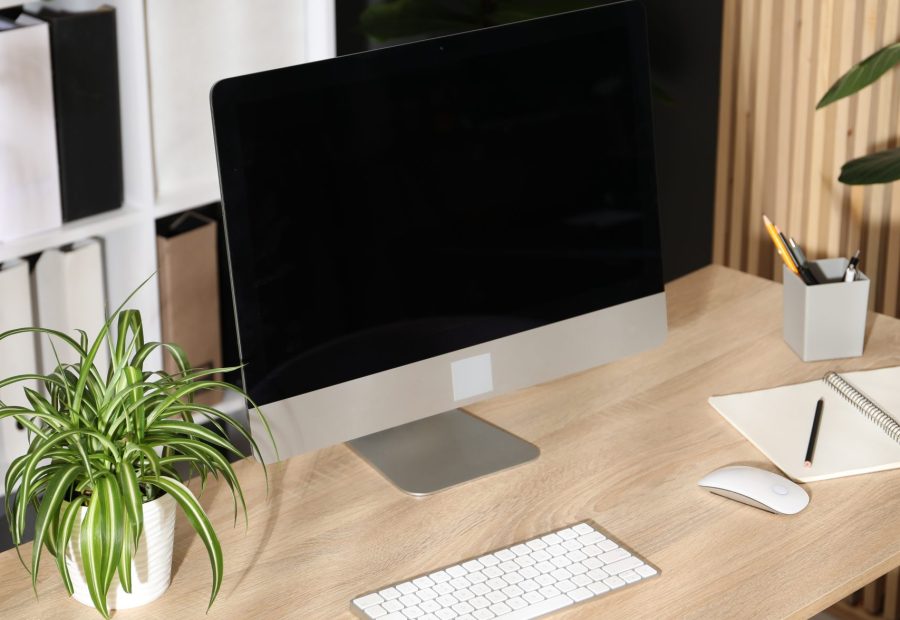
The fix is simple — keep only what you truly need within arm’s reach: your laptop, a mouse, a small notebook, and a pen. Everything else — old papers, cosmetics, that half-eaten bag of chips — belongs in a drawer, not on your desk. Try building a two-minute habit of clearing your desk at the end of each workday. Walking into a clean desk the next morning does wonders for motivation.
2. Make the Most of Natural Light
Sunlight helps your body produce serotonin, the hormone linked to alertness and good mood. Working in a dim room lit only by artificial light tends to cause eye strain and drowsiness — not exactly ideal when you’re trying to hit a deadline.
If possible, position your desk near a window. If your room doesn’t have one, invest in a desk lamp with warm, soft light rather than harsh white light, and make sure it’s positioned so light spreads evenly across your workspace instead of creating harsh shadows.
3. Pay Attention to Ergonomics
Don’t cheap out on your chair — treating back pain later will cost you far more than a decent chair costs now. Bad posture doesn’t just hurt your body; it quietly saps your energy long before you finish your tasks.
A good rule of thumb is the “90-90 rule”: your elbows and knees should both bend at roughly 90 degrees, and your monitor should sit at eye level so you’re not constantly tilting your neck down. A laptop stand or a separate keyboard can make this setup much easier to achieve, especially if you work on a laptop all day.
4. Bring in a Touch of Green
Staring at a screen for hours strains your eyes, and looking at greenery is a simple, well-known way to give them a break. Beyond the visual relief, having plants around has also been shown to reduce stress.
You don’t need a jungle — one or two small pots (succulents, pothos, or a snake plant are all low-maintenance choices) are enough to freshen up your desk, improve air quality a little, and make the space feel more alive.
5. Tame Your Cable Chaos
A desk can look tidy at first glance and still feel stressful if it’s tangled in phone chargers, laptop cords, and headphone wires all crossing over each other. Visual clutter doesn’t only come from objects — cables count too.
Cable ties, cord organizers, or a simple cable box (all cheap and easy to find online) can turn a tangled mess into a clean, organized setup in about ten minutes.
6. Draw a Clear Line Between “Work Zone” and “Rest Zone”
Never work from your bed. Your brain builds strong associations, and if it learns that bed equals sleep, working there sends mixed signals — over time, this can even contribute to trouble sleeping when you actually want to rest.
No matter how small your room is, try to carve out a dedicated corner just for work. Even a compact desk in the corner of a studio apartment sends your brain a clear signal: this is where focus happens.
7. Add Personal Touches to Stay Motivated
Your home workspace doesn’t need to feel as sterile as a corporate office. It should inspire you every time you sit down.
Hang up a piece of art you love, pin a moodboard of your goals to the wall, or simply use a mug you genuinely like. Just remember the golden rule from tip #1: decorate, don’t clutter. Personality and order can absolutely coexist.
Final Thoughts
Organizing your workspace isn’t a one-time project — it’s a habit you maintain, a little bit, every single day. A clean, thoughtfully arranged space clears the way for sharper focus, better ideas, and genuinely productive work.
So, what does your current workspace look like? Which of these seven tips are you most excited to try first? Share your thoughts in the comments below!







Leave a Reply