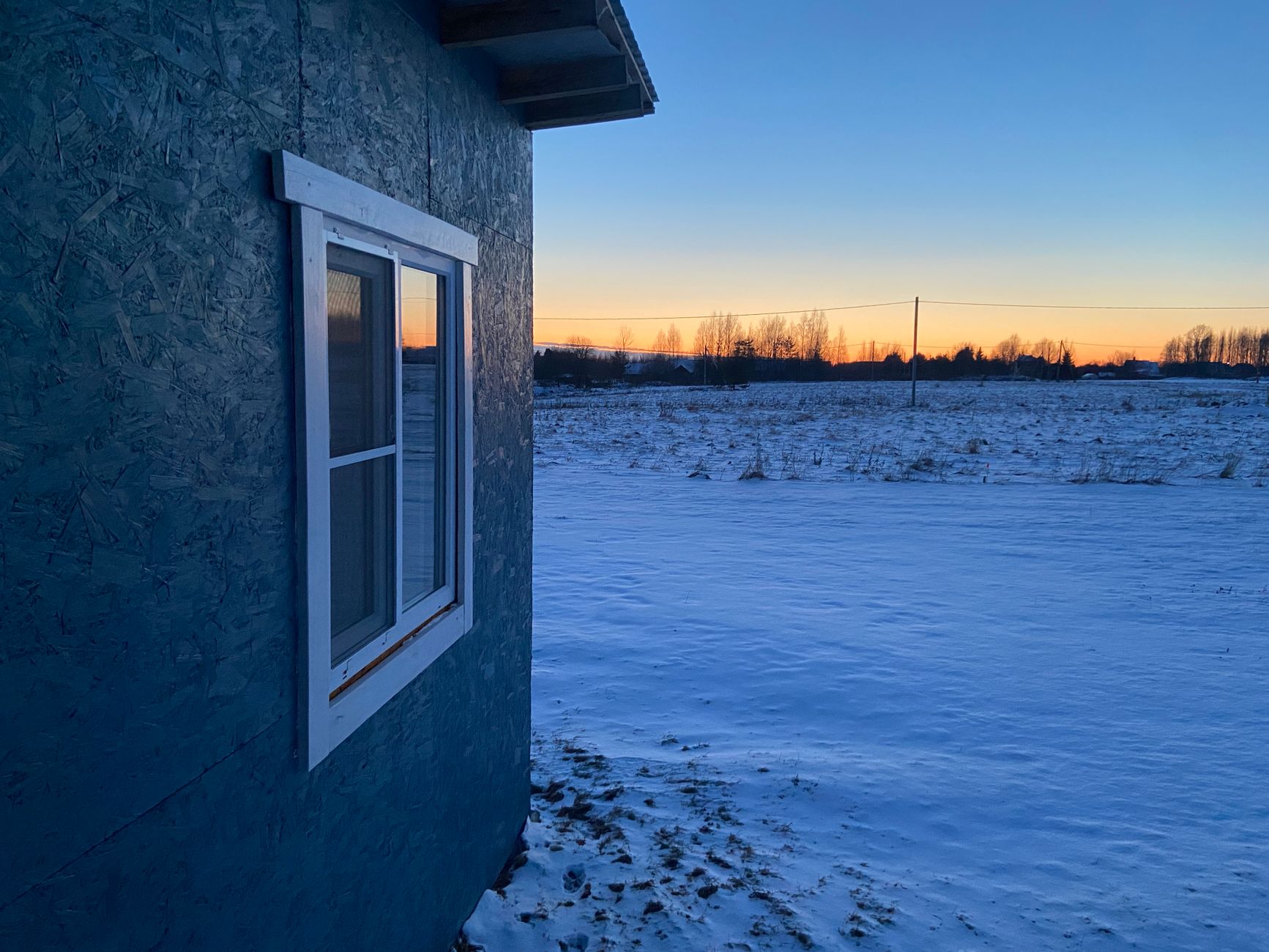
Seal drafts, set back the thermostat, protect pipes from freezing, heat safely and test your alarms: a cheap weekend plan for a warmer house and lower bills.
The first really cold night of the year has a way of revealing everything wrong with a house: the draft by the back door, the bedroom that never warms up, the heating bill that arrives a few weeks later.
Getting a home ready for winter doesn’t have to mean a contractor or a big project. Most of the useful work can be done in a weekend with a caulk gun, a few inexpensive supplies, and a checklist. Here’s where to start.
1. Find and Seal the Drafts
Small gaps add up. Air leaks around doors, windows, outlets and pipes let warm air out and cold air in, and they’re usually cheap to fix.
How to find them: on a windy day, hold a lit incense stick or a strip of tissue paper near window frames, door edges, outlets on outside walls, and where pipes or cables come through walls. If the smoke or paper moves, you’ve found a leak. You can also feel for cold spots with the back of your hand.
How to fix them:
- Weatherstripping for the moving parts of doors and windows. Peel-and-stick foam is inexpensive and takes minutes to install.
- Caulk for cracks and gaps in stationary joints, like around window trim.
- A door sweep or draft stopper along the bottom of exterior doors. A rolled-up towel works in a pinch.
- Foam outlet gaskets behind the cover plates of outlets and switches on outside walls.
- Window insulation film, a clear plastic sheet you shrink tight with a hair dryer, for drafty older windows. It’s nearly invisible and comes off in spring.
2. Use Your Thermostat Wisely
You don’t need to sit in the cold to save money. You just need to stop heating the house to full comfort when nobody is enjoying it. The U.S. Department of Energy estimates that turning your thermostat back 7 to 10 degrees from its normal setting for 8 hours a day can save up to 10% a year on heating and cooling (U.S. Department of Energy).
The easiest times to do that are while you sleep and while you’re at work. A programmable or smart thermostat does it automatically. (One exception: if you have a heat pump, check with an installer before using deep setbacks, since some systems can switch to costly backup heat to catch up.)
A cooler bedroom often helps sleep, too. Add a blanket rather than turning up the heat for the whole house.
3. Give the Furnace Some Attention
- Change or clean the filter. A clogged filter makes your system work harder. Check it monthly during heating season and replace it when it looks dirty, typically every one to three months.
- Clear the vents. Move furniture, rugs and curtains away from vents and radiators so warm air can circulate.
- Schedule a tune-up if it’s been more than a year. A technician can catch problems before they turn into a no-heat emergency on the coldest night.
- Reverse your ceiling fans. Many fans have a switch that makes them spin clockwise on low speed, pushing warm air that collects near the ceiling back down into the room.
4. Protect Your Pipes From Freezing
A burst pipe is one of the most expensive winter problems a home can have, and it’s mostly preventable. The American Red Cross recommends these steps (American Red Cross):
- Know where your vulnerable pipes are: in unheated areas like basements, crawl spaces, attics, garages, and under kitchen and bathroom cabinets on outside walls.
- Disconnect garden hoses and drain outdoor faucets before the first hard freeze.
- Keep the garage door closed if water lines run through the garage.
- On very cold nights, open cabinet doors under sinks so warm air can reach the pipes, and let the cold water drip from a faucet served by exposed pipes.
- If you’re going away, leave the heat on, set no lower than 55°F.
Foam pipe insulation from a hardware store is cheap and easy to slip over exposed pipes. And find your main water shut-off valve now, so you know exactly where it is if a pipe ever does burst.
5. Heat Safely
Winter is the peak season for home heating fires. The National Fire Protection Association reports that nearly half of home heating equipment fires happen in December, January and February, and heating equipment is a leading cause of home fire deaths (NFPA).
- Space heaters: keep anything that can burn, including curtains, bedding and furniture, at least three feet away. Plug them directly into a wall outlet, not an extension cord, and turn them off when you leave the room or go to bed.
- Fireplaces and wood stoves: have the chimney inspected and cleaned once a year, use a sturdy screen, and let ashes cool completely in a metal container kept away from the house.
- Never use an oven, grill or generator to heat your home. They can produce deadly carbon monoxide.
6. Test Your Detectors
Press the test button on every smoke alarm and carbon monoxide alarm. Replace batteries as needed, and replace the alarms themselves if they’re past the date printed on the back. Carbon monoxide is odorless and invisible, and the risk rises in winter when furnaces, water heaters and fireplaces are working hardest. If your home has any fuel-burning appliance or an attached garage, a CO alarm on every level of the home is essential.
7. Take Care of the Outside
- Clean the gutters after the leaves fall so melting snow can drain instead of backing up under the roof.
- Trim branches that hang over the roof or power lines and could break under ice.
- Stock up early on ice melt or sand and a good shovel, before the first storm empties the shelves.
8. Build a Small Winter Emergency Kit
Winter storms can knock out power for days. Keep a few things in one place: flashlights and extra batteries, a battery or hand-crank radio, a phone power bank, a few days of water and food that doesn’t need cooking, extra blankets, and any medications you need. Keep a smaller kit in the car too, with a blanket, scraper, jumper cables and a phone charger.
A Weekend Checklist
- Walk the house looking for drafts, then weatherstrip and caulk.
- Program the thermostat to turn down at night and while you’re out.
- Change the furnace filter and clear the vents.
- Drain outdoor faucets and insulate exposed pipes.
- Test smoke and carbon monoxide alarms.
- Clean the gutters and stock up on ice melt.
- Put together a simple emergency kit.
A few hours now can mean a warmer house, a lower bill, and a lot less stress when the temperature drops. If the dark, cold months tend to drag your mood down too, our guide to winter blues and seasonal affective disorder covers what actually helps.