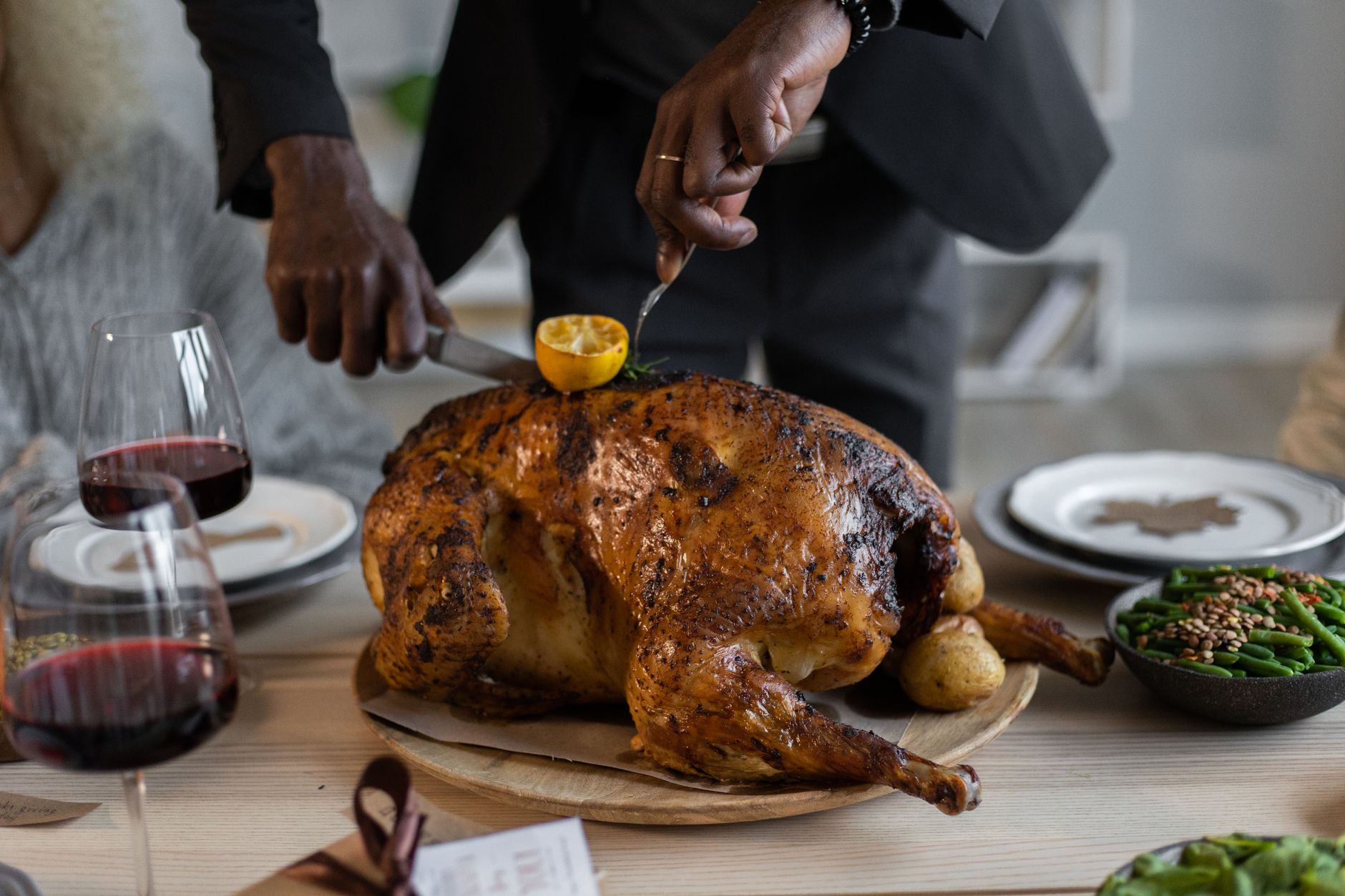
How long to thaw, why you should not wash the bird, the 165°F rule in three spots, stuffing, the two-hour rule and leftovers, straight from USDA food safety guidance.
Nobody wants to be remembered as the host who made everyone sick. And yet the Thanksgiving turkey is one of the trickiest things most home cooks handle all year: a huge, partly frozen bird, a crowded fridge, a busy kitchen, and a table full of guests who will be picking at leftovers for days.
The good news is that turkey safety comes down to a few simple rules, and the U.S. Department of Agriculture’s Food Safety and Inspection Service (FSIS) publishes clear guidance on every step. Here is what to know, from the freezer to the last leftover sandwich.
Step 1: Start Thawing Earlier Than You Think
The most common turkey mistake happens days before Thanksgiving: not leaving enough time to thaw. A frozen turkey left on the counter is not safe. While the center stays frozen, the outer layers can sit in the temperature range where bacteria multiply quickly.
FSIS lists three safe ways to thaw a turkey (USDA FSIS):
- In the refrigerator (best option): allow about 24 hours for every 4 to 5 pounds, in a fridge set at 40°F or below. A 20-pound bird needs four to five days. Once thawed, it can stay in the fridge for one to two more days before cooking.
- In cold water: allow about 30 minutes per pound. Keep the turkey in its leak-proof wrapping, submerge it in cold tap water, and change the water every 30 minutes. Cook it right away once it’s thawed.
- In the microwave: only if your bird fits and your microwave’s manual gives instructions. Cook it immediately afterward.
Put the turkey in a pan or on a tray on the bottom shelf while it thaws in the fridge, so juices can’t drip onto other food.
Forgot to thaw? You can safely cook a turkey straight from frozen. FSIS says it will take at least 50% longer than a thawed bird. Remove the giblet packet with tongs partway through cooking, once it loosens.
Step 2: Don’t Wash the Turkey
Many people were taught to rinse raw poultry in the sink. Food safety experts say not to. Washing a raw turkey does not remove bacteria in any useful way, and splashing water can spread germs onto the sink, the counter and nearby dishes. Cooking to the right temperature is what kills bacteria.
Do wash your hands, though: for at least 20 seconds with soap and water after touching raw turkey, and before touching anything else. Use a separate cutting board for raw poultry, and clean surfaces with hot, soapy water.
Step 3: Use a Thermometer, Not the Color or the Pop-Up
The only reliable way to know a turkey is done is a food thermometer. According to FSIS, the turkey is safe when it reaches 165°F in three places: the thickest part of the breast, the innermost part of the thigh, and the innermost part of the wing (USDA FSIS).
A few tips for checking:
- Push the probe into the thickest part of the meat without touching bone, which can give a false reading.
- Check all three spots. One part of the bird can lag behind the others.
- Don’t rely on clear juices or the color of the meat. Smoked or brined turkeys can stay pink even when fully cooked, and undercooked meat can look done.
- A pop-up timer is a hint, not proof. Confirm with a thermometer.
Set your oven no lower than 325°F, and let the turkey rest for about 20 minutes before carving. Resting lets the juices settle so the meat is easier to slice.
Step 4: Think Twice About Stuffing the Bird
Stuffing cooked inside the turkey soaks up raw juices and is often the last part to get hot enough. The safest choice is to bake stuffing in a separate dish. If you love the tradition of stuffing the bird, FSIS advises:
- Mix the stuffing right before it goes in, and pack it loosely.
- Check the center of the stuffing with a thermometer. It must reach 165°F too, even if the turkey itself is already done.
- Let the turkey rest, then remove all the stuffing before carving.
Step 5: Follow the Two-Hour Rule
After dinner, everyone wants to sit down, and the food tends to sit out all evening. That’s where a lot of trouble starts. Perishable food, including turkey, stuffing, gravy and anything with dairy, shouldn’t sit at room temperature for more than two hours (USDA FSIS).
A few habits help:
- Set a timer when the meal is served.
- Carve the meat off the bone before storing it. Big pieces cool too slowly.
- Divide leftovers into small, shallow containers so they cool quickly in the fridge.
- Keep the fridge at 40°F or below, and avoid overpacking it so cold air can circulate.
Step 6: Know When Leftovers Are Done
Refrigerated leftovers are best eaten within three to four days. If you won’t finish them in that time, freeze them. Frozen leftovers stay safe indefinitely, though quality is best within a few months.
When reheating, bring leftovers to 165°F, and bring gravy to a rolling boil. Label containers with the date so no one has to guess on Monday whether the stuffing is from this year.
Who Needs Extra Care
Food poisoning is unpleasant for anyone, but it can be serious for some guests: older adults, pregnant women, young children, and people with weakened immune systems. If anyone in those groups is at your table, be especially strict about temperatures and the two-hour rule.
A Simple Turkey Timeline
- About a week out: buy or check your thermometer, and clear space in the fridge.
- Four to five days out (for a 20-pound bird): move the turkey to the fridge to thaw.
- Thanksgiving morning: remove the giblets, keep raw turkey away from other food, and wash your hands often.
- Cooking: roast at 325°F or higher until breast, thigh and wing all hit 165°F.
- Dinner: rest the bird, carve, and start the two-hour clock.
- After dinner: refrigerate leftovers in shallow containers and eat them within three to four days.
Still have a question on the day? The USDA Meat and Poultry Hotline (1-888-674-6854) answers food safety questions and is traditionally open on Thanksgiving morning.
Once the food is handled, the people are the other half of the holiday. Our guides to handling difficult relatives at holiday gatherings and keeping holiday spending under control can help with the rest of the season.