
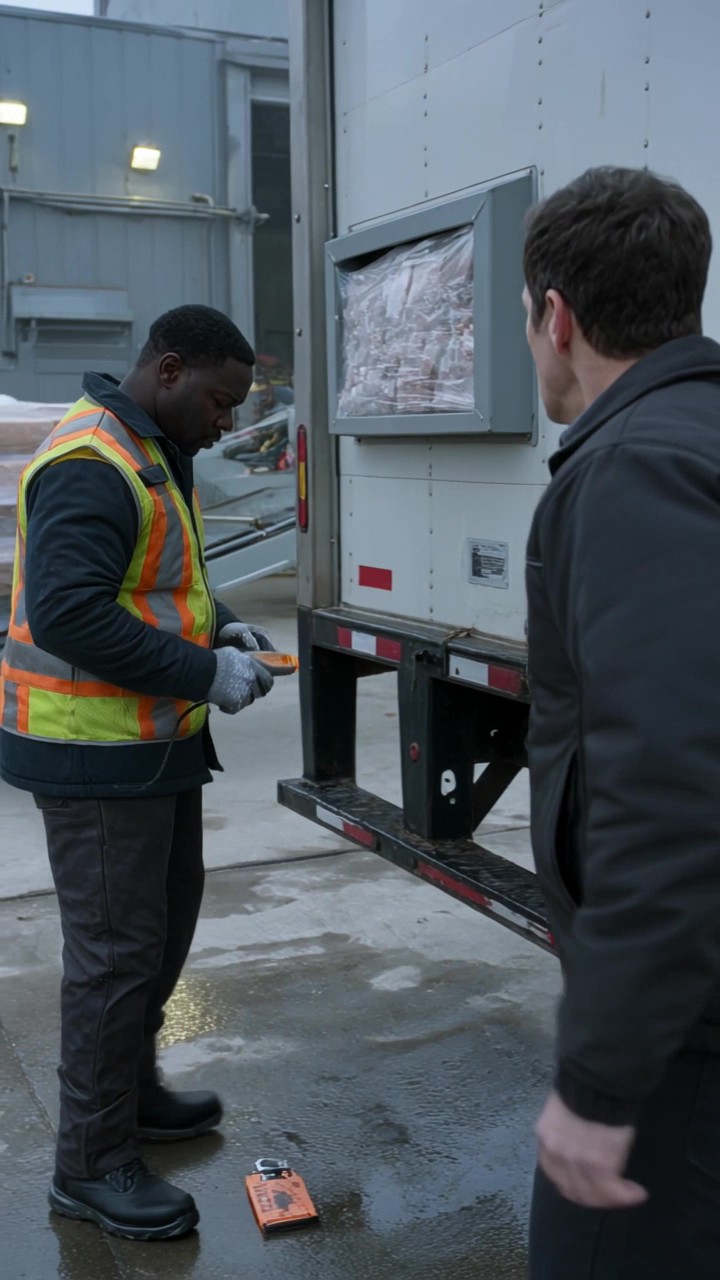
The alarm screamed through Dock 4.
Workers pulled pallets back.
Darius grabbed the lockout tag from the wet floor and slapped it onto the trailer door before anyone else could pretend the decision was still pending.
“Hold the load,” he said.
This time, no one argued.
Dr. Elena Brooks pointed to the quality team.
“Core temperature checks. Rear pallets first. Document every reading.”
Preston Hale stood pale beside the dock plate.
Margaret Vale looked at him.
“You told me there was no risk.”
Preston swallowed.
“The display was still technically—”
Darius cut in.
“The display lags. The product warms before the dashboard admits it.”
Elena nodded.
“He’s right.”
The quality team opened boxes and tested the internal temperatures.
One reading.
Then another.
Then another.
Too high.
Not by much.
Enough.
Enough to make the shipment unsafe.
Enough to make a child sick.
Enough to turn a launch into a disaster.
Margaret’s face changed from fear to anger.
“How long has this unit been flagged?”
A mechanic looked at the floor.
“Truck 4 had a compressor warning last week.”
Preston snapped, “It was cleared.”
The mechanic shook his head.
“It was marked ‘monitor only’ because taking it offline would short the launch fleet.”
Elena turned to Margaret.
“That is not a maintenance decision. That is a business decision wearing a tool belt.”
The investors were no longer smiling.
Margaret looked at Darius.
“How did you know?”
He touched his cheek once.
“Sound. Smell. Soft boxes.”
Elena said, “Dock workers are the last human checkpoint before food leaves us. If they say stop, the company stops.”
Preston tried to recover.
“I was protecting the schedule.”
Darius looked at the pallets.
“You were protecting a calendar from children’s stomachs.”
The words landed hard.
Margaret removed Preston from the dock immediately.
Not quietly.
Not later.
In front of the workers he had ignored.
The launch was delayed. Trucks were inspected. Two more refrigeration units were found at risk. The delay cost money, but the product that eventually shipped was safe.
That afternoon, Margaret held a meeting on the loading dock.
Not upstairs.
Not with slides.
On the concrete where the alarm had screamed.
She stood beside Darius.
“Northstar Foods nearly shipped unsafe meals because management ignored the people closest to the product. That changes today.”
A new rule was created: any dock worker, loader, driver, cleaner, mechanic, or quality clerk could issue an immediate cold-chain hold without supervisor approval.
Darius was promoted to Cold Chain Safety Lead.
He did not smile.
He asked for more handheld probes, more lockout tags, and a break room heater that had been broken for two winters.
Elena laughed.
“That is how you know he is the right person.”
Months later, the school lunch launch succeeded.
But Northstar’s marketing campaign changed.
No glossy executive hero story.
The first video showed the loading dock at 4:30 a.m.
Frost.
Gloves.
Pallets.
A worker checking temperature before sunrise.
At the dock entrance, a sign read:
If the floor says stop, leadership listens.
Darius still started his shifts early.
He still smelled compressors before coffee.
And every time a truck engine dipped wrong, the whole dock got quiet.
Because saving a company does not always happen in boardrooms.
Sometimes it happens when the lowest-paid person refuses to let the shipment leave.






Leave a Reply