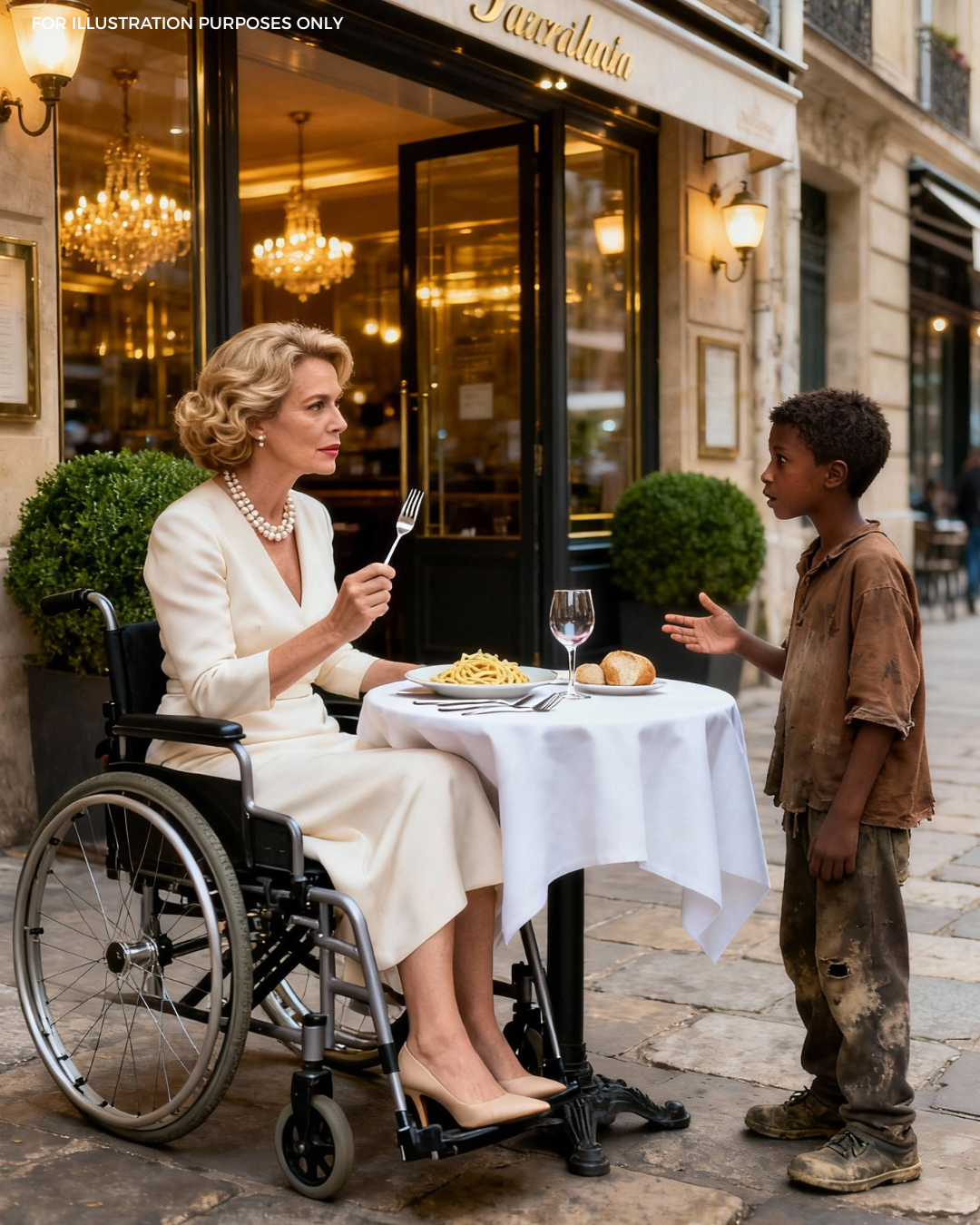
“Do you really think I’m going to believe some suburban kid’s superstition?” Victoria Whmmore’s voice cut through the mansion’s air like an icy blade, her steely blue eyes fixed on the 12-year-old boy standing before her. Daniel Thompson had just made the most daring proposal of his life. After three days of watching the bitter…
Fiction. This story is a dramatized work created for entertainment. Names, characters, events, and circumstances are fictional.
“Do you really think I’m going to believe some suburban kid’s superstition?” Victoria Whitmore’s voice cut through the mansion’s air like an icy blade, her steely blue eyes fixed on the 12-year-old boy standing before her.
Daniel Thompson had just made the most daring proposal of his life.
After three days of watching the bitter woman throw away entire plates of food while he and his grandmother starved across the street, he finally knocked on her door.
“Ma’am, I wasn’t joking,” Daniel said calmly.
“Can I help you walk again? I just need the food you were going to throw away.”
Victoria laughed cruelly, the sound echoing through the marble hall.
“Boy, I’ve spent $15 million on the best doctors in the world over eight years. Do you really think a rascal like you can achieve what no neurosurgeon has?”
What Victoria didn’t know was that Daniel wasn’t just any kid. While she looked at him with contempt, he studied every detail of her routine—details even her doctors had missed.
“You take medication for your back pain every day at 2 p.m.,” Daniel said calmly. “Three white pills, one blue one, and you always complain your legs are freezing—even when it’s hot.”
Victoria’s arrogance wavered. “How do you know?”
Daniel had spent weeks observing her—not out of curiosity, but because he recognized the same symptoms his grandmother, Ruth Thompson, had presented before her surgery saved her life.
“You don’t need more medication,” he said. “You need someone who understands that sometimes the cure doesn’t come from where we expect.”
Victoria slammed the door, but Daniel saw fear in her eyes: fear that a poor 12-year-old had noticed what all her expensive doctors had missed.

Back at his modest apartment with his grandmother, Daniel sat quietly on the porch.
“Grandma, tell me again about pseudoparalysis,” he said.
Ruth Thompson, a retired hospital worker and healer, smiled proudly. Her knowledge came from generations of midwives and herbalists in Mississippi, passed down from mother to daughter.
“Smart kid,” she said. “You saw what I showed you: her legs twitch when she doesn’t realize anyone is watching. Muscles respond to emotional stimuli.”
Daniel nodded. “She’s trapped in her own mind. Her body works, but her mind has created the chains.”
“Exactly,” Ruth said. “Three generations of healers taught me: sometimes the body lies, but the mind always tells the truth.”
That afternoon, Dr. Harwell, Victoria’s private neurologist, brought new tests.
“Victoria,” he said, adjusting his glasses, “neurologically, there’s no physical reason for your paralysis. Your nervous system is working perfectly. I suspect your trauma manifests as physical paralysis.”
Victoria’s world shook. Eight years in a wheelchair, and it had all been psychosomatic? Worse, a poor boy had diagnosed her in minutes what her expensive doctors could not.
That night, she looked across the street at Daniel’s modest apartment. Lights on. Shadows moving. A family with nothing, but knowledge she couldn’t buy. For a moment, she felt humility—but quickly replaced it with anger.
“That boy isn’t going to humiliate me,” she whispered.
Victoria began a silent campaign against Daniel:
- She called his school, accusing him of trespassing and harassment.
- She pressured the building manager, hoping to force them out.
“She’s trying to kick us out,” Daniel told Ruth as she prepared their nightly herbal tea.
“She’s scared,” Ruth said calmly. “When the rich fear the poor, it’s because they know they’ve done wrong. And when they fear the truth, they will do anything to destroy those who might reveal it.”
Ruth taught Daniel a fundamental truth.
“When I was your age,” she said, “a white doctor tried to stop me from working because I knew treatments he didn’t. I observed, documented, and when the time was right, I used his own knowledge against him. The truth always comes out.”
Daniel realized: Victoria wasn’t just afraid he could heal her—she was afraid of the truth being exposed.
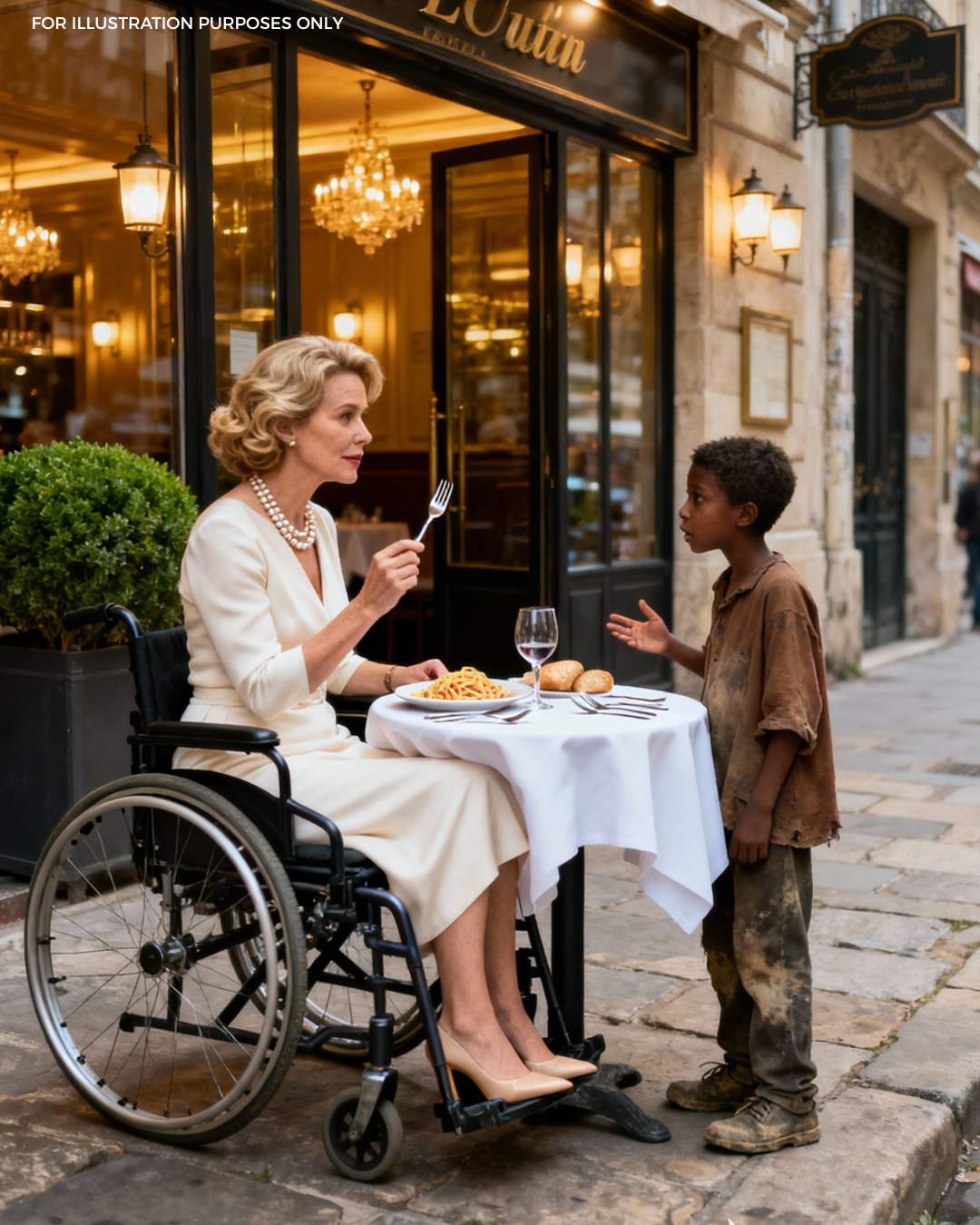
That night, Daniel investigated. Victoria wasn’t born rich—she was the daughter of poor European immigrants. She married Harrison Whitmore, heir to a fortune built on slavery.
Her accident happened one day after discovering her husband planned to divorce her for a younger woman. He died under suspicious circumstances two years later, leaving her the fortune. The will had been amended just a week before his death.
Even more, the Thompson family had long worked for the Whitmores. Generations of Daniel’s ancestors had served the very family Victoria now inherited from.
Daniel understood her hostility. She was rich, proud, and wounded. But he had generations of knowledge and the courage to observe where others didn’t.
And he had a plan.
Sometimes, healing isn’t just about the body. It’s about revealing the truth. And Daniel Thompson knew exactly how to do that.
He went back the next afternoon and knocked again. This time he did not ask for food.
“Your accident was the day after you found out he was leaving,” Daniel said through the gap in the door. “He stayed because of the chair. I think part of you is still afraid of what happens if you get out of it.”
Victoria did not slam the door. She did not say anything for a long time.
“He stayed two years,” she said at last. “He changed the will out of guilt, and then his heart gave out, and the papers called it suspicious for a week because of me. I have been sitting in the proof that he stayed ever since.”
“He’s gone, ma’am. The chair isn’t keeping anybody.”
She let him in.
It was not a miracle the way the word is usually meant. It was forty minutes every day after school in the marble hall, with Dr. Harwell’s physical therapist coming on Tuesdays and Ruth coming on Thursdays with her tea and her blunt questions. Daniel counted. Victoria swore at him. Then she ate dinner with him, because that was the deal, and the plates stopped going in the trash.
In the third week her toes curled against his palm.
In the sixth she stood at the kitchen counter for eleven seconds, gripping the edge, and cried so hard she had to sit back down.
The next morning she made two phone calls. She told Daniel’s school she had been mistaken and wanted her complaint taken out of his file. She told the building manager across the street that the Thompsons’ rent was paid through the end of next year.
“I was cruel to you,” she told Ruth that Thursday. “I’d like to say I’m sorry.”
“Say it by walking to the door when we knock,” Ruth said. “That’ll do.”
By spring, Victoria could cross the hall on two canes. She set up a fund in the Thompson name for Daniel’s schooling, and she wrote the reason on the first check herself: for services no doctor provided.
Daniel kept the stub. He still came for dinner.
On the first warm evening she opened the front door before he reached the top step, standing, one hand on the frame.
“You’re late,” she said. “It’s getting cold.”