
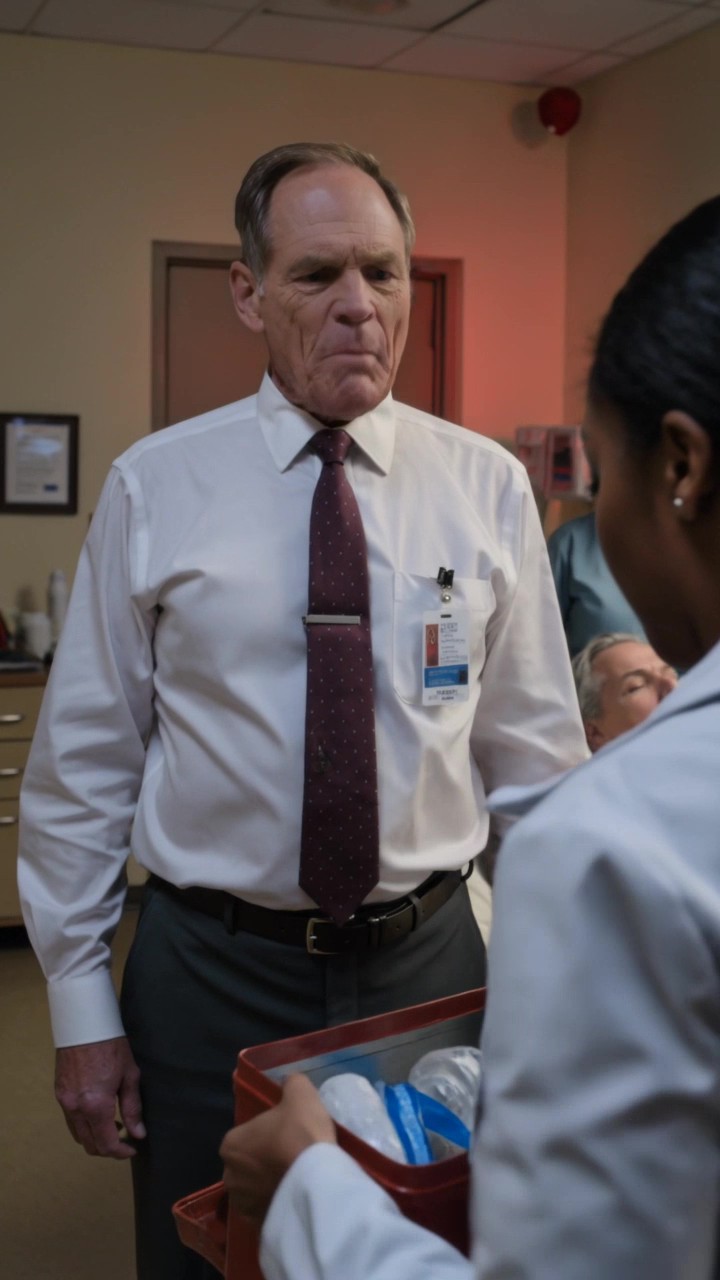
Tessa Reed worked through the night.
She transferred the boy’s medication into the mobile refrigerator.
She powered the oxygen concentrators.
She helped move the elderly heart patient into the heated mobile unit when the clinic temperature began dropping.
Her technicians ran cables through the hallway and marked every connection with bright tape so nobody would trip in the dark.
Preston followed instructions.
For the first time in eleven years, he stood beside Tessa without authority protecting him from what he had done.
At 2:10 a.m., the clinic’s roof generator finally restarted.
By 2:30, county emergency crews reached the parking lot.
No patient was lost.
The little boy received his medication.
The elderly woman fell asleep beneath two blankets while the monitor beeped steadily beside her.
The crisis was over.
The moral problem was not.
Preston found Tessa cleaning ice from the mobile unit’s rear step.
“You could have refused the call.”
“Yes.”
“You could have let county services handle it.”
“They could not reach you.”
“You could have sent equipment and stayed away.”
Tessa looked at him.
“I do not send respiratory equipment into a blackout without trained staff.”
He nodded.
Professional answer.
No forgiveness hidden inside it.
The red medicine box sat open on the tailgate between them.
Preston touched the dented lid.
“The boy from the bus survived.”
“I know.”
“He became a teacher.”
“I know.”
“He sends a Christmas card to the clinic.”
Tessa’s face hardened.
“To the clinic?”
Preston lowered his hand.
“He thinks we sent you.”
There it was.
A second theft.
Not medicine.
Credit.
For eleven years, Pine Valley had allowed the rescued boy’s family to believe Tessa acted on clinic orders while publicly maintaining that she had endangered patients by stealing supplies.
Tessa closed the red box.
“You used the rescue when it made the clinic look good and used the box when you needed someone to blame.”
Preston looked older than he had hours earlier.
“Yes.”
The word came without defense.
Tessa waited.
He continued.
“Inventory was short before you took it. We had been sharing emergency stock with a private practice without recording transfers. The audit would have closed the clinic.”
“So you closed my career instead.”
“I told myself the town needed the clinic more than it needed one nurse’s reputation.”
Tessa looked toward the windows where patients slept.
“And tonight?”
“Tonight the clinic needed the nurse.”
He sat on the icy step.
“I am sorry.”
Tessa did not tell him it was all right.
It was not.
Some apologies are the beginning of responsibility, not the end of pain.
By morning, reporters had gathered because the blackout affected half the county.
Preston could have praised “regional cooperation.”
He could have thanked “outside medical partners.”
He could have hidden Tessa behind another clean sentence.
Instead, he stood in the waiting room beside the red medicine box.
Tessa watched from the hallway.
“Eleven years ago,” Preston said, “Nurse Tessa Reed took this box to a stranded school bus and saved a child during an asthma emergency.”
The staff turned toward her.
“She did not steal medicine. The clinic’s inventory failures existed before she touched the box. I blamed her to protect this institution and my position.”
His voice shook.
“I allowed her to lose work, trust, and years of her profession. Last night she returned and saved our patients anyway.”
A reporter asked Tessa whether she forgave him.
She stepped toward the microphone.
“No.”
The room stiffened.
She continued.
“I believe he told the truth today. I believe people can change. Forgiveness is not the entry fee for me to do my job.”
That answer traveled farther than any dramatic reconciliation would have.
The clinic board reopened the old case.
Tessa’s personnel record was corrected.
Pine Valley publicly acknowledged the rescued child and the nurse who reached him.
Preston resigned as medical director but stayed temporarily as a supervised physician because closing the clinic during winter would punish the town more than it punished him.
That decision caused debate.
Some people wanted him removed immediately.
Others argued the community still needed his care.
Tessa supported the supervised transition.
Not for Preston.
For the patients.
Again.
Six months later, Pine Valley became a community-run clinic partnered with Tessa’s mobile respiratory program.
The red medicine box was placed near the emergency supply cabinet.
Not behind glass.
Still usable.
Its new label read:
TAKE WHAT SAVES A LIFE. RECORD THE TRUTH AFTER.
Preston attended the first staff training from the back row.
He did not speak unless asked.
Tessa led the session.
At the end, he approached her.
“Will you ever forgive me?”
She closed the box latch.
“I don’t know.”
He nodded.
“But I will keep showing up where patients need me,” she added. “Do not confuse that with what I owe you.”
He did not.
That was the beginning of his change.
Not being rescued from consequences.
Learning that the woman who saved his clinic had done it because her integrity was larger than his betrayal—not because the betrayal had become small.




Leave a Reply