
Preston Vale spent the night on a gym mat beside people he had once called accounts.
No private room.
No special cot.
No office door between him and the sound of families turning beneath thin blankets.
The shelter medic checked him and said he needed warmth, fluids, and observation.
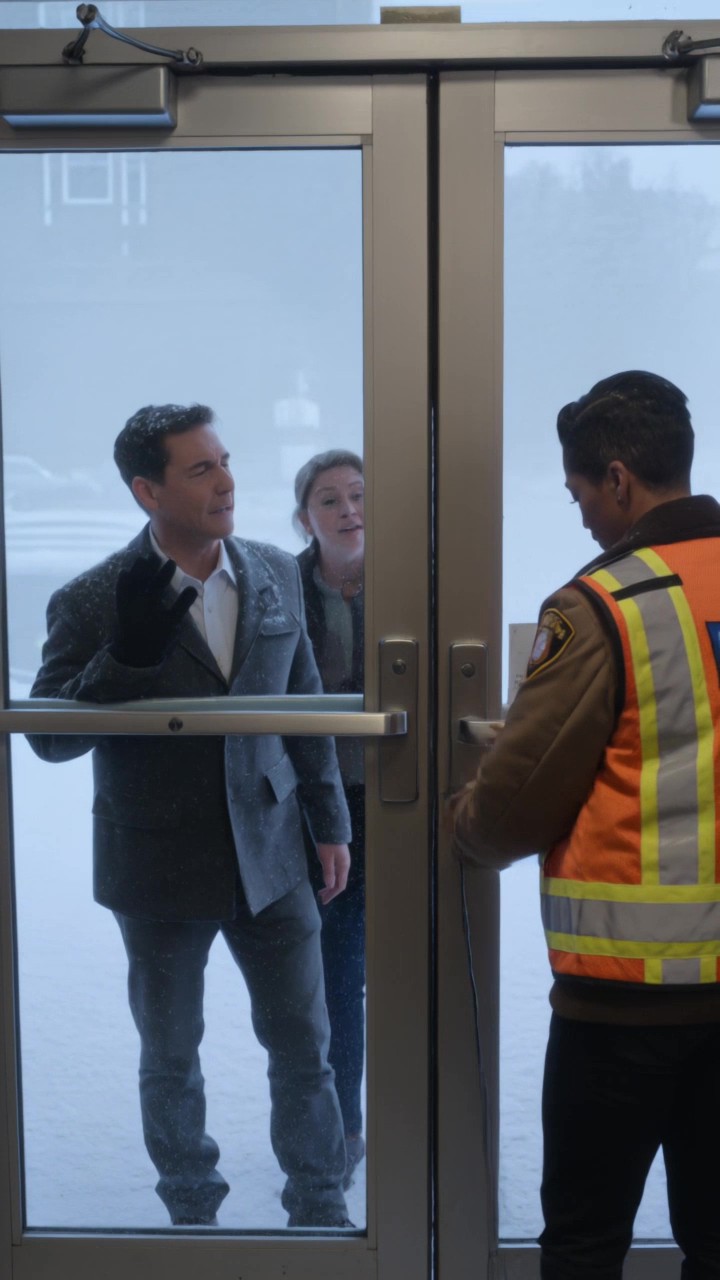
He had been stranded after his car slid into a snowbank less than half a mile from the center. His phone died. He tried walking toward the highway and lost direction in the whiteout.
By the time he saw the community-center lights, he could no longer feel his hands properly.
Maria had opened the door in time.
That fact settled over the shelter in uncomfortable layers.
Some people thanked her.
Some were angry.
One man said Preston would never have done the same.
Maria agreed.
“That is not the standard I use.”
Ruth sat beside her near the supply table.
“You scared me.”
“I was trained for the vestibule.”
“That is not what I mean.”
Maria looked toward Preston.
He lay awake beneath a gray blanket, listening.
Ruth lowered her voice.
“What if saving him becomes the story that erases what he did to us?”
Maria touched the key beneath her shirt.
“Then we tell both stories.”
At dawn, the storm weakened.
Road crews reached the shelter.
Preston’s assistant arrived in a four-wheel-drive vehicle and tried to move him immediately.
Preston refused.
He asked to speak with Maria.
She continued stacking breakfast cups.
“You can speak while I work.”
He stood awkwardly near the supply table.
“I owe you my life.”
Maria did not look up.
“You owe the volunteers who held the line too.”
“I want to make this right.”
She stopped.
That sentence had been used against tenants many times.
Make it right often meant write one check.
Offer one favor.
Ask the harmed person to approve the giver’s redemption.
Maria faced him.
“You cannot make twelve years right before breakfast.”
Preston looked down.
“I can repay what you lost.”
“My daughter lost her school, her friends, and four months of sleeping without knowing where we would live next. What amount are you planning to place on each part?”
His face tightened.
“I did not know it was that bad.”
“You signed the eviction.”
“My management company handled—”
“No.”
Maria’s voice stayed calm.
“Do not rescue yourself with an employee.”
The shelter fell quiet around them.
Preston looked toward the gym.
Ruth.
The man near the coffee urn.
A mother dressing two children for school despite the closure.
People from buildings he owned or once owned.
“I thought hardship exceptions would make refinancing impossible,” he said.
Maria answered.
“So you made housing impossible for us.”
He did not defend himself again.
That was the first useful thing he did.
Preston offered Maria a vacant apartment.
She refused.
He offered to cover her daughter’s education debt.
She refused.
“Why?”
“Because private rescue keeps the system that harmed everyone else untouched.”
Maria pointed toward the shelter residents.
“You want to respond to what happened last night? Start by listening to the people who would have been here if their buildings lost heat.”
Preston stayed.
Not all day.
Long enough to hear.
Tenants described broken boilers, unreturned calls, rent increases after cosmetic renovations, and notices delivered before maintenance requests were resolved.
Some complaints involved Preston directly.
Others involved the management company.
Responsibility did not become simpler because it had been delegated.
After the roads reopened, Preston invited tenant representatives to a public meeting.
Nobody trusted him.
Maria attended anyway.
She did not sit beside him.
The first proposal he offered was a hardship fund controlled by his company.
Ruth laughed.
“So you decide who deserves help again?”
The proposal failed.
The second plan created an independent tenant emergency fund administered by a local housing nonprofit.
Preston financed it for five years.
His buildings adopted payment-plan requirements before eviction, independent repair inspections, and a tenant right-to-counsel program.
Three properties converted a portion of renovated units to long-term affordable leases.
The changes did not solve the city’s housing crisis.
They did stop several families from repeating Maria’s exact story.
Preston sold one luxury development to fund the reforms.
Some residents praised him.
Maria did not.
Praise was not the price of accountability.
Months after the blizzard, Preston visited the community center.
Maria was repairing a loose cabinet hinge.
He placed a new brass key on the table.
“No address,” she said.
“It is for the tenant legal-aid office. They asked me to give the first copy to you.”
Maria looked at it.
Then at him.
“I do not need a ceremonial key.”
“I know.”
He placed it closer.
“I thought you might want to open the office.”
She considered refusing.
Then Ruth entered with two former tenants and a box of case files.
Maria picked up the new key.
Not for Preston.
For the door behind him.
At the legal-aid opening, reporters asked Maria whether she had forgiven the landlord she rescued.
She answered:
“Rescue and forgiveness are different decisions. One was urgent. The other may never happen.”
The quote made some people uncomfortable.
They wanted clean transformation.
A cruel landlord saved by a good woman, then redeemed.
Maria refused to perform that ending.
Preston changed policies.
He testified at the city housing hearing about how refinancing incentives rewarded quick eviction and deferred repair.
He faced lawsuits from former tenants.
Some he settled.
Some he contested.
Accountability remained complicated.
Maria remained the community-center custodian and emergency shelter coordinator.
Near the north vestibule, she mounted the old brass key from Apartment 3B.
The key Preston had thrown at her.
Beneath it was a small sign:
OPENING A DOOR FOR SOMEONE DOES NOT PRETEND THE LAST DOOR NEVER CLOSED.
During the next winter storm, Maria trained new volunteers on the vestibule airlock.
Ruth held the safety line.
Preston was nowhere in the room.
He did not need to be.
The lesson had moved beyond him.
Maria touched the old key once before closing the glass case.
She had saved the man who harmed her.
Not because he deserved a clean past.
Because she deserved a future in which his cruelty did not decide the limits of her humanity.





Leave a Reply