
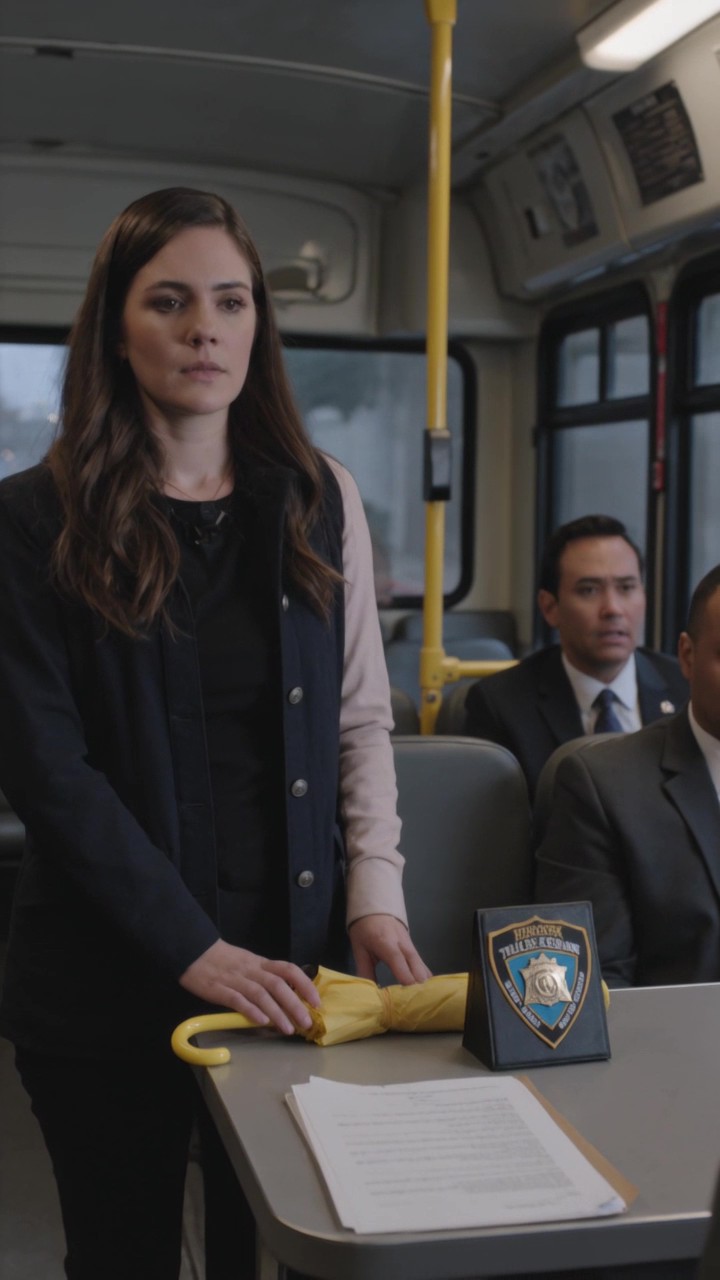
Rachel Miller had not planned to ride Bus 22 that afternoon.
She and her daughter Lily had been staying in temporary housing under a safety plan while a court reviewed threats from Rachel’s former husband, Aaron.
The arrangement was not a secret identity program.
They still used their names.
But their address, school route, and daily schedule were kept private.
That week, Lily became sick at school.
Rachel collected her early and took a different bus home.
At the second stop, she saw Aaron’s gray pickup in a pharmacy parking lot.
A yellow umbrella lay across the dashboard.
It belonged to Lily.
Aaron had taken it from the family home months earlier.
The umbrella told Rachel the sighting was not a coincidence.
He had been near the school.
He knew which child he was looking for.
Rachel did not call out.
She did not want Aaron to know she recognized him.
She moved toward the front of the bus, positioned herself where Denise could see the mirror, and used the distress signal she had learned from a community safety workshop.
Palm open.
Thumb in.
Fingers close.
Denise had attended the same training through the transit authority.
Drivers were told:
Do not confront the suspected follower.
Do not announce the signal.
Keep the doors closed if opening them could give the person access.
Move toward a secure, staffed location.
Denise followed the guidance.
The problem was that no clear public procedure existed for the passengers who did not know what was happening.
Rachel’s registered stop approached.
Aaron’s pickup moved beside the bus.
If Denise opened the door, Rachel and Lily would be exposed on the sidewalk.
If she explained over the speaker, Aaron might see passengers react or hear through the open windows at the next light.
So Denise drove past.
Rachel shouted publicly:
“Please stop!”
That was not betrayal.
It was part of making the follower believe the driver had ignored an ordinary passenger complaint.
Aaron stayed behind the bus.
At the next stop, several passengers stood and demanded release.
Denise could not open any door while the pickup remained close.
She contacted dispatch through the silent emergency button, but the system sent only the bus number and alert code. Dispatch did not speak into the cabin.
Denise headed for the police fleet garage because its entrance had a closing security gate.
Before she arrived, one passenger began livestreaming.
The video captured Rachel crying.
Lily frightened.
Denise silent and rigid at the wheel.
It did not capture the gray pickup clearly.
At the garage turn, Aaron realized where the bus was going and fled.
Police later found the pickup abandoned.
He was arrested two days afterward for violating court restrictions and other offenses linked to the pursuit.
Rachel and Lily were moved again.
Investigators asked them not to discuss the incident publicly until Aaron was detained and the new address was secure.
Denise agreed.
Transit officials could have issued a statement saying the route change involved a verified safety matter.
Instead, legal staff worried that any confirmation would connect the viral video to Rachel’s case.
They said nothing.
Denise became the only visible person left to blame.
Passengers called her a kidnapper.
Commentators demanded prosecution.
A local host replayed her expression and said:
“That is not the face of someone protecting a child.”
Denise’s teenage son stopped wearing his school jacket because classmates recognized the transit logo.
Her mother asked why she did not simply tell the truth.
Denise answered:
“Because the truth includes where they went.”
The transit board suspended her without pay while the review continued.
That consequence was not required by the safety plan.
It happened because the institution knew how to protect a passenger’s privacy but had no method to protect the worker carrying the confidential reason.
At the termination hearing, Rachel decided she was ready to speak.
Aaron was in custody.
The new housing location was secure.
Her advocate and attorney agreed that she could describe the bus incident without revealing the address.
Rachel placed Lily’s recovered yellow umbrella on the table.
Police had found it inside the pickup.
She explained the hand signal.
The pickup.
The public pleas.
The locked doors.
Then Lily spoke.
“Ms. Denise told everyone to stay seated.”
A board member asked:
“Were you afraid of her?”
Lily thought carefully.
“I was afraid she would open the door.”
The sentence changed the hearing.
Several passengers attended too.
One man apologized for filming.
Another did not.
He said passengers had a right to know why they were being carried off route.
Denise agreed.
“They had a right to safety information.”
“Then why didn’t you tell us?”
“Because the person following us could see the bus.”
The board faced a real policy failure.
A driver responding to covert danger needed a way to reassure passengers without exposing the protected person or escalating the threat.
Denise was reinstated with back pay.
She refused the transit authority’s first public statement because it praised her “heroic instincts” while ignoring that she had followed training.
“This was not instinct,” she said. “You taught me the signal and then punished me when the public did not know the protocol.”
The revised statement admitted that.
Transit policy changed.
Buses received a neutral safety announcement drivers could activate:
This vehicle is temporarily diverting to a secure location. The doors will open when safety personnel advise. Emergency services have been notified.
The announcement revealed no passenger and no threat.
Dispatchers gained direct two-way silent messaging.
Workers placed under confidential review received pay, legal support, and a private verification panel.
Rachel did not become Denise’s best friend.
She moved away.
Their lives separated again.
Before leaving, Rachel brought Lily to the depot.
Lily handed Denise the yellow umbrella.
Denise shook her head.
“That belongs to you.”
Lily opened it inside the garage.
Tiny suns covered the fabric.
“I don’t want him to own the memory.”
Denise understood.
She took a photograph of the umbrella, then returned it.
“You carry it in the rain,” she said. “That is how you take it back.”
Lily nodded.
Denise kept the photograph inside her bus locker.
Passengers sometimes recognized her after the story was corrected.
Some thanked her.
Others still believed no driver should be allowed to lock doors and change a route.
Denise did not dismiss the concern.
Authority can be abused.
That is why the decision required dispatch logs, police review, and clear limits.
Protection should never depend on unquestioned trust.
It should depend on accountable action.
Months later, Bus 22 received a silent safety alert during an evening route.
A teenager near the back gave the same hand signal.
Denise activated the new announcement.
Passengers heard a calm voice explain that the bus was moving to a secure location.
Nobody knew who needed help.
Nobody needed to.
The doors remained closed.
The bus kept moving.
This time, Denise did not have to protect one person by allowing the entire city to believe she had become the danger.







Leave a Reply