
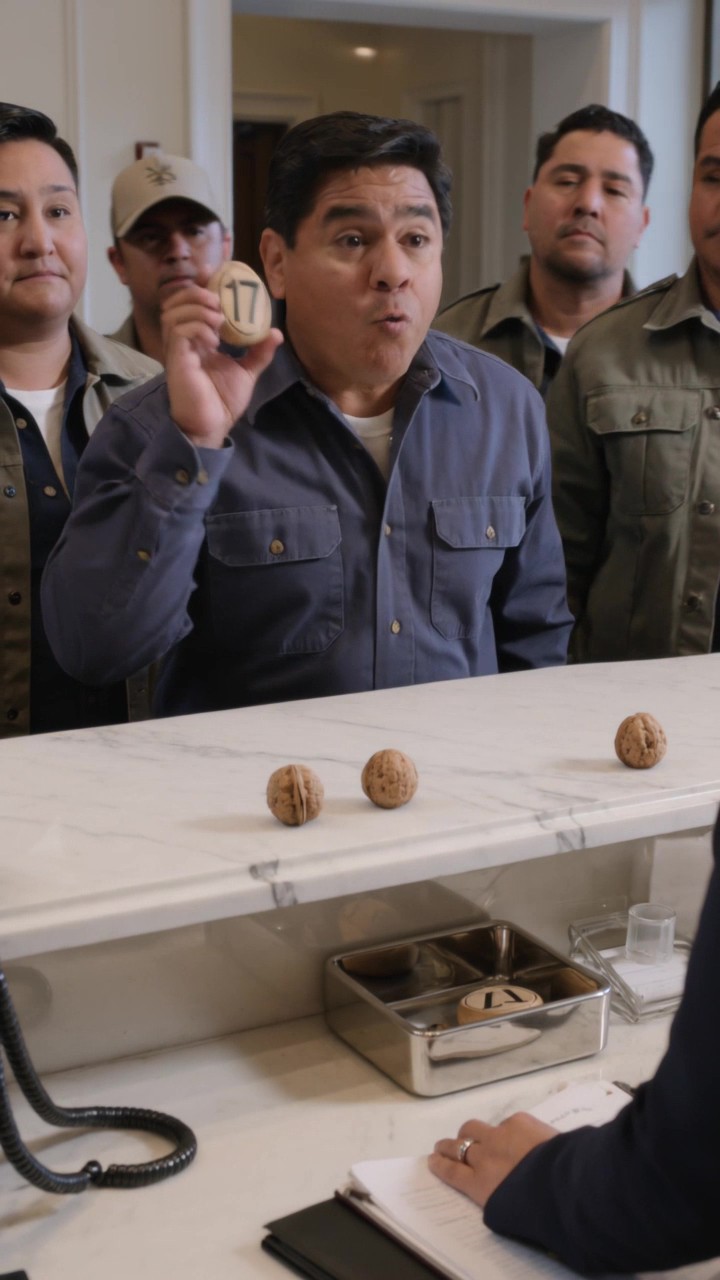
Celeste Hart had less than four minutes to decide whether the people standing in muddy boots were customers or an interruption.
The wire transfer had been initiated by Preston Hale, whose name still appeared as chairman in the bank’s main business profile.
He wore tailored suits.
Spoke the language of expansion.
Hosted charity breakfasts.
When he told Celeste the Willow Creek cooperative was “restructuring idle land assets,” she believed she was helping a regional agricultural business modernize.
Luis Rivera described the same transfer differently.
“It empties the reserve that protects our homes and packing shed.”
Willow Creek was not a standard company.
Forty years earlier, orchard workers pooled part of each harvest payment to purchase the land where they lived and packed fruit.
The cooperative owned thirty-two small cottages, two barns, a cold-storage building, and the narrow valley road leading to the highway.
Every active member had one vote.
No vote increased because someone earned more, supervised others, or spoke better English.
At the first meeting, founder Maria Ortiz carved walnut tokens for each family because several members could not read the printed ballots.
The tokens were not legal currency.
They became a physical promise:
One household.
One voice.
Major land decisions required two-thirds approval.
The bank’s original charter reflected that rule.
Over the years, the tokens remained in the cooperative while the bank gradually interacted only with whoever held the chairman title.
Convenience became habit.
Habit became false ownership.
Preston used that gap.
He negotiated with Valley Crest Development to transfer the land reserve into a new entity where he would serve as paid director.
The proposal promised upgraded housing and a modern packing facility.
Members later discovered the cottages would become temporary employee rentals with higher fees.
Families who had spent decades paying into the land could lose permanent occupancy.
At the emergency meeting, twenty-seven members voted Preston out.
Luis was elected interim treasurer.
The cooperative attorney planned to update the bank the following morning.
Preston arrived first.
He initiated the wire using his existing authority.
Celeste looked at the twenty-seven tokens.
“Do all of you have identification?”
Luis nodded.
“Yes.”
“Are your signatures on file?”
“Most. Some records use older names or household representatives.”
The senior teller, Elena Brooks, spoke.
“The charter says major reserve transfers require a certified membership resolution.”
Celeste turned to her.
“We do not have one.”
Luis held up a small wooden box.
“We have the meeting recording, the secretary, the vote book, and twenty-seven members standing here.”
The bank could not treat wooden tokens alone as legal authorization.
Luis understood that.
He was not asking Celeste to transfer money to him.
He was asking her to pause an irreversible transaction while the conflict was verified.
That power existed.
Banks routinely held unusual transfers when ownership authority was disputed.
The question was whether Celeste considered the dispute credible when presented by people whose clothes marked them as laborers.
The transfer phone rang again.
A regional approval officer wanted confirmation.
Celeste looked toward security.
Then at the tokens.
Finally, she said:
“Place an emergency hold.”
The teller repeated the order into the phone.
The wire stopped before final release.
The workers did not cheer.
The money was still in danger.
Preston’s name remained on the account.
And the bank lobby was not a courtroom.
Celeste moved everyone into the conference room.
For the first time that day, chairs were brought for the workers instead of instructions to leave.
The cooperative secretary, Rachel Cole, produced the meeting minutes and audio recording.
Elena compared member names with the original account documents.
Twenty-four of the people present were listed directly.
Three represented households whose records had not been updated after deaths or marriages.
The vote still exceeded the required threshold.
The bank’s legal department confirmed that Preston’s authority ended when the cooperative removed him according to its charter, even though the digital profile had not yet changed.
The wire was canceled.
The account was frozen until new signatories were verified.
Preston arrived thirty minutes later with an attorney.
He saw the walnut tokens covering the conference table.
His face tightened.
“This bank cannot be run by farmhands carrying craft pieces.”
Luis looked at him.
“The farmhands created the account.”
Preston argued the development deal would save Willow Creek from rising costs.
Some members had supported parts of his plan.
The conflict was not invented entirely from greed.
The cooperative needed roof repairs, irrigation upgrades, and a more efficient cold-storage system.
But Preston concealed the loss of member housing rights and planned to move the reserve before the final vote.
The problem was not that he proposed change.
It was that he tried to place himself above the people whose money made change possible.
Celeste listened as workers described what the reserve meant.
Emergency medical bills.
Crop failures.
Home repairs.
Legal defense against water-right disputes.
College loans guaranteed collectively.
It was not idle money.
It was time stored from thousands of workdays.
Celeste picked up Token 17.
She returned it to Luis with both hands.
“I should not have dropped this into a coin tray.”
Luis accepted it.
“No.”
She waited for him to soften the sentence.
He did not.
The bank opened an internal review.
It found that Preston’s transfer should have triggered additional verification because the receiving company was newly formed and the amount exceeded the cooperative’s usual transaction pattern.
Celeste had relied too heavily on his title and previous relationship with the branch.
She was removed from cooperative account supervision and required to complete corrective training.
The bank did not fire her.
Some workers wanted dismissal.
Others believed the larger failure was an account system designed around executive convenience instead of cooperative governance.
Luis supported the second view but insisted the public correction name the prejudice clearly.
“We told her who we were,” he said. “She looked at our clothes and decided the well-dressed man had more ownership.”
Harbor Trust rebuilt the account structure.
Major land transfers required direct verification from a rotating member committee.
Cooperative alerts went to several elected representatives, not only one chair.
Annual meetings included bank staff so members understood exactly whose names and powers were recorded.
Plain-language notices were offered in the languages used by the workers.
Willow Creek rejected the Valley Crest transfer.
It did not reject modernization.
Members developed a smaller plan using grants, low-interest cooperative loans, and phased repairs.
It took longer.
The cold-storage upgrade was delayed one season.
Three cottages required temporary relocation during roof work.
Collective ownership did not make every decision easy.
It made the difficulty belong to everyone.
Preston was removed permanently from office.
He retained his membership share after repaying unauthorized expenses, a decision that divided the cooperative.
Luis voted against expulsion.
“Punishment should not copy the thing he tried to do,” he said. “He tried to erase member rights. We should not erase his without following our rules.”
That position was unpopular.
It also proved the tokens still meant something even when the vote protected a difficult person.
The bank returned the walnut pieces in a new wooden case.
Luis refused the polished display box.
He kept Maria Ortiz’s original harvest crate.
Scratched.
Heavy.
Smelling faintly of walnuts and dust.
At the next annual meeting, every household placed one token into the crate.
The sound was soft.
Wood striking wood.
No single piece sounded powerful.
Together, they filled the room.
Above the cooperative office door, a sign was added:
THE MONEY BELONGS TO THE HANDS THAT EARNED IT.
THE DECISION BELONGS TO THE VOICES THAT SHARE IT.
Luis continued working in the orchard.
He did not become a banker.
He remained interim treasurer for one year, then stepped aside because the charter limited consecutive terms.
On his final bank visit, Celeste met him in the lobby.
She wore the same polished suit.
Luis wore clean boots this time because the harvest had not begun.
She said:
“I hope we serve you better now.”
Luis looked at the marble counter where the tokens had once been dismissed as scraps.
“Serve the account the way it was built.”
Then he placed Token 17 back in his pocket.
The bank had almost allowed one man to move two million dollars because he looked like authority.
Twenty-seven small pieces of walnut reminded it what ownership actually looked like.







Leave a Reply