
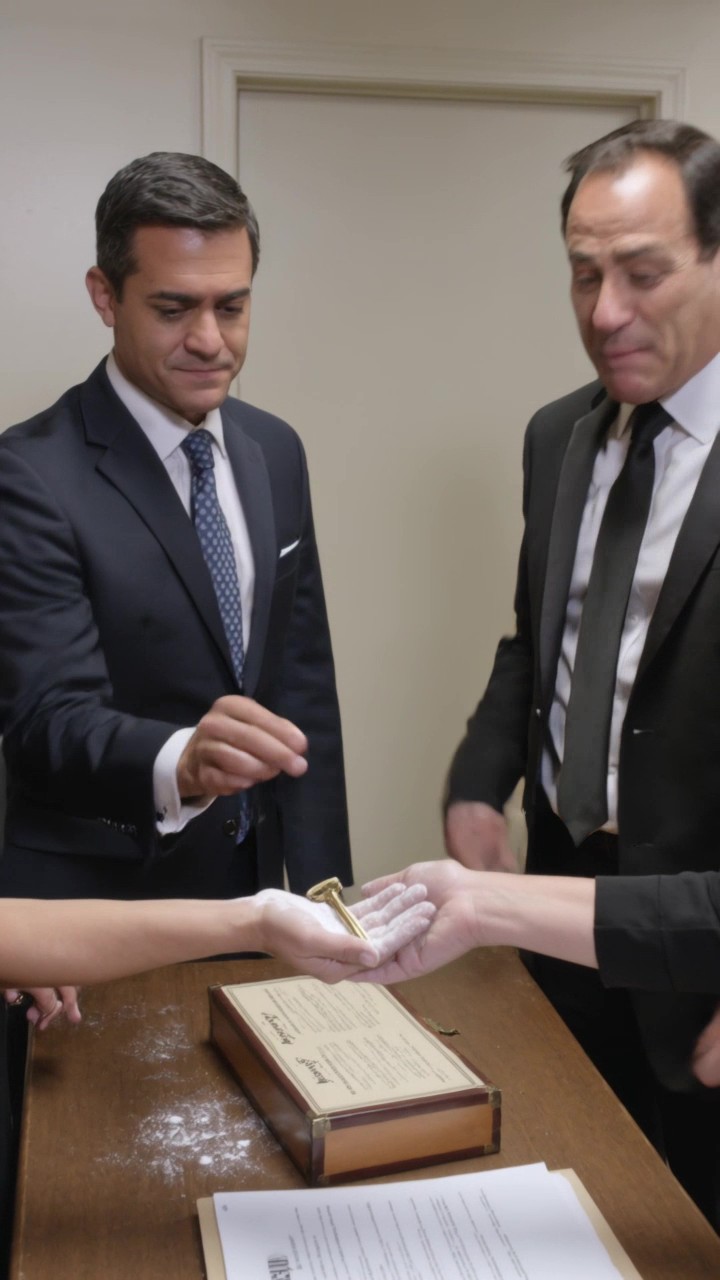
The flour-dusted key did not open a vault.
It opened the side door of Whitmore Bakery on Alder Street.
The same narrow door Rosa Alvarez had used for twenty-two years.
At 3:05 every morning, she entered before the display lights came on.
She checked the starter.
Tested the ovens.
Counted yesterday’s leftover rolls for the shelter pickup.
Listened for the old mixer’s uneven second gear.
June Whitmore knew the business through ledgers, recipes, suppliers, and customers.
Rosa knew it through sound, temperature, and who had not eaten before beginning a shift.
Together, they had kept the bakery alive through a flood, a recession, two failed expansions, and June’s long illness.
June’s children knew the business differently.
Charles handled property investments.
Vivian led brand partnerships.
Adrian lived across the country and designed the bakery’s seasonal packaging.
All three contributed something.
All three also assumed contribution and ownership were the same thing.
When June became ill, Charles proposed selling the original Alder Street building and moving production to a cheaper industrial kitchen.
Vivian wanted to franchise the name.
Adrian wanted the family to keep complete control so the brand remained “coherent.”
June asked one question:
“What happens to the workers?”
Charles answered:
“They receive severance.”
June began changing the company after that meeting.
Not suddenly.
Not secretly in one dramatic week.
Over ten years, she transferred portions of the bakery into an employee ownership trust.
Some shares came from her personal stake.
Others came from annual profit allocations.
Workers did not receive equal percentages automatically.
The formula considered years of service, hours worked, responsibility, and periods when employees accepted delayed bonuses to keep the doors open.
The blue cards in the recipe box were symbolic records.
The legal ownership existed in the trust documents.
The cards made the structure understandable to the people whose names were written there.
Forty-two workers together controlled sixty percent.
June’s children inherited twenty percent collectively.
The remaining twenty percent funded a community food program and protected the original building from sale without a supermajority vote.
Rosa held four percent personally.
Not enough to own the bakery.
Enough to prove she was not merely receiving kindness from a dead employer.
Charles looked at the lawyer.
“My mother never discussed this with us.”
“She did,” the lawyer said. “You discussed liquidation. She discussed stewardship.”
Vivian picked up her envelope.
“What does this sentence mean?”
You may inherit what you are willing to help carry.
The lawyer explained.
June had placed each child’s company shares into a five-year conditional trust.
They could retain them only if they completed a meaningful role within the business or community program under the same accountability rules as everyone else.
No executive title granted by surname.
No salary set by family vote.
No authority to sell the original property.
Charles laughed again, but less confidently.
“You expect me to bake bread?”
“No,” Rosa said.
Everyone turned.
“We need property knowledge. The roof lease is bad. The delivery-kitchen taxes are increasing. Your skill can help.”
Charles looked at her.
“You are offering me a job in my mother’s bakery?”
“No.”
Rosa placed the key beside the recipe box.
“The trust is offering you responsibility.”
That distinction became the center of the next year.
June’s will did not transform workers into perfect owners.
Employee meetings were slow.
Some staff wanted higher immediate distributions.
Others wanted new equipment.
The night crew distrusted the marketing team.
Drivers argued that their years on the road were undervalued compared with bakers.
Rosa was elected to the trust board, then discovered that being respected at an oven did not automatically make her good at budgets.
She made mistakes.
Approved one flour contract too quickly.
Underestimated refrigeration costs.
Had to apologize publicly.
Ownership was not a reward for virtue.
It was participation in consequences.
The children responded differently.
Adrian rejected the condition.
He kept the personal inheritance June left him and surrendered his bakery shares after one year.
He said he did not want his life governed by a company he no longer knew.
The decision hurt the family.
It was also honest.
Vivian joined the brand committee.
At first, workers distrusted her.
She had once proposed replacing the bakery’s plain paper bags with expensive packaging that would have cut staff bonuses.
But she learned.
She negotiated a grocery partnership that increased volume without changing recipes or forcing overnight expansion.
She retained her conditional shares.
Charles fought the trust in court.
He argued June lacked capacity when the final documents were signed.
Medical records showed otherwise.
He then tried to purchase enough employee shares privately to regain control.
The trust rules prohibited individual sales.
Workers could leave, retire, or receive distributions.
They could not sell voting power to one person.
Charles lost the case.
For months, he refused to enter the bakery.
Then the original building’s landlord announced a major rent increase tied to a development plan.
The trust faced the exact property problem Rosa had mentioned.
Charles knew municipal zoning better than anyone in the room.
He came to a board meeting.
Not as chairman.
As June’s son with one proposal.
He found a preservation-credit program, challenged an incorrect tax assessment, and negotiated a long lease protecting the bakery’s side-door access and overnight loading hours.
The work saved thousands.
The board approved professional payment at the same rate it would have paid an outside consultant.
Charles objected.
“My mother built this place.”
Rosa replied:
“And forty-two people kept it running while she was sick.”
He accepted the fee.
Not because he agreed completely.
Because the rules were finally clear.
June had also left one recorded message.
The family expected a confession about loving the workers more than her children.
She said the opposite.
“I loved my children enough not to leave them a throne.”
She spoke about watching the second generation of another family business destroy both the company and their relationships while fighting over control.
She wanted her children to inherit money, memories, and the choice to participate.
She did not want every worker’s future determined by whichever child won the loudest argument.
Then June addressed Rosa.
“You will be tempted to become indispensable. Do not.”
Rosa looked down.
June continued:
“Teach someone else the starter. Teach someone else the oven sound. A business is not safe if truth lives in one pair of hands.”
That instruction changed Rosa more than the shares did.
She trained two younger bakers on every process she once guarded.
One of them improved the sourdough schedule.
Rosa disliked the change.
Then admitted the bread was better.
The flour-dusted key remained with the trust board.
It rotated each month among workers responsible for opening.
Rosa no longer carried it every day.
On the bakery’s seventy-fifth anniversary, the family gathered before dawn.
Vivian tied bread bags.
Charles reviewed the new property insurance.
Adrian visited but did not participate in company decisions.
He brought his children to see the old ovens.
No one pretended every conflict had healed.
June’s inheritance had not made the family harmonious.
It had prevented their conflict from becoming everyone else’s unemployment.
At 3:05 a.m., Rosa handed the brass key to a twenty-three-year-old apprentice named Lily.
“Open it,” she said.
Lily hesitated.
“This was June’s key.”
“No,” Rosa answered. “It was the opening key.”
Lily turned it.
Inside, forty-two blue cards had become sixty-one.
New names.
New percentages.
New people arriving before dawn.
Above the side door, the employee trust installed one sentence from June’s will:
YOU MAY INHERIT WHAT YOU ARE WILLING TO HELP CARRY.
The children inherited a mother’s challenge.
The workers inherited a voice.
The bakery inherited a future no single person could sell.





Leave a Reply