Daniel Reed had agreed to donate before he understood how much fear could hide inside a yes.
His brother Marcus had advanced kidney disease and needed ongoing treatment while waiting for a transplant.
The family tested every relative.
Daniel was the best match.
At first, he volunteered freely.
He loved his brother.
He wanted him to live.
He also grew up as the younger son who solved problems quietly.
When Marcus needed rent, Daniel paid part of it.
When their father became ill, Daniel took more shifts.
When family arguments became too loud, everyone looked toward him to make peace.
The transplant became another role assigned through praise.
“You are the dependable one.”
“You are his only real chance.”
“Your mother will finally sleep.”
Nobody said:
You are allowed to stop.
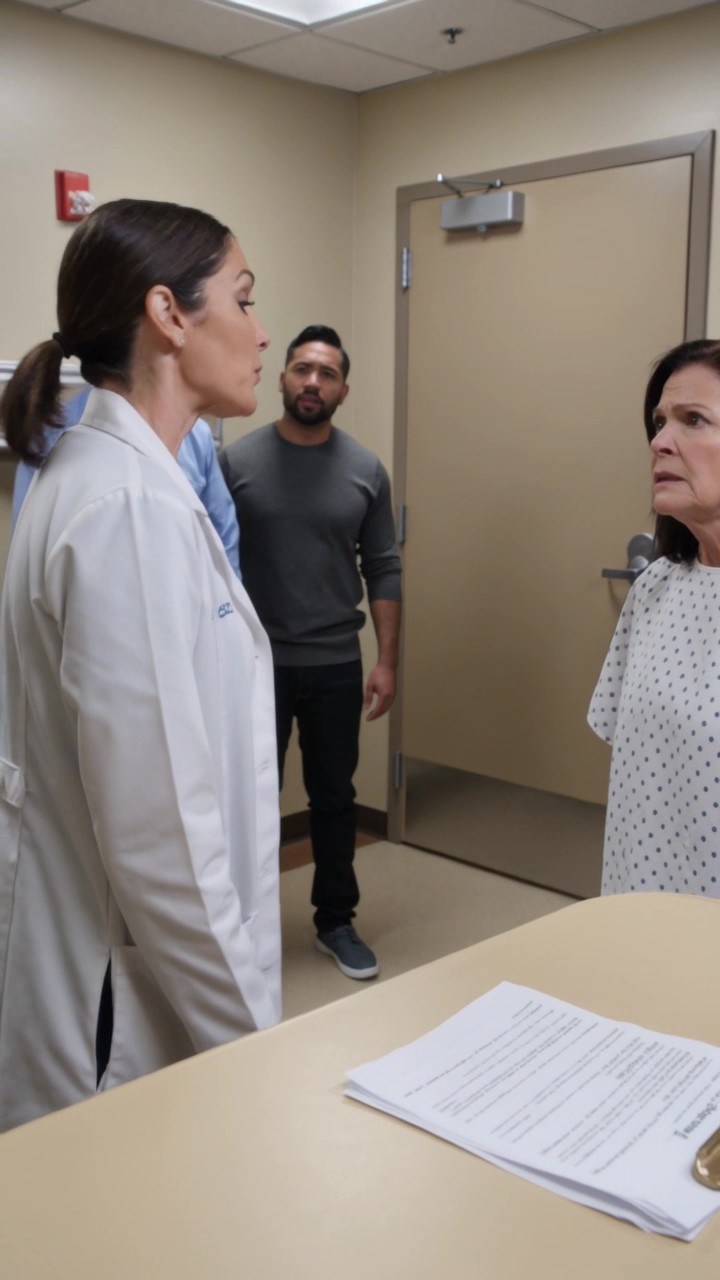
Rachel Cole was the living-donor coordinator.
Her responsibility was not to persuade Daniel.
It was to ensure his decision remained informed, voluntary, and separate from the recipient team’s pressure.
She interviewed him alone several times.
Daniel answered every question correctly.
He understood surgery carried real risks.
He understood recovery would take time.
He had arranged leave from work.
He denied being pressured.
Technically, everything appeared ready.
Then Rachel noticed a pattern.
Whenever she asked why he wanted to donate, Daniel described other people’s relief.
His mother would stop crying.
His father would respect him.
Marcus would forgive an old argument.
He rarely described his own choice.
In the final preoperative meeting, Rachel asked:
“What happens in your family if you withdraw?”
Daniel laughed nervously.
“There is no withdrawing now.”
“There is.”
“They already planned the surgery.”
“That is not the question.”
Daniel looked at the floor.
“If I stop, Marcus will think I chose myself over him.”
Rachel answered:
“You are allowed to choose your own body.”
That sentence broke the agreement he had been performing.
Daniel admitted he had been having panic attacks.
He had not told the family because his father called fear selfish.
He still wanted Marcus to receive a transplant.
He was no longer sure he wanted to be the donor.
Then he asked the question:
“If I say no now, will they ever know?”
Living-donor programs protect withdrawal.
The team may give a neutral medical explanation or state that donation cannot proceed.
The donor does not owe the recipient a detailed defense.
That confidentiality exists because a person cannot make a free choice if refusal requires surviving public punishment.
Rachel told Daniel:
“We can say the team did not clear the donation.”
“That makes you the bad person.”
“I am not asking you to protect me.”
Daniel began crying.
Rachel canceled the procedure.
The recipient team received only the necessary notice.
The family gathered quickly.
They demanded test results.
Explanations.
Another review.
Rachel repeated:
“The donor pathway is closed. We will continue working on other treatment and transplant options.”
Marcus’s mother called her heartless.
His father threatened to sue.
Marcus himself asked whether Daniel had changed his mind.
Rachel did not answer.
The anger moved toward the only person visible.
That was not accidental.
She stood there so the donor did not have to.
Daniel could have left through a private corridor.
He almost did.
Then he heard his mother say:
“Some doctor decided our family was not worth saving.”
Daniel opened the door.
He could not let Rachel carry every part of the truth once he realized what that meant.
His disclosure was his choice.
Not something the hospital demanded.
He told the family:
“I said yes because all of you kept saying there was only one good answer.”
His father stepped forward.
“We never forced you.”
Daniel looked at him.
“You said you would never understand a brother who could walk away.”
“That was not force.”
“It was the punishment written in advance.”
The room went quiet.
Marcus sat in a wheelchair near the wall.
He looked at Daniel.
“Did you ever want to do it?”
“Yes.”
“Do you still?”
Daniel took a long breath.
“No.”
Marcus closed his eyes.
That answer hurt more than a neutral medical explanation.
It was also honest.
The family did not embrace.
Marcus’s mother left the room.
His father called Daniel a coward before security asked him to step outside.
Marcus remained.
After several minutes, he said:
“I do not know how to look at you right now.”
Daniel nodded.
“I know.”
Rachel stayed near the door.
She did not turn the moment into therapy.
She made sure both brothers had separate support.
The transplant cancellation did not leave Marcus without care.
He continued treatment and remained on the deceased-donor waiting list.
The hospital also explored a paired-donation program, but no immediate match appeared.
Months passed.
Family relationships fractured.
Daniel moved out of the apartment he shared with his parents.
His mother stopped calling.
Marcus answered occasional texts but refused visits.
Rachel received formal complaints.
The family accused her of manipulating Daniel and failing to prioritize the recipient’s survival.
An independent review examined every interview, consent form, and note.
It found Rachel had followed policy.
More importantly, it found the program’s education sessions focused heavily on medical risk but not enough on emotional coercion inside close families.
The hospital changed the process.
Every potential donor received a private advocate independent from the recipient team.
Education explicitly stated that withdrawal could happen at any time.
Families were told before testing that no one should assume a match would become a donor.
Neutral cancellation language became standard.
Staff received training on pressure disguised as praise, duty, or family identity.
Rachel asked for one more change.
“Do not call donor withdrawal a failed transplant.”
The operation had never begun.
The donor process had done what it was designed to do:
Stop when consent was no longer free.
Marcus waited fourteen more months.
Then a deceased-donor kidney became available.
The transplant succeeded.
Recovery was difficult but steady.
Daniel heard through a cousin.
He sent one message:
I am glad you got another chance.
Marcus did not reply for three weeks.
Then he wrote:
I am still angry. I also know your body was not mine.
That was the beginning.
Not reconciliation.
Not forgiveness.
A beginning.
Their mother remained distant longer.
Their father never fully accepted the decision.
Daniel built a life outside the role of family rescuer.
He began counseling.
Changed jobs.
Learned to say no before fear made the answer collapse.
Rachel continued coordinating donors.
Some families remembered her as compassionate.
Others as the person who ended hope.
She accepted both versions when confidentiality prevented correction.
But the hospital no longer left coordinators alone with that burden.
A confidential ethics panel reviewed disputed cancellations.
Staff received legal and emotional support.
At a training session years later, Daniel volunteered to speak to donor candidates.
He did not describe himself as a victim or hero.
He said:
“I loved my brother when I said yes. I loved him when I said no. Love did not make both answers equally safe for me.”
Rachel sat in the back row.
Daniel held up the old unsigned clearance form.
No medical details.
No family names.
Only the blank signature line.
“This line saved two people from an operation only one of them truly agreed to.”
After the session, Marcus waited outside.
He had come without telling Daniel.
The brothers stood several feet apart.
Marcus said:
“I used to think she took the transplant from me.”
Daniel looked toward Rachel.
“She protected me.”
Marcus nodded.
“I know that now.”
They left separately.
The story did not end with a hug.
Protection does not guarantee gratitude.
Sometimes it preserves a person’s right to remain whole long enough for the family to decide whether love can survive an honest no.






Leave a Reply