
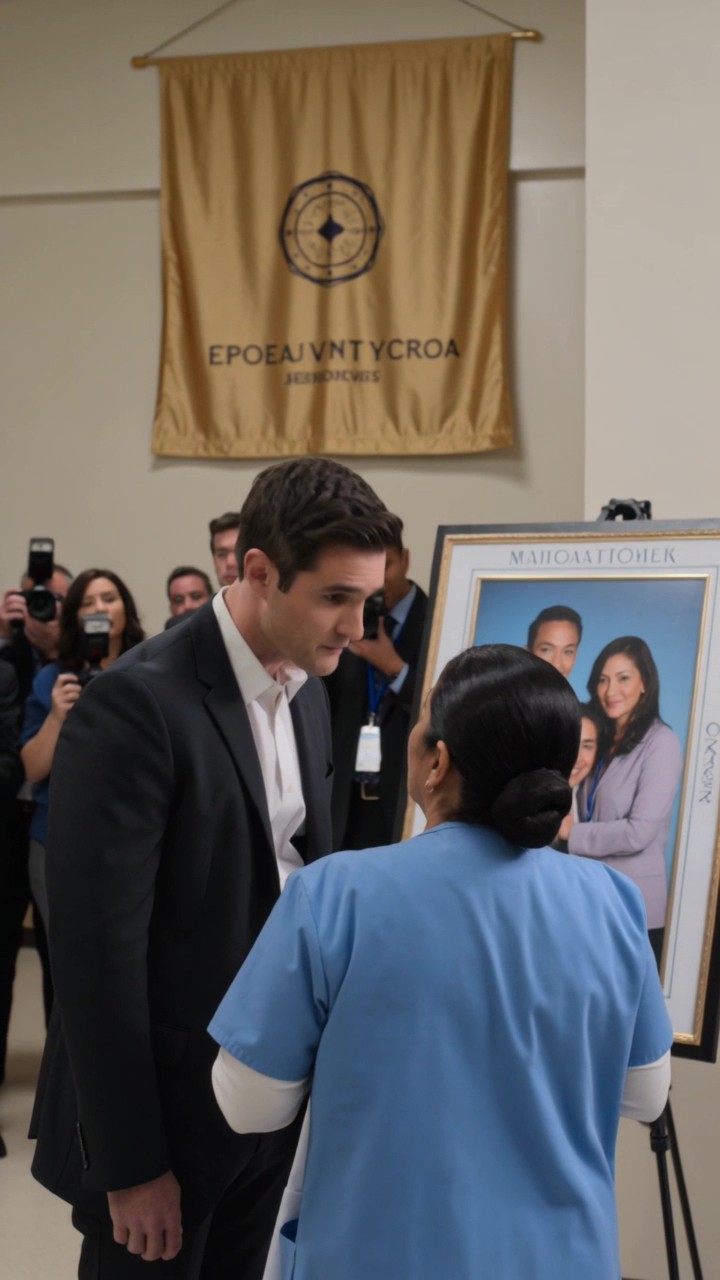
Maria Alvarez had not always worked in hospital laundry.
In Guatemala, she spent nine years as an intensive-care nurse.
She knew ventilators, medication charts, frightened families, and the difference between a patient sleeping and a patient becoming harder to wake.
When she moved to the United States after her husband died, none of that experience disappeared.
The title did.
Her nursing credentials required translation, exams, supervised clinical hours, and tuition she could not immediately afford.
Westbridge Medical Center hired her in the laundry department.
The job came with steady hours, health insurance, and discounted classes through a workforce program.
Maria worked nights and studied English during the day.
She saved for the hospital’s international nursing bridge program.
By the time Adrian began college, she had enough money for the first semester and licensing exams.
Adrian was eighteen.
Bright.
Restless.
Embarrassed by how often money entered every family decision.
He earned a strong scholarship to a state university, then lost part of it after a financial-aid recalculation counted a small insurance payment from his father’s death.
The university gave him ten days to cover the gap.
Adrian planned to leave school for a year.
Maria told him not to.
“The bridge program can wait.”
He argued.
She said she had failed the final English interview.
That was easier than telling him she had withdrawn voluntarily.
Maria received a partial refund from the program.
She sold her mother’s gold bracelet.
Added two weekend laundry shifts.
Covered the tuition balance.
Adrian stayed.
He never knew the amount had once been her path back to nursing.
Maria believed she was protecting him from guilt.
Instead, the silence created another story.
Adrian watched his mother remain in laundry year after year.
He decided she had stopped trying.
When classmates spoke proudly about parents with degrees and careers, he described Maria as “hospital support staff.”
Not false.
Not whole.
During medical school, he needed a white coat for his first clinical ceremony.
The required one cost more than Maria expected.
She opened the garment bag containing her old ICU coat.
Removed the embroidered hospital patch.
Shortened the sleeves.
Replaced the buttons.
Stitched Adrian’s name over her faded collar label.
The pale blue thread came from the sewing tin she carried from Guatemala.
Adrian thought she bought the coat used.
He never asked where it came from.
The coat followed him through anatomy labs, night rotations, and his first residency interview.
Later, he replaced it with new tailored coats.
Maria kept the original.
Not as evidence.
As the last place their two careers had touched.
At the surgical award ceremony, Leah Brooks recognized the blue stitching.
She had interviewed Maria for the bridge program twelve years earlier.
Maria had scored well enough to enter.
The only concern was whether she could manage school while working full time.
She answered:
“My son and I have already learned to take turns being tired.”
Leah remembered the sentence.
She also remembered Maria’s withdrawal letter arriving three days later.
The hospital never investigated why.
The seat went to another applicant.
The system recorded Maria as:
Accepted — declined enrollment.
That administrative line hid the decision’s cost.
Adrian looked at his mother beneath the ballroom lights.
“You told me you failed.”
Maria folded the coat again.
“You would have left school.”
“You should have let me decide.”
“You were eighteen.”
“It was your career.”
“And you were my son.”
The room expected an embrace.
Maria did not give them one.
She turned toward the photographers.
“This is not a public confession.”
Leah asked the event staff to pause the ceremony.
Adrian followed Maria into a quiet service corridor.
The same corridor he had just told her to use.
There, away from donors, he finally asked:
“Did you want to go back?”
Maria looked at the laundry carts lined against the wall.
“Yes.”
The answer hurt more than sacrifice framed as effortless love.
“Why didn’t you try again?”
“At first, money.”
“And later?”
Maria touched the repaired cuff.
“Later, I was tired. My back hurt. Medical English changed. Technology changed. Then everyone began calling me brave for giving things up.”
She looked at him.
“It becomes hard to admit you still want something after people build your goodness around not having it.”
Adrian sat on an overturned linen bin.
For years, he had praised discipline, ambition, and professional sacrifice.
He had interpreted his mother’s stalled career as evidence she lacked those qualities.
The truth was that her ambition had financed his.
That did not make him a thief.
He had not known.
It did make his shame unforgivable if he refused to change after knowing.
Adrian returned to the ballroom alone.
He asked the hospital board to remove the sentence in his award biography that said he was “raised by a mother who worked outside medicine.”
Then he corrected it.
“My mother was an ICU nurse whose credentials this system did not recognize. She worked inside this hospital for twelve years while it used her labor and ignored her training.”
The statement made administrators uncomfortable.
Good.
Maria remained in the corridor.
She did not want applause for being publicly reclaimed by the son who had hidden her moments earlier.
Adrian accepted the award.
He did not call her onto the stage.
Afterward, he found her near the laundry elevator.
“I am sorry I asked you to change.”
Maria nodded.
“I know.”
“I was ashamed.”
“I know that too.”
“Can I fix it?”
“No.”
The answer stopped him.
Then she continued:
“You can change what comes next.”
Repair began without a dramatic forgiveness scene.
Adrian started eating breakfast with her after night shifts.
Not every day.
Enough that conversation became ordinary again.
He learned the names of the laundry workers who handled contaminated linen, emergency shortages, and the endless fabric behind patient care.
He learned Maria still read nursing articles in Spanish.
Still noticed when patients were positioned badly in wheelchairs near the laundry corridor.
Still explained medical words to newly arrived workers calling clinics for their families.
Adrian wanted to pay for her to reenter the bridge program.
Maria refused.
“I do not want my life turned into your repayment project.”
She chose something different.
The hospital had recently created a patient-navigation training program for bilingual employees.
It required less physical work and recognized prior healthcare experience without pretending it replaced nursing licensure.
Maria applied through the normal process.
She passed.
At fifty-eight, she moved from laundry into family navigation for international patients.
She helped explain appointments, locate interpreters, and make sure families understood who would answer which question.
She did not become an ICU nurse again.
The story did not need to restore every abandoned possibility to prove the sacrifice mattered.
Some doors close.
Dignity is not pretending they remain open.
The hospital also reviewed its international-worker policies.
Leah joined a committee that created paid credential-evaluation support, flexible clinical placements, and small emergency grants so workers did not have to choose between a child’s tuition and their own relicensing.
Adrian donated to the fund.
Maria insisted it not carry her name.
“People should not need a dramatic son to deserve a second chance.”
The old white coat was displayed once at a workforce event.
Maria allowed it only if the label described both names.
MARIA ALVAREZ — ICU NURSE
ADRIAN COLE — MEDICAL STUDENT
ONE COAT. TWO CAREERS. ONLY ONE WAS ALLOWED TO CONTINUE.
After the event, Maria took it home.
It did not belong behind glass forever.
Years later, Adrian’s daughter needed a costume for a school career day.
She asked to wear the coat.
Adrian almost gave her a new one.
Maria opened the old garment bag instead.
The child turned the collar over and read both names.
“Were you both doctors?”
Maria smiled.
“No.”
“Were you both helping people?”
“Yes.”
That answer was enough.
Adrian watched his mother button the coat around the child.
The pale blue stitches remained visible.
Not a symbol of perfect maternal sacrifice.
A seam joining love, silence, pride, and the cost of mistaking someone’s uniform for the limit of their life.





Leave a Reply