
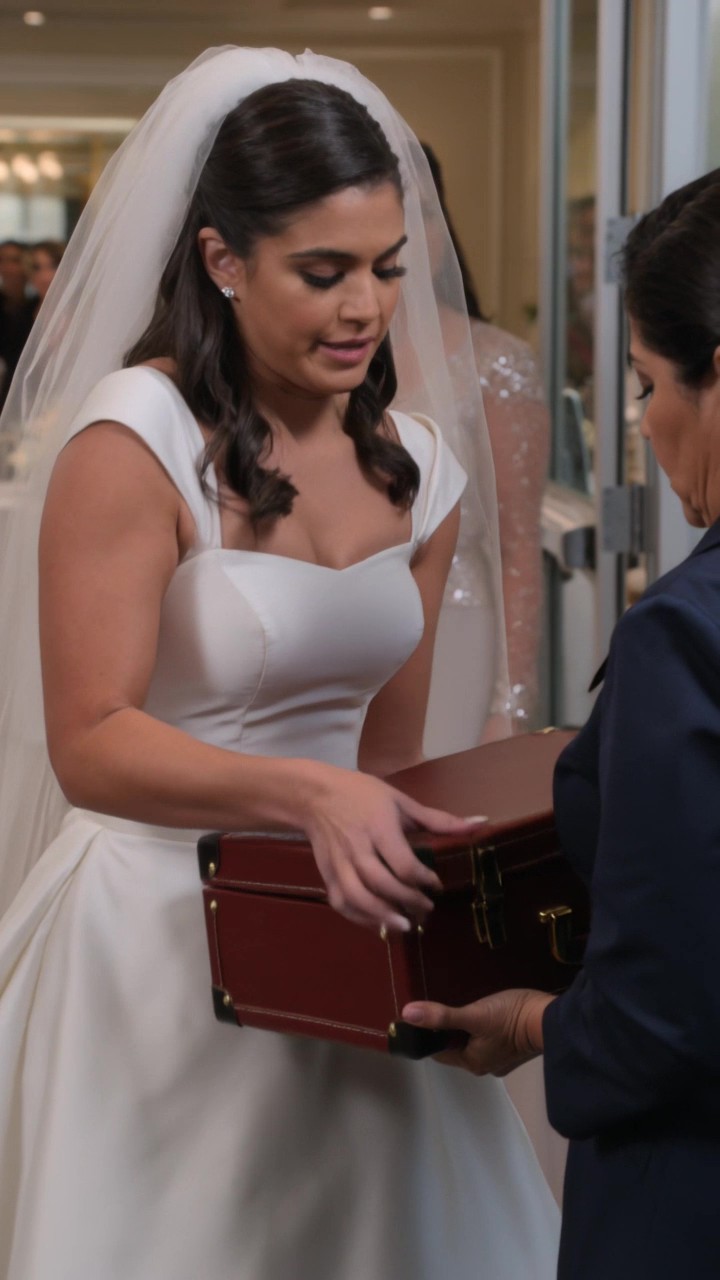
The glass door opened.
Rosa Lane stood in the service corridor holding the same red suitcase Grace had carried twenty years earlier.
Its corners were dented.
One wheel no longer turned.
A faded paper star remained beneath the handle.
Grace had drawn that star at eight years old because every red suitcase at the discount store looked the same.
Rosa had kept it after the night Grace and her mother left the motel in a shelter van.
She did not know whether she would ever return it.
The wedding invitation arrived with one handwritten line:
Please bring the red suitcase. I want it in the room when I begin a different life.
Rosa came directly from the motel because the evening clerk had called in sick.
She wore the only clean uniform available.
Celeste Hart saw a worker carrying old luggage into a formal wedding.
The conclusion seemed obvious.
That was the problem.
Twenty years earlier, Rosa worked the overnight desk at the Westbridge Motor Lodge.
The motel sat beside a highway exit.
Truckers.
Construction crews.
Families between apartments.
People leaving places they could no longer safely remain.
At 1:17 in the morning, a woman named Rachel Whitmore entered with an eight-year-old girl and one red suitcase.
Rachel’s lip was swollen.
Grace was barefoot inside oversized sneakers.
They had no reservation.
Rachel asked for a room facing the parking lot.
Then changed her mind and asked for one at the back.
She kept looking through the glass doors.
Rosa had attended basic domestic-violence response training through a county motel-safety program.
The training did not make her a detective.
It taught her several things:
Do not announce a room number.
Do not ask the person to prove danger in the lobby.
Offer a private phone.
Contact emergency or shelter services if requested.
Never confirm whether a guest is present to someone who arrives angry.
Rosa gave them Room 12.
It was near the laundry exit but not visible from the front desk.
She placed water, towels, and a child’s cereal box outside the door.
Rachel called a local shelter.
The shelter had no immediate bed.
A trained advocate said a van could arrive after sunrise.
At 2:06 a.m., Grace’s father entered the lobby.
He was not shouting.
That made him more convincing.
He wore a clean coat.
Carried family photographs.
Said his wife was confused and had taken their daughter without medication.
Asked Rosa to confirm whether they were staying there.
Rosa said:
“I cannot disclose guest information.”
He smiled.
“I’m her husband.”
“I still cannot disclose it.”
He placed money on the counter.
Rosa pushed it back.
Then he walked the outdoor corridor, checking vehicles.
Rosa locked the laundry door from inside Room 12 and moved mother and child to the utility office while police responded.
When the man returned to the lobby, she stood between him and the hallway.
She did not threaten him.
Did not create a cinematic fight.
She repeated one sentence:
“You need to leave the property.”
Police arrived.
They found no weapon.
No active warrant.
They still documented the incident and escorted him away because he refused the motel’s order to leave.
The shelter van collected Rachel and Grace just after dawn.
In the hurry, the red suitcase remained beside the utility-office desk.
Rosa called the number Rachel had written.
Disconnected.
The shelter could not confirm residents.
Rosa stored the suitcase in the motel’s locked lost-property room.
Inside were children’s clothes, two photographs, a recipe notebook, and a small wooden hairbrush.
Nothing valuable to a thief.
Everything important to the people who had run.
Months later, Rachel contacted the motel through an advocate.
She asked Rosa to mail the photographs and notebook but said the suitcase was too large for their temporary room.
“Keep it until we have somewhere permanent,” she said.
Life moved.
Addresses changed.
The motel changed owners twice.
Rosa remained.
She protected the suitcase through every lost-property cleanup because she had been asked to keep it until home became stable.
Grace never forgot Room 12.
She remembered the humming ice machine.
The paper cup of cereal.
Her mother’s hand shaking.
And Rosa sitting outside the utility office door with a motel ledger open on her lap as if keeping watch were an ordinary part of the night shift.
Rachel eventually gained a protection order.
They moved to another county.
She worked in a medical billing office.
Grace finished school, studied landscape design, and built a life that no longer revolved around escape routes.
She found Rosa six months before the wedding.
The motel still used the same roadside sign.
Rosa was still behind the desk.
Grace walked in and placed both hands on the counter.
“Do you remember Room 12?”
Rosa answered:
“I remember the red suitcase.”
They did not become instantly close.
Twenty years had passed.
Rosa was not a secret mother.
Grace was not trying to replace anyone.
They met for coffee.
Then dinner with Rachel.
The three women spoke about that night from different angles.
Rachel remembered terror.
Grace remembered cereal.
Rosa remembered a man who never raised his voice but kept testing whether rules would bend for him.
Grace invited Rosa to the wedding.
Not as a symbolic hero.
As a guest.
She asked her to bring the suitcase because she wanted to transform what it represented.
At the ballroom door, Grace took it from Rosa.
The brass latch opened only after she lifted one side.
Inside were no clothes.
Rosa had removed the old contents years earlier at Rachel’s request.
The suitcase held blank cards and pens.
Grace placed it on the gift table.
Guests were invited to write one practical thing they would do when someone asked for safety.
Offer a ride.
Keep a spare key.
Learn a shelter number.
Believe the first request without demanding the entire story.
The red suitcase became the wedding’s card box.
Celeste apologized to Rosa privately.
“I thought you were working.”
“I was.”
Celeste looked confused.
Rosa continued:
“I came from work. That did not make me a delivery.”
The sentence stayed with her.
Celeste had not known the history.
She had known Rosa held an invitation.
She still chose appearance over verification.
Grace did not demand her new mother-in-law leave the wedding.
She asked her to sit with the discomfort.
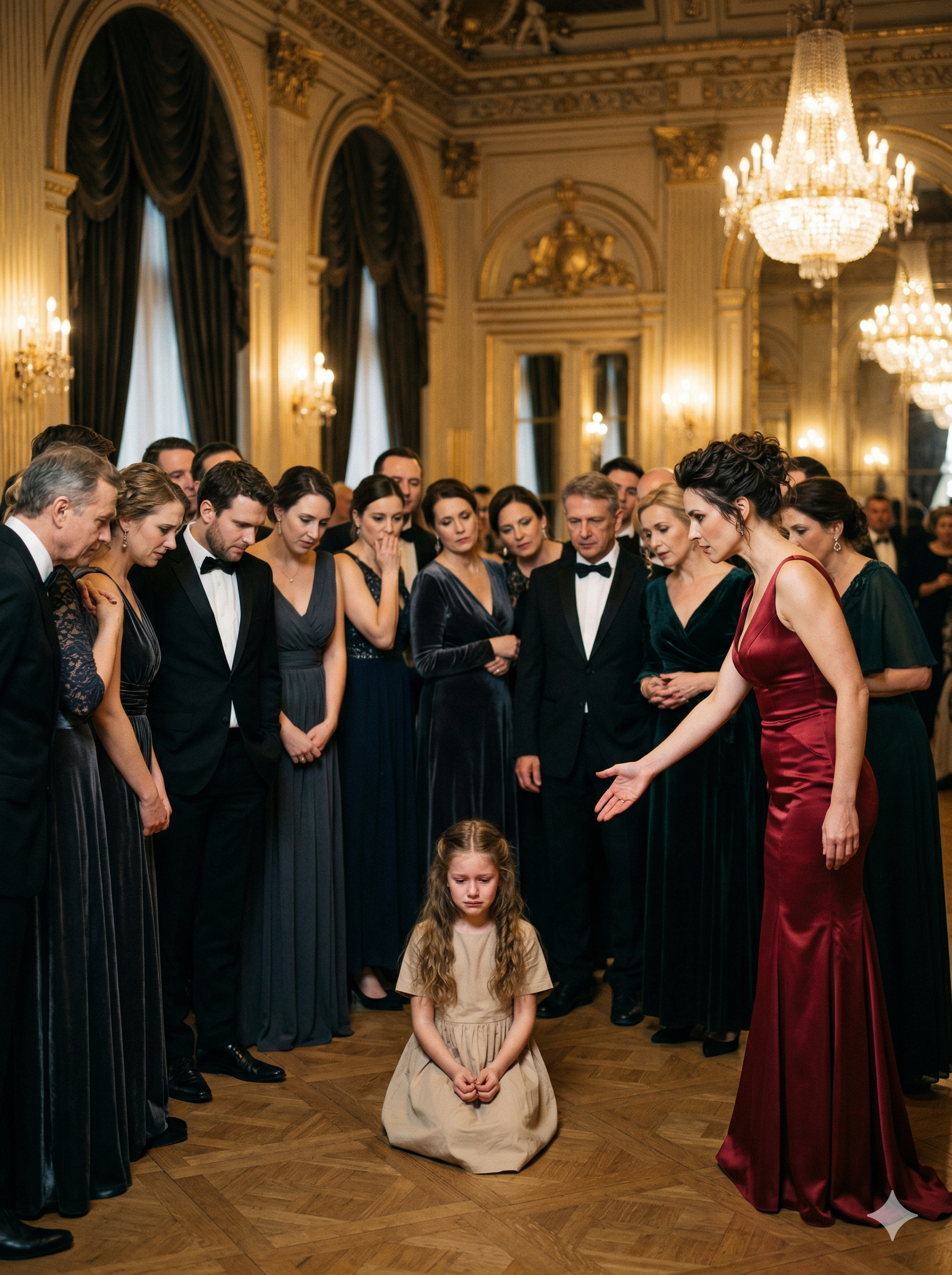
At the reception, Celeste stood and corrected herself publicly.
“I sent a guest away because I mistook a uniform for a role.”
Rosa did not need the announcement.
It mattered because the humiliation had happened in front of others.
A private apology would have protected only the person who made the mistake.
Rachel asked Rosa to sit beside her.
There was no dramatic seat at the head table.
They chose a small table near the dance floor.
Grace visited between photographs.
The wedding continued.
Not ruined.
Changed.
Later that evening, the groom asked Rosa why she had kept the suitcase for so many years.
Rosa looked toward Grace dancing with her mother.
“Because someone said they would come back for it when they had a home.”
“Did you believe them?”
“I believed they deserved to.”
After the wedding, Grace took the suitcase home.
She did not restore it.
The broken latch remained.
The paper star stayed beneath the handle.
Once a year, she and her husband filled it with supplies for the same shelter network that had collected her at dawn.
No cameras.
No donor plaque.
Practical items chosen from the shelter’s request list.
Rosa remained at the motel until retirement.
New clerks were trained never to announce room numbers and never to treat a frightened guest’s incomplete explanation as permission to ignore them.
A framed photograph of the red suitcase hung behind the desk.
Under it were the words:
A ROOM FOR ONE NIGHT CAN BECOME THE FIRST PIECE OF A FUTURE.
Grace visited Room 12 one final time before the motel was renovated.
The carpet had changed.
The utility office was now a vending room.
The ice machine still hummed.
She tapped the red suitcase once against the doorframe.
Not to reopen the past.
To acknowledge the person who had stood in a motel lobby and kept a door closed to the man demanding entry.
At her wedding, Rosa had been thrown out because nobody understood why she belonged.
The truth was simpler.
She belonged because years earlier, when belonging anywhere felt impossible, she had given a mother and child enough safety to reach morning.





Leave a Reply