
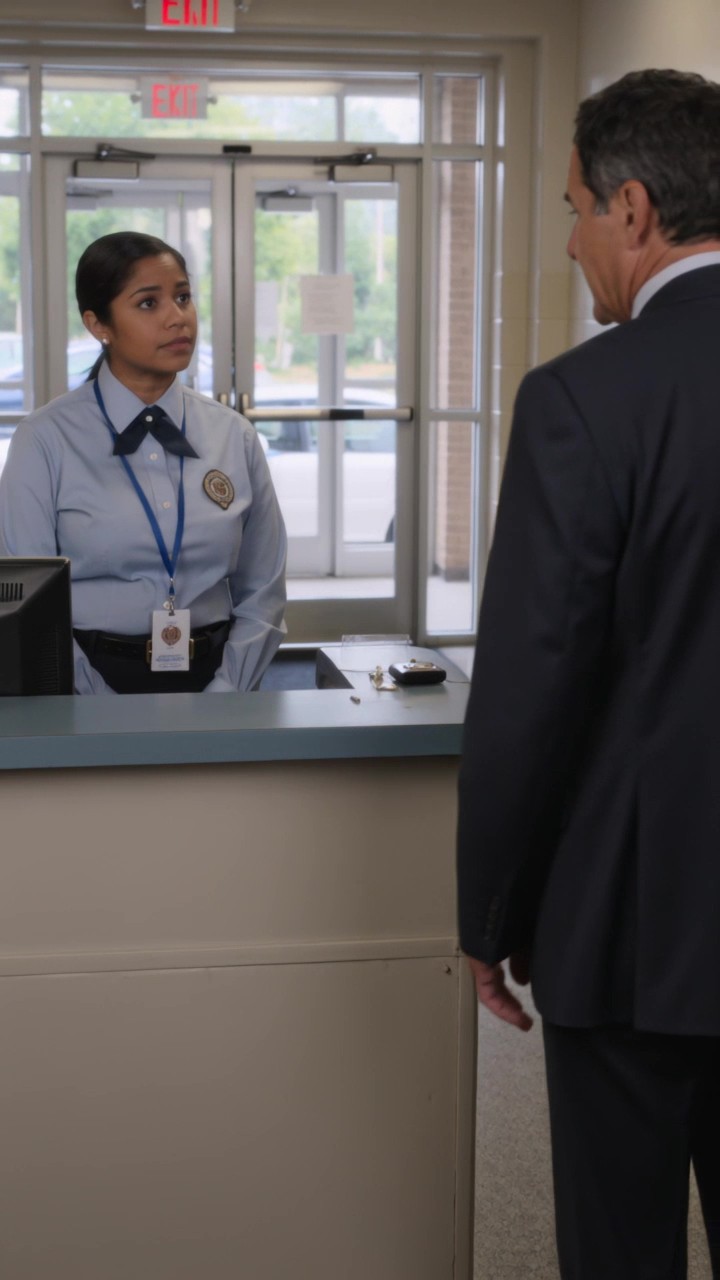
Nina Alvarez did apologize.
She apologized for Charles Whitmore having to wait while his status was checked.
She did not apologize for refusing to release Eli.
The difference was small enough that Headmaster Preston Hale tried to ignore it.
Eli made the difference impossible to ignore.
Blue library.
The phrase had been selected two weeks earlier during a school safety meeting.
Eli chose it himself because the Whitmore family had funded the school library and because no person trying to pressure him would expect those words to mean:
Do not let me leave.
Call Mom.
The safety plan existed because the family situation had changed.
Charles was not a stranger.
He was Eli’s grandfather.
For years, he attended school concerts, paid tuition when his daughter Rachel struggled, and picked Eli up on Wednesdays.
He loved the boy.
That history was exactly why the situation became difficult.
Several months earlier, Rachel and Charles began arguing about where Eli should live, which school he should attend, and how much authority a grandparent who paid major expenses should have.
Charles believed Rachel’s work schedule was unstable.
Rachel believed her father used financial help to control parenting decisions.
During one dispute, Charles collected Eli from an activity and kept him overnight after Rachel asked him to return the child.
Eli was safe.
He was also frightened by adults refusing to tell him when he would go home.
The family court issued a temporary order while the dispute was reviewed.
Charles could have supervised contact.
He could not collect Eli from school without Rachel’s written approval.
The order was entered on a Friday morning.
Rachel emailed it to the school and delivered a stamped copy to the counselor.
The central student system updated family restrictions only during an overnight synchronization.
Until then, the old pickup information remained visible in one screen.
The counselor printed a red temporary notice and placed it at the front desk.
Nina read it.
Preston did not.
Charles arrived thirty minutes later.
He had not yet received the formal copy through his attorney.
He believed the school was enforcing a private demand by Rachel rather than a court restriction.
He showed the old pickup badge.
The badge looked official.
His photograph matched.
Staff knew him.
His name appeared in the system.
Every familiar signal pointed one direction.
The red notice and the child pointed the other.
Nina followed the newer information.
She asked for the family code.
Charles did not know one had been created.
Preston interpreted the question as unnecessary embarrassment for a major donor.
His response exposed a structural weakness inside the school.
Policies were strict when the unknown person looked suspicious.
They became flexible when the familiar person looked important.
Preston told Nina to apologize.
He later said he never intended to force an unsafe release.
He believed he was resolving a customer-service dispute while the family record caught up.
That explanation mattered.
It did not excuse reaching for the door button before reading the red notice.
Eli’s behavior also mattered.
He did not scream.
Did not accuse his grandfather of wanting to hurt him.
He stepped out of his backpack and used the exact code adults had asked him to remember.
Blue library.
Nina pressed the silent alert.
The school counselor and Rachel were already entering from the side parking area after receiving a message that Charles had arrived.
A campus safety officer asked Charles to remain in the lobby while the documents were verified.
Charles became angry.
He did not fight.
He said the court order was based on incomplete information and accused Rachel of using the school against him.
Rachel answered:
“The hearing is where we argue about that. The pickup door is not.”
That sentence changed the room.
A school entrance cannot become a second courtroom where the adult with more confidence, money, or history wins temporary custody by persuasion.
The school’s responsibility was narrower:
Release the child only to the person currently authorized.
Charles left with his attorney after receiving confirmation of the order.
No criminal charge followed from the lobby incident.
The family case continued through normal legal channels.
Eli went home with Rachel.
In the car, he began crying.
Not because Nina had scared him.
Because he loved his grandfather.
Children can use a safety code against someone they love when adults have created an unsafe conflict around them.
That complexity mattered.
Rachel did not praise him for choosing her over Charles.
She said:
“You remembered the plan when the grown-ups disagreed.”
Nina’s workday did not end well.
Preston placed her on paid leave while the school reviewed whether she had handled a donor disrespectfully.
Parents had recorded part of the lobby confrontation.
One video showed Nina refusing to open the door after the headmaster ordered her to release Eli.
Online comments split quickly.
Some called her brave.
Others said a receptionist had no right to overrule the school leader and a family member.
Nina disliked both simplifications.
“I did not overrule family,” she told the investigator. “I followed the most recent pickup notice and the child’s code.”
The independent review confirmed that.
It also found the school’s systems were poorly designed.
Temporary restrictions lived on paper until the overnight update.
The headmaster could override front-desk decisions without entering a reason.
Donor-relations training emphasized de-escalating complaints but did not clearly state that financial status never changed pickup verification.
And staff had practiced safety codes with children but had not trained senior administrators to respect them.
Nina was reinstated with back pay.
The school apologized publicly because the order to apologize had occurred publicly.
Preston stood in the same lobby and said:
“I treated familiarity and donor status as stronger evidence than a current restriction and a child’s safety signal. Ms. Alvarez followed the correct process.”
Nina accepted the correction.
She did not ask for Preston’s dismissal.
The board removed his authority to override child release decisions alone and placed him under a formal improvement plan.
Some parents believed he should be fired.
Others believed the public admission and structural changes mattered more.
Rachel focused on the door.
“What happens next time the person is not wealthy enough for everyone to remember the lesson?”
The school changed the system.
Temporary pickup restrictions updated immediately across every screen.
Old badges deactivated automatically.
Two staff members verified any disputed release.
No administrator could open the door while a red restriction remained unresolved.
Children’s safety codes were treated as mandatory stop signals.
Financial donors, board members, staff relatives, and public officials followed the same process as everyone else.
And no employee could be disciplined for delaying pickup in good faith while current authorization was checked.
The school also changed how it taught children to use codes.
A code did not mean:
This person is bad.
It meant:
The situation is not matching the plan.
Pause.
Find the approved adult.
That helped Eli.
He did not have to convert love for his grandfather into fear.
Charles received supervised visits under the temporary order.
The first visits were tense.
He believed Rachel had humiliated him.
Rachel believed he had ignored her authority as a parent.
Eli believed every adult might ask him to choose a side.
A family counselor required them to stop discussing the case in front of him.
Charles apologized to Eli for pulling the backpack.
“I thought you were coming with me.”
Eli answered:
“I didn’t know when I would go home.”
Charles looked down.
That was the consequence he had minimized.
The court later approved a structured contact schedule.
Charles did not regain unrestricted school pickup immediately.
He had to demonstrate that he would follow return times and parental boundaries.
The outcome did not declare him permanently dangerous or secretly innocent.
It treated trust as behavior rather than status.
Nina remained at the front desk.
For weeks, parents joked:
“Should I know the code?”
She answered seriously:
“You should know the plan.”
That distinction became part of school culture.
One afternoon, a divorced father arrived on the wrong weekday.
His name was authorized generally, but the current schedule assigned pickup to the mother.
The child appeared comfortable.
The father apologized and called the other parent.
Staff verified a change.
The door opened ten minutes later.
No drama.
No humiliation.
The same process that stopped the wrong release also allowed a correct one after evidence changed.
At the end of the school year, Eli visited the library with Nina.
The renovated room carried a brass donor plaque bearing Charles Whitmore’s name.
Eli pointed at it.
“Is that why the code is blue library?”
“Yes.”
“Does Grandpa know now?”
“Yes.”
“Then we need a new code.”
Nina smiled.
The counselor helped Eli choose another one.
Not because Charles was expected to test the door again.
Because safety codes should not remain public after being used.
Eli chose:
Green telescope.
The phrase sounded ordinary.
That was the point.
Before leaving, he asked Nina:
“Were you scared when the headmaster told you to open the door?”
“Yes.”
“Why didn’t you?”
Nina looked at the front desk.
At the release button.
At the archived badge Charles had carried.
“Because an apology can be corrected later.”
She looked at Eli.
“A child leaving through the wrong door is harder to take back.”
The truth did not reverse because a secretly evil stranger was exposed.
It reversed because one low-ranking employee respected the newest document and the smallest voice in the lobby more than the oldest name on the donor wall.







Leave a Reply