
Silver Shears Mobile Grooming belonged to Karen’s older brother, Steven Harlan.
The company had a website, a business license and no active barbers.
It had never sent anyone to Maple Grove.
Eighteen months earlier, Karen added the forty-eight-dollar grooming fee to the residents’ monthly bills.
She described it as an optional service during family meetings.
But the billing system marked it as automatic.
Families who questioned the charge were told it covered “availability,” even if their relative never received a haircut.
Each month, Maple Grove transferred the money to Silver Shears.
Steven kept part of it.
Karen used the rest to cover unrelated activity-room expenses after the facility’s corporate office reduced her budget.
She told herself residents still benefited from the money.
New chairs.
Holiday decorations.
A television.
But none of them had agreed to pay for those things through a fake barber service.
Eli discovered the charge when Dorothy apologized for being unable to tip him.
“My daughter already pays the home for your visits,” she said.
Eli checked with three other residents.
All had the same fee.
He reported it to Karen.
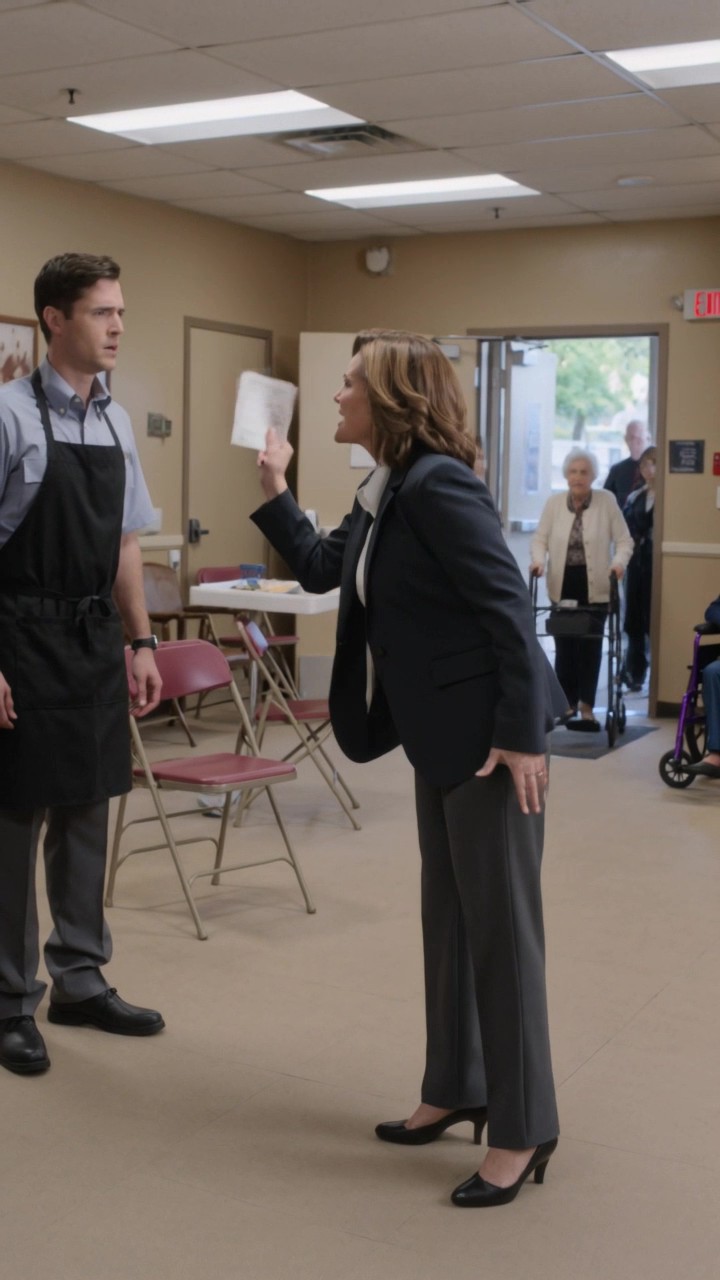
She ordered him to stop discussing resident bills.
When he continued asking questions, she warned that Maple Grove could end his volunteer access.
Eli contacted the residents’ families, but gathering documents took time.
Meanwhile, several residents became embarrassed, believing they had paid twice whenever Eli cut their hair.
So Eli organized the fundraiser and prepared the refund envelopes.
He hid them beneath his towels because Karen had already forbidden him from distributing them.
That was a mistake.
It allowed her to make the envelopes look like evidence against him.
After visiting families compared their invoices, the facility’s corporate office was contacted.
Karen tried to describe the vendor relationship as an administrative misunderstanding.
The invoices showed otherwise.
Silver Shears had collected more than thirty-nine thousand dollars without providing documented service.
Karen was suspended immediately.
Her brother’s contract was terminated and referred for financial investigation.
Maple Grove agreed to refund every grooming charge, including fees paid by former residents.
But Dorothy was not satisfied with only repayment.
At the meeting with corporate representatives, she placed Eli’s damaged clippers on the table.
“You humiliated the person who told us the truth.”
The regional director looked at Eli.
“We would like you to return.”
Eli answered:
“Not under the old volunteer agreement.”
He wanted three changes:
Residents had to receive clear explanations before any optional fee was added.
Volunteers needed a confidential process to report concerns without losing access.
And no staff member could publicly accuse someone of theft before reviewing the evidence.
The facility agreed.
Karen later sent Eli a written apology.
He read it once.
Then placed it in a drawer.
He did not need to publicly forgive her for the reforms to matter.
Two weeks later, Eli returned to Maple Grove with repaired clippers.
The residents had paid for the repair themselves.
Dorothy sat first in the barber chair.
“How much?” she asked.
Eli smiled.
“Still free.”
She held up her corrected bill.
“Good. Because this finally says zero.”
The residents laughed.
Near the doorway, the same security guard watched without interfering.
On the wall behind Eli’s station hung a new notice:
No resident will be charged for a service they did not request and receive.
Eli began cutting Dorothy’s hair.
The residents who had blocked the exit that day sat waiting for their turns.
They had not protected him because he was helpless.
They protected him because he had been the first person willing to ask why they were paying for something that did not exist.







Leave a Reply