
Noah’s mother, Ava, had dyslexia.
When she was eleven, her school placed her in a low-level class after one assessment. Teachers stopped asking what she understood and focused only on what she read slowly.
Other students mocked her.
Her own father called her incapable.
Ava eventually learned to read with specialized support, finished college and became a pharmacy technician.
But Daniel remembered only how deeply the label had hurt her.
When Noah’s school requested an evaluation, Daniel panicked.
He declined it without telling his son.
He believed more practice at home would solve the problem without giving anyone a reason to lower expectations.
Ava had once warned him against that.
Before she died, she told Daniel:
“If Noah struggles like I did, don’t protect him from the name. Protect him from people who use the name to limit him.”
Daniel had remembered the fear and forgotten the instruction.
In the principal’s office, he told Noah the full truth.
Noah listened, then asked:
“Did Mom wish she never got help?”
Daniel shook his head.
“No.”
“Then you protected me from the wrong thing.”
The sentence hurt because it was correct.
Daniel apologized to Rosa for humiliating her.
He also told her she should have informed him directly before continuing the after-lunch lessons.
Rosa accepted that criticism.
“I was afraid you would stop him from coming.”
“I might have.”
“That still did not make it my decision.”
They agreed on that.
The school completed Noah’s evaluation with Daniel’s consent. It confirmed dyslexia and showed that Noah’s verbal understanding was well above grade level.
He was not lazy.
He was not unintelligent.
He needed a different method.
Noah began receiving structured reading support. Rosa stopped holding private lessons and instead volunteered through the school’s approved literacy program.
Daniel attended the first meeting.
He did not speak for Noah.
He listened.
At home, progress remained slow.
Some nights Noah became frustrated and threw the book onto the couch.
Daniel no longer told him to try harder.
He asked:
“Do you want help, or do you need a break?”
Months later, the school held another assembly.
Noah read a short paragraph aloud.
He missed one word.
Paused.
Started again.
Nobody rescued him by finishing the sentence.
When he reached the end, Daniel stood and applauded.
Rosa remained near the cafeteria doors.
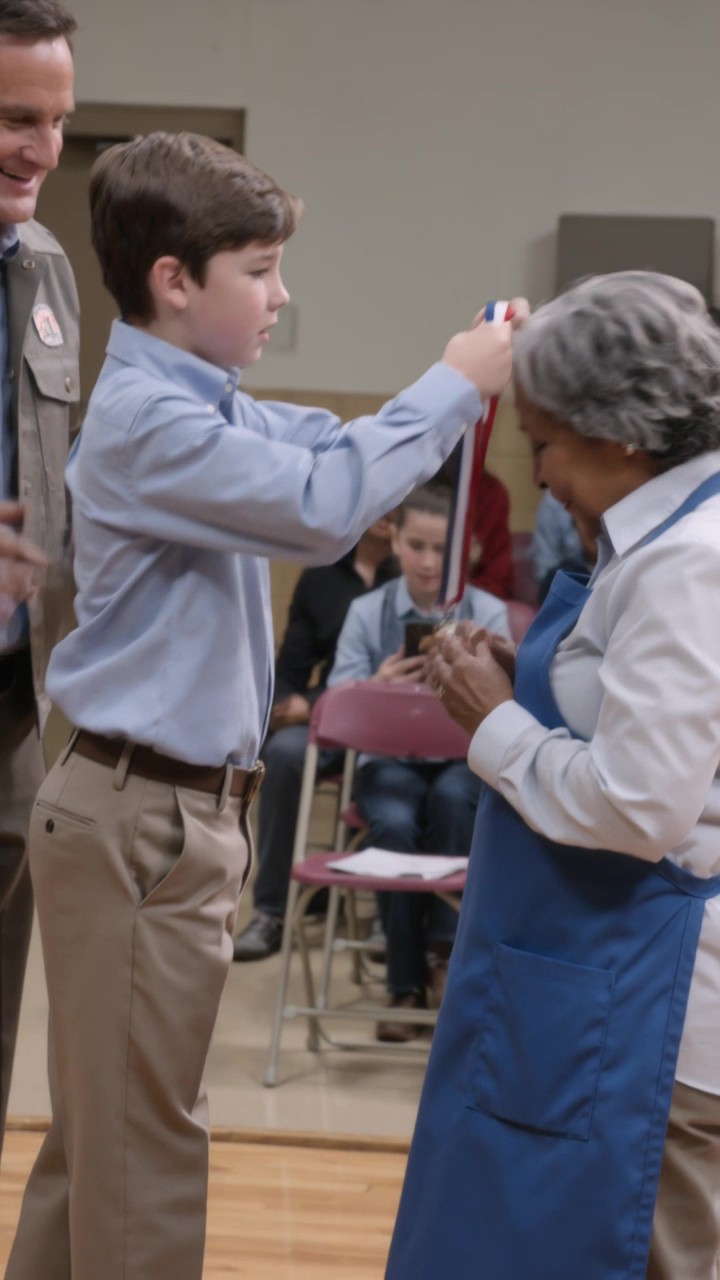
Noah walked over after the ceremony and showed her the old medal.
She had attached it to his backpack rather than keeping it.
“I told you it belonged to you,” she said.
Noah smiled.
“You still helped me earn it.”
Daniel joined them.
He looked at Rosa.
“Thank you for noticing what I refused to see.”
Then he looked at his son.
“And I’m sorry I made your mother’s fear become your problem.”
Noah did not offer instant forgiveness.
He simply handed his father the paragraph he had read.
“Read the first line with me.”
Daniel stood beside him.
This time, helping Noah did not mean hiding the difficulty.
It meant refusing to let the difficulty decide what he could become.






Leave a Reply