
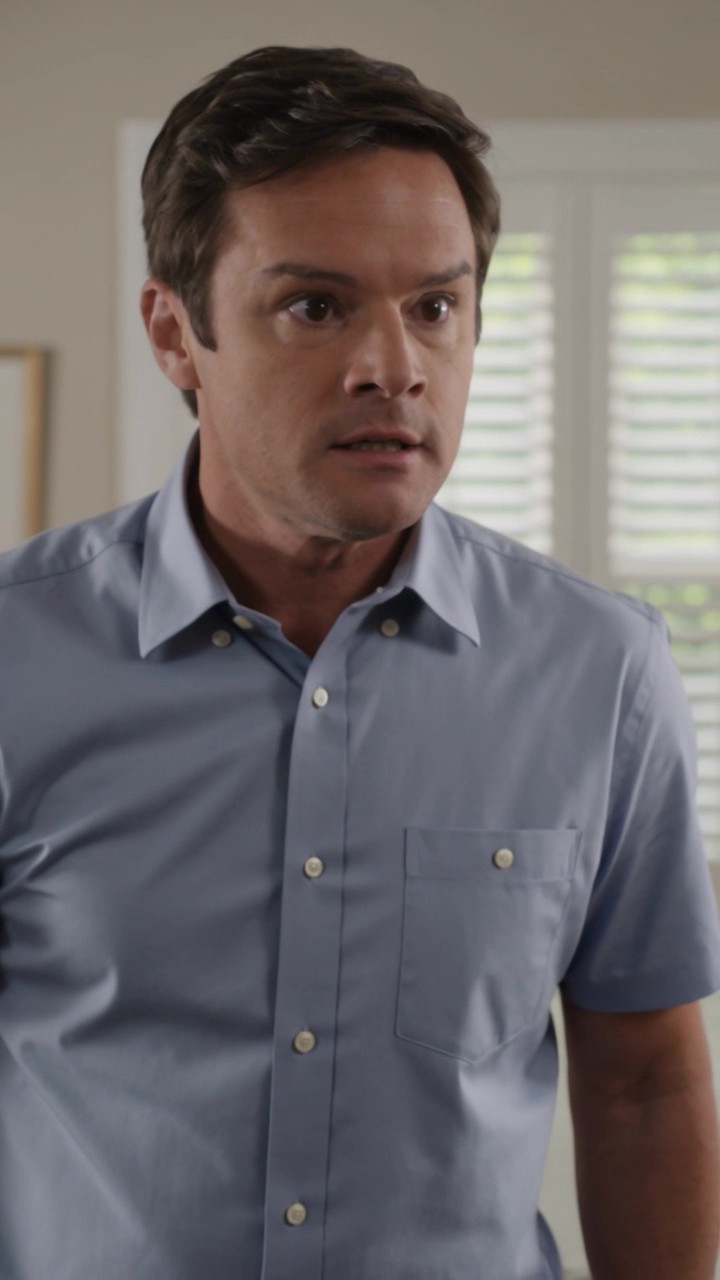
Daniel had created the new messages using a voice-cloning service.
After Sarah died, Jamie stopped sleeping alone.
He asked the same questions every night:
Would Mom be proud of me?
Would Mom want me to go to school?
Would Mom be angry if I laughed?
Daniel initially answered honestly.
“I don’t know exactly what she would say.”
Jamie hated that answer.
So Daniel uploaded Sarah’s home videos to a service that could recreate her voice.
The first generated messages were simple.
Go to sleep, sweetheart.
Eat your breakfast.
Your mother loves you.
They calmed Jamie.
They also calmed Daniel.
For a few minutes, the house sounded as if Sarah were still inside it.
Then Daniel began using the voice whenever he felt himself losing control.
When Jamie resisted school, “Sarah” told him to cooperate.
When Anna challenged her father, “Sarah” told Jamie not to become involved.
When Anna invited Jamie for the weekend, Daniel was terrified the boy would enjoy a home without him.
So he created the newest message.
He called it protection.
Anna called it manipulation.
Both knew which word was more honest.
Inside the locked office, Daniel opened a small storage drive.
Sarah’s original files were organized by date.
Only three were addressed directly to Jamie.
A fourth file was addressed to Daniel.
He had never played it for the children.
Sarah appeared in a hospital bed, thinner than she looked in the photographs.
Her real voice was weaker than the voice from the frame.
“Daniel,” she said, “I know you want to preserve everything.”
Daniel looked away.
The recording continued:
“But the children cannot live inside my last month forever.”
Anna covered her mouth.
Sarah told Daniel not to use her memory to settle arguments or prevent the children from growing away from their grief.
“If you ever catch yourself saying, ‘Your mother would want this,’ stop.”
Daniel began crying.
In the recording, Sarah smiled faintly.
“You don’t know what I would want in every future moment. I don’t either. Let them make choices I never got to see.”
Jamie sat beside the computer.
“Did you watch this before?”
Daniel nodded.
“When?”
“The week after she died.”
“And you still made the messages?”
“Yes.”
There was no explanation that could make the answer smaller.
Daniel deleted the generated recordings while Anna and Jamie watched.
He preserved the original files on two separate drives.
Then he gave both children access.
Anna did not immediately forgive him.
Jamie refused to sleep in Daniel’s room that night.
He stayed with Aunt Rebecca while the family arranged counseling.
The smashed frame could not be repaired.
Daniel offered to buy another.
Jamie said no.
A week later, Anna brought him a traditional photo album.
No speakers.
No screen.
No changing messages.
Together, they selected photographs and wrote dates beneath them.
At the back, Anna placed a small button containing one verified recording.
Sarah’s real voice said only:
“Goodnight, Jamie. Whatever tomorrow looks like, you are loved.”
Jamie listened once.
Then closed the album.
“Can I still stay at your apartment?” he asked Anna.
She looked at Daniel.
This time, he answered in his own voice.
“Yes.”
The weekend visit did not destroy their family.
Jamie returned Sunday evening excited to see his father.
Daniel began learning that letting someone leave for two days was not the same as losing them forever.
Several months later, Jamie asked whether he could hear one of the generated messages again.
Daniel said the files were gone.
“Good,” Jamie answered.
Then he touched the red stitching Anna had added to the album’s cloth cover.
“Mom’s real voice was quieter.”
Daniel nodded.
“It was.”
“I like it better.”
“Why?”
Jamie looked at the photographs.
“Because she wasn’t pretending she knew tomorrow.”





Leave a Reply