
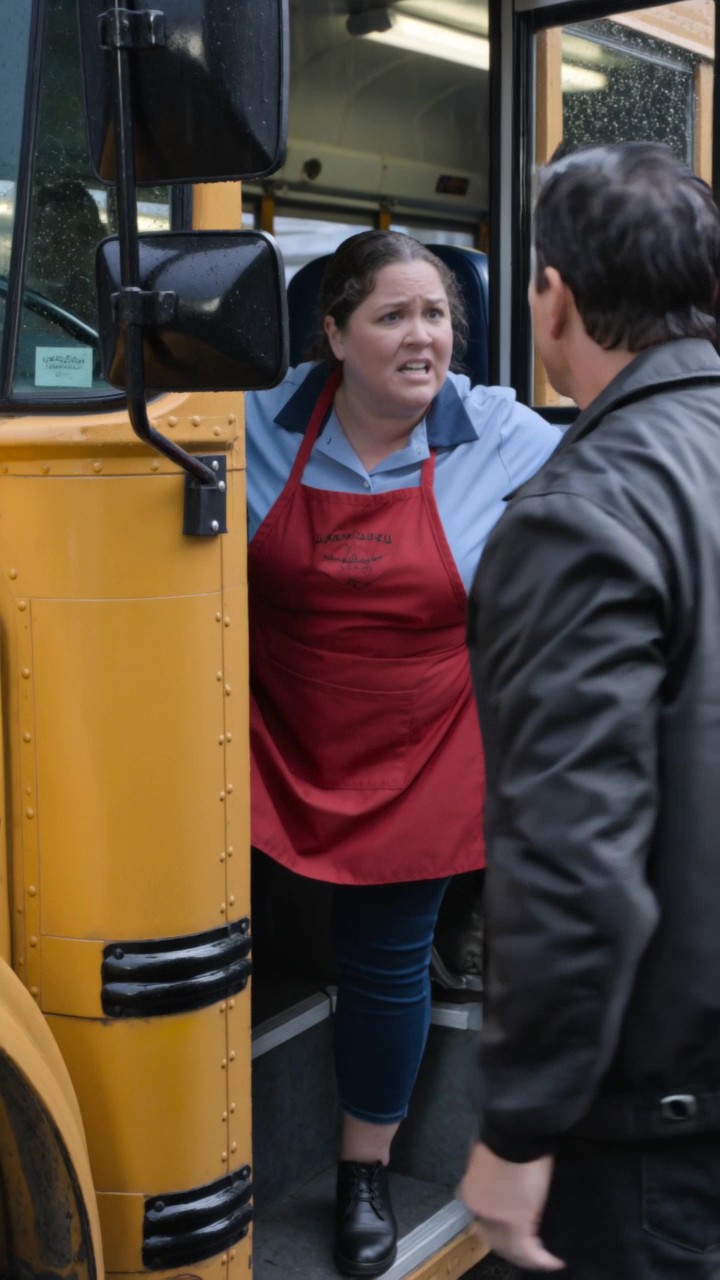
Transportation supervisor Wayne Keller had removed Eli’s warning tag.
The company had three buses unavailable for repairs and no replacement vehicle for the school trip.
Canceling would trigger penalties under its district contract.
Wayne told Eli to classify the problem as minor and approve the minibus for one more day.
Eli refused.
Wayne fired him for “insubordination,” then copied Eli’s previous signature onto a new clearance form.
The driver had been told the repair was complete.
He had no reason to suspect otherwise.
When parents began filming outside the diner, Wayne tried to take the paperwork and leave.
Rachel blocked his path.
“You used his name.”
Wayne looked at her.
“This is a company matter.”
“My daughter was inside that vehicle.”
That made it a parent’s matter too.
The school canceled the trip and called district transportation officials. Another bus collected the students later.
The minibus was towed for inspection.
The review confirmed that Eli had been correct to remove it from service. Investigators also found the clearance signature had been falsified.
Wayne lost his position.
The maintenance contractor offered Eli his job back.
He refused.
The company had ignored earlier safety complaints from other mechanics, and Eli no longer trusted it to protect workers who stopped unsafe vehicles.
Instead, a local repair shop hired him after several parents heard what happened.
Rachel apologized privately inside the diner.
“I judged you by your clothes and the way you smelled.”
Eli looked at his wet jacket.
“I had been working around engines.”
“I know that now.”
She placed his toolbox—dried and cleaned—beside him.
“You could have kept walking after I put this outside.”
“I almost did.”
“What made you turn back?”
Eli nodded toward Emma.
“She waved at me through the bus window. I recognized the vehicle behind her.”
Rachel closed her eyes.
Her own daughter had been the reason he returned after she humiliated him.
She offered him free meals for a year.
Eli declined.
“One coffee is enough.”
Rachel poured it herself.
Emma sat opposite him.
“Were you scared when you stopped the bus?”
“Yes.”
“You didn’t look scared.”
“Adults usually look angry when they are trying not to look scared.”
Emma smiled slightly.
Weeks later, the diner placed a small sign beside the front door:
Anyone stranded in dangerous weather may wait inside while arranging safe transportation. No purchase required.
Rachel did not put Eli’s name on it.
The sign was not meant to turn her apology into advertising.
One rainy evening, Eli’s truck stopped outside again.
This time, Rachel opened the diner door before he reached it.
“Phone is behind the counter,” she said.
Eli looked toward the booth where Emma was doing homework.
Then entered with his toolbox.
He had returned the first time to protect a child whose mother had rejected him.
He returned the second time because the door was finally open.







Leave a Reply