

Rosa Alvarez did not pay Daniel’s nursing-school tuition.
He earned academic aid.
Worked weekend shifts.
Borrowed part of the remaining cost.
Passed his exams.
Completed his clinical hours.
The green coin box did not turn his degree into somebody else’s achievement.
It revealed the support he had accepted without knowing who built the system behind it.
Daniel entered foster care at six years old.
His biological mother, Celeste Hart, was twenty-four and struggling with unstable housing, untreated trauma, and a relationship that made home unsafe.
The court did not permanently remove Daniel after one bad week.
There were repeated placements, reunification attempts, missed services, and long periods when the child did not know which adult would collect him from school.
Rosa worked at a neighborhood laundromat.
She became Daniel’s foster parent through the county program after caring for him during a short emergency placement.
Rosa was not related to him.
She lived in a two-bedroom apartment above the laundromat.
The second bedroom held storage boxes.
She cleared it in one night.
Daniel remained first for six weeks.
Then four months.
Then another year.
When reunification could not be completed safely and Celeste stopped participating in the plan, Rosa adopted him.
She never told Daniel that adoption made his biological mother unreal.
She kept the photographs provided by the caseworker.
Saved letters.
Answered questions without pretending to know everything.
When Daniel asked why Celeste left, Rosa said:
“Adults can love a child and still be unable to give the child what safety requires.”
That sentence did not remove anger.
It gave him somewhere to place it without turning himself into the reason.
Rosa raised Daniel through ordinary labor.
Morning cereal.
School forms.
Bus rides.
Dental bills.
Arguments about homework.
The laundromat paid enough when machines worked and rent remained stable.
Some months were tight.
Daniel grew embarrassed by the apron during middle school.
Rosa understood.
Laundry work smelled of detergent, hot metal, and other people’s clothes.
It also paid for basketball shoes and field trips.
She did not make him perform gratitude every time he felt ashamed.
She did require respect.
At nineteen, Daniel entered community college, then transferred into Westbridge Nursing Institute.
He wanted a profession with clear skills and reliable work.
Rosa worried about the cost.
Daniel told her:
“I’m doing this without you carrying it.”
The statement was partly pride.
Partly love.
He knew how many years she had carried practical burdens.
Rosa agreed not to pay tuition.
She did not tell him she had already started helping nursing students in another way.
The Night Shift Fund began seven years earlier.
The laundromat stood three blocks from Westbridge Community Hospital and one mile from the nursing institute.
Students brought uniforms after late clinical shifts.
They studied beside the folding tables.
Some fell asleep over textbooks while machines turned.
Rosa noticed patterns.
A student missed two weeks because her childcare ended before evening clinicals.
Another wore cracked shoes because the approved pair cost more than he had that month.
One student washed the same two uniforms every night because the program required clean clinical clothing and she owned only two sets.
Rosa kept a jar near Machine 8.
The sign said:
NIGHT SHIFT COFFEE.
Customers dropped coins inside.
At first, the money bought coffee and bus fare.
Then Rosa dedicated the revenue from Machine 8 every Tuesday night to emergency student needs.
A hospital nurse added fifty dollars.
A former student contributed after receiving her first paycheck.
The laundromat supplier donated detergent.
Rosa and a nursing instructor formalized the effort so help would not depend on private favors.
The Night Shift Fund became a small program administered through the school foundation.
Students applied confidentially.
A committee verified the immediate need.
Awards were modest.
Usually under five hundred dollars.
They paid for the gap that could end a semester:
A licensing-exam fee.
Two nights of approved childcare.
A bus pass.
A repaired tire.
Required clinical shoes.
Replacement identification.
The fund did not pay grades.
It did not excuse failed work.
It kept practical emergencies from becoming permanent academic exits.
Rosa asked that her name remain outside fundraising materials.
She had two reasons.
First, she did not want students to feel they owed personal gratitude to the woman washing beside them.
Second, Daniel was entering the program.
She did not want staff to treat him differently because his mother helped the fund.
The green coin box held the early records.
Each student received a numbered laundry token inside the approval envelope.
The token could be exchanged at Rosa’s laundromat for two uniform washes during the crisis period.
The school kept names in a protected file.
Rosa’s ledger kept only student numbers and expense categories.
As the program grew, the tokens became symbolic.
The foundation transferred money directly to approved providers.
Students still kept the small green discs.
Daniel became Student 31 without knowing.
During his second year, his car engine failed.
The clinical site was twenty-seven miles away.
Missing more than two shifts could remove him from the placement and delay graduation.
Daniel called Rosa.
She offered to drive him before opening the laundromat.
He refused.
“You already work twelve hours.”
He applied to the school’s emergency support office.
The Night Shift Fund paid for a transit pass, three rideshare trips during weekends without service, and part of a used engine repair.
Daniel completed the placement.
He received Token 31.
The letter said the fund came from community donors and former students.
That was true.
He attached the token to his key ring.
Months later, it fell off.
Rosa found it beneath the laundromat folding table.
She placed it inside the green box.
She never told him.
The secrecy was not perfect.
Support systems should not become family traps.
Rosa disclosed her relationship to the fund committee and removed herself from Daniel’s application review.
Other members approved the award based on the same criteria applied to everyone.
Daniel did not receive more because he was her son.
He did not receive less to prove fairness.
Celeste reentered his life when he was twenty-six.
She had spent years rebuilding stability.
Completed treatment.
Worked at a dental office.
Maintained housing.
She contacted Daniel through the post-adoption intermediary rather than arriving unannounced.
Daniel agreed to meet.
The first meeting lasted forty minutes.
The second lasted three hours.
He saw similarities.
The way Celeste moved her hands while explaining something.
Their shared dislike of cinnamon.
The shape of their smiles.
He also saw the years between them.
Reconnection brought joy, grief, and anger at the same time.
Rosa supported it.
At first.
Then she became afraid.
Daniel began calling Celeste “Mom” in messages.
He visited her family.
He asked about medical history and childhood photographs.
Rosa told herself she wanted him to have every answer.
She also feared adoption had become a temporary bridge between the family he lost and the family now returning.
Daniel sensed that fear and became defensive.
“You always said she was still part of me.”
“She is.”
“Then why do you look hurt every time I see her?”
“Because saying the right thing does not remove every feeling.”
Their honesty did not prevent conflict.
The pinning ceremony intensified it.
Celeste had never watched Daniel finish a school year.
He wanted to give her the family-seat experience she had missed.
His fiancée, Maya, occupied one of the two assigned chairs.
Daniel gave the second to Celeste.
He assumed Rosa would sit in general admission with other relatives.
Then the donor office arranged photographs of each graduate with the people in the designated family seats.
Daniel worried that including both mothers would turn his private history into a public question.
He told Rosa the family photograph was already arranged.
The wording erased her rather than managing privacy.
Rosa arrived directly from the laundromat because a drain backed up that morning.
She wore the clean blue apron beneath her coat.
The green coin box contained the old tokens and ledger.
The dean had asked her to bring it for a private meeting after the ceremony.
The school planned to formalize the fund as a permanent emergency-support program.
Rosa did not expect public recognition.
At the entrance, the coordinator saw the apron and assumed she was delivering laundered linens.
Daniel corrected the assumption weakly.
Instead of saying:
This is my mother.
He said:
She has a ticket.
Then asked Rosa not to make the seating problem harder.
Rosa chose the overflow room.
Not because the rejection was acceptable.
Because she would not force Daniel to stage his family conflict in the lobby.
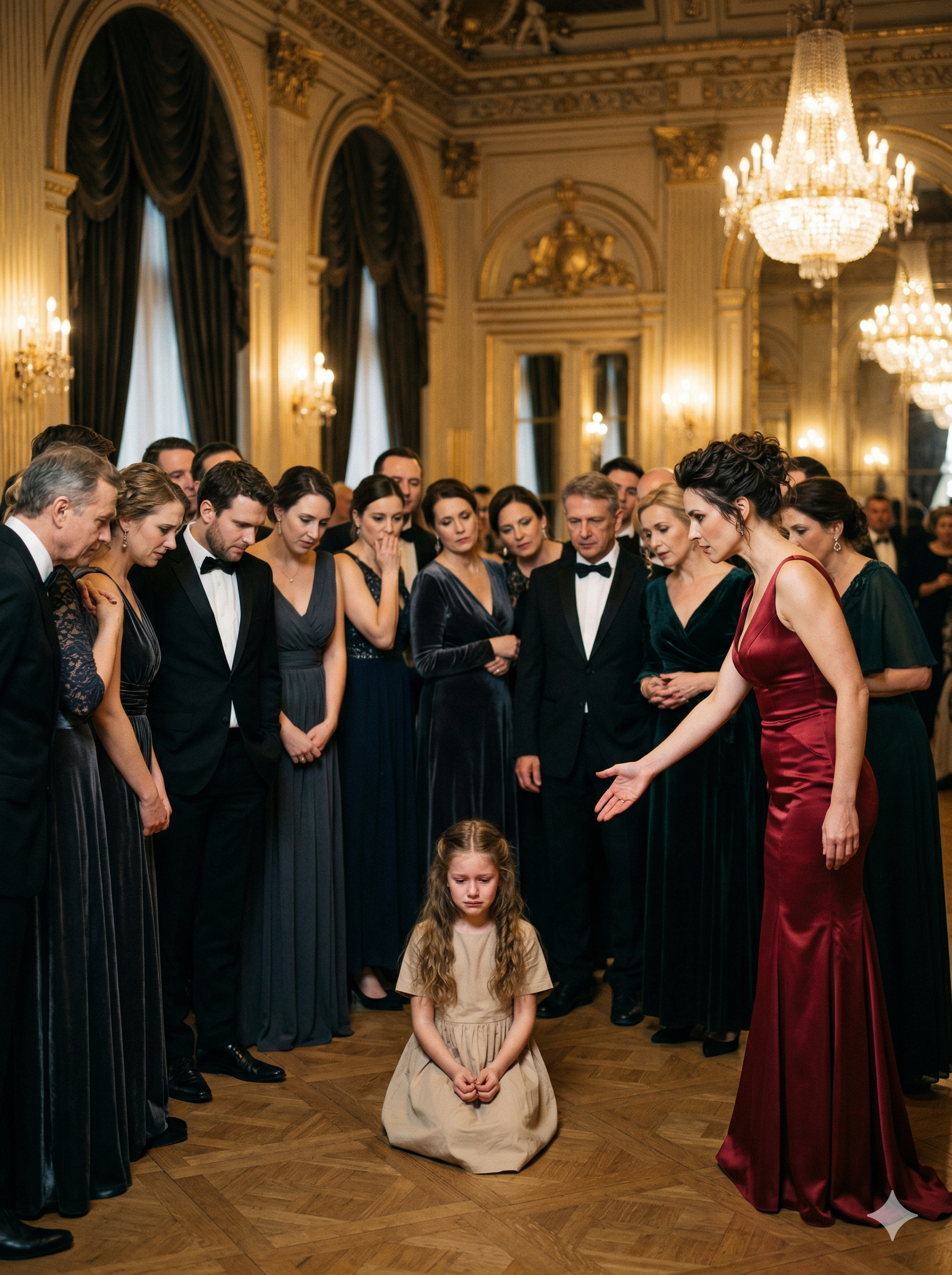
The box fell.
The tokens exposed the story adults had kept separate from the ceremony.
Graduates recognized their numbers.
One had used the fund for childcare after a babysitter was hospitalized.
Another paid a licensing fee after an employer delayed wages.
The dean opened the ledger.
The students stood.
Rosa immediately said:
“Sit down. This is Daniel’s ceremony.”
The graduates remained standing for several seconds.
Not to transfer Daniel’s pinning to Rosa.
To acknowledge the person whose small system had helped many of them reach the room.
The dean corrected the coordinator.
“Mrs. Alvarez is not a laundry delivery worker. She is an invited foundation partner and a graduate’s parent.”
Rosa answered:
“I am a laundromat worker too.”
The correction did not require distancing dignity from the job.
Daniel stared at Student 31.
“You knew I applied.”
“I knew after the committee meeting.”
“You let me think strangers paid.”
“Most of the money did come from other donors by then.”
“You founded it.”
“With a coffee jar and one washing machine.”
“Why didn’t you tell me?”
“Because help should not become a receipt a parent holds over a child.”
Daniel looked toward Celeste.
Then at the empty chair.
The revelation did not automatically make Rosa entitled to remove Celeste.
The injury was not that Daniel wanted his biological mother present.
It was that he treated inclusion as requiring the adoptive mother’s disappearance.
Daniel asked the school to delay his photograph.
He brought another chair into the family area himself.
The coordinator said the camera frame was fixed.
Daniel answered:
“Then widen it.”
The photograph included Maya, Rosa, and Celeste.
The three women did not pretend to be comfortable.
Rosa stood on one side.
Celeste on the other.
Daniel between them.
That awkwardness was more honest than the clean image he had planned.
During the ceremony, graduates pinned one another under faculty supervision.
Daniel had originally asked Celeste to place his pin.
He did not change that choice out of guilt.
Celeste pinned him.
Then Daniel asked Rosa to straighten the collar beneath it.
Two different actions.
Two real relationships.
Rosa did not need the most visible role to prove which years she had lived.
After the ceremony, Celeste approached her.
“Thank you for raising him.”
Rosa’s expression tightened.
“He is not a package you recovered.”
Celeste nodded.
“I know. I do not know how to say it.”
“You can start by not making me disappear when you arrive.”
“I did not ask him to.”
“No. But you accepted the chair.”
Celeste looked down.
“That is true.”
She carried responsibility without becoming the mastermind of the rejection.
Daniel had made the seating choice.
The school had reinforced it through rigid family-photo rules.
Rosa’s fear had also made earlier conversations tense enough that Daniel avoided complexity instead of addressing it.
Repair required everyone.
The nursing institute formally established the Night Shift Student Continuity Fund.
The laundromat tokens remained part of its history, not its application process.
Students no longer had to receive symbolic objects that could accidentally expose confidential support.
The new program provided emergency transit, childcare, uniforms, licensing costs, and small repair grants.
An independent committee made decisions.
Donors could not select recipients.
Rosa joined the advisory board for two years, then rotated off as required.
She insisted on term limits.
“No fund should depend forever on one person being good.”
The institute also changed ceremony seating.
Graduates could identify family, caregivers, mentors, and chosen supporters without a fixed two-person definition.
Photographs could include multiple groupings.
No worker arriving in uniform could be redirected to a service entrance without actual delivery documentation.
And staff stopped using “real parent” in event notes.
Legal relationship, biological relationship, caregiving relationship, and chosen relationship could be named accurately without creating a ranking.
Daniel apologized to Rosa privately the next morning at the laundromat.
He arrived before opening.
Machine 8 stood silent.
“I thought if the picture showed both of you, everyone would ask questions.”
Rosa unlocked the coin box.
“They might.”
“I wanted one uncomplicated moment.”
“You tried to purchase it with my absence.”
Daniel closed his eyes.
“Yes.”
“That is the apology.”
He looked at her.
“I am sorry.”
Rosa accepted.
Acceptance did not remove the hurt.
For several months, their conversations became cautious.
Daniel worried every visit to Celeste injured Rosa.
Rosa worried silence meant he was leaving.
Family counseling helped them separate reassurance from permission.
Daniel did not need approval for every biological-family relationship.
Rosa could name fear without making him responsible for erasing the relationship.
Celeste joined one session later.
The goal was not to create one blended family.
It was to stop treating Daniel as territory.
The fund continued growing.
Graduates who had once received help contributed small monthly amounts.
Not everyone repaid.
They were not required to.
The program did not become a disguised loan.
Its sustainability came from broad support, school funding, and an annual hospital partnership.
Rosa still worked at the laundromat.
People called her a philanthropist after a local article.
She disliked the word.
“I own six washers and four dryers,” she said. “One machine started a fund.”
That ordinary scale mattered.
She was not secretly wealthy.
She noticed that a bus pass or pair of shoes could decide whether years of study continued.
Then she built a repeatable way to fill that gap.
Daniel became a medical-surgical nurse.
His first year was exhausting.
He made errors that were caught and corrected.
Learned to ask for help before fatigue became dangerous.
He donated to the Night Shift Fund from his third paycheck.
The first two went to rent and loan payments.
Rosa approved of that order.
Celeste attended one of his hospital award nights.
Rosa did not.
She was traveling to visit a cousin.
Daniel did not interpret absence as abandonment.
That was progress.
At Rosa’s retirement from the laundromat years later, the nursing institute returned the green coin box.
The original ledger remained archived under privacy rules.
Inside the box were sixty-three blank green tokens.
One for every early student.
No names.
Daniel picked up Token 31.
“You kept me in school.”
Rosa shook her head.
“You stayed in school. The fund kept your broken engine from deciding for you.”
He smiled.
“That sounds like you.”
“What?”
“Refusing the dramatic sentence.”
Rosa closed the box.
“Dramatic sentences usually leave out the committee.”
The adopted son had once moved his mother out of the family row because her presence complicated the image he wanted.
The reversal was not that she owned the school or secretly paid for his entire life.
It was that the woman he treated as an embarrassment had spent years making sure practical hardship did not erase other students from that same room.
She had been his mother long before the tokens rolled across the floor.
The tokens simply made everyone else see the kind of mother she had chosen to be.




Leave a Reply