
No patient missed a medically required dialysis session during the first thirty-six hours of the Westbridge ice storm.
That statement became the center of CareLink Transport’s public campaign.
It was also incomplete.
Some appointments moved.
Several patients waited for hours.
One clinic treated people deep into the night.
Drivers took longer routes.
Families stayed awake beside landline phones.
The outcome was good because hundreds of small decisions remained connected when the official dispatch system failed.
Nina Alvarez held those connections together.
She did not make medical decisions.
That distinction mattered.
Dialysis clinics determined which patients needed treatment first, which appointments could move safely, and which individuals required hospital evaluation instead of ordinary transport.
Nina coordinated the transportation after receiving those instructions.
CareLink Transport operated wheelchair-accessible vans and non-emergency medical vehicles across three counties.
The company carried patients to dialysis, rehabilitation, wound care, oncology appointments, and routine specialty visits.
Most routes entered an online platform.
The software grouped pickups.
Tracked drivers.
Updated clinics.
And sent automated messages to families.
The system worked well during ordinary disruptions.
The ice storm was not ordinary.
Freezing rain began shortly after midnight.
Power lines fell.
Cell service became unreliable.
The dispatch platform’s regional data connection failed after a network facility lost backup power.
Driver tablets displayed old routes but stopped updating.
The office computers showed spinning icons.
CareLink’s emergency plan instructed dispatchers to print priority schedules before severe weather.
The weather forecast had changed quickly.
Nobody printed the full next-day list.
Nina worked the overnight desk from 10:00 p.m. to 6:00 a.m.
She earned less than the drivers she coordinated.
Her job required answering trip calls, checking clinic changes, and resolving late pickups.
She had worked at CareLink for seven years.
Most managers considered her dependable but overly attached to paper.
Nina kept a county road atlas beneath the desk.
She also kept red index cards.
One card per high-priority trip during severe weather.
The practice began after a smaller outage two years earlier.
The operations manager asked her to stop because handwritten systems created duplicate records.
Nina agreed to use them only as temporary backup and enter everything electronically afterward.
Nobody formally adopted the method.
At 12:47 a.m., the dispatch platform froze.
Nina called the on-call technology vendor.
Estimated restoration:
Thirty minutes.
At 1:20, the system remained down.
At 1:35, the first clinic called to change opening time.
At 1:42, a patient’s daughter reported their street had lost power and the front wheelchair ramp was icing.
At 1:58, a driver said the county bridge near Alder Creek was still open but untreated.
Nina stopped waiting for the screen.
She pulled out the road atlas.
Called each dialysis clinic through landlines and verified emergency schedules.
The clinic nurses identified priority order.
Nina wrote one red card for each patient.
Name and medical information remained limited to what dispatch required.
Pickup address.
Mobility equipment.
Approved clinic and time.
Emergency contact.
Driver.
Pickup confirmed.
Clinic arrival confirmed.
Return confirmed.
She placed the cards across the desk in three rows:
Waiting.
Moving.
Safe.
The cracked red phone handled the office’s surviving landline.
The casing had broken months earlier.
CareLink delayed replacement because it still worked.
During the storm, the phone became more reliable than the company’s new tablets.
Nina called every patient or caregiver using numbers already stored in the printed binder.
She did not rely on numbers sent through unknown texts.
She asked families to remain inside until the driver confirmed arrival.
She did not promise exact times.
She gave route status.
The first serious problem appeared at 2:05.
Driver Marcus Bell was taking Thomas Reed toward North County Dialysis.
The online route directed him across Alder Creek Bridge.
A county maintenance employee called CareLink to say the bridge would close because ice had damaged a barrier.
The message reached Nina’s landline.
Driver tablets did not update.
Nina called Marcus through the vehicle radio.
“Leave Route 8 before the creek. Use the hospital service road.”
Marcus objected.
“That adds forty minutes.”
“The bridge closes in six.”
He turned.
The bridge closed before the van would have reached it.
The extra route delayed Thomas’s appointment.
The clinic held the chair.
The next problem involved fuel.
Two accessible vans returned nearly empty after long detours.
The company’s ordinary fuel card system rejected purchases at an independent station because the network connection failed.
Nina contacted the on-call operations supervisor.
No answer.
She called Charles Whitmore, CareLink’s chief executive.
Charles lived in a gated community outside the county center.
A tree blocked his road.
He answered at 2:31.
Nina explained the software failure, routes, bridge closure, and fuel problem.
Charles authorized use of an emergency corporate account and began contacting county officials.
That contribution was real.
He secured fuel approval.
Requested priority access to one treated roadway.
And later arranged meals and hotel rooms for drivers who could not return home.
He did not create the manual routing system.
By the time he reached the command office at 10:18 a.m., Nina had created twenty-three red cards, dispatched fourteen completed trips, and moved nine patients into revised schedules.
Charles saw the desk.
He asked:
“How do we know nobody disappears when cards move?”
Nina pointed at the three rows.
“No patient becomes invisible because the screen goes dark. A card moves only after a voice confirms.”
Charles repeated the sentence during the noon press briefing.
He said:
“We built a manual network so no patient becomes invisible because the screen goes dark.”
The reporters quoted him.
Nina was asleep in the staff room during the briefing after handing the desk to a relief dispatcher.
She had remained four hours beyond shift because relief could not reach the office.
The company did not expect or encourage her to drive in unsafe conditions.
She stayed at the staffed facility until a safe handoff occurred.
When Nina woke, the online platform had partially returned.
Staff entered the handwritten records.
Every card matched a patient trip.
No duplicate vehicle had been sent.
No patient had been omitted.
The company praised the response.
Its internal email said:
Under CEO Charles Whitmore’s emergency leadership, CareLink developed a manual tracking network.
Nina’s name appeared in the final paragraph:
Dispatch personnel supported communications.
She asked the communications director to correct it.
“I developed the card system before Charles arrived.”
The director answered:
“The award language reflects executive accountability, not individual credit.”
Nina asked that the drivers and clinic coordinators at least be named.
The final press release listed leadership, county agencies, and partner clinics.
Dispatchers remained a category.
The story grew.
Charles spoke at an industry webinar.
He described “our decision to shift immediately to paper route cards.”
He held up a clean printed version created after the storm.
The original red cards remained in a storage envelope inside Nina’s desk.
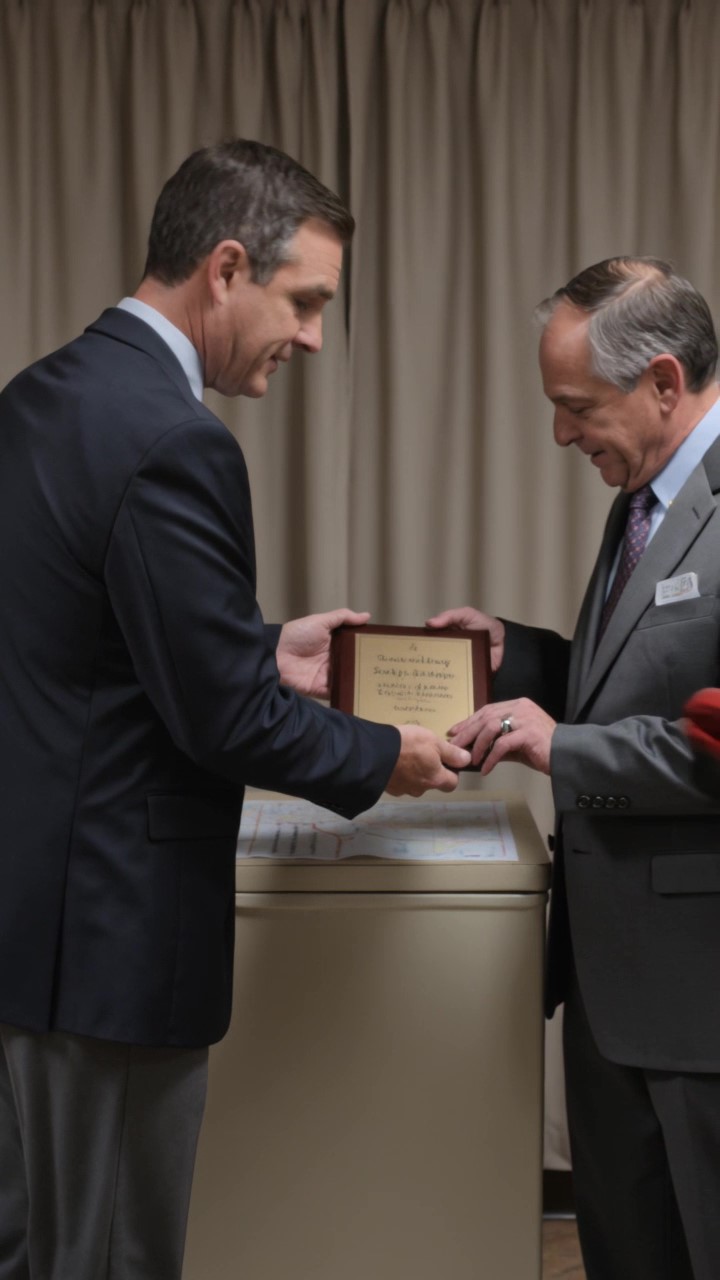
A healthcare association invited Charles to accept an innovation award.
The plaque used Nina’s sentence.
Nobody asked her permission.
Nina considered filing a public complaint.
She hesitated.
CareLink employed her sister as a driver.
The company offered stable health insurance.
Charles had made genuine contributions.
Nina feared that objecting would sound like claiming she alone saved twenty-three people.
She had not.
Clinic nurses prioritized patients.
Drivers navigated ice.
Families prepared ramps and waited.
County workers cleared roads.
Fuel staff accepted emergency authorization.
The rescue was collective.
Erasing the dispatcher who created the manual network did not make the story more collective.
It made the hierarchy visible.
Marcus Bell, the driver redirected from the bridge, began organizing the evidence.
He asked patients whether they still had the red route cards.
Drivers had given many cards to families during return trips because Nina wrote the final safe-arrival time on them.
Nina had intended to collect the cards later.
Patients kept them as reminders of the storm.
Thomas Reed kept his on the refrigerator.
Another patient used hers as a bookmark.
A caregiver placed one inside an emergency folder.
The cards carried timestamps, vehicle numbers, clinic initials, and Nina’s initials.
CareLink’s phone log showed calls from the red landline.
Radio recordings captured her bridge reroute.
The technology incident report showed Charles entered the command building hours later.
None of the evidence reduced his valid work.
It corrected the sequence.
At the hospital board ceremony, Nina placed the cracked red phone beside the award.
The patients raised their cards.
Charles first defended the executive role.
Then saw his engraved quote.
He knew the words were not merely similar.
They were exact.
The board chair paused the ceremony.
An independent review followed.
It examined call logs, building access records, radio traffic, dispatch cards, clinic confirmations, and leadership emails.
The findings were clear.
Nina initiated the manual card system.
She coordinated the first nine hours.
Relief dispatchers continued it.
Charles authorized resources, external coordination, and staff support after being contacted.
The hospital board withdrew the individual innovation award.
It replaced it with a regional emergency-transport commendation naming:
Nina Alvarez and the dispatch team.
CareLink drivers.
Participating clinic coordinators.
County road and emergency staff.
Patients and caregivers who maintained contact.
Charles was named for executive resource authorization—not system creation.
Nina accepted the team recognition.
She did not demand Charles’s name disappear.
Accuracy was the goal.
CareLink’s board opened an ethics and communications review.
Charles had not falsified operational records.
He had repeatedly allowed public language to credit him with a method he knew Nina had created.
The board removed him from external emergency-response speaking roles for one year and tied part of executive evaluation to frontline reporting accuracy.
He remained chief executive.
Some employees wanted dismissal.
Others believed public correction and governance changes were proportionate.
Nina focused on ownership of work.
“An executive can be accountable for a system without becoming the inventor of everything people below him do,” she said.
CareLink changed its incident-report process.
Frontline timelines were collected before public statements.
Direct quotes required attribution or permission.
Emergency awards named operational roles, not only titles.
Dispatchers participated in after-action reviews.
Manual backup tools received formal design, privacy, and training review.
The red-card method became an approved contingency system.
It was improved.
Cards used limited identifiers to protect privacy.
Each had a unique route number.
A magnetic board replaced the loose desk rows.
Two dispatchers verified movement from Waiting to Moving to Safe.
Digital records were reconciled after restoration.
The cracked phone was replaced.
Nina resisted.
People had begun treating the phone like a sacred object.
“It failed to charge twice and the cord fell out if you breathed near it,” she said.
The company kept it in a training case after disconnecting it permanently.
The lesson did not require outdated equipment remain in use.
Nina received a promotion to emergency dispatch coordinator with additional pay.
She accepted after the role included two deputies.
The company initially tried to make her permanently available during storms.
Nina refused.
“No backup plan should be one tired person everyone calls.”
Schedules, relief staffing, and remote backup sites were added.
The reform protected workers as well as patients.
Charles apologized to Nina in the dispatch room.
His first sentence was:
“I should have mentioned you.”
Nina shook her head.
“You did mention me. In the last paragraph.”
He understood.
“I should have said you built the system.”
“Yes.”
“I believed the public needed one accountable leader.”
“You already had that role. You wanted the useful idea attached to it too.”
Charles looked at the empty card board.
“That is true.”
He issued a written correction to the industry webinar, healthcare association, county agencies, and company staff.
He acknowledged using Nina’s unattributed words and describing the manual network as executive-created.
The correction followed the lie to every major place it had traveled.
Nina did not become his friend.
They continued working together under clearer boundaries.
At the next severe-weather exercise, Charles sat behind the dispatch team rather than at the center table.
Nina began the drill.
Clinic priorities came from clinical partners.
Drivers reported routes.
Cards moved only after confirmation.
One executive asked whether cameras should film the command room for public outreach.
Nina answered:
“After the exercise. Not during the work.”
The cameras waited.
Thomas Reed attended the training as a patient advisor.
He held his original red card.
Nina asked why he still kept it.
“It told my daughter when I arrived.”
“That was the purpose.”
“It also showed somebody knew I had not arrived yet.”
That was the deeper function of dispatch.
Not dramatic rescue.
Refusing to let a person become an unresolved gap.
A year later, another network outage affected CareLink.
The approved contingency system began within five minutes.
Two trained dispatchers opened route boards at separate sites.
Clinics verified priorities.
Drivers received updates through radio and landline relays.
Every trip was reconciled afterward.
Nina was not on shift.
She learned about the outage the next morning.
The system had worked without her.
That was the outcome she valued most.
The award had originally erased the person who built the manual network.
The correction did not turn her into the next single hero.
It turned her knowledge into a process no one executive could claim and no one patient had to depend on one person remembering alone.







Leave a Reply