
Mia Brooks did not know the full history between her mother and her aunt.
She knew one rule:
A safe adult asks the question before taking her anywhere.
That rule was not meant to make a child responsible for adult conflict.
It was meant to give school staff and transportation workers one clear pause when paperwork, family pressure, and fear arrived at the same time.
Mia’s mother, Rachel Brooks, worked two jobs and had relied on her older sister Celeste for childcare during difficult months. Celeste had money, a large house, and strong opinions about what Rachel should do with her life.
At first, help felt like rescue.
Celeste bought winter coats.
Paid one month of rent.
Picked Mia up when Rachel’s shifts ran late.
Then the help became control.
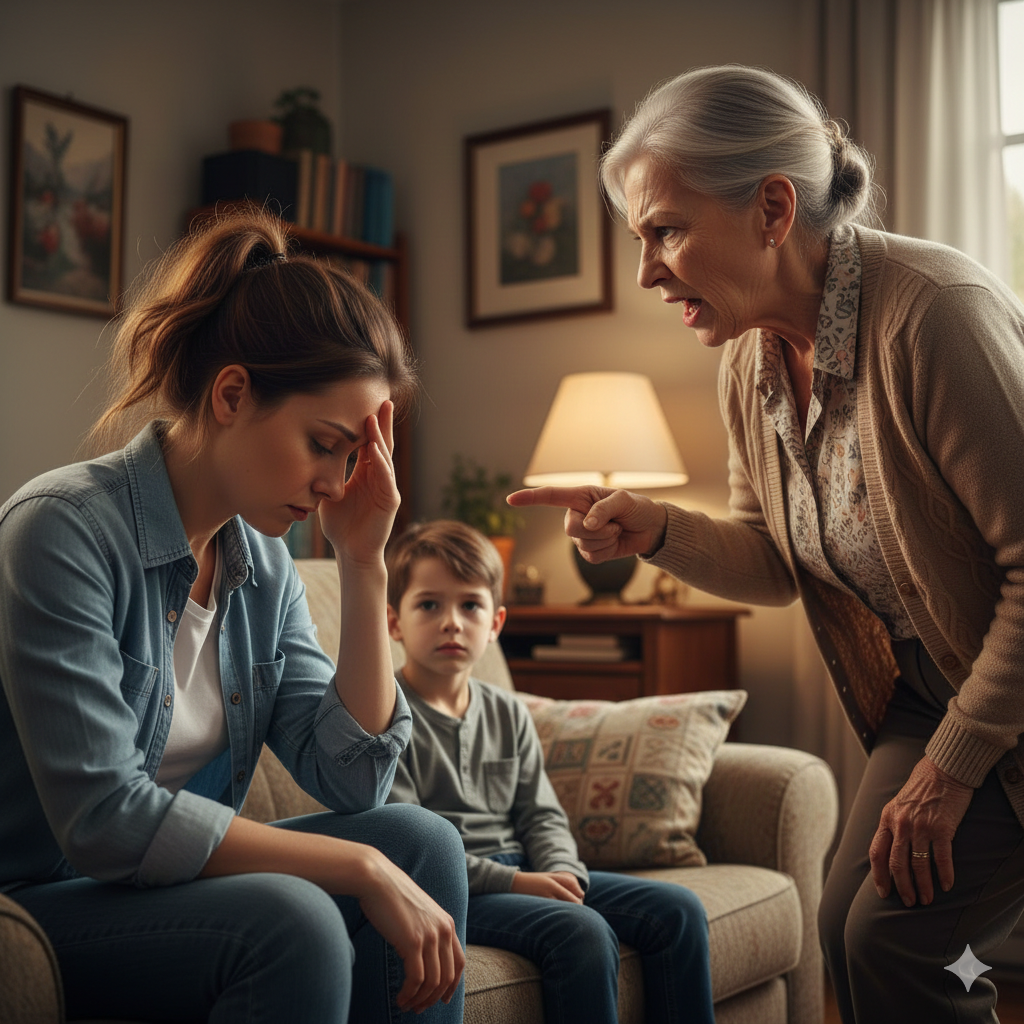
Celeste criticized Rachel in front of Mia.
Told teachers Rachel was unstable because she worked nights.
Once, after an argument, Celeste picked Mia up early from after-school care without telling Rachel and took her across town for three hours.
Mia was safe physically.
Rachel was terrified.
The school had allowed the pickup because Celeste remained on the emergency contact list.
Rachel removed her name the next day and gave the office updated paperwork.
She also created the yellow pickup card with the school counselor.
The card was simple.
Front side:
MIA BROOKS — SAFE PICKUP PLAN.
Three approved adults with photos:
Rachel Brooks.
Mrs. Alvarez from Apartment 2C.
Denise Carter, school bus driver for Route 14, emergency transport contact.
Back side:
Ask the moon blanket question.
The counselor warned Rachel that a child should not be treated as a security system. Staff still had to verify identity, paperwork, and caregiver authority.
Rachel agreed.
The question was an added protection for moments when a child might be pressured by someone familiar.
Mia loved a small reversible blanket with moons on it. One side was green. The other purple. When she felt overwhelmed, Rachel folded it purple-side out and called it the brave side.
Denise knew the answer because Mia once cried during a bus delay and Rachel had explained the blanket routine while picking her up.
Denise never expected to use it for anything serious.
On the rainy afternoon, Rachel collapsed at work from a medical emergency. A coworker called 911 and then called the school. The message was incomplete:
Mia’s mother was taken to the hospital.
Family pickup needed.
The office tried Rachel’s phone but reached voicemail.
Celeste arrived before anyone found the updated contact file.
She said Rachel had called her directly, which was false. She had heard about the emergency from a cousin who worked near Rachel’s office.
Celeste was not planning to harm Mia in a dramatic way.
She planned to take her.
She believed Rachel’s life was too unstable and that the emergency proved Mia should stay at Celeste’s house until “things were handled.”
That belief did not give her pickup rights.
Denise became involved because Mia had already boarded the bus before the office message reached the transportation dispatcher. At the end of the route, Denise noticed Mia still seated, clutching her backpack and not stepping down at the usual stop.
Mia said:
“Mom did not wave.”
Rachel normally stood by the apartment gate.
Denise radioed dispatch, learned about the hospital call, and brought Mia back to school instead of leaving her with a neighbor not on the plan.
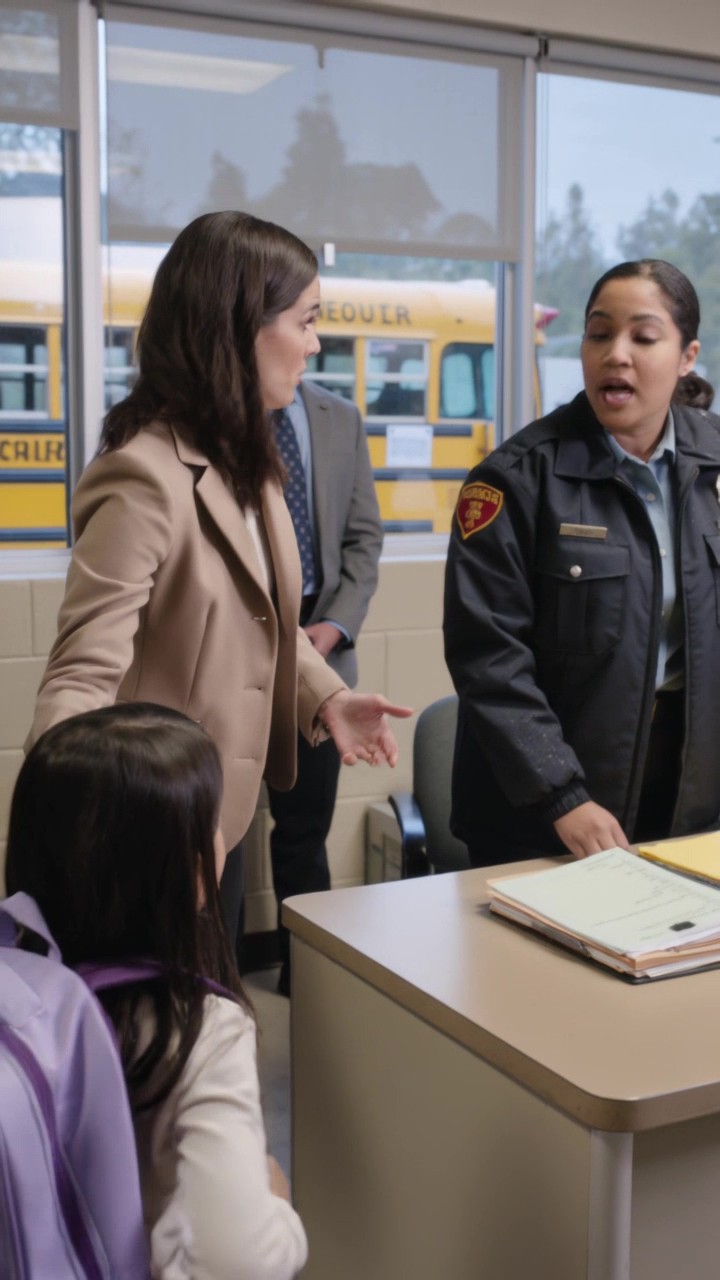
When they entered the office, Denise saw Celeste.
Mia’s body changed immediately.
She became small, quiet, and looked at the floor.
Denise asked the office whether the yellow pickup card was active.
Preston, the principal, had not read the updated file. The emergency folder on his desk still contained an older printed contact sheet with Celeste listed. Digital records had been updated, but the paper emergency binder had not been replaced.
That mismatch almost decided the child’s location.
Celeste spoke with confidence.
Denise spoke as a bus driver.
Preston leaned toward the adult who looked like family and sounded certain.
The yellow card interrupted that momentum.
Mia walked past Celeste not because Denise was more exciting, richer, or more powerful.
She chose Denise because Denise followed the step Mia had been taught would come before any safe pickup.
The office phone call from Rachel confirmed it.
Rachel had regained consciousness at the hospital and asked a nurse to help call the school. She knew Celeste might try to intervene. She stated clearly that Mia should remain at school until Mrs. Alvarez or Denise could bring her to the hospital waiting area under the school’s emergency transportation procedure.
Preston apologized immediately.
Rachel rejected the first apology because it focused on confusion.
“This was not just confusion,” she said later. “You had updated records. You were ready to ignore the person asking for the safety card because she wore a bus jacket.”
The school investigation found several failures.
The digital contact list had been updated, but the printed emergency binder was three weeks old.
Office staff did not know the yellow pickup plan existed because it had been filed under counseling notes rather than transportation and emergency release.
The principal allowed Celeste to remain inside the office with Mia before verifying current authority.
And the school treated a bus driver’s safety concern as secondary to a relative’s confidence.
No one accused Celeste of kidnapping because she never left with Mia.
But the district issued a no-release alert and required any future contact from Celeste to go through Rachel or the court-approved process.
Celeste was angry.
She told relatives Rachel was using the child as a weapon.
Rachel answered once in writing:
“A safety plan is not revenge. It is a boundary you made necessary when you took my child without telling me.”
The family conflict did not vanish.
It became structured.
Celeste could request supervised visits through mediation if Rachel agreed or through court if necessary. She could not appear at school and override current paperwork.
Denise received praise from the transportation department, but she insisted the issue was not personal heroism.
“If the binder had been updated and the office trained, Mia would not have had to choose in front of adults,” she said.
That point shaped the reform.
The district changed emergency plans for students with family-safety restrictions.
Printed binders updated automatically every Friday.
A bright but discreet marker alerted office staff to special release instructions without exposing details to casual viewers.
Transportation, counseling, classroom teachers, and front office all received the same release plan.
During emergencies, children waited in a private room with a staff member rather than inside a public office where unauthorized relatives could pressure them.
And no child had to answer the private question in front of the disputed adult.
The question became a staff verification tool, not a performance.
Rachel recovered after two nights in the hospital. Her condition required follow-up care but was manageable.
Mia visited her in the hospital lounge with Mrs. Alvarez and Denise.
Rachel held the yellow card and cried quietly.
Mia asked whether she had done the right thing.
Rachel said:
“You did what we practiced. But it was not your job to fix the adults.”
That sentence mattered.
Children can be taught safety steps without being made responsible for adult failures.
Denise stayed only ten minutes.
She did not become a replacement parent.
She drove Route 14 the next Monday.
At Mia’s stop, Rachel stood at the gate with the moon blanket over one arm.
Mia ran to her.
Denise watched until they entered the building, then continued the route.
Months later, the school practiced emergency release procedures.
A staff member asked Mia if she remembered the yellow card.
Mia nodded.
Then the counselor asked:
“What should adults do?”
Mia answered:
“Read it before they get loud.”
The counselor wrote that sentence into the training slide.
At the end of the year, Mia drew a picture for Denise.
It showed a yellow school bus, a purple moon, and three stick figures.
One was Rachel.
One was Mia.
One was Denise standing beside the bus door.
Underneath, Mia wrote:
SHE ASKED FIRST.
Denise kept it above the bus visor.
Not as proof that a child chose her over family.
As proof that in one frightened office, a child recognized the adult who followed the plan before claiming the right to be trusted.




Leave a Reply