
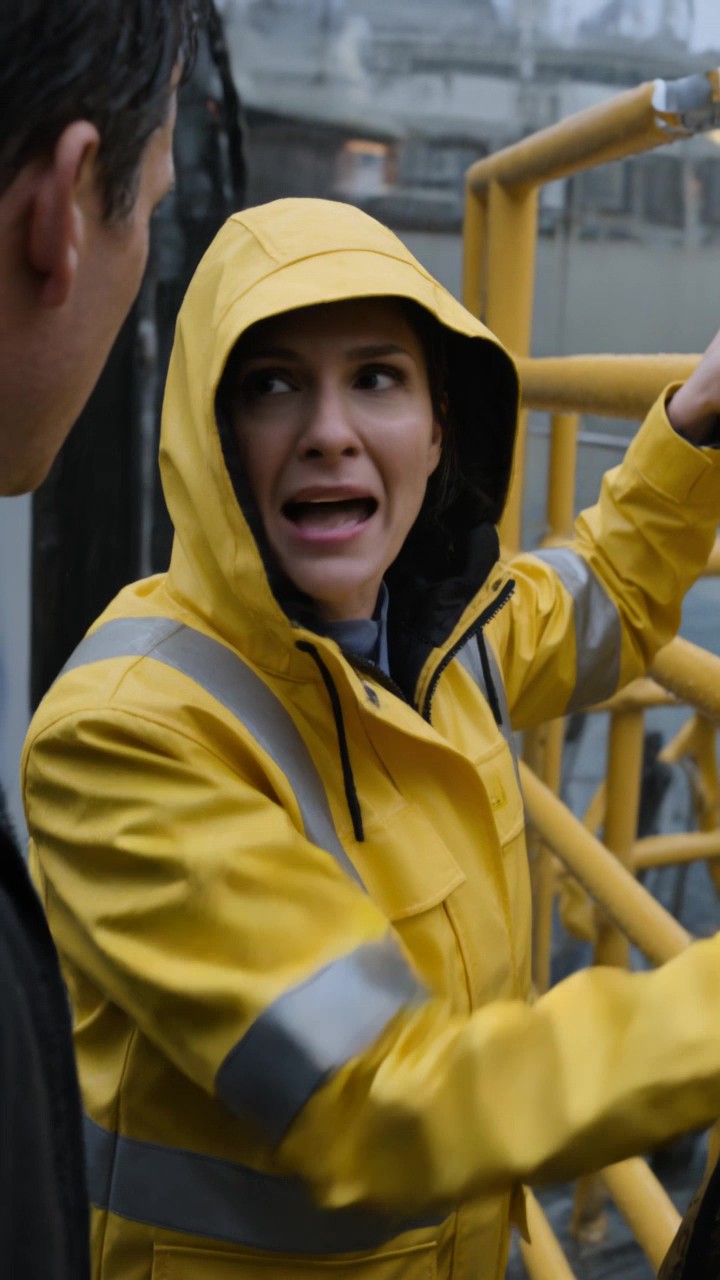
No one died on Harbor Pier that night.
That sentence sounded like victory when the ferry company first issued it.
It was not the whole story.
A family was separated overnight. A little girl spent six hours crying in a ferry lounge while her father remained trapped on the mainland side of a closed harbor. A mother had to manage fear, anger, and medication checks with strangers watching. Rachel Cole, the deckhand who closed the gate, was praised by some passengers and cursed by others before the ferry even reached the island.
The ferry route connected Westbridge Island to the mainland. The crossing usually took twenty-eight minutes. Weather delays were common in winter, but the evening storm intensified faster than the terminal forecast. By the time boarding began, wind had shifted hard across the dock.
The ferry’s passenger ramp used two side chains and a hydraulic support system to keep the walkway aligned between vessel and pier. It had passed inspection that morning. During loading, a truck ahead of schedule rolled slightly as the deck adjusted. The motion, combined with gusting wind and wave movement, placed abnormal strain on the ramp assembly.
Rachel had worked deck operations for nine years. Her job was not glamorous. She guided cars, secured wheelchairs, checked ramp clearance, and watched for small changes between dock and vessel. She knew the difference between a chain moving under normal load and a chain twisting in a way it should not.
She saw one link begin to open.
The correct procedure in that situation was to stop ramp traffic, secure the gate, and notify the captain and terminal. Once the ramp was under strain, reopening for “one more person” could place that person and everyone near the gate in danger.
Then she saw the father.
His name was Marcus Bell. He had parked in the short-term lot after realizing his daughter’s medical backpack remained in the car. His wife, Nora, boarded with their daughter Lily because staff had told them the ferry would depart in two minutes. Marcus planned to run back before final gate closure.
That plan might have worked on an ordinary evening.
This was no longer ordinary.
Lily used an inhaler during asthma flares. She was not in immediate distress at the gate, but the medication mattered. Nora shouted that Rachel had to reopen. Other passengers joined in because the father was visible, close, and desperate.
The danger Rachel saw was harder to explain.
A twisted chain.
A vibrating ramp.
A captain calling strain numbers from the bridge.
A steel walkway that still looked usable until it did not.
Rachel asked Marcus to throw the backpack. That was the smallest part of the rescue, and it mattered because it meant she was not ignoring the child’s medical need. The backpack landed safely on the deck seconds before the chain snapped.
When the ramp lurched sideways, the argument stopped.
The empty dock edge bent. Had the gate been open, passengers near the threshold could have fallen or been struck by the moving ramp. Had Marcus stepped onto the ramp, he likely would have been knocked down or trapped against the rail.
That did not make Nora grateful.
She held Lily and shook with anger.
“You left him.”
Rachel answered:
“Yes.”
Not because she wanted to be cruel.
Because denying the result would insult the family’s pain.
The ferry could not return immediately. The damaged ramp left the mainland terminal unsafe. The island dock was calmer and had a working ramp, so the captain crossed under emergency instructions. The harbor authority closed service afterward until repairs and wind conditions improved.
Marcus stayed in the terminal overnight with several other stranded passengers. The terminal provided blankets, coffee, and phone chargers. That was not the same as being with his family. Cellular service dropped repeatedly. Lily slept only after midnight.
The company’s first internal message praised “decisive gate closure by crew.” Nora objected to the clean language.
“It makes my husband sound like luggage they wisely left behind,” she said.
An investigation reviewed ramp maintenance, weather escalation, boarding timing, and Rachel’s decision. It found Rachel followed emergency procedure once she identified the ramp strain. The captain’s radio call supported her action. Video confirmed the chain snapped less than ten seconds after Marcus threw the backpack.
The review also found system failures.
The terminal should have paused boarding earlier when wind exceeded the caution threshold.
Families should not have been told to split briefly for forgotten medical items once final loading had begun.
Medical bags needed a faster staff-run retrieval process that did not require a passenger to leave the boarding group.
Ramp strain readings should have triggered a louder gate alert visible to terminal staff, not only a bridge call.
The ferry company changed procedures.
If a passenger reports a critical medical item in a nearby car during final boarding, staff pause that family’s boarding or retrieve the item through a controlled process before ramp movement becomes unsafe. Passengers are not encouraged to “run quickly” during closing sequences.
Wind thresholds for boarding were lowered.
Deckhands received authority to halt boarding without waiting for customer-service approval.
Terminal workers received ramp-risk training so they understood why a person close to the gate might still be too late.
The company also changed public communications. Emergency reports now include human impact, not only injury count.
No fatalities.
No physical injuries.
One family separated overnight.
Medical bag transferred successfully.
That was the true summary.
Rachel met Marcus and Nora two weeks later in a conference room. The company offered mediation because Nora had filed a formal complaint.
Marcus spoke first.
“I know the chain snapped.”
Rachel nodded.
“I know you saved me from stepping onto it.”
Rachel nodded again.
“I still watched the ferry leave with my daughter.”
“I know.”
Nora asked the question she had been carrying:
“If the bag had not thrown cleanly, would you have opened?”
Rachel answered after a long pause.
“No.”
Nora cried then, not because the answer was cruel, but because it confirmed what she already knew. Rachel would have chosen the loaded ferry over the bag. The company would have had to manage the medical risk on board with emergency support and available backup care.
That was the difficult truth.
A correct safety decision can still contain a terrible sacrifice.
Lily later drew a picture of the ferry with a giant yellow gate. She gave one copy to her father and one to Rachel. On Rachel’s copy, the ferry was on one side and a stick-figure father on the other.
Under it, Lily wrote:
THE GATE WAS MEAN BUT IT DID NOT BREAK.
Rachel kept it in her locker.
The company wanted to use the drawing for training. Nora refused. The training could describe the incident without displaying a child’s pain as a teaching prop.
Rachel agreed.
At the next storm-season drill, instructors used a diagram instead:
Ramp strain.
Visible late passenger.
Medical bag.
Gate closure.
Safe throw.
Chain failure.
Family separation.
The final line on the slide read:
A successful emergency action may still require aftercare.
Rachel continued working ferries. Some passengers recognized her for months. One called her the gate lady. Another thanked her for saving the ferry. She disliked both labels.
She did not save the ferry.
She closed a gate she could not reopen.
The lesson was not that hard choices become clean when they are right.
The lesson was that systems should reduce how often one worker must make them with a family watching from both sides of the rail.




Leave a Reply