
Maria Alvarez did not handle everything perfectly.
That was part of why Leah’s anger mattered.
Leah was eighteen. She had worked for the nursing-school admission. She had filled out applications between school, part-time work, and counseling appointments. She had waited for that letter like it was oxygen.
Maria kept it for three days.
No explanation.
No celebration.
No choice.
That secrecy hurt Leah even after she learned the reason.
The danger around Leah’s father was not new. Daniel Brooks had a court order barring contact after repeated violations of boundaries, unwanted appearances at school events, and threats that made Leah and Maria move apartments. He denied being dangerous. He described himself as a father excluded by “dramatic women.” Some relatives believed him because he could sound calm in public.
Leah knew enough to stay away.
She did not know every protective step Maria took because Maria believed less information meant less fear.
That belief was understandable.
It was also incomplete.
The university acceptance letter arrived on Monday afternoon. Maria opened the mailbox and saw the blue logo. She almost ran upstairs. Then she noticed a second page visible through the envelope window:
Residence Assignment: Maple Hall, Room 318.
The school had mailed the housing assignment with the acceptance because Leah had checked a box allowing early residential placement. Maria knew physical mail sometimes sat on the kitchen table when cousins visited. She also knew some relatives posted good news online without thinking about safety.
Maria called the university. After being transferred four times, she reached the protected-student office. The office confirmed that Leah could have her address suppressed, room assignment reissued through a secure portal, and public directory information limited. But Leah herself had to sign the request.
Maria asked whether she could bring Leah in the next day.
The office said yes.
Maria planned to tell Leah after dinner that night.
Then Celeste arrived early, saw the university envelope on the counter, and nearly opened it. Maria grabbed it back. Celeste teased her for being controlling. Maria panicked and said the letter had not arrived yet.
That lie trapped her.
For three days, Maria tried to get an appointment with the protected-student office, gather the court order, and ask Leah’s school counselor how to explain without ruining the graduation dinner. Each delay made the hidden letter worse.
Meanwhile, Leah checked the mailbox every morning.
She cried once in the bathroom.
Maria heard and still said nothing.
That was the cost of overprotective secrecy.
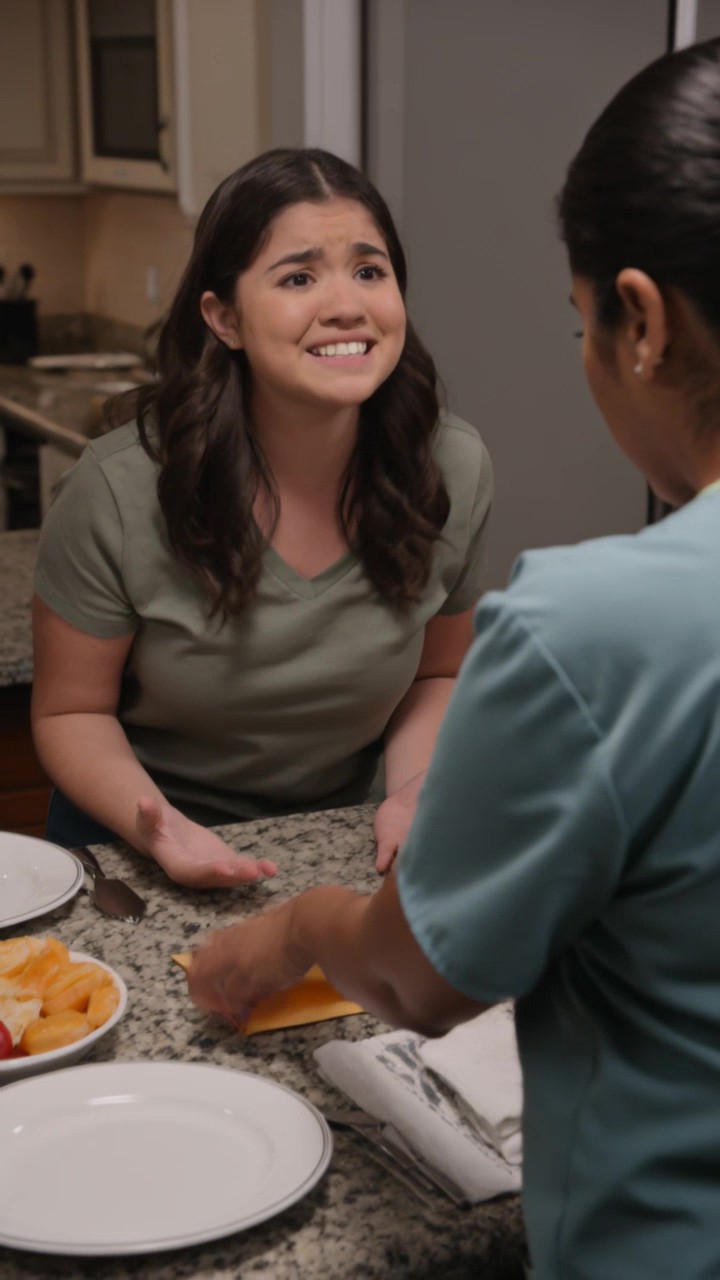
On Friday, Celeste found a delivery notification in the family email account and told everyone Maria had received the letter days earlier. Leah confronted her at dinner.
Maria did not defend herself because explaining the danger would reveal it in a room full of relatives before the safety office had corrected the records. She had already seen Celeste post family news publicly without permission.
The worst possible proof arrived on the porch.
Celeste had posted a screenshot of Leah’s acceptance announcement that morning after discovering the letter delay. She did not include the address, but she tagged the university and wrote that Leah was “moving into the nursing dorms this August.” Daniel saw it through a relative’s account. He came to Maria’s apartment with flowers and a printed copy, claiming he wanted to congratulate his daughter.
The police liaison did not arrest him at the door because the situation required checking the order and documenting contact. He was escorted away after being told he was violating the no-contact terms. The incident became part of the court record.
The campus safety advocate helped Leah complete protected-student status that evening. Her residence assignment was changed. Her directory information was restricted. Move-in day was handled through a private arrival window.
Leah’s acceptance remained valid.
But the family dinner did not become joyful.
Leah told Maria:
“You protected the address and made me feel like I did not own my own future.”
Maria cried then.
“I thought if I told you, you would be afraid to go.”
“I am already afraid,” Leah answered. “I need truth so I can go anyway.”
That sentence changed their relationship.
The safety plan was rewritten with Leah in the center.
She chose who could know the school name publicly.
She chose what relatives received.
She learned how to check mail, online profiles, directory settings, housing forms, emergency contacts, and social-media tags. Maria remained support, not gatekeeper.
Celeste faced the truth too.
She had not meant harm. She wanted to celebrate Leah and expose Maria’s secrecy. But posting student details during a safety dispute created risk. Leah blocked her for several months. Later, they resumed limited contact with clear rules: no posting locations, no tagging schools, no sharing documents.
Daniel continued claiming the family overreacted. The court disagreed after the porch incident and additional documented contact attempts. The protective order remained in effect. The story did not require Leah to forgive him.
At college, Leah struggled through the first semester. Safety planning did not remove loneliness. She hated that other students could complain about dorm food while she worried about directory privacy. She sometimes resented Maria for the three stolen days. She also called Maria every Sunday.
In October, Leah received her first care-package box. Inside was a pair of thick socks, instant soup, a small desk lamp, and a note:
I will never hide your mail again. I will help you read it safely.
Leah taped the note inside her closet.
Years later, when she became a nurse, Leah spoke to incoming students about protected records and family safety. She did not tell them to hide everything from students in danger. She told staff:
Do not confuse protection with control.
Maria attended from the back row.
Afterward, Leah handed her a copy of the new student guide.
On the first page, in small print, was a line Leah had added:
A future is not safe if the person living it is kept outside the plan.
Maria read it twice.
Then nodded.
She had accepted being hated for three days to protect Leah’s address.
The better lesson was what came after: never make the protected person beg for the truth of their own life.





Leave a Reply