
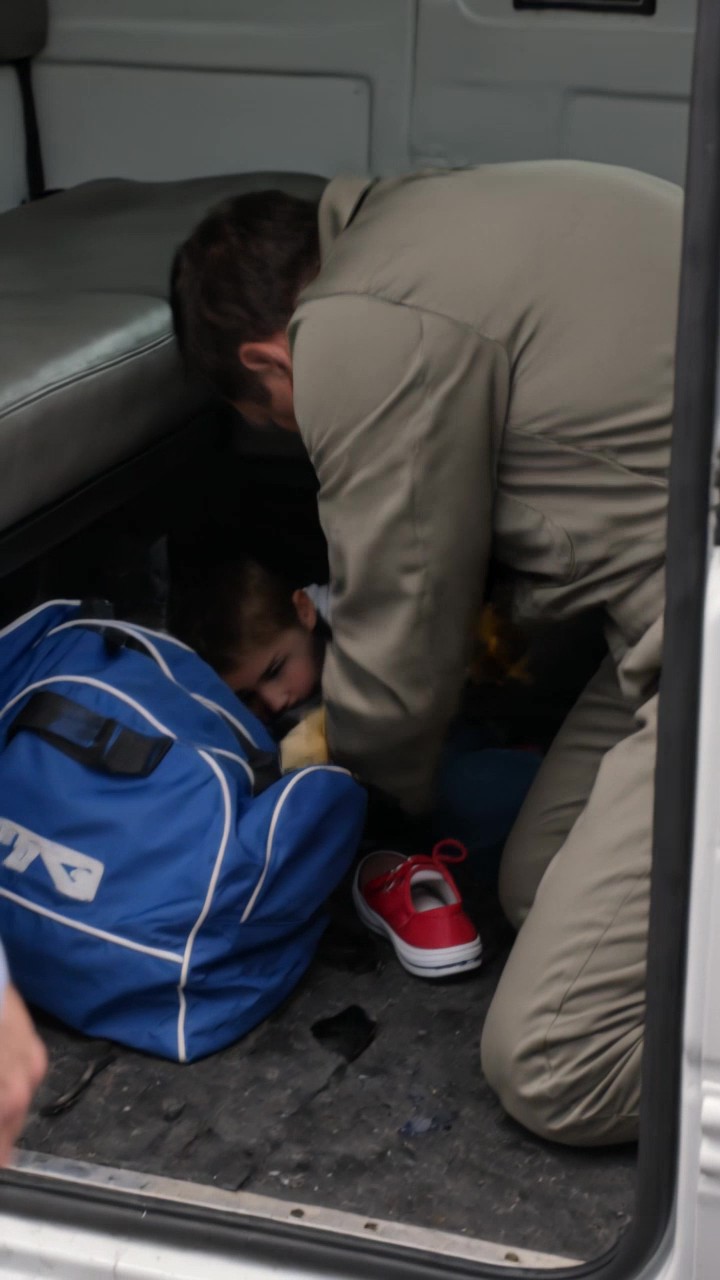
Marcus Reed broke the school van window.
That fact never changed.
The district still had to repair it, clean the glass, and inspect the door mechanism.
What changed was the meaning of the broken window.
The activity van carried six children back from a Saturday science-club trip. It was a smaller vehicle than the district buses, used for short outings and after-school programs. Because children had been left behind in vehicles in other districts years earlier, Westbridge installed rear child-check alarms. When the vehicle shut off, the alarm chirped until the driver walked to the back and pressed a reset button. The system forced a physical walk-through.
The alarm was unpopular.
It chirped loudly during late returns.
Neighbors near the gym complained.
Drivers said it startled them.
Principal Charles Whitmore asked maintenance whether the volume could be reduced. The contractor said the unit could not be altered without district approval. Charles then told staff to silence it through a temporary bypass during evening returns and “make sure to check manually.”
That instruction was unsafe.
The bypass was supposed to be used only during service testing.
On the day of the science-club trip, the driver returned late because of traffic. Parents were waiting near the gym. Children were restless. Two backpacks spilled sports equipment into the aisle. Caleb, the smallest child, had fallen asleep under a jacket after complaining of a headache. When the van stopped, students climbed around bags and hurried into the gym.
The driver visually checked from the front and walked partway down the aisle.
She did not reach the rear bench.
The disabled alarm did not force her to.
Marcus was in the lot inspecting a separate bus for a brake-light issue. He heard the van door close, then later heard a faint tapping sound from inside. At first, he thought it was a loose strap moving in the wind. Then he saw the window fogging slightly near the rear and noticed the child-check panel had no reset light.
He tried the van doors.
Locked.
He ran to the gym entrance and told staff he believed someone might be inside. A teacher said all students were in the pickup line. Marcus asked for the driver. No one found her immediately because she was helping with equipment.
Marcus looked back at the van. The day was warm, not extremely hot, but the closed vehicle was heating quickly. Caleb had asthma history listed on school forms, though Marcus did not know that. Marcus knew only that a possible child inside a locked vehicle could not wait for a committee.
He broke the window farthest from the rear floor area, using a tire iron from his service truck. He covered part of the frame with his jacket before reaching in. He still created glass scatter, which later had to be assessed. Emergency decisions do not become perfect because they are necessary.
Caleb was found disoriented but responsive. The nurse followed school protocol and emergency medical services evaluated him. He did not suffer lasting injury, but his parents were terrified and furious.
Charles initially tried to focus on Marcus’s property damage.
That lasted until the bypass came to light.
District investigators pulled maintenance records and staff messages. They found emails showing Charles had directed evening staff to use the bypass because of neighbor complaints. He claimed manual checks were adequate. The problem was that safety systems exist because manual checks fail under stress, fatigue, noise, and hurry.
The driver was also held accountable. She had not completed a full physical walk-through. She received discipline and retraining but was not made the sole villain. The investigation found leadership normalized bypassing the alarm.
Marcus was cleared of vandalism because the action was deemed a reasonable emergency entry based on observable signs: sound from inside, fogging, locked vehicle, disabled child-check panel, and incomplete student verification. The district paid for the repair and did not bill him.
He did receive one criticism in the report: after breaking the window, he did not immediately control the glass field before entering. The report recommended emergency window-entry kits and staff training so future rescues could reduce secondary risk. Marcus accepted that point.
“I was right to get in,” he said. “That does not mean there was nothing to learn.”
Caleb’s parents demanded Charles be fired. The district placed him on leave. After review, he resigned before formal termination proceedings finished. The alarm-bypass instruction and attempted blame-shifting made continued leadership impossible.
The district changed transportation policy.
Child-check alarms could not be disabled except by maintenance during documented service.
Any bypass triggered a vehicle out-of-service flag until inspected.
Drivers had to place a physical marker at the rear after each trip and hand it to the supervising staff member before children were released.
Coaches, club sponsors, and teachers had to count students at three points: boarding, unloading, and handoff.
Parents received incident notices written in plain language.
No more phrases like “student remained briefly in vehicle.”
The corrected report said:
Caleb Hart was unintentionally left in a locked activity van after the rear child-check alarm had been bypassed. A contract mechanic broke a window and removed him before serious harm occurred.
Caleb returned to school the following week. For several months, he refused to sit in the last row of any vehicle. The district arranged counseling and allowed his parent to inspect transportation procedures before field trips.
Marcus saw Caleb again at a school safety day. Caleb pointed at him and said:
“You broke the window.”
Marcus nodded.
“Yes.”
“My mom says you had to.”
“I believed I had to.”
“Was the van mad?”
Marcus smiled.
“Vans do not get mad.”
Caleb thought about it.
“Mr. Whitmore did.”
“That is true.”
The exchange became part of Marcus’s own understanding. Children often remember the physical act more than the reason. Adults must explain without making the child carry gratitude.
Marcus kept working district contracts after the review. He also helped train staff to notice small signs: fogged windows, unusual sounds, bags blocking sight lines, inactive alarm lights, and count mismatches.
He did not tell them to break windows casually.
He told them:
“If you think a child is inside, get the key fast. If the key is not fast enough, call emergency response and act to preserve life. Then document everything.”
The van returned to service months later with a new window, inspected alarm, and bright rear-check marker.
No plaque marked the broken glass.
That was fine.
The best result of the incident was that no worker, teacher, or principal could again call the alarm annoying without someone in the room remembering the red shoe under the last seat.







Leave a Reply