
The wedding reception was delayed by nearly two hours.
The champagne toast happened with bottled water and unopened canned drinks.
The bride cried in the service hallway because the family had spent months planning a perfect evening.
The groom’s grandmother complained that the caterer had embarrassed everyone.
Several guests posted photos of the empty punch table before anyone understood why it was empty.
Lena Morales had prevented a serious food-safety incident.
She had also destroyed part of someone’s wedding reception in front of staff and family.
Both truths belonged in the report.
The banquet hall used a large commercial ice machine behind the kitchen. It fed ice bins for water stations, soft drinks, and punch service. The machine had two lines relevant to the incident: one for potable water and one for scheduled cleaning and sanitizing under controlled maintenance procedures. They were color tagged and separated.
The day before the wedding, maintenance replaced a cracked fitting near the machine. The repair was rushed because the hall had three weekend events. During reconnection, two flexible lines were routed incorrectly. The machine was run briefly and appeared to produce ice. No one performed a full post-maintenance verification with chemical test strips before returning it to service.
Lena worked dish station and late cleanup.
Her job required handling detergent, rinse agents, sanitizer buckets, glass racks, and floor drains. She knew the smell of approved sanitizer because she mixed test buckets several times a shift. She also knew the difference between a clean glass smell and a chemical smell that meant something had not been rinsed or routed correctly.
She reported the odor after breakfast setup.
A line cook told her the maintenance team had already cleared the machine.
She reported it again when the first ice bin filled.
The banquet manager, Preston, said the machine was under facilities, not dish.
That sentence became important.
In the kitchen hierarchy, Lena was expected to wash what came back dirty, not question what went out clean. The ice was clear. The machine was running. The wedding schedule was tight.
Before service, Lena filled a small test cup with ice and water from the punch station. When the ice melted, the chemical smell intensified. She did not know the concentration. She did not know whether one sip would harm someone. She knew the product should not be served until checked.
The correct action would have been to stop service, call maintenance, and test immediately.
She tried.
Preston told servers to proceed because guests were already entering the ballroom. The first punch bowl had been filled. The bride’s father wanted the toast on time because several elderly relatives planned to leave early.
Lena faced a choice.
If she waited for permission, guests would be served.
If she acted, she would ruin the service and possibly lose her job.
She dumped the bowl.
Food safety people later debated whether dumping was necessary before isolating the product. In a perfect procedure, she would have labeled and held the bowl for testing. In that moment, servers were reaching for it. Lena chose prevention over evidence preservation.
The county health inspector happened to be on site for a routine catering license renewal. That fact saved time. She tested the remaining sample in the cup and then the ice bin. The readings confirmed sanitizer contamination beyond safe food-contact levels. The machine was shut down. Ice from all bins filled after the repair was discarded. Surfaces and containers that had contacted it were cleaned and re-sanitized under supervision.
No guest consumed the punch.
Some guests had received water with ice from an earlier bin. The inspector tested that batch separately and found it safe because it had been filled before the maintenance error. The hall documented which items were affected and which were not.
This mattered.
A clear investigation prevents both minimization and panic.
The wedding family received a partial refund and reimbursement for substitute beverages. The banquet hall paid for additional time, vendor delays, and health-inspector fees. The bride and groom later received an apology that did not call the incident “unfortunate timing.”
The first apology draft said:
A staff member interrupted service out of caution.
Lena rejected it.
The inspector supported her.
The final statement said:
A dish-station employee identified a chemical odor after maintenance, stopped service when management failed to act, and prevented contaminated ice from reaching guests.
Preston was disciplined for ignoring two reports and attempting to remove Lena before testing. He argued that dish staff had no authority over ice-machine clearance. The hall’s ownership responded by changing that rule. Any employee detecting unusual odor, chemical residue, temperature abuse, broken seals, pests, or foreign material could call a food-safety stop. Service could resume only after a qualified person cleared it.
Maintenance procedures changed too.
No ice machine, beverage dispenser, dish machine, coffee brewer, or water line could return to service after repair without documented verification. Hose tags were redesigned so cleaning lines and potable lines used different connector shapes, not just colors. Test strips had to be logged after maintenance. Banquet managers could not override a food-safety hold for schedule reasons.
Lena was offered a promotion to sanitation lead.
She accepted only after the hall clarified pay, training, and authority. She did not want a title that made her responsible without power. She completed food-handler supervisor training and began teaching new staff the “smell stop” rule.
At the next event, a busser reported sour milk odor near a coffee station. It turned out to be a spilled creamer under the counter, not a system failure. Service paused for six minutes. No one mocked the busser. That proved the culture had changed.
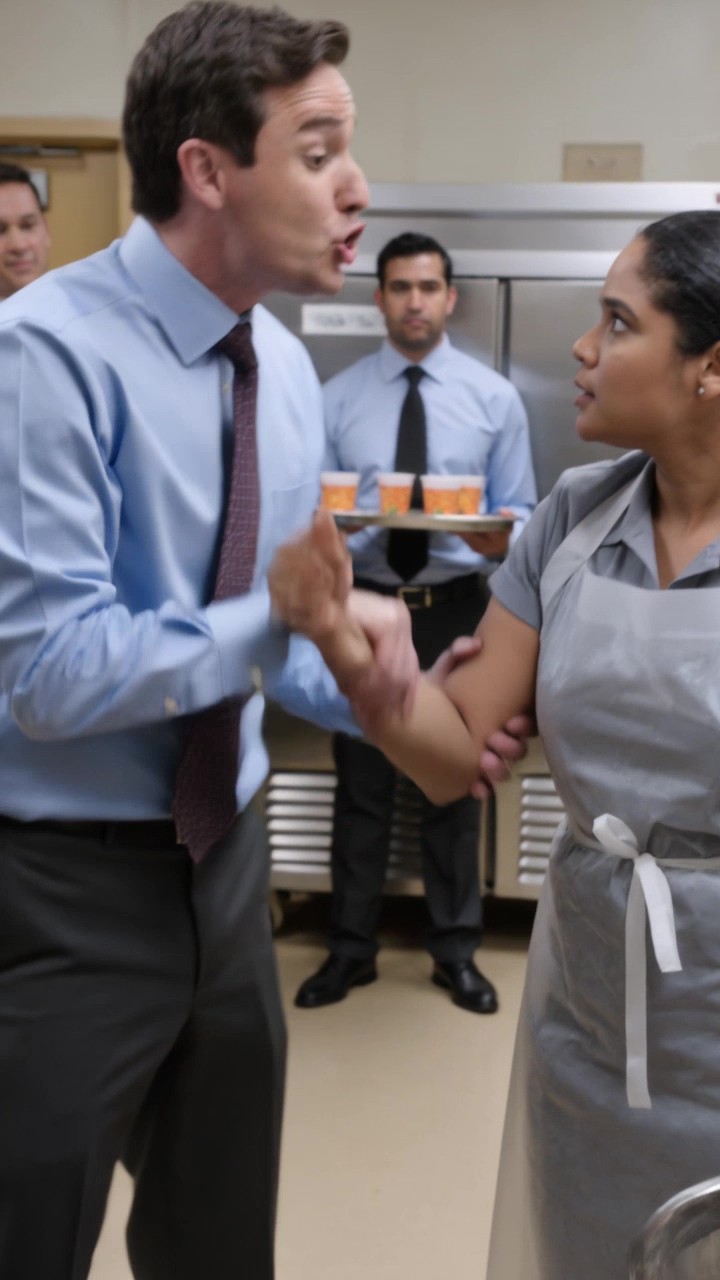
Charles, the bride’s father, apologized to Lena after the inspector’s report.
“I grabbed your apron.”
“Yes.”
“I thought you were ruining my daughter’s wedding.”
“I was ruining the punch.”
He almost smiled, then stopped.
“Thank you.”
Lena answered:
“You should thank the inspector, maintenance supervisor, and the servers who stopped moving trays when I yelled.”
“I am thanking you too.”
She accepted that.
The bride later wrote a letter. It did not pretend the night became perfect.
She wrote:
I hated you for twenty minutes. Then I imagined every guest holding that glass. I still wish the toast had happened. I am glad it did not happen that way.
Lena kept the letter in her locker, next to a laminated photo of the swapped hose tags.
The story became part of staff training, but not as a legend about one brave dishwasher. The training listed every failure that made her action necessary:
Rushed repair.
Poor hose design.
No verification.
Ignored odor reports.
Schedule pressure.
Low-status worker dismissed.
Servers not trained to pause service.
Then it listed the new controls.
That was the rescue Lena wanted.
Not applause after disaster nearly happened.
A system where the next dishwasher would not have to dump a wedding punch bowl onto the floor to be believed.







Leave a Reply