
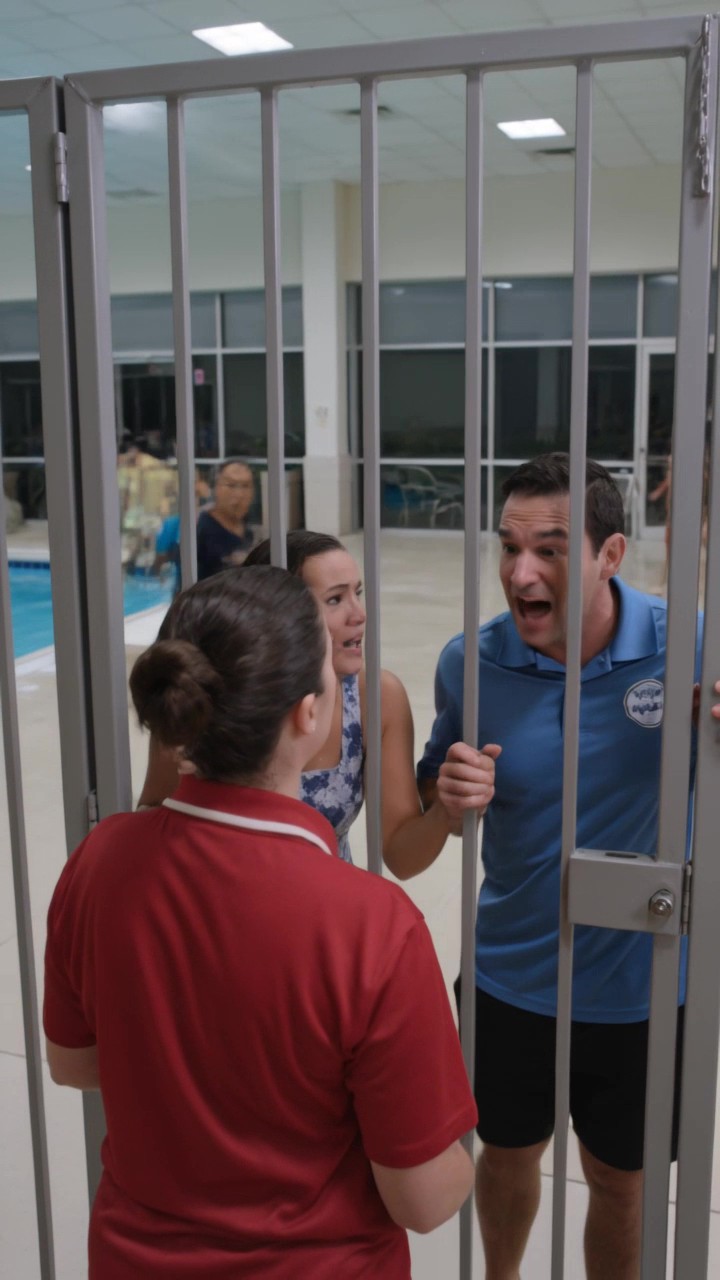
Nora Bell made the correct choice, and it still hurt.
Caleb had sensory panic in water. His blue goggles helped him feel protected. When Nora pulled him from the shallow end and pushed him through the gate, he begged to go back for them. His mother heard that fear and ran toward the pool room.
Nora had seconds. She saw a roof support bending near the shallow walkway. The manager wanted calm because a crowded exit can become dangerous. But calm does not mean pretending a ceiling is safe. Nora cleared the pool and locked the gate before anyone could rush back.
The ceiling fell less than a minute later. No one was hit. Caleb’s goggles were crushed.
The investigation found the roof leak had been reported twice that month. Charles had delayed closing the pool because weekend family nights made money. He was removed from facility management. The pool stayed closed until repairs passed inspection.
Caleb did not thank Nora that night. He cried for the goggles all the way home. Nora understood. Children do not process rescue like adults want them to.
Two weeks later, she mailed him a new pair of blue goggles with a short note:
I am sorry I could not save both you and the old pair.
Caleb’s mother returned to the pool months later and hugged Nora in the lobby. Caleb did not hug her, but he waved with two fingers.
That was enough.
The ending was not perfect. The choice saved a child’s body and broke a small part of his trust. Nora accepted both truths because difficult rescues rarely leave everyone feeling rescued.



Leave a Reply