
Thomas Bell was not trying to ruin the sale. He was trying to stop a lie from becoming permanent.
The Harbor Crown Hotel had used red luggage tags decades earlier for urgent room issues. Celeste’s father created the habit when he owned the hotel: if a problem could affect a guest or buyer, tag it in red and do not hide it behind polite words.
Thomas started as a porter under that old system. He remembered it even after new managers replaced tags with email forms no one read.
Room 214 had a brown stain behind the wardrobe. Thomas reported it twice. Charles wanted the sale done before anyone asked for another inspection. That morning, he ordered staff to move the wardrobe forward and mark the room cleared.
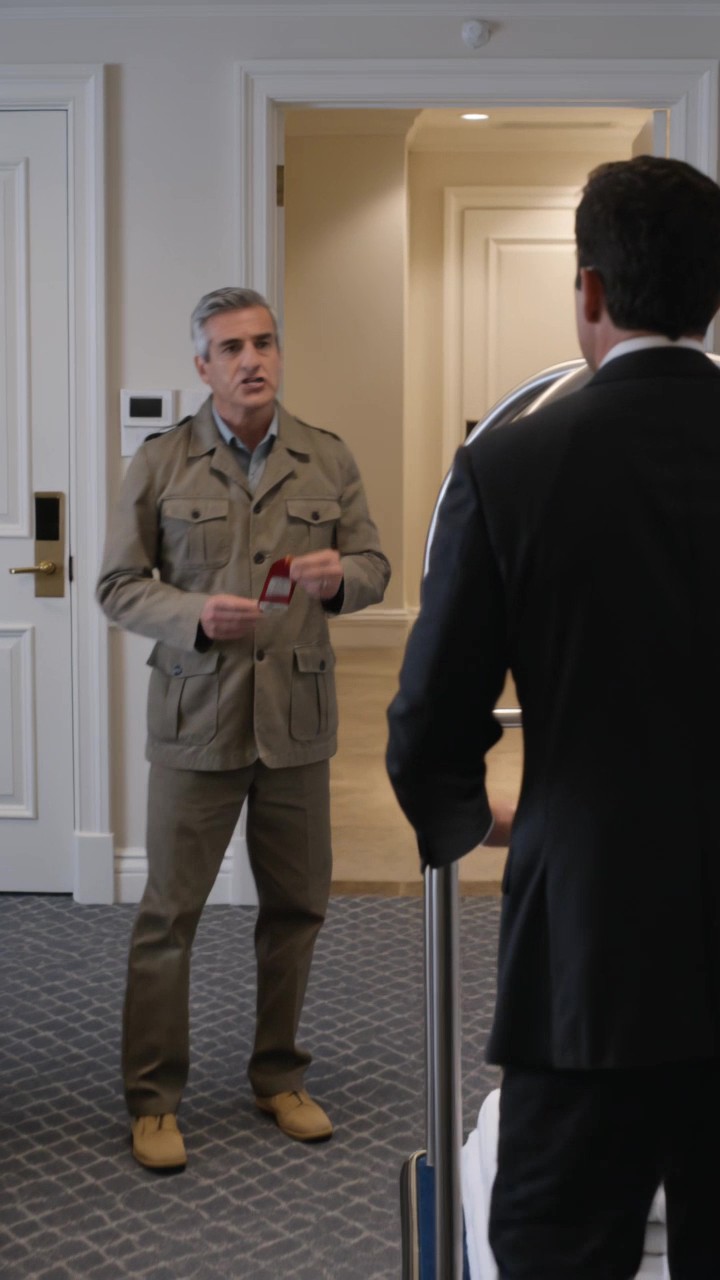
Thomas found the old red tag in a drawer, wrote the warning, and tried to bring it into the boardroom.
Charles saw only a porter interrupting rich people.
Celeste saw her father’s old rule.
The buyer’s team checked Room 214 before signing. The wall needed repair, but the larger issue was trust. Celeste paused the purchase until the seller corrected the room list and removed Charles from the handover team.
Thomas did not get a grand promotion. He received a written apology, back pay for ignored overtime, and a new role training staff on guest-condition reporting.
Charles tried to say it was a misunderstanding.
Celeste answered, “You moved the furniture. He moved the truth back.”
Thomas kept the red tag in his locker afterward.
Not because he stopped a sale.
Because, for once, someone let the porter finish the sentence before the room decided he did not belong.







Leave a Reply