
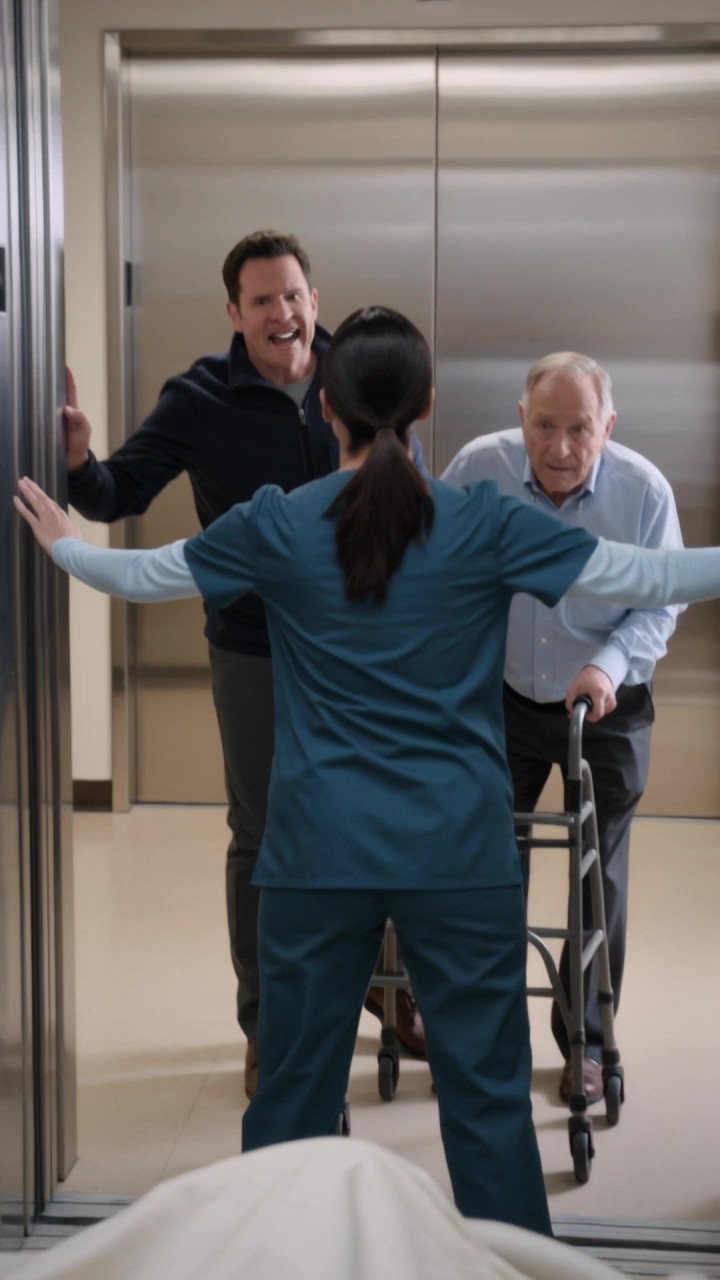
Nora’s father did not die. He did not even lose treatment forever. But he missed the morning slot and had to wait three painful hours for the next opening.
That was why the choice hurt.
Nora worked on the hospital transport team. Her job was simple on paper: get the right patient to the right room at the right time. That morning, two needs collided in one hallway.
The teenage girl, Maya, had a red wristband because her medication had to be given within a narrow window before a procedure. If she missed it, the hospital would cancel and reschedule. Her family had waited months.
Thomas, Nora’s father, had a painful appointment downstairs. He was scared, tired, and already late. Charles saw only one fact: their father was standing there, and Nora had the power to open the elevator.
Nora saw the wristband.
She chose the patient with the smaller window.
After the doctor explained, Thomas did not hug her. He was too hurt for that. He only said, “I know why. I still felt left behind.”
Nora answered, “I know.”
The hospital later changed hallway scheduling so transport staff were not forced to choose alone. A second elevator key was placed with the charge nurse, and red-wristband transports were announced earlier.
Charles apologized days later, but Nora remembered the look on her father’s face more than his brother’s anger.
The story did not end perfectly.
Maya got her procedure. Thomas got his appointment late. Nora kept her job and her conscience, but she also learned that doing the right thing can still leave someone you love standing on the other side of a closed door.





Leave a Reply