
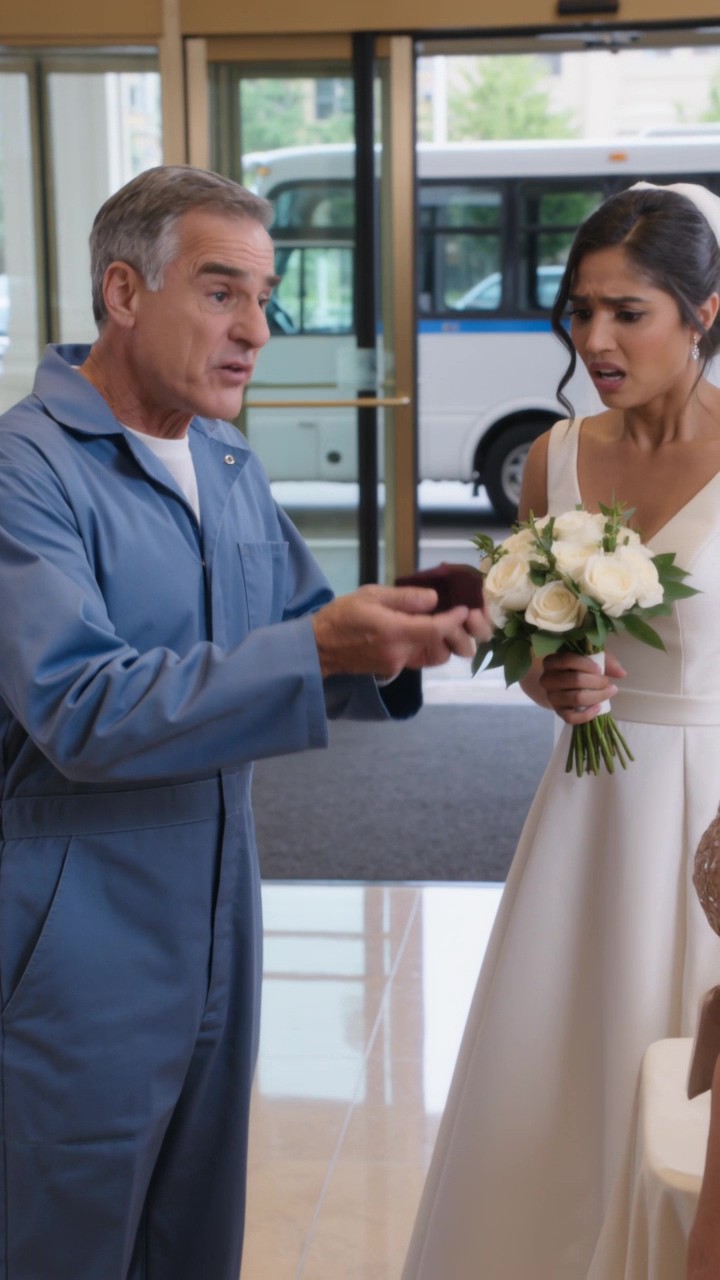
Thomas cleaned hotel shuttle buses after weekend events. He found phones, lipstick, toys, wallets, and sometimes jewelry. His rule was simple: if it looked valuable, stop cleaning and report it before touching anything else.
That morning, he found the bracelet box under seat twelve. A sticky bride name tag was pressed into gum beside it. He put both into the box so hotel staff could match the item to the wedding party.
The bride’s brother Charles had borrowed the bracelet for a staged photo outside the shuttle. He slipped it into the seat pocket while helping the bride step down, then forgot it. When the family panicked, blaming a cleaner felt easier than admitting the careless person was inside their own wedding party.
The flower girl had seen Charles with the box, but no adult asked her until she spoke up. The shuttle driver’s lost-and-found call also proved Thomas had reported the bracelet before entering the lobby.
Security apologized. The bride apologized in tears. Celeste tried to hand Thomas a cash tip, but he refused it.
“I did not bring it back to be rewarded,” he said. “I brought it back because it was not mine.”
The hotel manager banned Charles from accusing staff directly and required lost-and-found items to be handled at the desk, not in the lobby. Thomas went back to cleaning buses that afternoon.
The bride later sent him a handwritten note:
You protected something precious while we protected our pride.
Thomas kept the note in his locker, not because it made the humiliation disappear, but because it proved somebody finally wrote the truth down.







Leave a Reply