Artificial intelligence can transform a few hours of scanning into a digital performer capable of appearing indefinitely. The central question is no longer whether Hollywood can reproduce a human performance—but who controls and profits from it.
1. The Scan That Never Clocks Out
Imagine a background actor arriving on a film set and spending several minutes inside a body-scanning booth. Cameras record the performer’s face, body, movements and expressions. The actor completes one day of work, receives an agreed fee and leaves.
But the digital scan does not necessarily leave with them.
It could potentially be used to place a replica in crowd scenes, create new movements or modify the performer’s appearance during post-production. If the same replica later appears in 20 scenes, three sequels or an advertising campaign, should the actor be paid only for the original day—or for every subsequent use?
This is a hypothetical example, not evidence of a universal studio practice. Nevertheless, the underlying concern is real. Control over artificial intelligence and digital replicas became a central issue in the 2023 Hollywood labour dispute.
The agreement that ended the dispute introduced informed-consent and compensation protections governing the use of AI and digital replicas, according to SAG-AFTRA’s official summary of the 2023 TV/Theatrical Agreement.
2. From Labour Cost to Permanent Asset
Traditionally, a studio hires an actor to perform specific work within a defined production period. Digital replication could fundamentally change that arrangement.
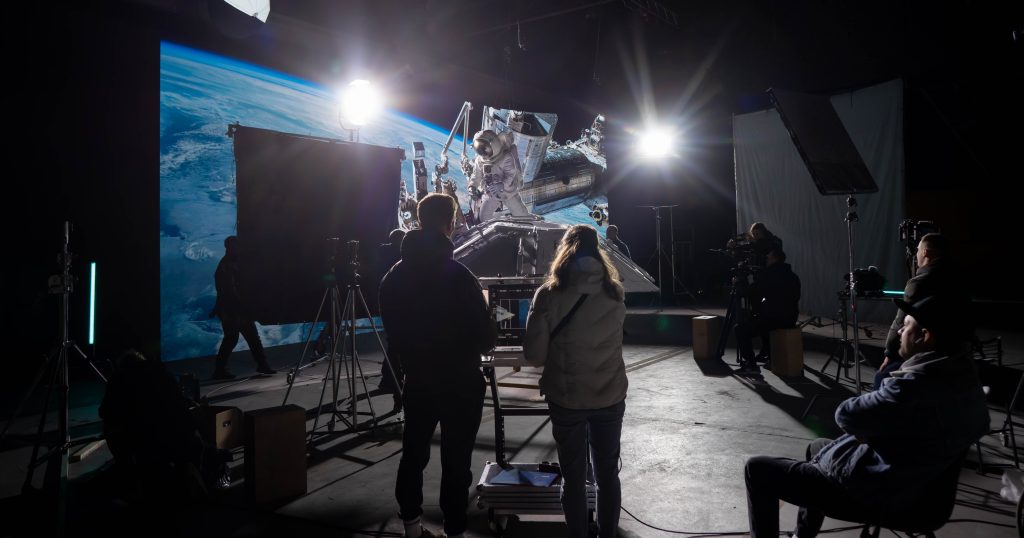
Instead of paying for each new performance, a company could potentially turn one recording session into an asset capable of being reused, modified and distributed. The immediate saving might come from avoiding reshoots or reducing the number of performers required for certain scenes. The long-term value, however, would come from controlling the replica.
For actors, the technology is not inherently harmful. A performer could license a voice or likeness for projects they cannot attend physically. Digital tools may also help actors continue working despite age, illness or disability.
The economic risk arises when the company receives long-term commercial value while the performer is compensated only for a short-term job.
This is an author-proposed framework, not an established industry metric. Its purpose is to reveal the possible difference between the value created by repeated use and the amount ultimately received by the person whose identity produced that value.
3. The Digital Replica Ledger
The real cost of a digital actor cannot be measured simply by comparing a scanning fee with the cost of another day of filming.
| Factor | Human performance | AI digital replica |
|---|---|---|
| Initial production cost | Potentially higher | Potentially lower |
| Additional performances | New work and payment | May be generated from existing data |
| Working period | Contractually limited | Technically reusable |
| Control over performance | Actor participates directly | Depends on consent terms |
| Legal exposure | Established contractual rules | Developing and fragmented rules |
| Correction costs | Reshoots may be required | VFX and AI corrections may be required |
This table is an analytical comparison, not a record of standard prices. There is currently no reliable public dataset proving how much Hollywood collectively saves by using digital replicas.
A complete audit would need to include licensing fees, residuals, visual-effects corrections, data security, human supervision, regulatory compliance, litigation risk and reputational damage. Claims that AI automatically makes production dramatically cheaper remain difficult to verify without access to actual studio budgets.
4. Consent Is Not the Same as Control
An actor may agree to be scanned without understanding how many times the data could be used, how extensively the replica might be altered or whether it could appear in future projects.
Meaningful consent should therefore specify the production, duration, territory, platform and intended use. It should also address whether the replica can be transferred to another company, placed in sensitive scenes or incorporated into an AI training system.
SAG-AFTRA describes its AI framework as being built around clear consent, fair compensation and performer control. Its official resource centre also provides more specific contractual guidance for television, theatrical, commercial and interactive productions. SAG-AFTRA Artificial Intelligence Resources
A 2024 agreement between SAG-AFTRA and the talent platform Narrativ demonstrated one possible licensing model. Under the arrangement, performers could approve or reject each proposed advertisement and set their own prices, subject to union minimums.
However, SAG-AFTRA states that this particular agreement ceased to be effective on September 24, 2025. It should therefore be treated as a historical example rather than a currently available programme. SAG-AFTRA’s official Narrativ agreement page
The arrangement nevertheless illustrated how consent could be managed as an ongoing commercial transaction instead of a single signature granting indefinite rights.
5. The Copyright Paradox
Digital performers also expose an important legal contradiction.
A replica originates from a human face, voice and performance. Yet material produced entirely by artificial intelligence may not qualify for copyright protection in the United States because copyright requires human authorship.
The U.S. Copyright Office has concluded that purely AI-generated material is not copyrightable. Human-created elements of a larger work may still qualify for protection, but entering prompts alone does not automatically give a user authorship over the resulting output. U.S. Copyright Office: Copyright and Artificial Intelligence
Studios may therefore want AI to reduce production costs while still needing substantial human creative input to establish copyright ownership. Actors, writers, directors, editors and visual-effects artists are not merely costs in this equation; their creative decisions may help make the finished product legally protectable.
6. Who Wins—and Who Disappears?
Studios may benefit from fewer reshoots and more flexible post-production. AI and visual-effects companies may gain new licensing and service revenue. Famous actors with strong negotiating power could secure lucrative agreements covering controlled uses of their identities.
The most vulnerable group may be background performers and emerging actors. They generally possess less bargaining power and may depend on short-term jobs that make refusing a scan difficult.
The legal system is beginning to respond. California’s AB 2602 limits the enforceability of certain contractual provisions allowing digital replicas to replace work an individual would otherwise have performed. The law also addresses whether the agreement provides a reasonably specific description of the intended uses and whether the individual received professional representation. California Legislature: AB 2602
A separate California law, AB 1836, addresses certain unauthorised digital replicas of deceased performers. California Legislature: AB 1836
At the federal level, protections remain fragmented. The U.S. Copyright Office concluded that existing state publicity rights, privacy laws, copyright rules and other legal mechanisms do not provide sufficiently consistent protection against unauthorised digital replicas. It recommended dedicated federal legislation covering both living and deceased individuals. U.S. Copyright Office: Digital Replicas Report Announcement
Audiences also have a stake in the outcome. Without adequate transparency, viewers may not know whether a performance came from a person, an authorised replica or a synthetic combination of several sources.
7. The Right to Say No
The future of acting will not be determined solely by how convincingly AI can reproduce a face or voice. It will depend on whether the person behind that identity retains the right to understand, approve and limit its use.
With specific consent, fair compensation and enforceable restrictions, digital replicas could become legitimate creative tools. Without those safeguards, they risk transforming human identity into a permanent corporate asset.
The decisive question is therefore not whether the digital actor can perform forever. It is whether the human actor continues to be paid, credited and permitted to say no.
Disclaimer: This article is based on publicly available sources. Factual claims are cited, while interpretations reflect the author’s analysis and should not be treated as legal advice.





Leave a Reply