The Shoppertainment Era: Decoding the Psychology That Keeps You Tapping “Buy Now” on Livestream
It is 11:40 p.m. You opened the app to kill five minutes before sleep. Forty minutes later, you own a three-pack of ceramic knives, a jar of collagen powder, and a pair of sandals in a color you would never normally wear. You did not plan any of it. You are not even sure you wanted any of it.
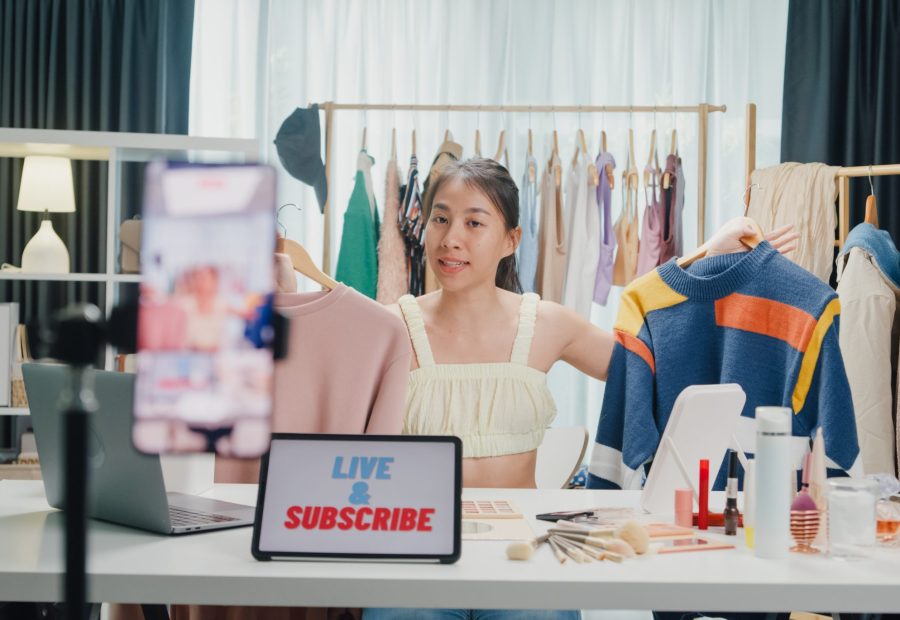
This is the ordinary arithmetic of shoppertainment, the fusion of e-commerce and entertainment that now dominates how young consumers shop in Vietnam and across Southeast Asia. Mega livestream sessions on TikTok Shop, Shopee Live, and Facebook run for eight, twelve, sometimes twenty-four hours straight, moving billions of dong in a single night. The popular explanation is that livestream shopping is simply convenient: you see the product, you hear the price, you order. But convenience does not explain the 1 a.m. purchase you regret by breakfast. What actually happens during a livestream is not a transaction. It is a carefully engineered sequence of psychological pressures, each one designed to shorten the distance between wanting and clicking until there is no distance left at all.
Manufactured scarcity and the anchor that isn’t there
The first lever is time. Livestream scripts are built around artificial deadlines, and they are remarkably consistent across sellers: “only five deals left at this price,” “flash sale, three minutes on the clock,” “I’m closing the order form after this batch.” None of these constraints are natural. The warehouse has more inventory. The price could stay the same tomorrow. The scarcity exists because scarcity works.
What it works on is the brain’s decision-making process. Under a countdown, we stop evaluating and start reacting. The fear of missing out compresses the window in which you would normally ask the boring, useful questions: Do I need this? Do I already own something like it? Is this actually cheap? A deliberate shopper checks three other shops before buying. A shopper with ninety seconds on the clock checks nothing. The countdown does not persuade you that the product is good. It removes your ability to ask whether it is.
Layered on top of urgency is price anchoring. The host holds up the product and announces a “market price” of 1,200,000 VND. Then the graphic slashes through it. Today, on this stream only, 399,000. And because that still needs to feel like a steal, there is a gift: a travel-size version, a second unit, free shipping, a voucher for the next order. Your mind fixes on that first number and measures everything against it. You are no longer deciding whether the product is worth 399,000 to you. You are calculating how much you just “saved,” which feels like earning money rather than spending it. The original price is usually fiction, or at least a number no one has paid in months. It does not need to be real. It only needs to arrive first.
Real-time proof and the illusion of friendship
The second engine is trust, and this is where livestream genuinely outperforms traditional e-commerce.
A product page is a set of still images, retouched and shot under studio lighting, next to a description written by someone who wants your money. A livestream is a person unwrapping the box on camera, pulling the fabric to show it does not stretch, dropping the phone case on a tile floor, pouring water on the shoe. Viewers can type a question and watch the host answer it by picking the item up and turning it around. The physical immediacy of this is powerful because it feels unfalsifiable. Whatever skepticism you carry into an online purchase, watching someone use the thing in real time dissolves most of it.
Then comes the part that has nothing to do with the product. Over hours of watching, viewers develop what researchers call a parasocial relationship: a one-sided bond that nevertheless feels mutual. The host reads your comment out loud. She uses your username. She remembers that the audience complained about the last shipment and apologizes for it. She mentions she has not eaten since noon, and thousands of strangers tell her to drink water. None of this is intimacy in any real sense, but the brain does not process it that way. It processes a familiar face who speaks to you and responds to you, which is the same shape as friendship.
Once that bond exists, buying changes meaning. It is no longer an evaluation of value; it is a small act of support for someone you like. This is why the most effective hosts are not the most polished. They are the ones who feel like a slightly chaotic older sister who happens to know which serum is worth it.
Dopamine, minigames, and the addiction to winning
The third mechanism is why you stay for four hours when you came for five minutes.
Mega livestreams are structured like game shows. There are minigames and giveaways timed to keep you from leaving. There is loud music, a rapid-fire speaking rhythm that never leaves silence, a co-host who interrupts, background changes, outfit changes, guest appearances. Nothing holds still long enough for your attention to drift.
Underneath the noise is a simple reward loop. Vouchers drop unpredictably. Limited-quantity deals are released without warning and vanish in seconds. Winning one produces a genuine spike of dopamine, the same neurochemical response that drives slot machines and loot boxes. The reward is variable and unpredictable, which is precisely the schedule that produces the strongest habits.
The consequence is subtle and worth naming clearly: over time, many viewers become attached to the feeling of catching a deal rather than to the products themselves. The unopened packages piling up in the corner are evidence. The thrill was in the hunt. The item was incidental.
Watching with your eyes open
None of this makes livestream shopping a scam. The convenience is real, the price reductions are often real, and for small sellers it has been genuinely democratizing. But it is worth being honest about what these sessions are: an extremely sharp application of behavioral psychology, refined through millions of A/B tests, aimed at the part of you that decides fastest and thinks least.
The practical defense is unglamorous. Add to cart, then close the app for an hour. If you still want it, the deal was probably fine. If you have forgotten it, the countdown was doing the wanting for you.
So — what is the most impulsive thing a livestream has ever talked you into? And for those of you who have managed to stay calm through a mega sale night, what is your trick?
Disclaimer: This article is based on publicly available sources. Factual claims are cited, while interpretations reflect the author’s analysis and should not be treated as legal advice.







Leave a Reply