
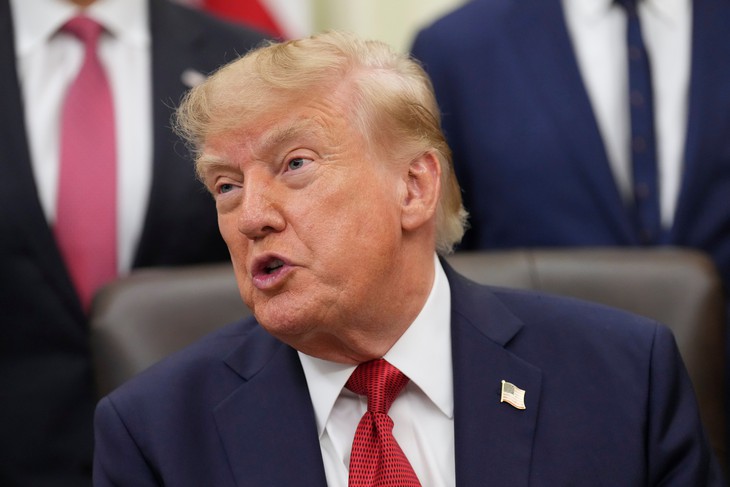
The legislation targets Russian energy, banks and sanctions-evasion networks while allowing the president to impose tariffs of up to 100% on major buyers of Russian oil and gas.
WASHINGTON — President Donald Trump signed a sweeping Russia sanctions package into law on September 18, increasing economic pressure on Moscow over its continuing war in Ukraine and giving the White House broad new authority to penalize countries purchasing Russian energy.
The legislation targets Russian officials, financial institutions, defense companies and energy businesses. It also imposes sanctions on the so-called shadow fleet of tankers used to transport Russian oil while avoiding Western restrictions.
The measure, formally titled the Lindsey O. Graham Sanctioning Russia and Iran Act of 2026, passed Congress with strong bipartisan support. The Senate approved it by 86 votes to 11, while the House of Representatives passed it 262–159, according to the Associated Press.
Supporters argue that the law could reduce the energy revenue available to Russian President Vladimir Putin’s government and increase pressure on Moscow to end the war. However, critics warn that the legislation gives Trump substantial discretion over tariffs, potentially creating new risks for American consumers and international trade.
Tariffs Could Reach 100%
One of the law’s most consequential provisions authorizes tariffs of up to 100% on goods imported from major purchasers of Russian oil or natural gas.
The measure focuses particularly on the five largest importers of Russian energy. It also allows penalties against countries or businesses accused of helping Moscow evade existing sanctions. China and India, which remain major purchasers of Russian oil, could face increased pressure under the legislation.
The tariffs are not automatically imposed at the maximum rate. Trump will have significant authority to determine which countries are targeted, how high the duties should be and whether exemptions are justified on national-security grounds.
Countries importing less than 15% of Russia’s natural-gas exports may qualify for an exemption if they demonstrate meaningful efforts to reduce their dependence on Russian supplies.
That flexibility may help Washington avoid immediate confrontations with strategic partners. At the same time, it has raised questions about whether the rules will be applied consistently.
A separate Reuters analysis noted that the law does not clearly explain how the five largest energy buyers will be identified. The uncertainty could allow the administration to interpret the legislation broadly.
Congress Expands Presidential Authority
The legislation marks a significant transfer of trade authority from Congress to the executive branch.
Trump has repeatedly used tariffs as a central part of his foreign and economic policy. Some of those efforts faced legal challenges, including questions about whether emergency-powers laws gave the president sufficient authority to impose duties without congressional approval.
The new Russia sanctions law provides specific authorization from Congress, giving the administration a stronger legal basis for future tariffs connected to Russian energy.
Supporters say that authority is necessary because restrictions directed only at Russian businesses have not stopped Moscow from redirecting oil exports through third countries. Penalizing major purchasers could force those countries to reconsider their commercial relationship with Russia.
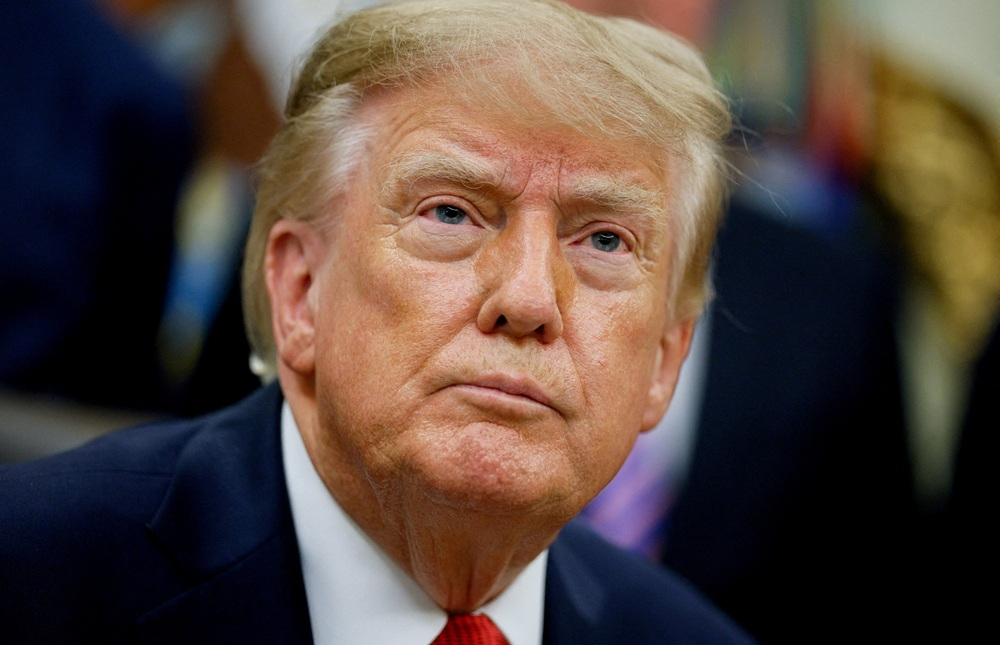
Opponents contend that such tariffs could also raise prices for American businesses and consumers. If the United States imposes duties on goods from major trading partners, affected governments could respond with retaliatory tariffs.
Some Democratic lawmakers supported tougher sanctions on Russia but objected to giving the president extensive freedom to determine the targets and size of the penalties. Their concerns centered on transparency, congressional oversight and the possibility that tariff powers could be used for objectives extending beyond the war in Ukraine.
A Bipartisan Legacy for Lindsey Graham
The legislation was developed by Democratic Senator Richard Blumenthal and the late Republican Senator Lindsey Graham, a longtime advocate of stronger action against Russia.
Graham worked on the proposal for more than a year before his death in July. The law was subsequently named in his honor.
The senator’s sister, Darline Graham, who was appointed to complete his Senate term, described its enactment as a historic moment and said her brother believed economic pressure could force Putin and Russia’s trading partners to reconsider the war.
The bill’s bipartisan passage is notable at a time of deep political division in Washington. Lawmakers from both parties have often disagreed over the scale of American assistance to Ukraine, but large majorities supported additional economic measures against Russia.
Effect Will Depend on Enforcement
The law’s practical impact will depend on how aggressively the Trump administration implements it.
Sanctions on Russian officials, banks and tankers could make it more difficult and expensive for Moscow to move energy through international markets. Secondary tariffs could have a greater effect by confronting the foreign buyers that continue supplying Russia with revenue.
However, broad exemptions or delayed enforcement could limit the pressure. Aggressive implementation, meanwhile, could strain U.S. relations with large economies that continue to depend on Russian oil or gas.
The administration must therefore balance two objectives: reducing Moscow’s ability to finance the war without triggering a wider trade dispute that damages American economic interests.
Trump’s signature gives Washington a powerful new economic instrument, but the law alone does not guarantee a change in Russia’s conduct. Its significance will ultimately be determined by which countries the White House targets, how quickly the penalties are introduced and whether major energy buyers decide that continued trade with Moscow has become too costly.
Works Cited
- Associated Press. “Trump Signs Sweeping Russia Sanctions Bill, Aiming to Choke Off Funds for Moscow in Ukraine War.” 18 Sept. 2026.
- Reuters. “Trump Signs Russia Sanctions Bill Into Law.” 18 Sept. 2026.
- Reuters. “Russia Sanctions Bill Gives Trump Sweeping New Tariff Powers.” 18 Sept. 2026.





Leave a Reply