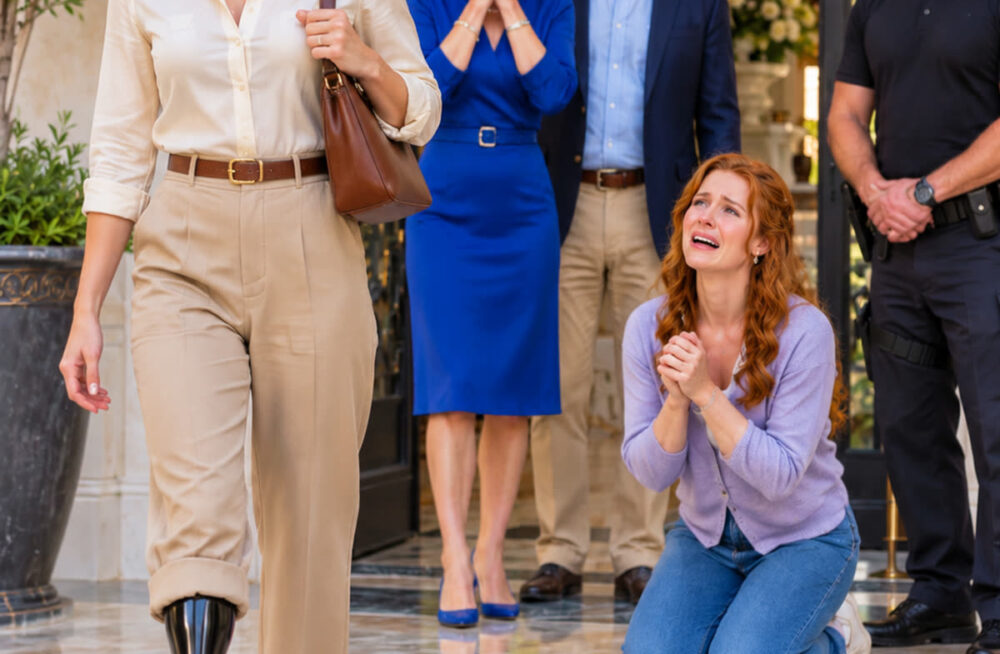
Fiction. This story is a dramatized work created for entertainment. Names, characters, events, and circumstances are fictional.
Part 1: The Agreement
"I heard you." My composed reply seemed to annoy her far more than any argument could have.
She moved nearer, angling herself so that her little audience could still catch every word, even as the exchange took on the look of something almost private. "Avery, I’m going to say something that may be difficult for you to hear, but someone needs to explain how things work in families like ours."
I held her gaze. "Go ahead."
"As you know, your sister will soon become an Ashcroft. That’s a considerable responsibility. Our family has spent three generations establishing a reputation in this community, and everyone associated with us is expected to uphold certain standards." She let the pause linger, clearly waiting for me to feel the full weight of her surname. I said nothing.
"Grant has worked extremely hard to reach his position at Halcyon Wealth Partners. His professional relationships are sensitive, and the people around him are expected to exercise discretion." Grant Ashcroft was her son. He was also the man my sister had promised to marry.
Vivienne pressed on. "Naturally, I made a few inquiries about your background. I understand you operate some sort of consulting business from a small apartment. Your earnings appear modest, and you don’t seem to have any meaningful standing in the financial circles our family belongs to." Just behind her, a woman weighed down by an enormous sapphire necklace made a show of studying the flowers.
Vivienne let her voice drop a fraction. "You’re welcome here because Molly loves you. But after the wedding, you’ll need to recognize that family affection doesn’t automatically grant access to our social or professional world."
My eyes drifted across the ballroom. Molly stood among a cluster of her fellow elementary school teachers, laughing at something one of them had just said. She wore a pale blue dress, her brown hair gathered loosely at the back of her neck, and an engagement ring that sparkled every time her hands moved. She looked beautiful. More than that, she looked happy. I meant to protect that happiness for as long as I possibly could.
"So," I said, turning my attention back to Vivienne, "what exactly would you like me to do?" Her face lit up. She opened her designer clutch and drew out a crisply folded document. "I’m glad you’re being reasonable."
She held it out to me with the impersonal politeness of a woman passing a receipt to a parking attendant. "Our attorney prepared a simple social boundaries agreement. It’s a routine precaution, nothing personal." I unfolded the paper.
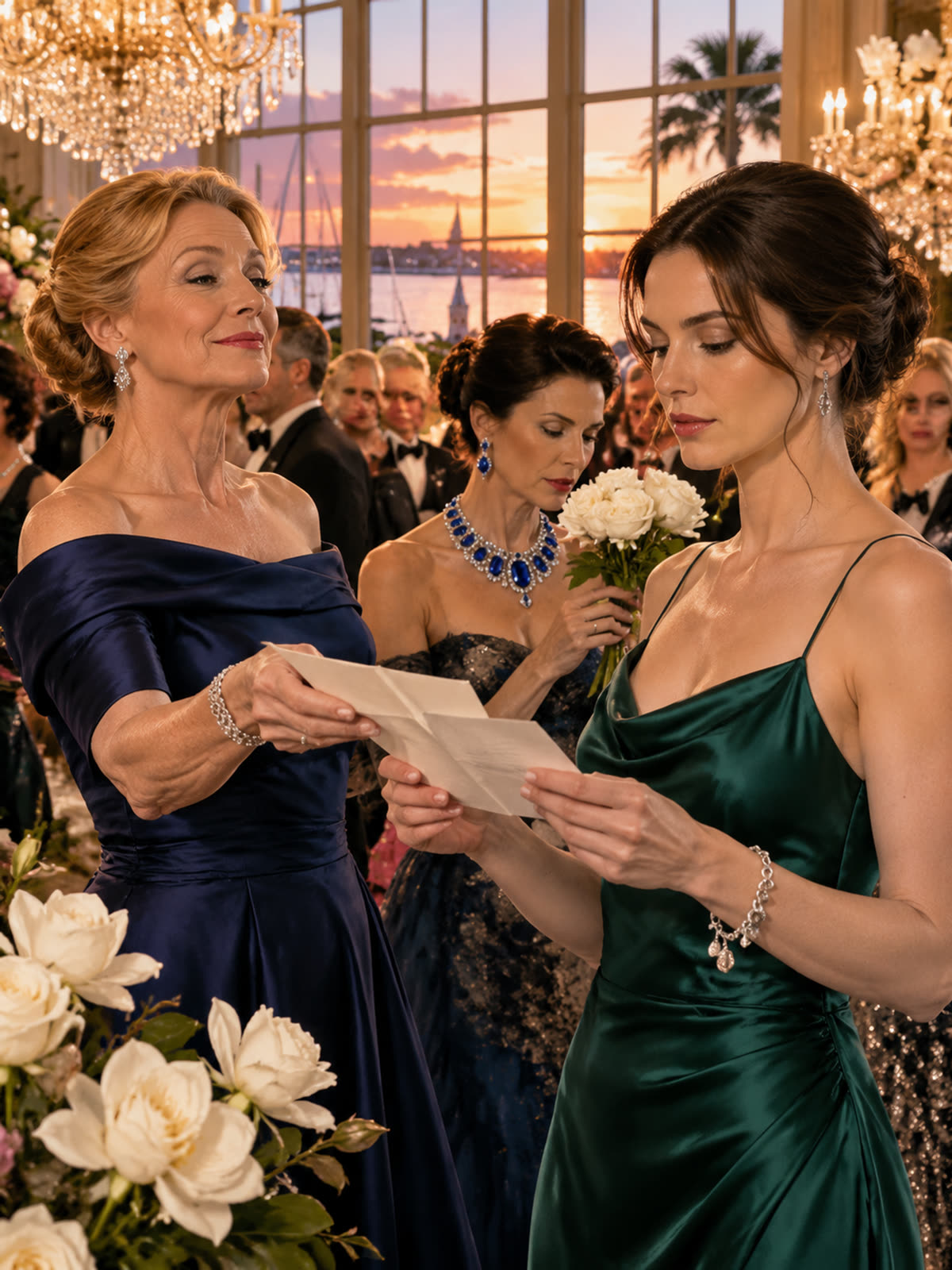
The document set out a series of terms. I was to avoid contacting Grant’s business associates without explicit permission. I was forbidden from discussing the Ashcroft family’s financial affairs with anyone outside it. I was not to attend events hosted by Ashcroft family foundations, businesses, or affiliated organizations without first receiving written approval. One paragraph also required me to refrain from using my relationship with Molly to secure introductions, jobs, or financial advantages.
I read that paragraph twice. Not because I found it confusing. Because the irony was staggering.
Vivienne was watching my face closely. "We require similar commitments from other relatives who aren’t directly involved in the family’s affairs," she explained. "It’s simply a way to prevent misunderstandings."
My eyes settled on the signature line. The thing was less a carefully drafted legal contract than an exercise in intimidation. Its loose wording and lopsided restrictions made it doubtful that it could ever be enforced in any practical sense. But Vivienne hadn’t carried it to an engagement party because she cared about enforcement. She wanted submission. Mine, specifically.
"Do you have a pen?" I asked. For the first time all evening, she looked truly caught off guard. "Of course." She passed me an expensive fountain pen.
I set the paper on the edge of the appetizer table, using the flat space beside a glass of shrimp cocktail, and signed my name. Avery Callahan. Then I folded it and handed it back to her. "There you go."
Vivienne blinked. "You’re agreeing?" "Absolutely. I understand how important protecting a family reputation can be." She looked at me with suspicion. I smiled. "Especially when so much depends on it."
For a moment she seemed unable to decide whether I had just insulted her. Then she concluded that she had won. "Well. I’m pleased we could handle this like adults." "So am I."
I excused myself and headed for the terrace, depositing my untouched champagne on the tray of a passing server. Behind me, the chatter picked up again. I knew precisely how Vivienne would retell the encounter. She would inform her friends that Molly’s odd older sister had finally learned her place. She would paint me as desperate, embarrassed, and grateful to be allowed in the room at all. And I would let her.
Because I had learned something valuable long before that night. People who believe they are in control are often astonishingly generous with information. The longer they think they’re ahead, the more plainly they expose their weak points. And Vivienne Ashcroft had just exposed quite a few.
There was a reason my name almost never showed up in newspapers, trade publications, or rankings of successful entrepreneurs. I had spent most of my adult life ensuring it didn’t.
At twenty-two, I left college with a computer science degree, a crushing pile of student loans, and an idea for a financial technology platform that everyone around me dismissed as too ambitious. I moved into a studio apartment in Austin, Texas, where the air conditioner roared like a small plane getting ready for takeoff and the kitchen table served as my desk.
For close to four years, I worked through weekends, holidays, and more late nights than I wanted to count. I lived on black coffee, bargain groceries, and the belief that I could create something worthwhile if I just stayed focused long enough.
My grandmother phoned every Sunday. She never grasped the technical side of what I was building, but she understood determination perfectly. "Make something you’re proud of, sweetheart," she told me once. "And don’t waste your life explaining your worth to people who refuse to see it."
Those words came back to me when my first company was acquired. I was twenty-six. The sale transformed my finances so completely that I spent weeks struggling to believe the figures on the paperwork. But instead of buying a mansion or broadcasting my success to everyone I’d ever met, I put most of the money back to work. I built another company. Then another.
By twenty-nine, I had founded a private investment firm called Northstar Equity Holdings. In the years that followed, Northstar took controlling and minority positions in commercial real estate, financial services, technology infrastructure, and specialized media businesses.
Our structure was deliberately low-profile. My face did not appear on billboards. We did not mark acquisitions with splashy public announcements. Our executives seldom discussed the firm’s ownership outside the circle of people who actually needed to know. I liked working behind the curtain. Not out of shame for what I’d achieved. I simply valued a private life. And as the firm grew, that privacy became more precious.
Ten months before Molly’s engagement party, Northstar had finalized its purchase of Halcyon Wealth Partners, a well-regarded investment advisory company with offices across the Southeast. Halcyon was profitable, well known, and particularly favored by families who saw themselves as pillars of Charleston’s established financial world. It was among Northstar’s bigger deals that year. It was also why Vivienne’s patronizing lecture had been so remarkable.
Her son, Grant, worked at Halcyon as a senior portfolio manager. Her daughter, Celeste, was a vice president in the client relations division. In the two hours since I’d walked into the Bellamy Grand, I had heard the Ashcrofts bring up Halcyon at least seven times.
Vivienne talked about the firm’s prestige as if her family had built it with their own hands. Grant hinted at his alleged sway over major investment portfolios. Celeste spoke of exclusive clients and powerful connections with the theatrical self-assurance of someone who mistook a job title for a personality. Not one of them realized that the quiet woman in the dark green dress was the founder and managing director of the company that owned their employer. And I had never planned to tell them.
I had come to Charleston for Molly. Nothing else. My younger sister was six years behind me, yet at times I suspected she understood the world better than I ever would. She taught fourth grade at a public elementary school. She spent Saturday mornings painting watercolors, remembered birthdays other adults let slip, and somehow found potential in children who had already started believing they were failures. She was the sort of person who made ordinary rooms feel safer.
When Molly was eight, she discovered an injured bird in our backyard and insisted we make it a shelter out of an old shoebox. When she was twelve, she spent three months helping a classmate learn to read because she couldn’t bear watching him get humiliated in class. And when our grandmother died, it was Molly who sat beside me on the kitchen floor, holding my hand while I cried.
For most of our lives, I had been the practical older sister. Molly was the one who reminded me that practical and strong were not the same thing. So when she told me she had fallen in love with Grant Ashcroft, I wanted to believe she’d found someone who valued her generosity.
At first, Grant seemed charming. He sent flowers to her school. He remembered small details about her students. He listened when she talked about the pressures teachers faced, and he always seemed eager to fold her into his plans. His family was a different story.
The first time I met Vivienne, she asked whether Molly planned to keep teaching after the wedding. When Molly said yes, Vivienne smiled in a way that made the answer sound shameful. "How admirable," she said. "Although I imagine there are more appropriate ways for a woman in your position to contribute to the community." Molly gave an awkward laugh. I didn’t.
Over the following months, I watched similar scenes play out again and again. Vivienne criticized Molly’s clothes, her apartment, her career, and even the simple silver necklace our grandmother had given her. Grant almost never stepped in. He would squeeze Molly’s hand under the table and assure her his mother was "just traditional." Molly wanted peace so desperately that she accepted excuses I never would have.
By the night of the engagement party, I had already seen more than enough to be worried. But I was carrying another concern. One Molly knew nothing about. And it had nothing to do with manners.
The terrace above Charleston Harbor was almost deserted. Warm air moved between the stone columns, bringing the scent of salt water and blooming magnolias. Past the gardens, the harbor lights glimmered on the darkening water. I stepped away from the ballroom doors and pulled out my phone. Then I opened an encrypted line to Northstar’s chief operating officer.
Jonah Mercer picked up on the second ring. "Avery?" "Initiate Project Lantern." A short silence followed. "Tonight?" "Full scope." "That includes the Ashcroft-related accounts?"
"Every account identified in the review. Halcyon’s exposure, the Redcliff lending facilities, and the outstanding client-billing discrepancies involving Celeste Ashcroft." Jonah let out a breath. "Understood. The compliance team has already completed the documentation. Are you authorizing the scheduled actions to proceed?" "Yes. Follow counsel’s recommendations and the approved protocols."
"And the timeline?" I looked out at the black water, at the glittering ballroom behind me, at the family who believed they had just put me in my place. "Before dessert."
Part 2: Before Dessert
"I’ll coordinate with legal." I ended the call. For a few moments I stood by myself, watching the harbor.
I wasn’t doing this because Vivienne had sneered at my dress or brushed off my career. Her behavior had merely confirmed something I’d been dreading for weeks. The Ashcrofts had grown used to mistaking social status for protection from consequences. And Grant was getting ready to make Molly pay for that mistake. I had suspected it for two weeks. That night, I finally held the proof I needed to face it.
I went back inside and found my attorney, Mara Ellison, waiting near the coat check. Mara had worked with me for four years. She was forty-one, meticulously organized, and had the unsettling talent of delivering catastrophic financial news in exactly the same tone she used to order lunch. She wore a charcoal-gray suit and held a glass of sparkling water. Her phone was in one hand, and a slim leather portfolio was tucked under her other arm.
"Did you get everything?" I asked. "More than we expected." She passed me the portfolio.
I opened it. The first page held an internal review summary. The figures were neatly arranged. What they implied was anything but neat.
"Grant hasn’t been operating as a legitimate senior portfolio manager for quite some time," Mara explained. "For approximately fourteen months, he’s been managing a very narrow group of accounts while representing his responsibilities as substantially broader."
I turned the page. The records revealed a tangled chain of transfers, dubious valuations, and transactions tied to related entities. "He’s been moving funds between accounts to conceal shortfalls," Mara went on. "Our investigators have identified patterns consistent with a circular financing arrangement. The final findings will depend on the formal review, but the evidence is serious."
"How much?" "His private borrowing alone totals approximately $3.2 million." I raised my eyes. "Through Redcliff?" She nodded.
Redcliff Private Lending was a specialized credit firm in which Northstar held a controlling stake. Grant had borrowed millions from a company ultimately owned by the very investment group that owned his employer. He had no idea.
"Show me the collateral." Mara tapped the next page as I held the portfolio open between us, the chandelier light catching the columns of numbers. The list included the Ashcroft family’s Mount Pleasant residence, several investment accounts linked to Vivienne, and a commercial property in North Charleston.
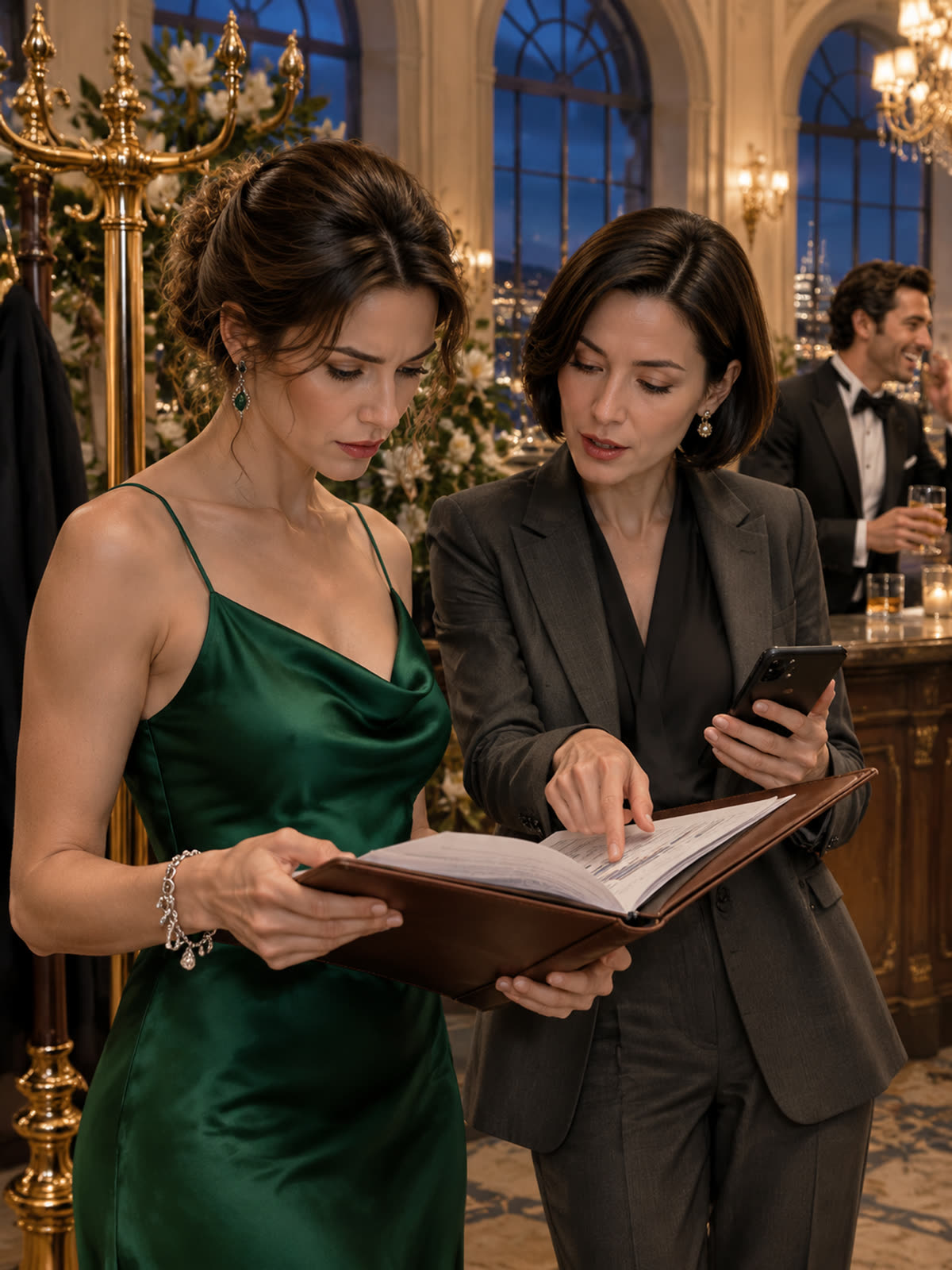
That last property was especially concerning. It seemed to have been pledged against several different obligations, with liens and valuation claims that didn’t line up. "How did this get past the original underwriting team?" "Some of the supporting documents were misleading. Other issues emerged after the acquisition when we started reviewing the underlying records."
I went over the figures. Grant’s finances were far shakier than his polished lifestyle suggested. His salary, his anticipated bonuses, and his access to managed assets had become the only things holding the whole arrangement together. Without them, the borrowed money couldn’t be serviced. And without new financing, the structure would eventually cave in.
"How long does he have?" I asked. "Based on the current cash position, perhaps sixty days before the pressure becomes impossible to conceal. Possibly less."
I glanced toward the ballroom. Grant was standing near the bar with two old college friends, laughing as he waved a glass of bourbon. His tuxedo fit flawlessly. His watch was expensive. He looked like a man who had never known a single uncertain moment.
"That’s why he moved the wedding forward," I said. Mara nodded. "We believe so."
Molly and Grant had originally planned to marry the following spring. Then, out of nowhere, Grant proposed a small ceremony before Christmas. He told Molly he couldn’t stand to wait. He said he wanted to start building their future right away. Molly found it romantic. Now I understood the rush.
She had a stable job, excellent credit, careful spending habits, and no debt apart from a manageable car loan. Grant had been nudging her to merge their finances after the wedding. He had talked about buying property together. He had even hinted that her strong credit could help them land favorable terms on a refinancing deal. She thought she was entering a partnership. In truth, Grant was trying to set her up as one more source of financial support before his existing debts came to light. The thought of Molly unknowingly getting tangled up in his obligations turned my stomach.
"Does she know any of this?" Mara asked. "No." "Then you need to tell her." "I know."
Mara studied me for a moment. "You understand this isn’t just about his family being unpleasant." "I understood that two weeks ago." "Then why wait?" "Because I wasn’t going to destroy my sister’s future based on suspicions. I needed facts." Mara’s face softened a little. "Now you have them."
I looked back down at the portfolio. The newest documents confirmed that Redcliff had sent Grant a formal demand notice after discovering breaches of his lending covenants. Separately, Halcyon’s executive board had approved his immediate suspension pending an internal investigation. Celeste had also been served notice regarding roughly $380,000 in questionable client-billing entries spread over eighteen months. Her case was still under review, but the documentation against her was substantial.
"Have the notices been delivered?" I asked. "Grant received both his lending notice and employment notification. Celeste has been notified as well." "And Vivienne?" "Not yet directly."
I closed the portfolio. For a long moment, I watched my grandmother’s bracelet catch the light. The tiny silver book lay against the Eiffel Tower charm. The sealed locket hung beside them. I thought about how my grandmother had worked twelve-hour nursing shifts to provide for her family, how she’d saved for years to afford a single trip abroad, and how she’d worn this bracelet every day without caring whether strangers thought it stylish.
Vivienne had looked at those memories and seen something cheap. Grant had looked at my sister and seen a convenient financial resource. I was done letting either of them confuse kindness with weakness. "Mara," I said, handing back the portfolio, "I think it’s time the Ashcrofts learned who they’ve been speaking to."
The ballroom at the Bellamy Grand was spectacular. Its vaulted ceilings were adorned with original plasterwork. Tall windows looked out over gardens lit by gentle amber lights. Crystal chandeliers glowed above tables dressed in ivory linen, and carefully arranged flowers filled the air with the fragrance of roses and white lilies.
I knew the property well. Several years earlier, Northstar had bought a controlling interest in the hospitality management company that ran the hotel. I had toured the Bellamy during the acquisition and walked this very ballroom with the management team. I remembered thinking that the building embodied everything Charleston’s old families prized: permanence, beauty, and the look of effortless privilege. What they tended to forget was that appearances cost real money to keep up.
As I walked in, I could see the Ashcrofts scattered throughout the room. Vivienne was by the bar, regaling another group of influential guests with a story about a former governor and a charity golf tournament. Grant stood at a cocktail table with his college friends, one hand in his pocket, the other gripping his phone.
Celeste was near a towering floral display, staring at her screen. Even from across the room, I could watch her expression shift. Confusion turned to disbelief. Disbelief turned to fear. She scrolled quickly, stopped, and read something a second time. Then she lifted her eyes and scanned the room for Grant. He had started looking at his phone too.
Molly was still by the windows, laughing with two of her teacher friends. She hadn’t sensed the shift in the air.
I made my way toward Vivienne. She spotted me coming and immediately composed her face into a rehearsed look of sympathy. "Avery," she said. "Back already? I hope the fresh air helped. You seemed a little uncomfortable earlier." A few people smiled politely.
"I feel much better, thank you." "Wonderful." "Actually, there’s something I’d like to discuss with you." Her smile grew wary. "Of course. Is this about the agreement?" "In a way." She tilted her head.
I kept my tone light. "You’ve mentioned Halcyon Wealth Partners several times tonight." Vivienne perked up. "Naturally. My children have built remarkable careers there." "Grant is a senior portfolio manager, correct?" "One of their most respected." "And Celeste handles important client relationships?" "She’s a vice president. Her clients include some very prominent families." "That’s impressive." Vivienne smiled. "I’m glad you understand."
"Oh, I understand quite a lot about Halcyon." I let a beat pass. "Northstar Equity Holdings acquired the company ten months ago." Vivienne frowned. "I’m aware there was some restructuring." "It was a complete acquisition." "Yes, well, I hardly see what that has to do with—" "I’m the founder and managing director of Northstar."
The woman in the sapphire necklace snapped her head toward me. Vivienne went silent. I went on. "Which means the investment firm your children work for is owned by a company I built."
For several seconds, no one moved. Then Vivienne laughed, a short, incredulous sound. "Really, Avery. That’s quite a story." "It’s easily verified." "You’re telling me you own Halcyon?" "Through Northstar’s holding structure, yes." The smile slid off her face. "That’s impossible." "Why?" "Because you—"
She broke off. I waited. "Because I what?" Her eyes darted toward the people watching. "Because you told us you were a consultant." "I do consulting work. Among other things." "From an apartment." "I’ve worked from apartments before. My first company was built in one." Someone behind Vivienne cleared his throat.
I continued before she could regain her footing. "I didn’t come here tonight intending to discuss business. This is Molly’s engagement party, and I wanted the evening to belong to her." The color was beginning to drain from Vivienne’s face. "But since you’ve made my professional standing such an important concern, I thought you deserved a more accurate understanding of it." Her champagne glass shook slightly.
I looked over at Grant. He was staring at his phone now, his shoulders locked. "Following an ownership review that began several weeks ago, Halcyon’s executive board has suspended Grant pending an investigation into serious financial irregularities." Vivienne’s lips parted. "What?" "Celeste has also received formal notification about discrepancies involving approximately $380,000 in client billing records."
The conversations nearby died away. Even the guests pretending not to listen had turned to face us. Vivienne stared at me. "You’re lying." "No." "You cannot possibly know anything about my children’s employment." "I’ve reviewed their files." She took a step back. I stayed exactly where I was.
"There’s also the matter of Grant’s outstanding private loan." Her face changed again. This time the fear was impossible to miss. "What loan?" "Approximately $3.2 million borrowed through Redcliff Private Lending." She looked bewildered. "Redcliff?" "Northstar holds a controlling interest in the lender."
Mara stepped in from the edge of the crowd, holding a formal envelope with a copy of the demand notice. "Mr. Ashcroft has already received notification," Mara said evenly. "The lender has demanded repayment following documented covenant breaches. The listed collateral includes the Mount Pleasant residence, certain investment accounts, and the North Charleston commercial property."
Vivienne clutched her champagne glass with both hands. "That’s absurd. Our home is not—" She stopped again. I watched understanding creep across her face. "Did Grant use the house as collateral?" I asked quietly. She didn’t reply. Her eyes flew to her son.
Across the room, Grant shoved away from his cocktail table. "What the hell is going on?" he demanded. Heads turned. He looked from his phone to me. Then to Mara. Then back to me. His friends trailed a few steps behind, unsure whether they were meant to step in.
Vivienne found her voice. "This is outrageous. You cannot come into our family’s celebration and make these accusations." "Your son received the notices through the proper channels. The investigations will proceed regardless of what happens at this party." "You’ve embarrassed us in front of everyone!"
I looked at her. "An hour ago, you handed me a document instructing me to stay away from your family’s professional affairs." Her expression hardened. "You signed it." "I did." "Then you have no right—" "Vivienne, you were attempting to restrict my involvement with a family whose members work for my company, while your son was already under investigation for financial misconduct." She opened her mouth. Nothing came out.
"I signed your paper because I knew it wasn’t going to change the underlying facts." She glared at me with a blend of hatred and disbelief. "You’re nobody," she whispered. "You’re Molly’s sister who runs some little business out of her apartment." "I have an office on the forty-first floor of a building on King Street. I also own the building. But I didn’t think either fact belonged in a conversation about my sister’s wedding."
The people around her had gone completely silent. I lowered my voice. "There’s something else you need to understand." Vivienne swallowed. "Grant isn’t simply having trouble at work. His financial position has deteriorated badly, and he’s been trying to secure new financing before his existing obligations come due."
I glanced toward Molly. She had stopped laughing. Her friends were watching us. She stood perfectly still. "He has been encouraging my sister to combine their finances, use her credit, and enter new financial obligations without telling her the truth about his debts."
Grant was close enough to catch that last sentence. "Stop," he said sharply. I turned to face him. "Then explain it yourself." He strode toward me, his face furious. "This is completely inappropriate." "Is it?" "Whatever problem you have with my family, this isn’t how you handle it."
"Grant, your employment suspension and loan demand were handled through the appropriate professional channels. I’m talking about Molly because she deserves to understand what she’s about to marry into." He jabbed a finger at me. "You’ve been looking for a way to undermine this relationship from the beginning." "No. I’ve been hoping you were the person she believed you were." "You’re twisting everything." "Then tell her the truth."
His jaw clenched. For a moment, I thought he might actually do it. Then Molly spoke. "Grant?" Her voice wasn’t loud. But it sliced through the silence with startling clarity.
He turned. "Sweetheart, don’t listen to this. Avery has obviously misunderstood—" "How much?" He blinked. "What?" "How much money did you borrow?" "Molly, this is complicated." "Then explain it." He glanced around the room. "Can we please discuss this privately?"
She walked toward him, her pale blue dress whispering against the marble floor. "Did you borrow $3.2 million?" Grant swallowed. "That’s not exactly how it works." "Did you use your mother’s house as collateral?" He didn’t answer. Molly waited. "Grant." "I had business obligations." "Against what?" "Several assets. It’s normal in my profession." "Did you tell me about them?"
His eyes slid toward Vivienne. "Of course not. Those are private business matters." Molly looked at him for a long moment. "Then why did you ask me to meet with your mortgage broker next Tuesday?" The silence that followed was nearly unbearable.
Grant rubbed his forehead. "Because we’re getting married. Because married people build things together." "Build what?" "Our future." "With money you don’t have?" He flinched. "Molly, please."
She shook her head. "Last week, you asked whether I’d be comfortable signing documents for a refinancing arrangement after the wedding. You told me it would help us qualify for better terms on a house." "That’s still true." "You never mentioned these loans." "I was going to explain everything." "When?" He hesitated. "After we were married?" Molly’s voice cracked slightly.
Grant moved toward her. "Baby, you have to understand, I was trying to protect you from unnecessary stress." She stepped back before he could touch her. "Protect me?" "I love you." "Then why didn’t you trust me with the truth?"
He looked helplessly at his mother. Vivienne immediately stepped forward. "Darling, financial matters are rarely as simple as they seem. Grant has significant responsibilities, and your sister has chosen the worst possible moment to create a scandal." Molly turned to her. "Mrs. Ashcroft, please don’t."
Vivienne froze. Molly had never spoken to her so firmly. For months she had swallowed every condescending comment, every criticism dressed up as advice, every suggestion that she wasn’t quite good enough for this family. Now something had shifted.
Molly looked at me. Then at the bracelet on my wrist. "Do you know what I saw tonight?" she asked Grant. He looked confused. "Your mother knocked Grandma’s bracelet off Avery’s wrist." Vivienne went rigid. "It was an accident." "No," Molly said. "It wasn’t." The words were quiet. Certain.
"I watched her do it. Avery was fixing my flowers, and your mother moved her arm on purpose." "Molly, that’s ridiculous," Vivienne snapped. My sister held her ground. "You didn’t even bend down to help her pick it up. You stood there and made fun of it."
Grant looked from Molly to his mother. "That’s what this is about? A bracelet?" Molly stared at him. I saw the exact instant something inside her settled. "No," she said. "That’s what I’ve been trying to tell myself for months." He frowned. "What are you talking about?"
"Every time your mother insulted me, you said she was just traditional. Every time she criticized my job, you told me not to take it personally. When she said I needed to dress differently, you said she only wanted me to fit in." "Molly—" "And tonight, she treated my sister like someone who didn’t deserve to stand in the same room as her." Vivienne’s cheeks reddened. "That is a gross exaggeration."
Molly ignored her. "And you never once asked why your family thought they had the right to treat people that way." Grant dragged a hand through his hair. "This is getting out of control." "No," Molly replied. "I think I’m finally seeing it clearly."
She raised her left hand. The diamond caught the light. It was a lovely solitaire, delicate and costly, the kind of ring Grant had offered with a carefully rehearsed speech about forever. I knew now that it had been paid for within the same troubling web of borrowed money.
Molly gazed at the ring for several seconds. Then, slowly, she slid it off her finger. Grant’s face changed. "Don’t."
Part 3: The Debts Worth Keeping
She held the ring between her thumb and forefinger. "You’re making a mistake," he said. She looked at him. "Maybe." He drew a breath. "Good. Then let’s go somewhere private and talk." "But I’d rather make one mistake tonight than spend the rest of my life paying for yours."
A server came by carrying a silver tray of champagne glasses. Molly gently placed the ring on an empty corner of the tray. The young man’s eyes went wide. He stopped in his tracks. Molly looked at Grant. "I hope that helps with at least a little of what you owe." Then she turned away.
Grant reached for her. "Molly, wait." She kept going. "Molly!" His voice rose. Whispers spread through the room. Vivienne looked as if she might collapse. Celeste had retreated toward the hallway, her phone pressed to her ear. The guests who had spent all evening admiring the Ashcrofts were suddenly finding urgent reasons to look somewhere else.
Molly walked straight toward me. For one awful second, I feared she might blame me. After all, I had just redirected her life in front of nearly a hundred people. I had exposed the man she loved. I had turned her engagement party into a public reckoning. And though I knew the truth had to come out, I also knew that being right never makes someone else’s heartbreak lighter.
She stopped beside me, her eyes shining with tears. "Avery?" "Yeah?" "Can we go?" I nodded. "Whenever you’re ready."
She slid her hand into mine. We crossed the ballroom together. No one tried to stop us. The crowd parted almost on instinct as we neared the enormous double doors. Behind us, I heard Grant arguing with someone. Vivienne’s voice climbed over his. A glass shattered. But Molly kept walking. And so did I.
The heavy doors of the Bellamy Grand swung shut behind us with a soft, solid thud. Outside, the Charleston night felt vast. Warm air drifted through the covered entrance, and the hum of distant traffic blended with the sound of the harbor.
For a long while, Molly stood silently at the top of the hotel steps, staring out toward the street. Then she took a deep breath. Her shoulders rose, and slowly sank. I stood beside her. There were a hundred things I could have said. I could have walked her through the audit. I could have told her exactly how long I’d suspected Grant. I could have reminded her that she deserved better. But none of those words would mend what had just happened. So I waited.
Eventually, she looked down at her left hand. The faint pale line where her ring had been was still visible. She ran her thumb across the empty space. "How long?" she asked. "How long what?" "How long have you known about Grant?"
I looked toward the street, the harbor lights glittering behind the magnolias as my sister stood beside me in her pale blue dress. "About two weeks." She nodded slowly. "And you didn’t tell me." "I wasn’t sure at first. There were warning signs, but the review wasn’t finished. I didn’t want to accuse him of something that could have destroyed your relationship unless I had evidence."

She stared straight ahead. "I wish you’d told me you were worried." "I know." "You could’ve trusted me." "You’re right." That seemed to catch her off guard. She turned. "I’m right?" "Completely." For the first time all evening, the corners of her mouth twitched. "That’s unusual." I laughed softly. "Don’t get used to it."
She glanced at the bracelet. "Grandma would have hated that woman." I smiled. "Grandma would’ve been polite to her." "For about five minutes." "Maybe ten."
Then Molly laughed. It wasn’t the careful, polite laugh she’d been practicing around the Ashcrofts. It was the same open, full-bodied laugh she’d had since she was little, the one that always escaped before she could catch it. She wiped beneath one eye.
"I saw what she did to your bracelet," she said. "I wanted to say something right then, but I kept thinking I shouldn’t make a scene." "You didn’t have to." "I should have." "Molly—" "No. I’ve been doing that for months. Pretending I didn’t hear things. Smiling when I wanted to cry. Telling myself that if I just tried harder, they’d eventually accept me."
I stayed quiet. She shook her head. "And the worst part is, I think I started believing them." My chest tightened. "Believing what?" "That I wasn’t impressive enough. That being a teacher was embarrassing. That my apartment was too small and my clothes were too ordinary."
She looked at me. "Grant used to tell me his mother only wanted the best for us." "What do you think now?" Molly drew another breath. "I think she wanted someone she could control."
We stood without speaking for a moment. Then she rested her head against my shoulder, and I put my arm around her. From inside the hotel, the muffled sounds of the ruined party seeped through the walls. A door opened somewhere behind us. Someone spoke urgently. Another door closed.
Molly sighed. "I chose this place, you know." "The hotel?" She nodded. "I thought it was beautiful. When Grant asked where I wanted the engagement party, I told him I’d always dreamed of having something here." "It is beautiful." She looked up at the glowing windows. "I didn’t know you had anything to do with it." "Technically, Northstar controls the company that manages it."
She pulled back a little. "Of course you do." I smiled. "Is that a problem?" "No. It’s just…" She shook her head. "You’ve always done that." "Done what?" "Built these enormous things quietly while everyone around you assumes you’re doing nothing." I didn’t answer.
She studied me. "You’re not actually living in some tiny apartment anymore, are you?" "I have an apartment." "Avery." "And a house." "Of course." "And a few other properties." She laughed again. "You’re impossible." "I like privacy." "I know you do."
Her face softened. "But you don’t have to make yourself smaller for me." I looked at her. "What?" "You’ve been doing it since we were kids. You always let me have the spotlight. At my school plays, my graduations, my birthday parties. You show up, you help, you make sure everything is perfect, and then you stand in the background like you’re just another guest." "That’s what older sisters do." "Not always."
She took my hand. "I know you came tonight wearing that simple dress because you didn’t want anyone paying attention to you." I looked down at the dark green fabric. "It’s a nice dress." "It is. That’s not my point." She gave me a sad smile. "You were trying to make sure tonight belonged to me." "It was supposed to." "Avery, you don’t have to disappear so I can shine."
For a moment, I couldn’t find my voice. I thought about my first apartment in Austin. About the years I’d spent proving myself while trying not to draw the wrong kind of attention. About boardrooms full of men who assumed I was somebody’s assistant. About people who grew suddenly respectful the moment they discovered which assets I controlled.
And I thought about Grandma. She had never owned anything close to wealth. She worked hard, paid her bills, loved her family, and never once apologized for living within her means. Her bracelet was precious because of the life it stood for, not the worth of the silver.
One afternoon, not long before she died, she had pressed it into my hand. "You’ve always been so busy taking care of everyone," she told me. "Promise me you’ll let someone take care of you once in a while." At the time, I’d promised just to see her smile. Standing outside the Bellamy Grand, I finally understood how thoroughly I’d dodged keeping that promise.
Molly squeezed my fingers. "You know you can be proud of what you’ve built, right?" "I am proud." "Then act like it sometimes." I smiled. "I’ll consider it." She rolled her eyes. "That’s the most commitment I’m getting, isn’t it?" "Probably."
Then she hugged me. Not politely. Not carefully. She threw her arms around me the way she had as a little girl, and I held her as the last of her composure finally gave out. She cried into my shoulder. I didn’t tell her to stop. I didn’t tell her she was lucky to learn the truth before the wedding. I didn’t tell her she’d find someone better. Those things might have been true, but they weren’t what she needed. She needed permission to mourn the future she had pictured. So I gave it to her.
When she finally pulled away, she looked embarrassed. "I probably ruined your dress." "It’s survived worse." "Really?" "Board meetings." She laughed through her tears. "Those sound awful." "Some of them are."
Then I glanced toward the street. "Are you hungry?" She blinked. "What?" "Food. I’m starving." "We just left an engagement party." "Exactly. I was promised salmon, and your former future mother-in-law interrupted my evening before I got to eat it." Molly stared at me. Then she burst out laughing. "You’re unbelievable."
"I know a place on East Bay Street." "Does it have fries?" "Yes." "Pie?" "Absolutely." "Then let’s go."
Twenty minutes later, we were tucked into a booth at a little diner that stayed open long past midnight. It had cracked red vinyl seats, old photographs of Charleston lining the wall behind the counter, and a coffee machine that never seemed to rest. Nobody cared that Molly was wearing an expensive evening gown. Nobody asked why my shoes likely cost more than the diner’s cash register.
The waitress, a woman named Denise with silver-streaked hair and a warm Southern drawl, set down two mugs of coffee. "You girls celebrating something?" she asked. Molly looked at me. I looked back at her. Then Molly smiled. "Actually, yes." Denise raised an eyebrow. "Something good?" Molly thought about it. "I think so." "Well, that’s the kind of answer I like." She left us with menus.
We ordered cheeseburgers, fries, and two slices of peach pie. Molly helped herself to half my fries before her own plate showed up. For a while, neither of us brought up the Ashcrofts.
Instead, she told me about a boy in her fourth-grade class who had struggled with reading for months. His name was Caleb. For weeks he had refused to read out loud, terrified his classmates would laugh. Then, the Thursday before, he finished a whole chapter of a children’s novel without asking for help. "He stood up afterward," Molly said, smiling at the memory, "and asked if he could read another one." "Really?" "He was so proud of himself. You should’ve seen his face." She sipped her coffee. "I think he finally believes he can do it."
I watched her as she talked. There she was. My sister. Not the woman who had spent months trying to squeeze herself into the Ashcrofts’ world. Not the anxious bride-to-be measuring her value against someone else’s family tree. Just Molly, talking about a child she had helped believe in himself. And I realized how close she had come to letting Grant’s family persuade her that the work she loved didn’t matter.
Later, she told me about a series of watercolors she had begun. She wanted to paint places that had meant something to our grandmother. The little house where Grandma grew up. The church where she married our grandfather. The porch where she’d read to us. And the lake she took us to every summer. "I’ve only finished two," Molly admitted. "Can I see them?" "Not yet." "Why?" "Because they’re terrible." "I doubt that." "You’re legally required to say that. You’re my sister." I smiled. "Then I look forward to seeing your terrible paintings." She nudged me with her foot under the table.
We talked about the trip we’d been promising each other ever since Grandma passed. For years, we’d talked about Paris. Grandma had spent the last decade of her life describing her one European vacation as though it had lasted a lifetime. She loved telling us how she’d gotten lost near the Seine, bought a scarf she couldn’t afford, and eaten pastries for breakfast because she couldn’t make sense of the menu.
Molly pointed at my bracelet. "We should finally go." "To Paris?" "Yes." "That sounds nice." "I’m serious." "So am I." "No work calls. No emergency meetings. No pretending you can’t afford a hotel." I laughed. "That’s a long list of rules." "And I’m adding more." "Naturally." She smiled. "We should do the things Grandma always wanted to do again." I touched the Eiffel Tower charm. "I’d like that."
For the first time since we’d left the Bellamy Grand, Molly looked peaceful. Not exactly happy. The hurt was still there. But she seemed to be looking past it, toward something that was hers alone.
Around midnight, my phone buzzed. A message from Jonah lit up the screen. The approved notices had been delivered. Halcyon’s independent compliance team was preserving the relevant records. Redcliff’s legal department had started the formal collection process. There was also an update on Celeste’s billing investigation: the review had turned up additional transactions that needed scrutiny. Nothing would be decided without a proper investigation. Any disciplinary steps, creditor remedies, or legal action would follow the required procedures. The Ashcrofts’ financial troubles weren’t going to vanish overnight. But the assumptions that had allowed them to hide those troubles were already coming apart.
I locked my phone and laid it face down beside my coffee. Molly noticed. "Work?" "Yes." "Important?" "Not tonight." She studied me. Then smiled. "Good."
A minute later, Denise appeared with another slice of peach pie. "I didn’t order that," I said. Molly looked completely innocent. "I did." "You haven’t finished yours." "I’m planning ahead." "That sounds familiar." She grinned. Then, without asking, she reached across the table and snatched the last bite from my plate. "Seriously?" "What?" "That was mine." "We’re family." "Apparently that means you can steal my dessert." "Exactly." I shook my head, fighting a smile.
For three hours, we talked about nearly everything except the family she had almost married into. We revisited childhood vacations and silly arguments. We laughed about the time Molly accidentally used salt instead of sugar in a birthday cake. We talked about our parents, old friends, and the things we wanted to do before another year slipped by.
At one point, Molly mentioned she’d been thinking about applying for a role mentoring new teachers. Grant had talked her out of it because it wouldn’t raise her salary much. I asked whether she still wanted it. She thought for a moment. "Yes." "Then apply." She nodded. "I think I will." It was such a small decision. But I understood what it meant. For months, her future had been shaped by Grant’s expectations and Vivienne’s opinions. Now she was starting to make her own choices again.
Beyond the diner’s windows, Charleston had gone quiet. A few cars rolled along the almost empty street. The neon OPEN sign glowed faintly in the glass. Molly leaned back in the booth, cradling her coffee in both hands. "Do you think they’ll be okay?" she asked. I knew who she meant. "The Ashcrofts?" She nodded. "They’ll have to face the consequences of whatever the investigations establish." "Even Vivienne?" "Her personal exposure depends on what she actually signed, knew, or guaranteed. It isn’t something we can assume."
Molly gazed into her coffee. "Part of me feels sorry for her." That didn’t surprise me. My sister could find compassion in places where most people would have been content with anger. "You can feel sorry for someone without accepting the way they treated you," I said. She thought that over. "Do you think Grant ever really loved me?"
It was the question I’d been dreading. I could have said no. After everything we’d uncovered, it would have been easy to write off the whole relationship as a calculation. But I didn’t know what Grant had felt. And I wasn’t going to fake certainty just because the simpler answer might be more comforting. "I don’t know," I said.
Molly looked up. "He may have cared about you. He may even have believed he loved you. But whatever he felt, he was willing to hide something that could have changed your life." She swallowed. "That’s what hurts." "I know." "I would’ve helped him if he’d told me he was struggling." "That’s probably what he was counting on." Her eyes filled again. "I just wish he’d trusted me enough to be honest."
I reached across the table, and she took my hand. "Love without honesty isn’t the future you were hoping for," I said. Molly looked down. Then she nodded. "No," she whispered. "It isn’t." We sat in silence until the moment passed.
Then she pushed her empty plate aside. "Do you think Grandma would’ve liked Grant?" I considered it. "At first? Maybe." "Really?" "She liked almost everybody at first." Molly smiled. "That’s true." "But she would’ve paid attention to how he treated people who couldn’t do anything for him." Her eyes moved to my bracelet. "And his mother?"
I laughed softly. "Grandma would’ve invited Vivienne over for coffee." "You’re kidding." "No. She would’ve served her the good cookies, asked about her family, and listened very carefully." "Then what?" "Then she would’ve decided whether Vivienne deserved a second invitation." Molly smiled through her tears. "She wouldn’t have." "Probably not."
For a while, we watched the waitress wipe down the counter. Then Molly said something I didn’t expect. "You know what the strangest part is?" "What?" "I thought losing Grant would make me feel like I’d failed." I waited. "But sitting here with you, I don’t feel like a failure." "Good." "I feel sad. And embarrassed. And really angry." "All reasonable." "But I also feel…" She hunted for the word. "Free?" I smiled. "That sounds reasonable too."
By the next morning, I knew my legal and compliance teams would have their hands full. There would be meetings, document reviews, interviews, and hard conversations. Grant’s carefully curated professional image would face scrutiny from people who cared far more about records and obligations than about family ties. Celeste would have to answer for the billing discrepancies traced to her department. Vivienne would learn that a distinguished surname did not erase contractual obligations or make inconvenient financial facts go away.
But I didn’t have to supervise every detail myself. I had hired experienced people precisely because I trusted them to do their jobs well. The investigations would move forward through established channels. My attention belonged elsewhere. It belonged to the woman across the table, who had just asked if she could spend the weekend at my house.
"Of course," I said. "Even if I borrow your clothes?" "Within reason." "And eat everything in your refrigerator?" "That’s apparently inevitable." "And make you watch terrible movies?" I pretended to weigh it. "How terrible?" "The kind where the ending is obvious fifteen minutes in." "That may be too much." She laughed. "You’re stuck with me." I looked at her. "Good."
When we finally left the diner, the night air had cooled a little. Molly hooked her arm through mine as we walked to the car. She was worn out. Her makeup had faded around her eyes, and her hair was slipping free of its careful pins. Without the diamond ring, her left hand looked oddly bare. But she seemed more like herself than she had at any point during the engagement party.
Halfway across the parking lot, she stopped. "Avery?" "Yeah?" "Thank you." I shook my head. "You don’t have to thank me." "Yes, I do." She glanced at the bracelet. "Not for the money. Not for owning some company they thought made them important. And not even for what happened tonight." "Then what?" "For never making me feel like I had to become somebody else to deserve your love."
For a moment, I couldn’t speak. Then I pulled her into another hug, and she held on tight. Standing there under the soft glow of the parking lot lights, I thought about everything people spend their lives chasing. Wealth. Recognition. Influence. Beautiful homes. Famous names. Invitations to rooms where everyone is supposed to matter.
I had spent years building companies, closing acquisitions, and learning to navigate worlds where power was counted in numbers most people would never see. I understood the value of money. I understood what it could buy. Security. Freedom. Opportunity. The power to protect the people you love when life turns hard. But that night, none of my investments felt as important as the simple fact that Molly still wanted to stand next to me.
The Bellamy Grand’s chandeliers would keep shining. The influential guests would find other parties. The Ashcroft family’s reputation would rise or fall on whatever truth eventually surfaced. And the financial mess Grant had made would be resolved through processes that had nothing to do with how loudly his mother defended their name. Those things mattered. But they weren’t what I would remember most.
I would remember my little sister laughing in a diner at midnight. I would remember her stealing the last bite of peach pie off my plate. I would remember the way she talked about her students, her paintings, and the trip we were finally going to take together. And I would remember my grandmother’s bracelet. Fourteen small pieces of silver. A tiny book. An Eiffel Tower. A sealed heart-shaped locket that had never needed to give up its secrets.
Vivienne Ashcroft had looked at that bracelet and judged it worthless. She had looked at me and assumed I didn’t matter. She had looked at my sister and seen someone who needed reshaping before she could belong. What she never grasped was that the things most worth protecting seldom announce their value.
Some of the wealthiest people on earth have nothing meaningful left once their accounts run dry. And some of the richest lives are built around things no amount of money can buy. Trust. Loyalty. The freedom to be yourself. The quiet certainty that someone will stand with you even when the whole room turns against you.
My grandmother had understood that long before I ever signed my first deal. She had spent her life giving us something far more precious than money. And while I had inherited her bracelet, Molly and I had both inherited the lesson behind it. A person’s worth isn’t measured by the family they marry into, the company they work for, or the names printed on their invitations. It’s revealed in how they treat people when they believe there’s nothing to gain.
As Molly settled into the passenger seat, she turned to me with a sleepy smile. "Hey, Avery?" "What?" "Next time I get engaged, we’re having the party somewhere with better food." I laughed. "Deal." "And absolutely no social boundaries agreements." "That might be my favorite condition." She grinned. Then she closed her eyes and leaned back against the headrest.
I started the car. For a moment, the silver charms on my wrist caught the glow of the dashboard. I touched the little heart-shaped locket. I still didn’t know what was inside. Maybe someday I would. But I no longer felt any need to find out. Grandma had already given us the most important part of her legacy.
And as I drove through the quiet streets of Charleston with my sister beside me, I realized that some debts are worth carrying forever. Not the kind written into contracts or secured against property. But the beautiful, unpayable debt of being loved by someone who asks nothing of you except that you remain yourself. That was the kind of wealth I meant to protect. And for the first time in a very long while, I didn’t care who knew how much I had.
Disclaimer: This story is a work of fiction inspired by real-life themes. Names, characters, places and events are fictionalized, and any resemblance to real persons is purely coincidental. It does not represent any person or organization and does not encourage inappropriate behavior. Images are for illustration purposes only.