I had lived twenty-eight years beside Daniel, and in all that time, I had come to believe—quietly but completely—that there were no parts of his life left unknown to me. Not because we had interrogated each other’s pasts or demanded explanations, but because everything about our life together had unfolded in a way that felt…
Fiction. This story is a dramatized work created for entertainment. Names, characters, events, and circumstances are fictional.
I had lived twenty-eight years beside Daniel, and in all that time, I had come to believe—quietly but completely—that there were no parts of his life left unknown to me. Not because we had interrogated each other’s pasts or demanded explanations, but because everything about our life together had unfolded in a way that felt consistent, transparent, and deeply familiar.
We were not a dramatic couple. There were no sudden disappearances, no unexplained habits, no lingering shadows from the past that demanded attention. What we had built was simple, almost deliberately so, shaped by routines that repeated themselves with a kind of comfort I had long mistaken for completeness.
Which is why, when everything ended so abruptly, it did not feel like the closing of a chapter so much as the interruption of something that had never given any sign it might stop.

The morning it happened had been ordinary in the most unremarkable way, defined by small conversations and unfinished plans. He had been talking about repainting the fence, about colors and timing, about things that assumed a future neither of us had reason to question.
Then, without warning, he collapsed.
There was no gradual decline, no time to understand what was happening, only the sudden shift from conversation to urgency, from familiarity to fear, as I found myself in the back of an ambulance, holding his hand and speaking to him as though words alone might be enough to keep him present.
He didn’t respond.
And by the time we reached the hospital, there was nothing left to hold onto.
The days that followed passed in a kind of muted sequence, where everything that needed to be done was done, but none of it felt connected to anything real. Arrangements were made, calls were answered, people arrived and spoke to me with kindness I could barely process, and I found myself responding automatically, repeating the expected words without fully registering their meaning.
The funeral itself reflected the life we had lived—modest, composed, attended by people who knew us not through spectacle but through quiet proximity. Colleagues, neighbors, a handful of friends who had shared parts of our routine over the years.
I stood beside the coffin, aware of my own presence only in the most distant sense, as though I were observing the moment from somewhere slightly removed.
It was during that slow, repetitive exchange of condolences that I noticed him.
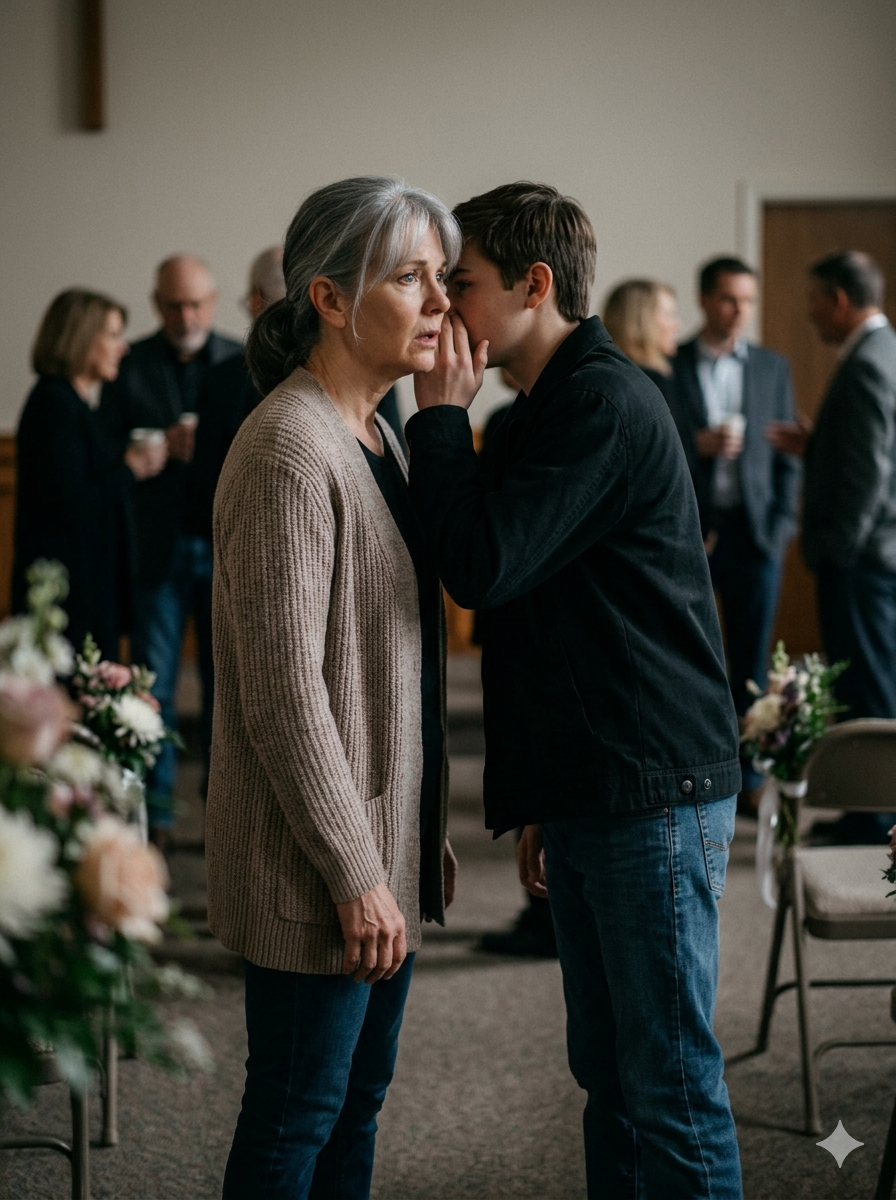
At first, he did not stand out for any particular reason, except that he did not belong to any group I could recognize. He was alone, positioned slightly apart from the others, watching rather than participating, his posture carrying a kind of restrained tension that suggested he was waiting for something.
He looked young.
Fifteen, perhaps.
Too young to be there without explanation.

I might have dismissed it as a distant connection, a neighbor’s child, someone brought along without context, if not for the way he continued to watch me, not intrusively, but with a focus that felt deliberate.
And eventually, when the crowd began to thin and the conversations quieted, he moved.
Up close, the uncertainty in him became more visible, not as hesitation, but as careful control, as though he had rehearsed this moment in his mind and was now trying to follow it without deviation.
“My condolences,” he said.
I thanked him, the words coming automatically, the way they had for everyone else that day.
But he didn’t step away.
Instead, he leaned slightly closer, lowering his voice in a way that made the next words feel separate from everything else that had been said to me.
“He told me that if anything ever happened to him… you would take care of me.”
For a moment, I thought I had misheard him, not because the words were unclear, but because they did not fit into anything I understood about the life I had lived with Daniel.
“Sorry?” I asked, more out of instinct than comprehension.
He met my gaze without flinching.
“He promised me.”
There are moments when confusion does not arrive gradually, but all at once, displacing everything else and leaving behind a space where nothing quite aligns. Standing there, I felt that shift take hold, not as panic, but as a quiet disorientation that made it difficult to decide what question to ask first.
“Take care of you?” I repeated. “Who are you?”
He lowered his eyes briefly, not in avoidance, but in concentration, as though choosing his words carefully.
“I didn’t come to cause problems,” he said. “I just… I had to come today. He told me that if he ever disappeared, I should find you.”
The air between us seemed to change, the weight of his words settling into the silence in a way that made it impossible to dismiss them as a misunderstanding.
“When did he tell you that?” I asked.
He hesitated, then answered with a certainty that felt too grounded to question.
“About a year ago. At the center where I was staying.”
That detail stopped my thoughts completely.
A center.
Daniel had never mentioned anything like that, not casually, not in passing, not in any way that suggested he had been spending time in places I knew nothing about.
And yet, the boy’s tone carried no uncertainty.
“He used to come sometimes,” he continued. “Not often. But he brought things. Books mostly. He talked to us. Not like other people do.”
I found myself searching for something in his expression that might indicate exaggeration or confusion, but there was nothing performative in the way he spoke. If anything, his words felt measured, restrained, as though he was offering only what was necessary.
“And what exactly did he promise you?” I asked.
This time, he didn’t hesitate.
“That he wouldn’t leave me,” he said. “No matter what changed. Even if something happened to him… he said you would understand.”
I didn’t.
Not yet.
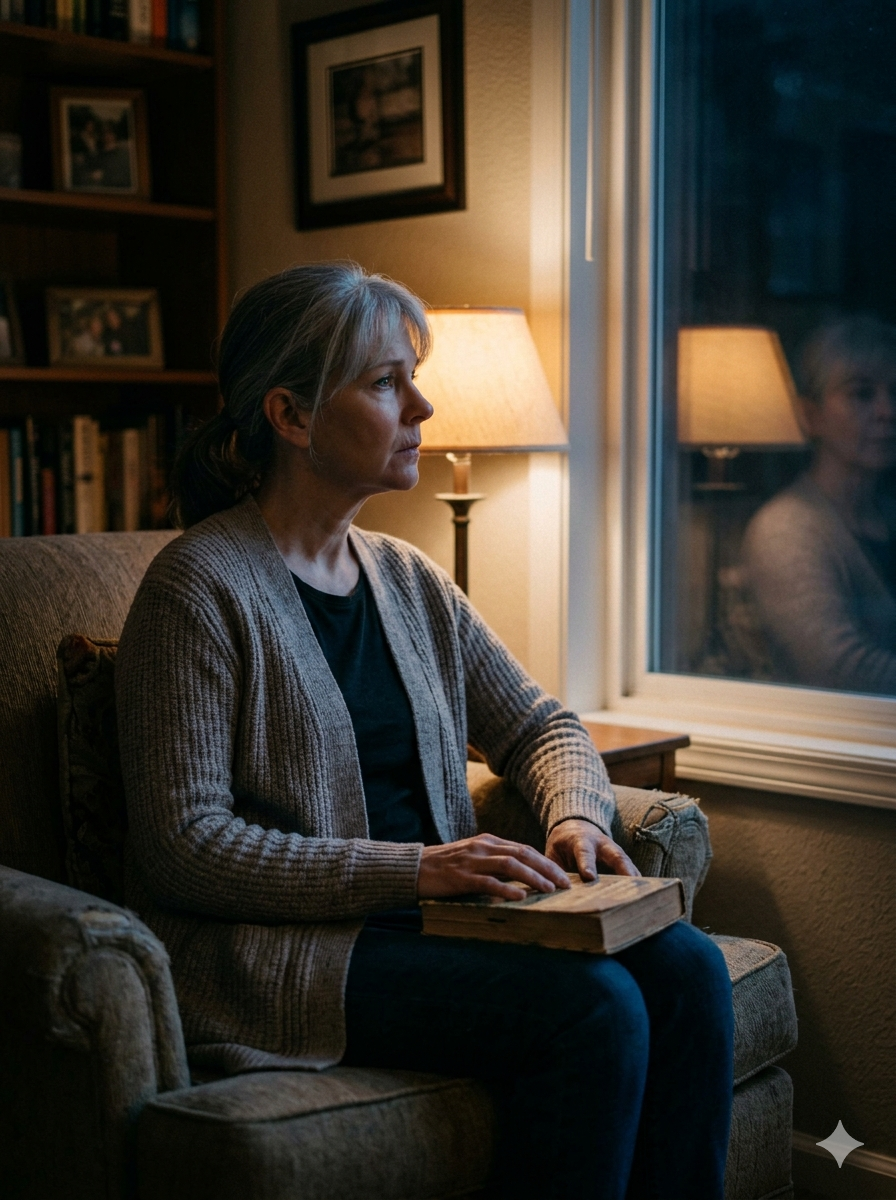
But something in the way he said it, in the simplicity of the statement and the absence of expectation behind it, made it impossible to dismiss him outright.
“What’s your name?” I asked quietly.
“Lucas.”
I repeated it silently, testing the unfamiliarity of it against everything I thought I knew.
Daniel had never mentioned Lucas.
Not once.
And yet, standing there, I realized something I hadn’t allowed myself to consider until that moment.
Knowing someone for twenty-eight years does not mean you have seen every part of their life.
It only means you have seen the parts they chose to share.
Lucas didn’t move.
He didn’t press.
He simply stood there, waiting, with a patience that suggested he had never doubted I would listen.
And for the first time since Daniel’s death, I understood that grief was no longer the only thing I was carrying.
There was something else now.
A question.
One that, whether I was ready or not, was not going to leave unanswered.
I took him to the diner across from the cemetery, because I could not think of anywhere else, and because he looked as though he had not eaten since the day before.
The answer, when it came, was not the one I had braced for. Lucas was not Daniel’s son. He was a boy at Harlow House, a residential center on the east side of the city, where Daniel had been going on Thursday evenings for nearly three years, the same Thursday evenings I had believed he spent at the library. In a sense he had been at the library. He collected the books they were discarding and drove them across town.
“He said he wasn’t allowed to promise us anything,” Lucas told me. “Then last year my placement fell through, and he promised anyway.”
I found the rest in the garage that night, on the shelf above the fence paint. A folder, labeled in Daniel’s square handwriting, containing a foster care application for our address. His half was complete. Mine was blank, with a yellow note stuck to the first page: Ask her. Stop being a coward.
I understood then why he had never asked. Nineteen years ago we lost a pregnancy at five months, and afterward I told him I could not talk about children again, not ever, and he gave me his word. Daniel kept his word about everything. He had kept that one so carefully that he could not find a way to tell me he had walked into a building full of children and been unable to walk back out.
He had not hidden a second life from me. He had hidden a hope, because I had asked him to.
I filled in my half of the form at the kitchen table. It took four months, two home visits, and a class I attended on Thursday evenings, which seemed right.
Lucas moved into the back bedroom in the spring. He was polite for six weeks and then, to my great relief, he was not.
In June we painted the fence. Daniel had left a color card taped to the can, a gray-green I would never have chosen, and Lucas held it up to the light and shrugged.
“He had bad taste,” he said.
“Terrible,” I agreed, and handed him a brush.