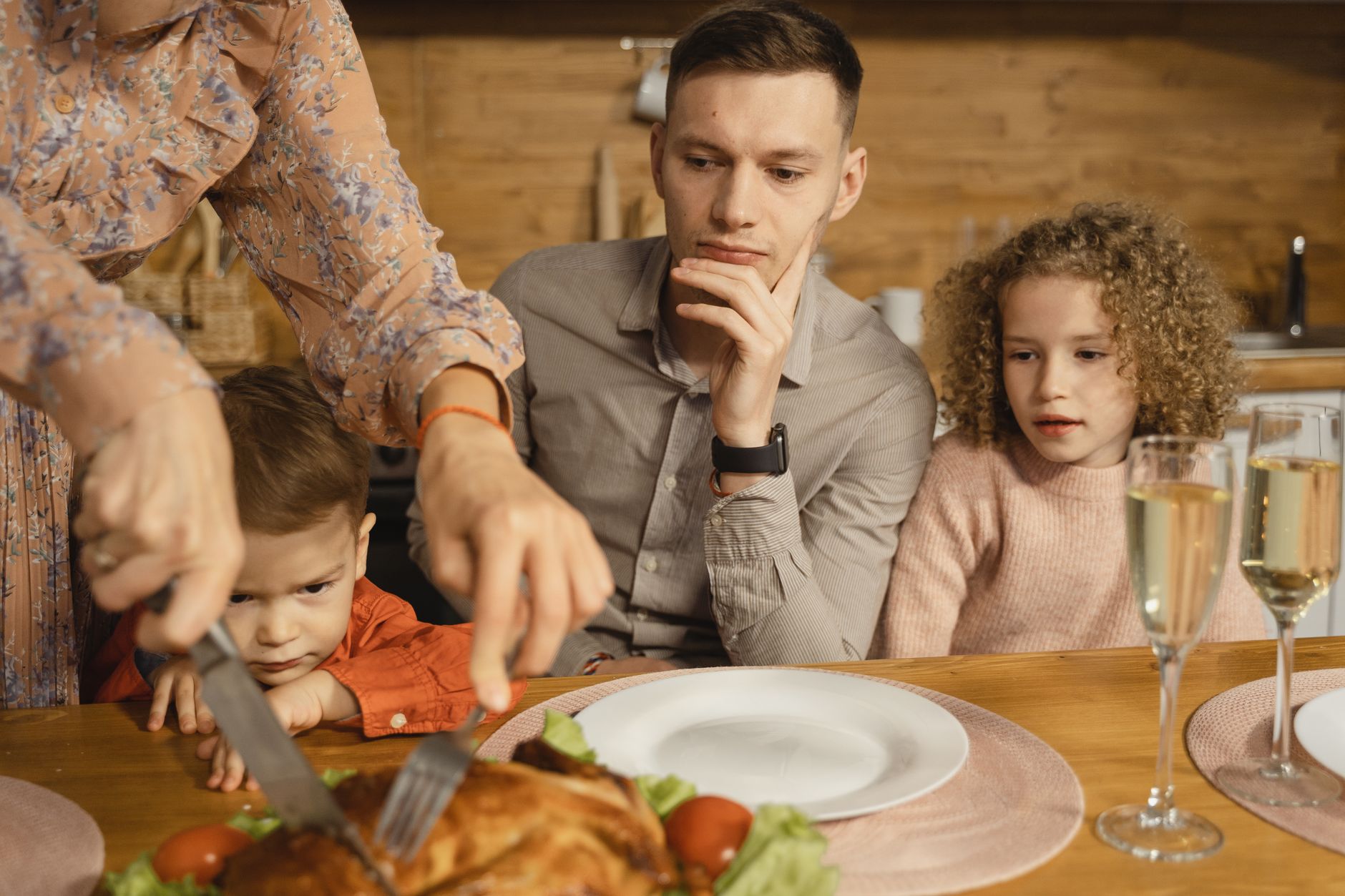
A calm plan for holiday gatherings: exit lines for touchy topics, a game plan with your partner, breaks, alcohol limits, grief, and when it is OK to skip.
You love your family. You also know exactly which relative is going to bring up politics before the rolls are passed, who will comment on your weight, and which old argument will resurface around the second glass of wine.
If the holidays make you a little tense, you are far from alone. In the American Psychiatric Association’s 2025 Healthy Minds Poll, 41% of U.S. adults said they expected more holiday stress than the year before, up from 28% in 2024. Nearly one in three said they were worried about dealing with challenging family dynamics (American Psychiatric Association).
You can’t control your relatives. But you can control a surprising amount of how the day goes for you. Here is a practical plan.
Decide What You Actually Want From the Day
Before you think about anyone else, ask yourself one question: what would make this gathering a success for me? Maybe it’s that the kids get time with their grandparents. Maybe it’s a calm meal and leaving before dark. Maybe it’s just getting through without a fight.
Having a clear, modest goal changes how you react in the moment. When your uncle starts in on a familiar topic, you can ask yourself whether engaging gets you closer to your goal. Usually it doesn’t, and that makes it much easier to let it go.
Expect the Predictable
Most holiday friction is not a surprise. The same people tend to push the same buttons year after year. That is actually useful, because you can prepare.
Take two minutes and write down the two or three comments or topics most likely to come up. Then decide in advance how you’ll respond to each. A response you planned at your kitchen table will almost always be calmer than one you come up with while your face is getting hot.
Have a Few Polite Exit Lines Ready
You don’t owe anyone a debate over dinner. A short, friendly line that closes the topic is often all you need:
- “We see that one differently. How’s the new job going?”
- “I’d rather not get into that today. Can I get anyone more coffee?”
- “Thanks, I’ll think about it.” (Then change the subject.)
- “I’m not talking about my weight, but I’d love the recipe for this stuffing.”
The pattern is simple: acknowledge, decline, redirect. You are not being rude. You are choosing not to fight. If the person pushes, repeat the same line calmly. You don’t need a new argument each time.
For the bigger requests (hosting again, lending money, staying longer than you planned), our guide on how to say no to family without starting a fight has more scripts.
Agree on a Plan With Your Partner Before You Arrive
If you’re going as a couple, talk on the drive over, not in the hallway with your voices lowered. A few things to settle:
- What time you’re leaving. Agree on it before you walk in.
- A signal. A simple word or gesture that means “I need a break” or “let’s start saying goodbyes.”
- Who handles which relatives. It usually goes better when each person deals with their own family’s touchy topics.
- That you’re on the same team. If one of you gets criticized, the other doesn’t pile on.
Being on the same side ahead of time takes much of the sting out of anything that happens at the table. And if the two of you do end up snapping at each other on the drive home, our piece on how to make up after an argument covers what the research says about repair.
Know Your Body’s Warning Signs
Most blowups happen when someone is overwhelmed: racing heart, hot face, a mind that won’t slow down. Marriage researcher John Gottman calls this being “flooded,” and once you’re there, nothing useful gets said.
Learn to catch it early. When you feel that surge, step away before you say anything. Offer to take out the trash, walk the dog, check on the kids, or run to the store for ice. Twenty minutes away from the table, doing something that calms you, gives your body time to settle. Nobody needs to know why you left.
Go Easy on the Alcohol
A drink can make a gathering feel looser, but alcohol also lowers inhibitions, which is exactly what you don’t want when tensions are already high. Plenty of family fights start with “one more glass.” If you want to drink, set a limit beforehand, alternate with water, and eat a real meal. If a particular relative becomes harder to be around after a few drinks, that’s a good reason to plan your exit for earlier in the evening.
Build In Breaks
A full day of togetherness is a lot for anyone. Breaks make it easier on everyone:
- Suggest a walk after the meal. Moving side by side tends to make conversation easier than sitting face to face.
- Bring a game or puzzle. A shared activity gives people something to focus on besides each other.
- If you’re staying overnight, consider a hotel or short-term rental nearby. Having your own space to retreat to can make a multi-day visit much more peaceful.
- Keep the visit short. A warm three-hour visit is better than a tense eight-hour one.
Make Room for Grief
For many people, the hardest part of the holidays isn’t the relatives who are there. It’s the ones who aren’t. In the same APA poll, missing someone or grieving was the top holiday worry, named by 48% of adults.
It often helps to acknowledge the loss rather than pretend everything is the same. Some families set out a photo, cook the person’s favorite dish, or take a moment to share a story about them. Others change the tradition entirely because the old one hurts too much. Either choice is fine. Talk about it ahead of time so no one is caught off guard.
If You’re Spending It Alone
Not everyone has a family table to go to, and not everyone wants one. If you’ll be on your own, plan the day a little so it doesn’t just stretch out in front of you. Volunteer for a few hours, join a friend’s gathering, schedule a long video call, or make yourself a meal you’d never bother with on a normal day.
Loneliness is more than a bad mood. A 2023 advisory from the U.S. Surgeon General linked a lack of social connection to higher risks of heart disease, stroke, depression and early death (HHS). Reaching out, even in small ways, is worth the effort. (We wrote about the bigger picture in The Loneliness Economy.)
It’s OK to Skip a Gathering
Sometimes the healthiest choice is not to go, or to change how you show up. If a family member is cruel, abusive, or unsafe, you don’t owe anyone your presence just because it’s a holiday. You can visit on a different day, stop by for dessert only, or celebrate with friends instead. A warm, firm message is enough: “We won’t make it this year, but we’re thinking of you.”
If you are ever afraid for your safety, the National Domestic Violence Hotline is available 24/7 at 1-800-799-7233 or thehotline.org.
A Quick Holiday Game Plan
- Pick one simple goal for the day.
- List the two or three predictable trouble spots and plan your answers.
- Agree on a leaving time and a signal with your partner.
- Use “acknowledge, decline, redirect” on the hard topics.
- Step away the moment you feel flooded.
- Set a drink limit before you arrive.
- Leave while it’s still going well.
You won’t fix your family in one afternoon, and that isn’t the job. The job is to protect your peace, enjoy the parts worth enjoying, and get home with your relationships, and your sense of humor, intact.