What studies by Emmons, McCullough and Seligman found about gratitude, and five easy ways to practice it all year, from journaling to a thank-you letter.
Every November, gratitude gets its moment. We go around the table and name what we’re thankful for, and then, for most of us, the feeling fades by the time the dishes are done.
It turns out that gratitude is more than a holiday ritual. Psychologists have studied it for more than two decades, and the research suggests that small, regular habits of noticing and expressing thanks can make people happier and strengthen their relationships. Here’s what the studies found, and how to make gratitude something you do all year, not just on the fourth Thursday of November.
What the Research Shows
One of the best-known studies came from psychologists Robert Emmons of the University of California, Davis, and Michael McCullough. They asked participants to write a few sentences each week. One group wrote about things they were grateful for, another about things that irritated them, and a third about events that affected them, good or bad.
After 10 weeks, the people who wrote about gratitude were more optimistic and felt better about their lives. They also exercised more and had fewer visits to doctors than those who focused on their irritations, as summarized by Harvard Health Publishing.
Another study, led by University of Pennsylvania psychologist Martin Seligman, tested several “positive psychology” exercises on 411 people. The one with the biggest effect: writing and personally delivering a letter of thanks to someone who had never been properly thanked. Participants showed an immediate jump in happiness scores, and the benefit lasted about a month, larger than any other exercise in the study.
It’s worth keeping this in perspective. Gratitude isn’t a cure for depression or a replacement for treatment, and some studies have found smaller effects than others. But as low-cost habits go, it has an unusually good track record.
Why Gratitude Seems to Work
Our brains are built to notice problems. That’s useful for survival, but it means the leaky faucet and the rude email get far more of our attention than the friend who checked in or the good cup of coffee. Gratitude practices push back against that habit. They train you to notice what’s going right, which is usually a lot more than you remember at the end of a long day.
Gratitude also tends to point outward, toward other people. Thanking someone strengthens the relationship and makes it more likely they’ll show up for you again. That matters, because decades of research link strong relationships to better health and longer lives.
Five Ways to Practice Gratitude
1. Keep a simple gratitude journal
Once or twice a week, write down three to five things you’re grateful for. Researchers at UC Berkeley’s Greater Good Science Center offer several tips for making it stick (Greater Good Magazine):
- Go for depth over length. Writing in detail about one thing beats listing many things briefly.
- Focus on people more than possessions.
- Notice surprises. Unexpected kindnesses tend to stir stronger feelings.
- Don’t overdo it. Some research suggests writing a few times a week can work better than daily, which can start to feel like a chore.
2. Write a thank-you letter
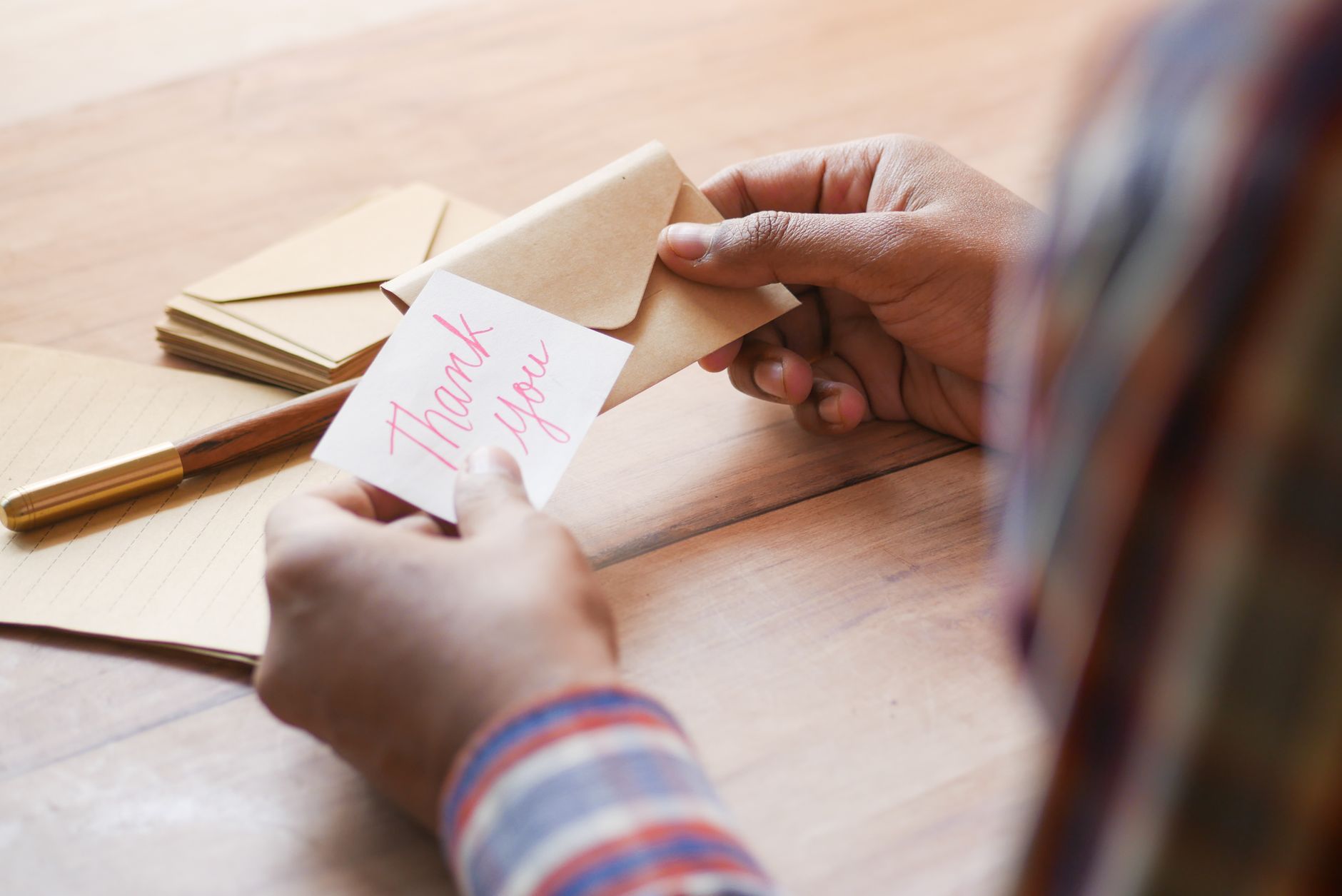
Think of someone who made a real difference in your life: a teacher, a coach, an old boss, a neighbor, a grandparent. Write them a letter describing specifically what they did and how it affected you. If you can, deliver it in person or read it to them on the phone. If they’ve passed away, writing the letter can still be meaningful.
Thanksgiving week is a natural time to do this. It costs nothing, and it may be the best gift you give all season. (If gift budgets are tight this year, our holiday spending plan has more ideas for gifts that don’t come from a store.)
3. Say thanks out loud, and be specific
“Thanks” is good. “Thank you for picking up the kids today. It meant I could finish that report without panicking” is much better. Specific thanks shows the other person that you actually noticed what they did.
This matters especially at home, where it’s easy to take a partner’s daily efforts for granted. Marriage researchers have found that regular appreciation is one of the habits that keeps couples close. We cover more of that research in how to make up after an argument.
4. Make it a family habit
Turn gratitude into something you do together instead of a once-a-year speech:
- Share one good thing from the day at dinner.
- Keep a “thankful jar” on the counter where anyone can drop in a note, and read them together at the end of the month or year.
- Help kids write short thank-you notes for gifts and kindnesses. Even a drawing counts.
5. Use it when things are hard
Gratitude isn’t about pretending everything is fine. During difficult stretches, it can mean noticing small things that still help: a friend who called, a warm meal, a good night’s sleep. Some people find it helps to end a hard day by naming one thing that went OK. It doesn’t erase the bad parts. It just makes sure they aren’t the only thing you see.
A Gentle Word of Caution
Gratitude should never become a way to dismiss real problems, yours or anyone else’s. “Just be grateful” is not helpful advice for someone who is grieving, struggling with depression, or in a harmful situation. If low mood has lasted for weeks, or if winter tends to hit you especially hard, talk to a doctor. Our guide to winter blues and seasonal affective disorder explains when to seek help.
Try This This Week
- Tonight, write down three specific things that went right today.
- Thank one person in detail for something they did.
- Before Thanksgiving, write a thank-you letter to someone who shaped your life, and deliver it if you can.
The holiday gives us one day to count our blessings. The research suggests the real benefit comes from making it a habit long after the leftovers are gone.