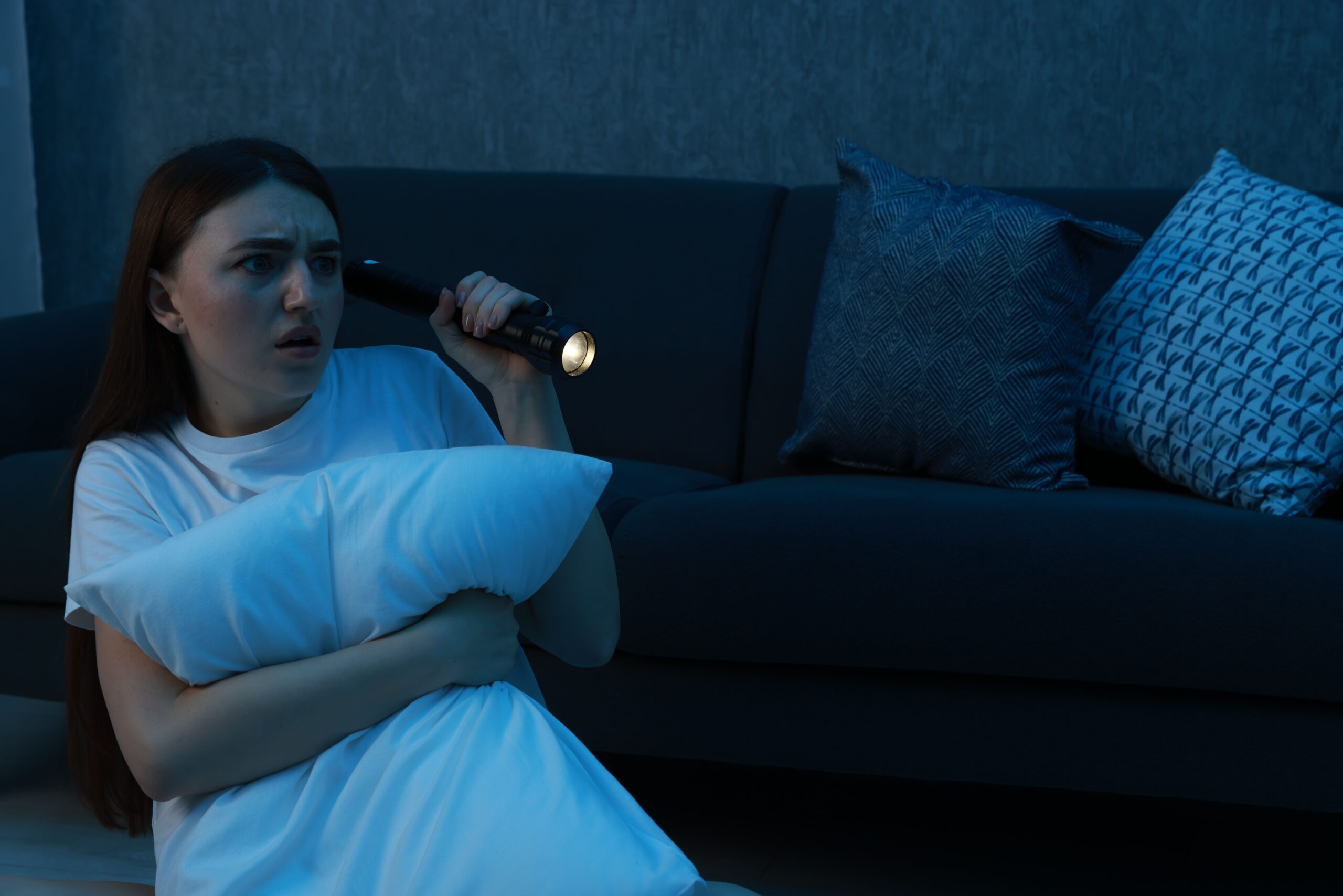
Fiction. This story is a dramatized work created for entertainment. Names, characters, events, and circumstances are fictional.
Sunday Never Came
PART 1: The Tuesday
The Tuesday I watched my husband pour something onto my pillow, he had spent two days telling me he was in Dallas.
But that wasn’t the worst part.
The worst part came five minutes later, when my phone lit up with a text from him: Still in meetings, babe. Take care of yourself.
My name is Dana Whitfield. I’m thirty-nine years old, and I live in Chicago.
For twelve years, I believed I knew Garrett Pruitt. I married him when we were so broke that our first dining table was a door laid across two filing cabinets. He grew into a real estate developer, the kind who wore good watches and said “the pipeline” a lot. I became a forensic auditor at a private firm, the person companies call when money goes missing and nobody can explain where.
Garrett loved to joke about my job in front of our friends. “Dee checks invoices,” he’d say, swirling his wine, “while the rest of us do real business.”
I laughed along every time. It was easier than starting a fight.
Now I understand that his contempt was his first mistake. He never imagined I would look at his books.
By that Tuesday, I had been sick for almost a month.
It started with headaches that were already waiting for me when I opened my eyes. Then came nausea, dizzy spells, and a strange fog in my head, as if someone had shuffled my thoughts like a deck of cards and I couldn’t put them back in order. I saw my family doctor. The routine tests came back normal.
“It’s stress,” Garrett told me, over and over. “You’re burning yourself out, Dee. Take some time off.” And every night, with great tenderness, he fluffed my pillow before I lay down.
That morning I lasted three hours at my desk before my boss took one look at my face and sent me home.
I got in a little after noon, dropped my bag beside the armchair, and pulled a blanket over myself. I didn’t turn on the television. I needed silence the way other people need water.
At 12:27, I heard the front door lock turn.
My first thought was the cleaning lady, until I remembered she only came on Fridays. It was Tuesday.
Through the gap under the living room door, I saw a pair of men’s shoes cross the hallway.
“Who’s there?” I called.
Nobody answered.
I slid down behind the big armchair and held still. From there, I could see the staircase reflected in the glass of the dining room cabinet. A shape moved across it. Then I saw him: Garrett, in his navy blue shirt, carrying a small paper bag.
Relief hit me for exactly one second. He’s home early, I thought. He came back to surprise me.
Then I noticed the gloves.
Thin, blue, disposable gloves, the kind you wear to handle something you don’t want to touch.
He went up the stairs without calling my name.
My hands were shaking, but my training took over, the same instinct that makes me pull a thread when a number looks wrong. I took out my phone, opened the security app, and selected the camera in our bedroom. We had installed those cameras after a break-in attempt next door. The bedroom one faced the door and a corner of the bed. When I’d once suggested turning it off, Garrett had insisted we keep it running. “Better safe than sorry,” he’d said.
On my screen, my husband walked straight to my side of the bed.
He took a small dark bottle out of the bag. He lifted the edge of my pillowcase. And he let several drops fall onto the fabric that touched my face every single night.
Then he photographed it, as if filing a report, and slipped the bottle into his pocket.
I couldn’t feel my fingers. Every cell in my body screamed at me to run, but he was thirty feet above my head, and the front door was behind him.
He came back down the stairs with his phone to his ear.
“It’s done for today,” he said, in a flat, practical voice. “No, she wasn’t here.”
My phone buzzed in my hand. Still in meetings, babe. Take care of yourself.
I stared at the message, and at the man standing ten feet away who had just typed it with his free thumb. I didn’t dare breathe.
He listened to the voice on the other end, then said, “We’ll settle it Thursday. And don’t text this number again.”
I knew that tone. It was the one he used with Lindsey Crane, his business partner.
Lindsey had eaten at our table more times than I could count. She had sat beside me in a hospital waiting room when my mother had surgery, holding my hand and a cup of terrible coffee. I had called her my friend.
Garrett stayed in the house for twelve more minutes. I spent every one of them folded behind that armchair, counting my own heartbeats. When the sound of his car finally faded down the street, I made myself move in order, the way I do at work. Evidence first.
I downloaded the original recording from the app. I saved the time stamps and the access log. I sent copies to a backup account Garrett didn’t know existed. Only then did I call 911.
“My husband just put something on my pillow,” I told the operator, and my voice cracked on the last word. “I’ve been sick for weeks.”
She told me to leave the house, not to touch the bedroom, and to wait somewhere safe for officers.
I already had my keys in my hand when the family tablet rang on the coffee table.
It was an old iPad we used for video calls with my mother, still logged in to Garrett’s account. A message preview from Lindsey took up the whole screen.
Did you confirm the beneficiary thing? The deposit is already paid.
I didn’t need to guess his password. Garrett had used the same one for twelve years, because he’d never believed anyone would look.
I opened the conversation and photographed every screen without deleting or changing a thing. There were pictures of a $400,000 life insurance policy. There was a letter bearing my signature, except I had never written it. There was a medical report claiming I suffered from “episodes of confusion and memory loss.”
Further down, I found a shared folder called Planning.
Inside was a quote from a funeral home. Instructions for a cremation. A receipt for a deposit, paid from Garrett’s company account.
And on the last page, in handwriting I knew from a hundred birthday cards, someone had written a date.
The coming Sunday.
My fortieth birthday.
PART 2: The Paper Trail
I walked out of my own house without a sweater, sat down on the curb across the street, and stared up at our bedroom window until a patrol car pulled in. I never went back inside.
An officer named Tamara Boyd took my statement. She wrote down where every device was and explained that the originals had to be preserved exactly as they were. A paramedic checked my blood pressure, and then an ambulance took me to the emergency room.
At the hospital, they drew blood and ran a neurological exam. They asked about my medications, my job, even every cleaning product under my sink. The doctor was careful with her words.
“Your symptoms can have many causes,” she said. “I can’t tell you that you were poisoned without specific testing. But based on what you’ve described, you should not sleep in that house tonight.”
I asked her to write down my symptoms, their dates, and my reasons for being worried. Years of auditing had taught me something simple: one precise document is worth more than twenty angry accusations.
Then I called my sister, Becca, who lived in Evanston, and asked her to collect a few of my things once the police allowed it. After that, I called my lawyer, Joan Sutter.
Garrett and I had always kept our finances separate. Joan had been helping me organize a share I’d inherited from my grandfather in a real estate trust.
“Don’t touch that tablet again,” Joan said the moment I finished. “You’ve seen enough to bring in the prosecutors. Now we protect your accounts and we document everything.”
I told her about Lindsey’s message. She went quiet.
“Does your husband know what your share is really worth?”
“He thinks it’s around four hundred thousand,” I said. “He never read the statements. He only ever asked how much he could get out of it.”
The real value was closer to $1.6 million. But it wasn’t cash anyone could grab. The trust had administrators, rules, and strict limits on withdrawals. Garrett knew only a sliver of that, and he had never cared to learn the rest.
That night, my phone rang. His name filled the screen.
“How’s my sick girl?” he asked, in a sweetness that now turned my stomach.
“Tired. I’m staying at Becca’s.”
“Your sister’s? Why aren’t you home?”
“I got dizzy again.”
A short silence.
“You should stay in bed tomorrow,” he said. “You know. On your own pillow. I’ll be back Friday.”
I closed my eyes. He had leaned on the words your own pillow, slowly, like a man tapping a table to make sure I was listening.
“And Dallas?”
“All good, babe. I’ll tell you everything when I’m back.”
I hung up before my voice could shake.
The next morning, Joan arrived at Becca’s apartment with the bank records I had requested and a stack of alert emails from my accounts. Someone had tried to move $80,000 out of one of my individual accounts into a company connected to Garrett. It had failed because the second-step approval, the one that required my phone, was missing.
But from our joint account, the one we both could use, $35,000 had already left in three transfers. The money went to a contractor who had been hounding Garrett over unpaid work, and to a travel agency. It wasn’t some future inheritance he was spending. It was our money, spent behind my back.
Joan had also called the trust company, and what she found there made my skin go cold. Someone had emailed them, supposedly as me, asking that Garrett be named my representative “to help me manage things,” and attached a power of attorney with a signature that wasn’t mine. The trust officer had refused. She had demanded that I come in person.
“His plan didn’t depend only on you dying,” Joan said quietly. “He also needed you to look incapable of handling your own affairs.”
That sentence rearranged my memory like a key turning in a lock.
I remembered the dinners where Garrett laughed and told the table I couldn’t remember where I’d put my keys. How Lindsey always added her little line. Dee works so hard. Then she can’t even remember what she signs. They had said it in front of my mother, our friends, my clients. Every joke was a brick. Together, they were building a version of me that someone could use later.
The Cook County State’s Attorney’s Office asked us to preserve every piece of digital material. Investigators arranged to search the bedroom and review the documents. A lab technician bagged the pillowcase and the pillow itself. The results would take time.
They also looked into the medical report. The clinic whose letterhead it carried confirmed it had never issued it.
That afternoon, another alert arrived on my phone: someone was trying to reset my banking password from a device I didn’t recognize. With the bank’s help, I locked everything down and handed the details to the investigators.
I told myself Garrett was improvising now, that I had slammed every door in his face and he was scrambling. I almost believed it.
Then Joan slid a printed photo across Becca’s kitchen table. The prosecutors had added it to my complaint. It was a page from the Planning folder that I hadn’t had time to see, a calendar where Lindsey had circled a single date and written three words beside it.
If she won’t sign, Sunday.
Sunday wasn’t a random day. The calendar showed what had been arranged weeks earlier: a birthday dinner for me, in our own house, with all my family and friends invited. Lindsey had volunteered to organize everything. She would choose the menu. She would pour the drinks.
The poison on my pillow, I realized, had never been the whole plan.
It was only the backup.
PART 3: Sunday Never Came
The first thing I did was cancel the dinner.
I didn’t send a polite message to the family group chat claiming I felt under the weather. I didn’t invent an excuse. I called my mother and told her, in the clearest words I could find, not to go to our house and not to eat or drink anything prepared by Garrett or Lindsey.
Then I asked Becca to pass the same warning to the closest guests, without saying a word about the investigation.
My mother took a few seconds to answer.
“Three weeks ago, he told me you were having memory problems,” she admitted. “He asked me not to upset you with questions.”
That hurt more than I expected. My mother had stayed silent because she believed she was protecting me. Garrett had recruited the people who loved me most to doubt me before I’d even begun to doubt him.
“Mom, I need you to believe me now, even though I can’t explain everything.”
“I believe you,” she said. “And I’ll repeat exactly what he told me, if anyone asks.”
She didn’t turn into a detective or march over to confront anyone. She simply stopped, without knowing it, playing along with the lie.
For the next several days, I lived in Becca’s spare room. I changed my passwords from a clean computer, signed out of every shared session, and asked the banks for extra security. Joan filed the civil motions needed to prevent anyone from acting in my name with disputed documents. She also came with me to request protective measures, because of the danger I had reported.
There were forms, repeated interviews, and nights when I woke up certain I could smell that pillowcase again. I wanted to scream at Garrett. But an accusation is no substitute for a lab result, and I knew it.
On Friday, the day he was supposed to return from Dallas, my phone buzzed with a photo of a bouquet of roses.
I’m home. Let’s talk. Lindsey says we can fix your stress thing.
I wrote back that I wasn’t coming home, and that every money matter would go through Joan. Within three minutes, he called seven times. Then came another message:
Don’t listen to your sister. She’s putting ideas in your head. You need help.
I saved every word. He was still trying to paint me as a woman who couldn’t think for herself, and now he was handing me the proof.
While I waited, I did what I do best. I went through every bank record I could still access, and I dug out a copy of an old guarantee I’d once signed for Garrett’s company. I confirmed it had expired, so no new debts could be pinned on me through that contract.
One more detail finished explaining the two of them. Through the investigators, a travel agency confirmed a booking for Garrett and Lindsey to Lisbon, departing the day after my birthday. Recovered messages showed they weren’t only partners. They had been lovers for almost two years.
I thought about all the times Lindsey had sat at my table, looked me in the eye, and asked whether I was still feeling unwell.
The financial investigation later revealed how deep the hole really was. Garrett’s development company had pre-sold condos in a building that had been stalled for months, with no permits and no money. Buyers and suppliers were demanding refunds. He had personal loans he couldn’t repay, and Lindsey, as a partner, had signed some of those obligations herself.
They weren’t two lovers playing at being rich. They were two people running from their creditors.
They had counted on my life insurance, $400,000 of fast cash. Garrett had been the beneficiary since the day I bought the policy, back when I trusted him completely. They also planned to sell our jointly owned house and take control of my assets through false documents.
What they hadn’t counted on was a trust that wouldn’t empty itself because someone walked in waving a forged power of attorney. The fake medical report was their insurance policy if I survived and told anyone. And if I didn’t, Garrett would collect, shake hands at my funeral, and tell everyone he’d been quietly managing my affairs for months.
In the end, nobody had to confess to everything. A handwriting expert challenged the signatures on the power of attorney. The clinic denied the report. The bank records showed where the money went. And the video showed Garrett standing beside my pillow with a bottle.
What remained was the question of what was in that bottle.
The lab found residue on the pillowcase of a compound that has no business in any household cleaner. My doctors said my symptoms fit repeated exposure, though they couldn’t say how much I had absorbed. During a court-authorized search of Garrett’s office, investigators seized a container with traces of the same compound, and later testing backed up the match.
When I heard the results, I had to step out into the hallway to breathe. Every night, he had told me to rest in the very spot where I could be hurt.
Joan asked whether I would also testify about the months of Garrett telling people I was losing my mind. I said yes. I wanted the whole deception exposed, not only what had happened with the pillow.
Before the hearing, I wrote a timeline of the weeks leading up to it. I didn’t just list headaches. I included the doctor’s visit, the calls from his fake trip, and the date he began telling my family I was confused. I went over it with Joan, line by line, separating my own memories from documented facts.
I faced him at a hearing on the protective orders, after his lawyer challenged them. I testified with Joan beside me, from the spot the judge assigned, without going anywhere near him. His lawyer described the whole thing as a marital argument made worse by my health problems.
Then Garrett asked to speak.
“I never wanted to hurt my wife,” he said. “She’s misreading things because she hasn’t been well lately.”
With the judge’s permission, I asked him a question.
“Were you in Dallas that Tuesday?”
“Yes. For work.”
“Then explain why our security system recorded you entering our house at noon, and why you appear walking to my pillow with a bottle.”
He said nothing.
“And I’d like to know,” I went on, “why you tried to use my assets with a signature that isn’t mine, and why you circulated a medical report the clinic itself denies.”
“Everything we built, we built because of me,” he snapped. “You always treated me like I didn’t understand anything.”
“I never denied you respect,” I said. “What I denied you was permission to run my life.”
The protective orders stayed in place. Nobody was convicted that day, but I walked out knowing I no longer had to defend the version of me he had invented.
Months later, once every lab and document report was in, Garrett and Lindsey were formally charged with attempted murder and use of forged documents. Both pleaded not guilty. Their lawyers attacked how the messages and test results were interpreted. There were witnesses, more evidence, and delay after delay.
I also learned how far Lindsey had gone. She had suggested the birthday dinner at my house. She knew my schedule. For weeks, she had listened to Garrett talk about my supposed confusion and said nothing. Messages recovered under court orders showed her part in the insurance plans and the false papers.
I still have a photo of the three of us at our tenth anniversary. Losing her, the friend I thought I had, was another kind of grief.
The case took more than a year. The evidence admitted at trial led to prison sentences for both: fourteen years for Garrett and nine for Lindsey. Their lawyers announced appeals. The money claims went down separate tracks.
I never recovered the whole $35,000. Part of it was already gone, and restitution became its own slow, exhausting process. I learned to accept that a court ruling doesn’t automatically return what you lost, and it certainly doesn’t return trust.
Meanwhile, I filed for divorce, changed the beneficiaries on my policy, and locked down my access to the trust. I left the house. Selling it meant sorting out what belonged to each of us as co-owners, but I was never going to sleep again in a room where someone had planned my death.
My health slowly came back. The headaches faded, though I still flinched when someone opened a door without warning. I went to counseling and returned to work little by little. Some people told me to move to another city. I hadn’t done anything that required me to hide.
Eighteen months after that Tuesday, my mother came to dinner at the apartment I’d rented near my office. While we washed dishes side by side, she brought up the birthday invitation from the party that never happened.
“I’ve thrown it away a hundred times in my head,” she said. “But I wanted to ask if it would bother you if we planned something this year.”
I looked at her. For the first time, the idea of a family gathering didn’t make me feel sick.
“I do want a dinner,” I said. “But we pick the cake.”
We laughed, and we cried a little. My mother still blamed herself for believing Garrett when he said I was losing my memory. I asked her for just one thing: never again let anyone speak for me without asking me first.
That night, I changed my pillowcase and opened the window. The fear hadn’t entirely gone. But the shame, I finally understood, belonged to the people who had tried to destroy me.
People sometimes ask whether I’ll forgive him. I don’t know. What I do know is that I don’t need to forgive him to take my life back.
And I still wonder how many times a woman has to say something is wrong before her own family stops calling her dramatic.
THE END
Note: This story is a work of fiction inspired by real events. Names, characters, and details have been altered. Any resemblance is coincidental. The author and publisher disclaim accuracy, liability, and responsibility for interpretations or reliance. All images are for illustration purposes only.