Fiction. This story is a dramatized work created for entertainment. Names, characters, events, and circumstances are fictional.
The $2.35 on My Desk
PART ONE
I had been teaching preschool for fifteen years, and I thought I’d seen everything a five-year-old could do before nine o’clock on a Monday morning.
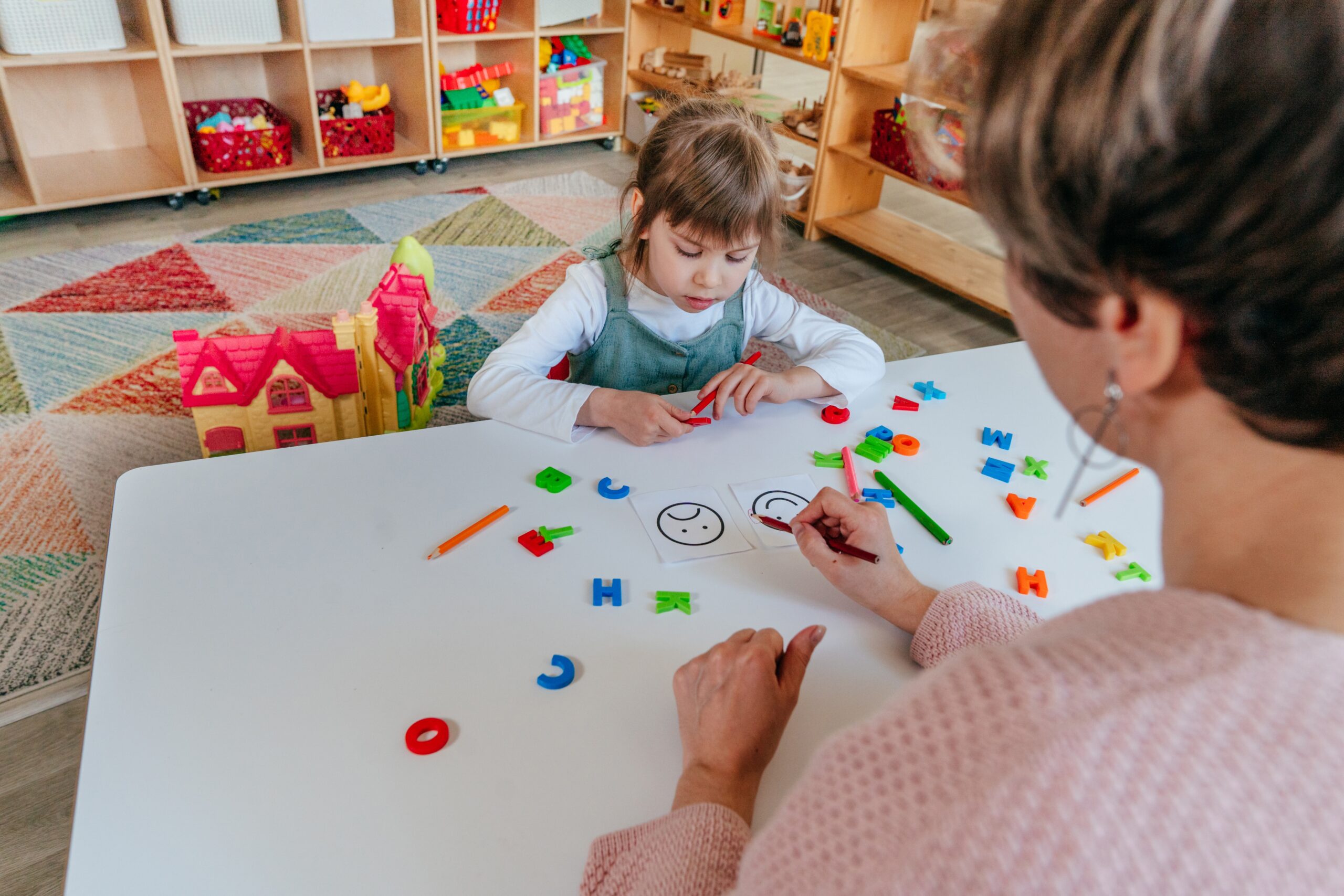
Then Ellie Mercer waited until her parents’ backs disappeared down the hall, marched up to my desk, and emptied a fistful of coins across my lesson plans.
“Is this enough to make you call my mommy and daddy?” she whispered.
I counted without meaning to. Two dollars and thirty-five cents, mostly nickels and dimes, still warm from her pocket.
“Call them about what, sweetheart?”
She glanced at the classroom door, then back at me.
“Tell them I was bad.”
I almost laughed. “Ellie, you haven’t done anything bad.”
“Not yet,” she said, with the calm of a tiny negotiator. “But I can. Just tell me what would make them both come.”
Fifteen years of teaching children how to behave, and here was a child begging me to teach her the opposite.
I pulled out the chair beside my desk. “Come sit with me for a minute.”
She climbed up at once, sneakers dangling above the floor, and folded her hands like she was at a job interview.
Ellie was the kind of child teachers quietly dream about. Brown pigtails. Purple crayons. A stack of animal picture books she knew by heart. She washed her hands without being reminded and helped the younger kids with their coats. When another child wanted the toy she was holding, she handed it over before they finished asking. I’d taught criers, arguers, and children who considered sitting still a personal insult. Ellie was none of those.
Which made the pile of coins between us so much stranger.
“Where did you get all this?”
“My jar.”
“Your savings jar? What were you saving for?”
“A unicorn notebook.”
“Then why are you giving it to me?”
“Because I need you to call them. Both of them.”
“Did something happen at home?”
A quick shake of the head.
“Are you worried about something?”
Another.
Gently, I slid the coins back toward her. “Honey, I can’t tell your parents you did something bad when you didn’t.”
Ellie considered this with great seriousness. Then she scooped the money into her pink sweater pocket.
“Okay.”
I assumed that was the end of it.
At 9:15, in the middle of our art activity, Ellie walked to the supply shelf, looked straight at me, and pushed a bin of crayons onto the floor.
The crash turned every head in the room. Red, green, and yellow crayons rolled under the tables like startled mice.
Ellie didn’t flinch. She stood with her arms at her sides, waiting.
“Ellie? What happened?”
“I pushed them.”
I crossed the room. “Did you need something?”
“No.”
“All right. Then let’s pick them up together.”
Her face fell.
“That’s all?”
“You made a mess on purpose, so we’ll talk about that. But we can fix it.”
She wasn’t embarrassed. She wasn’t sorry she’d been caught. She was disappointed, the way you’d look at a vending machine that swallowed your money and gave you nothing.
I crouched beside her. “Why did you push them?”
Her eyes flicked to the classroom telephone. “Don’t you have to tell my mommy?”
“Not every mistake needs a phone call.”
“But it wasn’t a mistake,” she said. “I did it on purpose.”
Something tightened in my chest. Across the room, twenty other children were gluing paper pumpkins, and my assistant, Karen, had smoothly taken over. I led Ellie to the reading corner.
“Sometimes children make choices that aren’t helpful,” I said. “When they do, we help them make better ones.”
She stared at her shoes. “Even if they do something really bad?”
“Even then.”
She went quiet for so long I thought I’d finally gotten through. Then she asked, “What if I broke something? Not a little thing. A big thing.”
“Why are you asking me that?”
She twisted the cuff of her sweater. “Because I need you to call both of them.”
“Why, Ellie?”
She swallowed. “Because I want them to come.”
“Is someone supposed to pick you up early today?”
“No.”
Her eyes filled. She blinked hard, as though crying might ruin whatever she was trying to accomplish.
“I just want to know what I have to do,” she whispered.
I had no answer for her. Not yet. But I knew this wasn’t about crayons, and it certainly wasn’t about a unicorn notebook. Something had convinced this little girl that she had to earn a visit from her own parents.
By lunchtime, Ellie had broken three more rules. Small ones. She talked while I was reading. She left the carpet before circle time ended. When Karen called everyone to line up for recess, Ellie planted herself beside the bookshelf instead.
Each time, she watched us closely. Most five-year-olds who test limits want attention or independence or a reaction. Ellie looked like she was checking a list, wondering if she’d finally hit the invisible requirement.
And each time I said, “Ellie, please join the line,” she joined it. No argument. No tantrum. Just that same flat disappointment when nothing happened.
During quiet time, I left Karen in charge and sat with Ellie at a small table by the window. She tucked her stuffed rabbit under one arm.
“Are you trying to get sent home?”
“No.”
“Trying to upset me?”
“No, Mrs. Bennett.”
“Then help me understand.”
She smoothed the rabbit’s ear. “Last time Mason had a bad day, Mommy came before lunch.”
Mason was her nine-year-old brother, a thin, sandy-haired boy who always carried a book under his arm. He attended third grade in the same building that housed our preschool.
“Your mommy picked him up?”
“And Daddy came too.”
“Both of them?”
“Yes. They talked to the grown-ups and then they took him home.”
“Is that what you want? To go home early?”
“Not really.” She looked at me as if the answer were obvious. “I want Mommy and Daddy to come get me. Because then they have to stop working.”
She said it plainly, like she was explaining how a traffic light worked.
“Does Mason have a lot of hard days?”
“Sometimes.”
“Do you?”
She shook her head. “Everybody says I’m good.”
“That’s a nice thing to be.”
Ellie didn’t smile. “Good kids stay at school.”
I didn’t know what to say to that.
“Mrs. Bennett? Do you have to be very bad to make two grown-ups come?”
“No, sweetheart.”
“What if I hit somebody?”
I straightened. “Ellie, you must never hurt another child to get attention.”
She looked frightened. “I wasn’t going to. I just wanted to know.”
I reached across the table. “You don’t need to hurt anyone or break anything to get help. You can tell me what you need. You can tell your parents, too.”
Her face crumpled a little. “I did tell them.”
“What did you say?”
“That I wanted them to come to school. Mommy said they have to work. Daddy said I should be happy I don’t have problems like Mason.” She rubbed the rabbit’s ear harder. “Then he gave me a quarter for being so patient.”
I looked at the pocket where the coins were hiding. “Is that where some of your money came from?”
“Uh-huh. For being patient, and for helping. I have a lot, because I’m really good at waiting.”
I knew children often repeat grown-up phrases without understanding them. But I also knew when a sentence carried more sadness than its speaker realized.
“What do you do when you want your parents?” I asked.
“I wait.”
“And if they don’t have time?”
She shrugged. Then she said something I would carry with me for a very long time.
“Mason never has to ask twice.”
That afternoon, after the last child left, I sat at my desk and read through Ellie’s file. No discipline notes. No aggression. Parents who attended every conference and signed every form. On paper, she was perfect.
Yet that morning she’d tried to buy a phone call with her unicorn money.
I wrote her words in my notebook and reached for the phone. Before dialing, my eyes landed on the calendar pinned beside my desk, and my stomach dropped.
Family Breakfast — Friday, 8:30 A.M.
Three days ago.
I’d nearly forgotten what happened that morning.
Ellie hadn’t.
Karen had noticed something, too. When I asked, she stopped stacking chairs. “She’s been quieter at pickup. Her dad asks if she behaved, she says yes, and she tries to show him something she made, but he’s already walking to the door.”
I remembered a Thursday two weeks earlier: Daniel Mercer, exhausted, work jacket half-zipped. Ellie had run to him with a drawing. Daddy, look! It’s our house! He’d said “That’s beautiful, sweetheart,” and then his phone rang. Yes, I’m Mason’s father. He’d steered her out with one hand on her shoulder, the drawing folded against her chest.
He hadn’t been cruel. Just distracted.
And I had barely noticed.
The next morning at drop-off, I watched Ellie hug her mother’s waist. “Mommy, can you stay for the song?”
“Not today, baby. I have a meeting in twenty minutes.” Rachel kissed her forehead. “Thank you for being my easy girl.”
The words landed differently now. Ellie walked to her cubby without looking back.
I caught Rachel in the hallway and told her about the coins. She frowned. “She asked you to call us because she was bad? That doesn’t sound like her.” She let out a tired breath. “Honestly, things have been hard with Mason lately. Ellie probably sees all the attention he gets and thinks it’s exciting.”
“That may be part of it,” I said. “But she seemed genuinely upset. Could you and Daniel meet with me tomorrow?”
She hesitated. “We have another meeting about Mason tomorrow.”
“Then we’ll work around it.”
She nodded and promised to call. I stood in the hallway longer than I needed to. I’d seen exhausted parents before. I’d also seen what happens when one child needs so much that everyone else in the family learns to shrink. Sometimes the parents are doing everything they can. Sometimes the child who seems fine is quietly carrying more than anyone knows.
I didn’t know which was happening here. I only knew how Ellie had said it.
That afternoon she brought me a drawing of her family: four stick figures outside a yellow house, all holding hands.
“That’s how I want us to be,” she said.
“Do you hold hands a lot?”
“Sometimes.” She traced one little paper hand with her finger. “When Mason gets upset, Mommy holds one of his hands so he won’t run away. And Daddy holds the other.”
I waited.
“Then there’s no hand left.”
My throat tightened. “Ellie, your parents can hold your hand, too.”
She nodded politely. She didn’t believe me.
That evening, I lifted her drawing off the drying rack to slip it into her folder. Then I noticed something along the bottom edge, in tiny, crooked letters.
MY TURN NEXT.
I stared at those three words. And I remembered a very different morning, and two chairs that had stayed empty.
PART TWO
The Friday before Ellie brought me her money, our classroom had hosted Family Breakfast.
It was a simple event. Paper tablecloths, grocery-store muffins, orange juice in tiny cups. Parents, grandparents, aunts, uncles, anyone who loved a child could spend half an hour at their table. The kids had talked about it all week.
Ellie most of all. On Wednesday she made two invitations, one for her mother and one for her father, and covered both with purple hearts.
“Are they coming?” I asked.
“Daddy said he’d try. Mommy said she’d check.” She pressed the cards to her chest. “I made two because maybe they’ll both come.”
On Friday she arrived in a blue dress with tiny white flowers, her hair in two perfect braids. She asked Karen for an extra napkin so her table would look nice. Then she chose three chairs: one for herself, one for Mommy, one for Daddy.
At 8:30, the families poured in. Carter dragged his grandfather through the door. Two mothers helped their daughter pour juice. A little boy waved wildly at his aunt.
Ellie sat at her table, eyes on the entrance.
At 8:40, I asked if she wanted a muffin. “I’m waiting,” she said. At 8:45, she accepted half of one, but she wouldn’t touch the juice. “That’s for Mommy.”
“Should I put it somewhere safe until she gets here?”
“No. She’ll see it.”
By 8:50, nearly every child had a grown-up beside them. Ellie still had two empty chairs. When Karen offered to sit with her, Ellie shook her head. “They’re saving those.”
I remember that answer because it made me sad even then. But the room was chaos: spilled juice, a boy crying because his grandmother had to leave early, someone needing the bathroom. I hopped from one small emergency to the next.
By nine, families were saying goodbye. Ellie stood near the door. She wasn’t crying or asking questions. She was only watching.
At 9:05, she helped me stack the chairs.
“Was I good today?” she asked.
“Of course, sweetheart.”
“Really good?”
“The very best.”
She looked down at the two invitations still in her hand. Then she folded them carefully and slipped them into her backpack.
And I said the thing I would give anything to take back.
“You’re my easy one, Ellie. I never have to worry about you.”
She gave me a small smile. I thought I was comforting her.
I had no idea what she heard.
Now, three days later, I sat across from Rachel and Daniel Mercer in the school’s cramped conference room, Ms. Alvarez, our counselor, at my side. Rachel still wore her work badge. Daniel looked as though he’d come straight from a job site. They both looked worn to the bone.
I told them about the coins, the crayons, the rules Ellie had broken one by one. Daniel rubbed his forehead. “She’s never done anything like that at home.”
“That’s why I wanted to talk to you. She told me she wanted you both to come to school.”
“We do come to school,” Daniel said. “We’re here constantly.”
“For Mason,” I answered gently.
The room went still. I didn’t want it to land as an accusation, so I kept going. “I know he needs a lot of support, and I’m not suggesting you stop. I’m worried about what Ellie has concluded. She’s decided the only way to get you both here is to be a problem someone has to call you about.”
Daniel looked at Rachel. Rachel looked away.
“We can’t do everything,” she said quietly. “Two kids, two jobs, only so many hours.”
“Of course,” I said. I opened my notebook. “There’s something else. Last Friday’s Family Breakfast.”
Rachel’s expression shifted. “What about it?”
“Ellie saved two chairs for you.”
Rachel closed her eyes. Daniel stared at the table.
“She waited until the very end. She’d made two invitations. I didn’t realize until afterward how much she was counting on it.”
“We were there,” Daniel said.
I looked up. “Where?”
“At the school. That morning.” Rachel nodded slowly. “We had an emergency meeting about Mason. The assistant principal asked us both to come.”
“What time?”
“Eight fifteen,” Daniel said.
Family Breakfast had started at eight thirty.
“Was it in the third-grade wing?”
“Two hallways over,” Rachel whispered.
None of us spoke. Then Daniel added, “It ran long. I had to get back to work, and Rachel had another meeting.”
“I thought Daniel was going to stop by Ellie’s room,” Rachel said, her hand rising to her mouth.
“I thought you’d told Mrs. Bennett we couldn’t make it.”
“I emailed the office.”
“About the meeting with Mason.”
“Yes, but—” She stopped, then turned to me. “Did Ellie know we were in the building?”
“I don’t think so.”
Daniel leaned back. “Then she probably thought we were just working.”
There was no gentle way to say what came next. “That morning, Ellie watched nearly every other child get a visitor. She kept two chairs empty because she thought you might still walk in.”
Rachel began wiping her eyes. Daniel studied his hands.
“I know Mason needed you,” I said. “But I think Ellie needed you, too.”
Ms. Alvarez asked whether Ellie had said anything when they got home. Rachel thought. “She showed us a picture she’d made. I told her to put it on the fridge because Mason was having a hard afternoon.”
“I told her it was nice,” Daniel said. Then he picked up the drawing I’d set on the table. He studied the four figures holding hands. His eyes found the words beneath them.
“What’s this say?”
“My turn next,” I told him.
He read it again. And again. Then he looked at Rachel.
“She was waiting for us.”
“Yes.”
His voice cracked. “She was waiting while we were right down the hall.”
Rachel’s voice was barely audible. “We didn’t know.”
“I don’t think you’re bad parents,” I said.
She gave a bitter little laugh. “It certainly feels like that’s what we’re discussing.”
“We’re discussing what Ellie is experiencing. That isn’t the same thing.”
Daniel glanced at his wife. “Last month. The library.”
“What library?”
“Ellie wanted me to take her on Saturday. I said no because Mason had a rough Friday and we’d decided he needed a quiet weekend. I promised next week.” He swallowed. “I never took her.”
“That was one time.”
“Was it?”
Rachel didn’t answer. She explained that Mason had struggled since the semester began. Loud rooms and sudden changes overwhelmed him, and some days he couldn’t stay safely in class without help. They’d spent months working with teachers, counselors, and his pediatrician. “He’s not a bad kid,” she said fiercely.
“I know.”
“And when the school calls, we go. What else are we supposed to do?”
“Help your son,” I said. “But Ellie is your child, too. She needs attention even when nothing is wrong.”
I told them about the quarters. Daniel frowned. “We give her a little money for chores.”
“And sometimes when plans change,” Rachel added.
Then she stopped talking.
I watched it dawn on her, memory by memory. “The pumpkin patch,” she breathed. “When we had to cancel. I gave her two dollars and told her what a good girl she was for understanding. And when we missed her friend’s birthday party, another dollar.”
“She put it in her jar,” Daniel said hollowly.
“We kept thanking her for not being upset.” Rachel covered her face. “And she was upset.”
“We thought being easy meant she was happy,” she said finally.
I looked down at my notebook, because until the day before, I’d believed the same thing.
Ms. Alvarez outlined a few steps: a clearer plan with Mason’s school team for when a parent truly needed to come, and regular time set aside for Ellie instead of squeezed around everything else. “But first,” she said, “you need to listen to your daughter. Not defend yourselves. Not explain how busy you are. Just listen.”
Before they left, Daniel asked if he could take the drawing home. At the door, Rachel turned back. “Did Ellie seem angry with us?”
I thought of the crayons, the coins, the way she’d asked if she’d have to hurt someone to get a phone call.
“No,” I said. Rachel’s face eased for half a second. “She seemed afraid you wouldn’t come unless she gave you a reason.”
A little after eight that evening, my phone rang. It was Rachel.
“I talked to Ellie.”
I sat down at my kitchen table.
She’d waited until Mason was settled, then gone to Ellie’s room, where Ellie was lining up her stuffed animals along the edge of her bed. Rachel asked about Family Breakfast. Ellie said it was nice. The muffins were good. Carter’s grandpa told funny jokes. Mrs. Bennett let her help with the chairs.
“Did you want Daddy and me there?”
Ellie nodded.
“I’m sorry we missed it.”
“That’s okay.”
“Those two words nearly broke me,” Rachel told me. “She said them so easily. Like she’d practiced.”
Rachel told her they’d been in the building that morning. Ellie asked why they hadn’t walked to her room. Daniel explained about Mason, and Ellie said she knew Mason needed help. Then she asked if they could come next time. Daniel promised to try. He told her she never had to get in trouble to make them come.
Rachel’s voice broke. “And Mrs. Bennett, she looked right at me and asked, ‘Mommy, if I get in trouble tomorrow, will you come for me first?’”
I pressed my hand to my mouth. “What did you say?”
“I said that if she ever needed us, we’d come.”
“And?”
“She asked, ‘But how will you know I need you, if I’m being good?’”
I sat in the quiet of my kitchen.
“I didn’t have an answer,” Rachel whispered.
PART THREE
The hardest part of this story, I realized that night, wasn’t going to be convincing Ellie that her parents loved her. It was going to be convincing her that love didn’t have to be summoned by an emergency.
The next morning, Ellie arrived holding her father’s hand.
That alone was remarkable. Daniel usually delivered her to the door with a quick hug and hurried off. Today he came inside. “Can you show me where you keep your backpack?”
Ellie blinked. “Over there.”
He helped hang her coat, though she could do it herself. Then he knelt. “I’ll see you after school. And I want to hear about your day.”
“Even if it’s boring?”
“Especially if it’s boring.”
When he left, Ellie watched the doorway a few seconds. “Daddy stayed longer,” she told me. Then, thoughtfully: “Maybe because I was bad yesterday.”
My heart sank. “Your daddy stayed because he wanted to be with you.”
She didn’t argue. She didn’t believe me, either.
That afternoon, once the other children were gone, we held the smallest meeting I’ve ever run: no conference table, no stack of papers, just five chairs in the reading corner. Ellie sat between her parents, rabbit in her lap.
“Do you know why we’re all here?” Ms. Alvarez asked.
“Because I was bad.”
“No, sweetheart,” Rachel said at once.
“I pushed the crayons.”
“You did,” I said. “And we cleaned them up. That’s not why we’re here.”
“We’re here,” Daniel said, “because we found out you’ve been missing us.”
Ellie pulled the rabbit closer. “I know you have work.”
“We do,” Rachel said. “But that doesn’t mean you aren’t important.”
“Is Mason in trouble?”
“No, honey.”
“Then why are you both here?”
The question wasn’t defiant. She was truly confused. Daniel scooted his chair closer. “Because you’re important, too.”
“But I didn’t do anything.”
“You don’t have to,” Rachel said, taking her hand.
Ellie looked at the floor. “Then why didn’t you come before?”
For once, neither of them explained or defended. “Because we made a mistake,” Daniel said quietly.
Ellie’s eyes widened. “Grown-ups make mistakes?”
“All the time.”
“Even big ones?”
“Especially big ones.”
Rachel wiped her cheek. “We spent so much time helping Mason that we forgot to notice when you needed us. That wasn’t fair to you.”
“I don’t want Mason to be sad,” Ellie said. “Or in trouble.” She gripped the rabbit’s ear. “But when he has a bad day, everybody helps him. And when I have a good day, everybody says ‘good job’ and goes away.”
Her words settled over the room because they were true. Not only at home. In my classroom, too. I thought of all the times she’d waited while I tended to someone else, all the turns I’d asked her to give up, all the praise I’d handed her for being patient without ever asking if she wanted to be.
I moved closer. “Ellie, I made a mistake, too.”
“You did?”
“Sometimes I asked you to wait because I knew you would. But you have needs just like Carter does. If you tell me, I’ll listen. Even if someone else is crying. I might have to help them first if they’re hurt, but I won’t forget you.”
She nodded slowly. Then she turned to her mother. “Can I tell Mommy, too?”
Rachel pulled her into her arms. “Oh, honey. Please.”
For the first time since the coins landed on my desk, Ellie stopped watching everyone’s faces. She just rested there, safe between her parents.
After a while, Daniel took out his phone and opened his calendar. “Remember that library trip I promised? I’d like to take you Saturday.”
Her whole face lit up. “Just us?”
“Just us.”
Then the light dimmed. “What if Mason has a bad day?”
I saw the old uncertainty cross Daniel’s face. Rachel saw it, too, and touched his arm. “We’ll make a plan.”
Daniel knelt in front of his daughter. “I can’t promise nothing unexpected will ever happen. But I promise we’re going to take your plans seriously.”
Ellie studied him. Then, very businesslike: “Can we get books about dragons?”
“As many as they’ll let us borrow.”
“Even the scary ones?”
“Especially the scary ones.”
Later, Ms. Alvarez helped me stack the chairs. “Better than I’d hoped,” she said.
“She still thinks she’ll be forgotten the moment something goes wrong.”
“Trust takes time.” She picked up an abandoned purple crayon. “The adults around her will have to keep proving it.”
Three days later, I found out how hard that would be.
On Monday morning, Ellie came in clutching a dragon book to her chest like a trophy. “Mrs. Bennett! Daddy took me! We got four books, and I picked all of them.”
Then she lowered her voice. “But we almost didn’t go.”
Daniel appeared at the door a few minutes later, and he told me the rest. Saturday morning, Mason had woken overwhelmed after a bad Friday, breakfast had turned into an argument, and Rachel was helping him settle. Daniel’s first instinct was to cancel.
“It wasn’t even a decision,” he admitted. “I just opened my mouth and said we’d go another time.”
Ellie had been standing by the front door, shoes on, library card in her pocket. She didn’t argue. She quietly took off her shoes and set the card on the table. “It’s okay, Daddy,” she said. “I know.”
“That’s when I realized what I was doing,” he said. He found Rachel. Mason wasn’t in danger, they had a counselor’s plan for hard mornings, and there was no reason both parents had to cancel. So he went back to Ellie and told her to put her shoes on again.
“She asked if I was sure.” His smile was sad. “Three times.”
They stayed almost two hours. She showed him every dragon in the children’s section. By lunchtime Mason felt better and asked Ellie to bring him a book next time.
“I almost broke that promise without even thinking,” Daniel said.
“You noticed. That’s what matters. Keep showing up.”
“I intend to.”
Over the next two weeks, small things shifted. Nothing dramatic, no grand vacation or expensive gifts. Rachel started coming into the classroom once a week at pickup, asking Ellie to show her what she’d made, and then actually listening. Daniel took Ellie to the library on Saturdays. Not every plan survived: once an extra shift forced a change, and once Ellie decided she’d rather bake cookies with her mother. But they changed plans together.
In my classroom, Ellie stopped glancing at the telephone whenever something fell. One morning, while I was zipping Carter’s jacket, she tugged my sleeve. “Mrs. Bennett, I need to tell you something.”
“Of course.”
“I don’t like the blue paint.”
I nearly laughed. “Why not?”
“Because I want purple.”
A tiny request, nothing to most adults. But she had spoken up instead of silently accepting whatever she was handed. “Then let’s find some purple,” I said. That afternoon she painted a purple house with four people inside.
When our fall art exhibition approached, an hour after school when families could visit, Ellie took two invitations from my pile. One for Rachel. One for Daniel. She decorated both with purple hearts.
But before tucking them into her backpack, she came to me. “Do you think they’ll come?”
I could have said of course. But I’d learned that a promise from the wrong person can make disappointment worse. “They want to come very much. Have you asked them?”
“Daddy put it in his phone. Mommy’s taking time off.” She traced a heart with one finger. “Last time I made two. And nobody came.”
“I remember.”
“I’m trying not to get too excited.”
“Why, sweetheart?”
“Just in case.”
On the day of the exhibition, Ellie wore the blue dress with the little white flowers, her hair in neat braids, a paper bag in her hands. “My good shoes. Mommy said I could wear them for pictures.” She glanced at the clock. It was 8:10. “What time do the grown-ups come?”
“Three thirty.”
“That’s a long time,” she sighed.
All day she worked harder than anyone, hanging paintings, carrying plates, lining up crayons. At one point I heard myself say, “Ellie, would you mind helping me with one more thing?”
She looked up from her coloring. And I stopped.
For fifteen years I’d relied on children like Ellie to make hard days easier. The ones who cleaned up, who waited, who made room. I’d always thought it was kindness to call them mature and helpful. But being helpful shouldn’t mean always being available.
“Actually,” I said, “finish your picture. I’ll handle it.”
She smiled. “Okay.”
By 3:15, she’d changed into her white shoes and taken her place beside her painting: a yellow house with a purple roof, and four people out front. This time, the little girl wasn’t wedged between her parents. She held her father’s hand, and Mason held their mother’s. Everyone was smiling.
At 3:25, families began arriving. Carter’s grandfather. A mother with a stroller. Two dads with paper cups of coffee. Ellie hovered by the door.
At 3:30, she looked up at the clock. I knelt beside her. “Would you like to show me your painting?”
“I’m waiting.”
Those words again. I felt them in my stomach. It was only 3:31, but I couldn’t stop thinking about the two empty chairs.
“Mrs. Bennett?” she whispered. “Do you think they forgot?”
“I don’t know what’s happening outside this room, sweetheart. But I know they planned to be here.”
Her eyes never left the doorway.
Then a familiar voice rang down the hall. “Excuse me, is this where the famous purple house is?”
Ellie froze.
Daniel stood in the doorway in his work clothes, phone tucked away, grinning. Beside him was Rachel, a small camera dangling from her wrist.
Both of them.
For one second, Ellie didn’t move. Then she ran. “Mommy! Daddy!”
Daniel dropped to one knee just in time to catch her, and Rachel wrapped her arms around them both. I turned away. Some moments belong to a family alone.
When I looked back, Ellie was towing her parents toward her painting. “Look! I made this!”
“Oh, sweetheart, look at all those colors,” Rachel said.
“Is that our house?” Daniel asked. “And who’s this tall guy?”
“That’s you!”
“Am I really that tall?”
Ellie giggled. “Taller than Mommy.”
Mason was at home with his grandmother, making pizza. “He wanted us to take a picture of the purple roof,” Rachel told me. Daniel snapped one photo, then another, then Rachel stood Ellie between them. For once, Ellie didn’t have to ask anyone to look. Her parents were already looking.
They stayed for the entire exhibition. They listened to why the roof was purple, admired her finger-painted trees, laughed at her lopsided clay pumpkin. Rachel asked which project had been the hardest. Ellie talked so much I barely recognized the little girl who had once sat beside two empty chairs.
When it ended, as families gathered their coats, Ellie hurried back to me. “I forgot something.”
She reached into her bag, and for one strange second I expected coins. Instead she handed me a folded sheet of purple paper. Inside were two figures beside a desk, one tall, one small. Above them, in uneven letters:
THANK YOU FOR LISTENING.
“That’s you and me,” she said shyly. “That’s your desk.”
“The very same desk,” I managed.
Then she grew serious. “Mrs. Bennett? I didn’t bring my money today. The money I wanted to give you.”
“Oh, sweetheart. You never needed to pay me.”
“I know.” She glanced back at her parents, who were admiring her pictures near the door. “I put it in my jar again. I’m saving for my unicorn notebook.”
“I remember.”
She leaned close and said the words I hadn’t known I was waiting for.
“Because they came when I was good.”
My eyes filled. Ellie looked startled. “Are you sad?”
“No, honey.”
“Then why are you crying?”
“Sometimes grown-ups cry when they’re happy.”
She thought about that. Then she hugged me around the waist, and I hugged her back. And she ran to her parents, who took her hands, one on each side, just like the drawing she’d made.
I stood in the doorway watching them disappear down the hall.
Fifteen years. Hundreds of children. I’d taught them to share, to apologize, to take turns, to ask for help. I thought I knew what it meant when a child was easy to teach.
Ellie Mercer taught me what I’d missed.
Sometimes the child who never interrupts has the most to say. Sometimes the child who never complains has simply gotten used to disappointment. And sometimes the child who seems to need the least is the one who has been waiting the longest.
I went back to my desk, the same desk where she’d once poured out $2.35 and asked me to make her parents think she was bad. I set her purple drawing beside my lesson plans, and it stayed there the rest of the school year.
Not as a reminder of a little girl who tried to break the rules.
As a reminder of what happened when she finally didn’t have to.
THE END