I was thirty-nine when I finally understood something that took me years to admit: The night my husband left me for carrying a daughter…was the night my real life began. Michael and I tried to have a baby for seven years. Seven years of clinics, injections, whispered hopes, and silent disappointments. Every month felt like…
Fiction. This story is a dramatized work created for entertainment. Names, characters, events, and circumstances are fictional.
I was thirty-nine when I finally understood something that took me years to admit:
The night my husband left me for carrying a daughter…
was the night my real life began.
Michael and I tried to have a baby for seven years.
Seven years of clinics, injections, whispered hopes, and silent disappointments. Every month felt like standing in court, waiting for a verdict I was terrified to hear.
I told myself we were in it together.
But looking back now… we never were.
Because Michael didn’t just want a child.
He wanted a son.
At first, it sounded harmless—like a dream.
“My boy is going to play baseball with me.”
“I need a son to carry my name.”
I laughed it off.
Until the day he didn’t laugh back.
“If we go through all of this,” he once said flatly, “I’m not ending up with a girl.”
I should’ve seen it then.
But love has a way of softening sharp edges until they cut you.
Then… I got pregnant.
I took three tests. Sat on the bathroom floor. Cried until I couldn’t breathe.
After years of emptiness—there she was.
I waited before telling him. I wanted it to be perfect. I wanted us to be perfect.
So I planned everything.
A candlelit dinner. Pink ribbons tied around the chairs. A small white box with the ultrasound tucked inside.
When Michael came home, he frowned at the decorations.
“What is all this?”
“Just open it,” I said, smiling.
He lifted the lid. Looked at the image.
“What am I looking at?”
I took a breath.
“Our daughter. I’m pregnant.”
Silence.
Cold. Heavy. Wrong.
Then. He slammed his hand on the table.
“What did you just say?”
My smile faded. “I’m pregnant… with a girl.”

He stood so fast the chair screeched across the floor.
“So after everything I’ve done,” he said, voice sharp, “you give me a girl?”
For a second… I thought he was joking.
He wasn’t.
“What do I need a girl for?” he snapped. “I wanted a son. You knew that.”
“This is our child,” I said, my voice shaking. “Why does that matter?”
He laughed.
But there was no warmth in it.
“It was your egg,” he said coldly. “You’re the reason.”
Even now, I can still hear it.
“You ruined this.”
That night, he packed a suitcase.
No hesitation. No second thoughts.
“I’m not raising a daughter,” he said before walking out the door.
“Remember—this is your fault.”
And just like that… he was gone.
A few months later, Maria was born.
And the moment I held her, everything changed.
I was still alone. Still scared. Still exhausted.
But something inside me went quiet—the part that had spent years begging to be chosen.
Because now… I had someone who needed me.
And that was enough.
I raised her on my own.
No calls from him.
No birthdays.
No apologies.
Just silence.
The kind that forces you to become stronger than you ever planned to be.
Maria grew up asking questions.
“Where’s my dad?”
“He’s not here.”
Then one night, when she was old enough to understand pain:
“Did he leave because of me?”
I looked her in the eyes.
“No,” I said. “He left because something was broken in him. Not in you.”
Maria is sixteen now.
Calm. Sharp. Observant.
The kind of person who doesn’t speak often—but when she does, people listen.
She became everything he said he didn’t want.
And everything he never deserved.
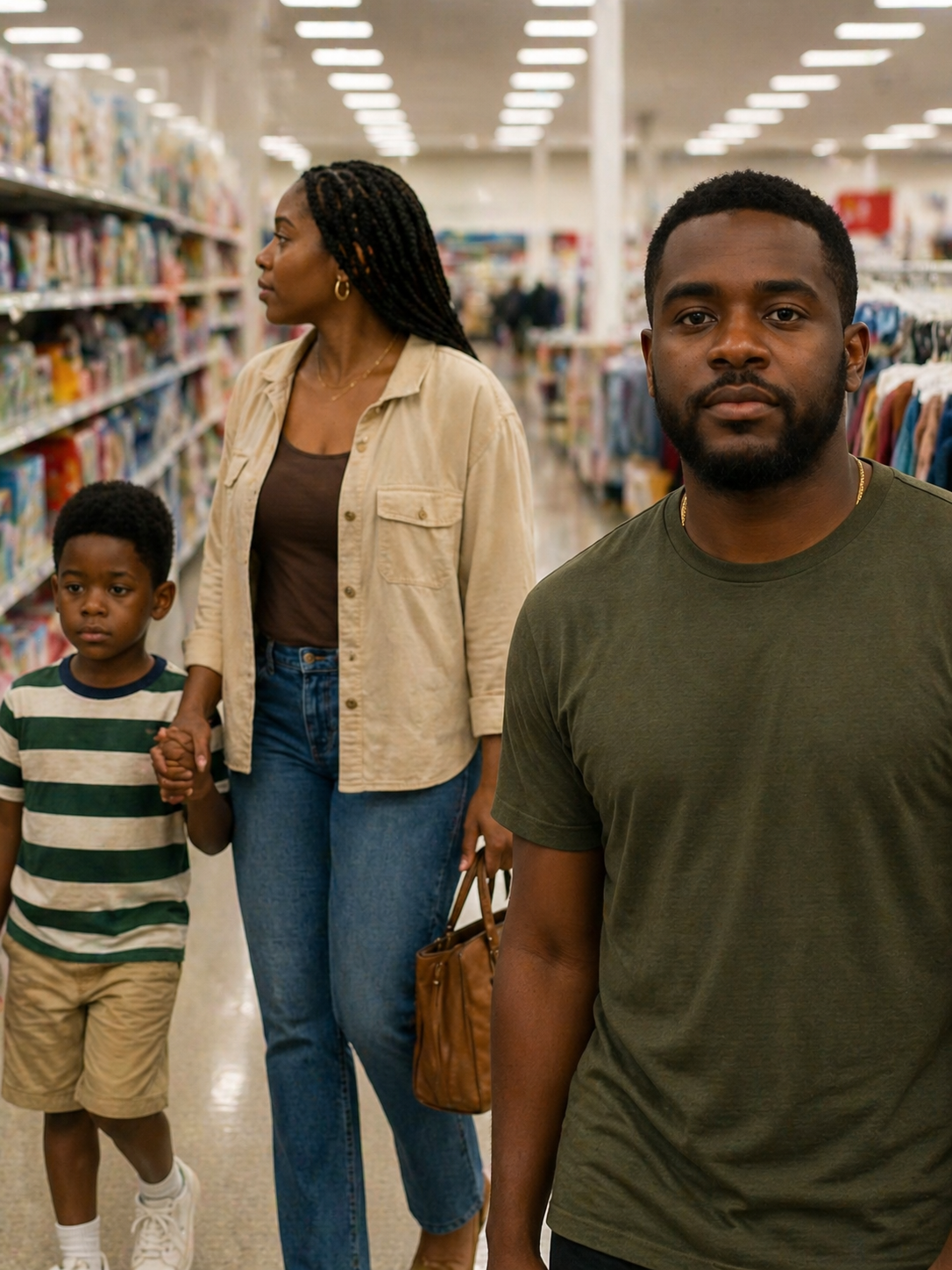
A few weeks ago, we went to the supermarket.
Nothing special. Just groceries.
Then we heard shouting.
A man was yelling at a young cashier over a broken glass jar.
“This is your fault! Who puts glass there? Are you all incompetent?”
The girl stood there quietly, cleaning up, saying nothing.
I almost walked past.
Then Maria tugged my sleeve.
“Mom… why is he yelling at her?”
I looked up.
And my world stopped.
It was him.
Michael.
Older. Worn down. But still carrying that same arrogance—like the world owed him something it never gave.
He saw me.
Then his eyes shifted to Maria.
A slow, smug smile spread across his face.
“Well,” he said, stepping closer. “Sharon.”
I froze.
“And this must be your daughter.”
Your daughter.
Not ours.
I didn’t even get the chance to respond.
Because in the next moment
Maria let go of my hand… and stepped forward.
Maria walked straight past him. She crouched beside the cashier and started picking the larger pieces of glass out of the puddle.
“You don’t have to,” the girl whispered.
“I know,” Maria said. “It’s a jar. Jars break. It wasn’t your fault.”
Michael’s face went red. “Excuse me? Do you know who you’re talking to?”
Maria stood up and wiped her hands on her jeans. She looked at him the way she looks at a math problem.
“Yes,” she said. “You said my mom’s name like you still had the right. You’re Michael. You’re my father.”
He opened his mouth. Nothing came out.
“When I was little I asked my mom if you left because of me. She said something was broken in you, not in me.” Maria nodded toward the floor. “I always wondered if she was just being nice. Then I walked in here and you were screaming at a girl about a jar.”
“Now listen,” he started. “Your mother never told you my side.”
“I just heard your side,” Maria said. “It’s the same one. It’s somebody else’s fault.”
He looked at me then, as if I might step in and manage her for him. Sixteen years ago I would have.
I didn’t move.
Maria took a ten-dollar bill out of her pocket, her own babysitting money, and laid it on the register. “That’s for the jar,” she told the cashier. “So nobody takes it out of your check.”
Then she turned back to him one last time. Her voice was not angry. That was the part I think he felt.
“You wanted a son to carry your name,” she said. “I’ve had Mom’s my whole life. It’s a good one. You can keep yours.”
She took the cart from me and pushed it toward the next open lane.
Michael stood there with his hands half raised, an older man in a wet checkout lane with nobody left to blame.
In the parking lot Maria loaded the bags and didn’t speak until the trunk was shut.
“Was that too much?” she asked.
“No,” I said.
“My hands are shaking,” she said.
I took them in mine and held them until they stopped. Then she asked what was for dinner, and I told her, and we drove home.