Fiction. This story is a dramatized work created for entertainment. Names, characters, events, and circumstances are fictional.
PART 1
Three days after my wife humiliated my seventy-year-old father over a $1,000 loan, I was standing outside an operating room with a sealed envelope in my hands. My name was written across the front in his shaky handwriting.
Dad was somewhere behind those double doors, with surgeons working to save his life. The nurse who had handed me the envelope leaned in and repeated his instruction slowly, as if she knew how strange it sounded.
“Your father said you must not let your wife see what’s inside until you’ve spoken privately with his attorney.”
I had no idea what that meant.
My name is Grant Mercer, and until that afternoon I would have sworn I knew everything about the man who raised me. Raymond Mercer worked construction for more than thirty years and gave up every comfort he had so I could have opportunities he never got. When I was nine, he sold his only good suit to buy my school shoes. When I was eighteen, he sold his motorcycle to help with my tuition. Years later, he sold land he’d inherited so I could make the down payment on my first house.
He never said a word about any of it. I heard about those sacrifices from relatives, usually years after the fact. Dad believed a father should give and never keep score.
That’s why, three days earlier, I knew something was badly wrong when he showed up in my kitchen and said, “Grant, son, I need to borrow some money.”
He had never asked me for anything. Not once.
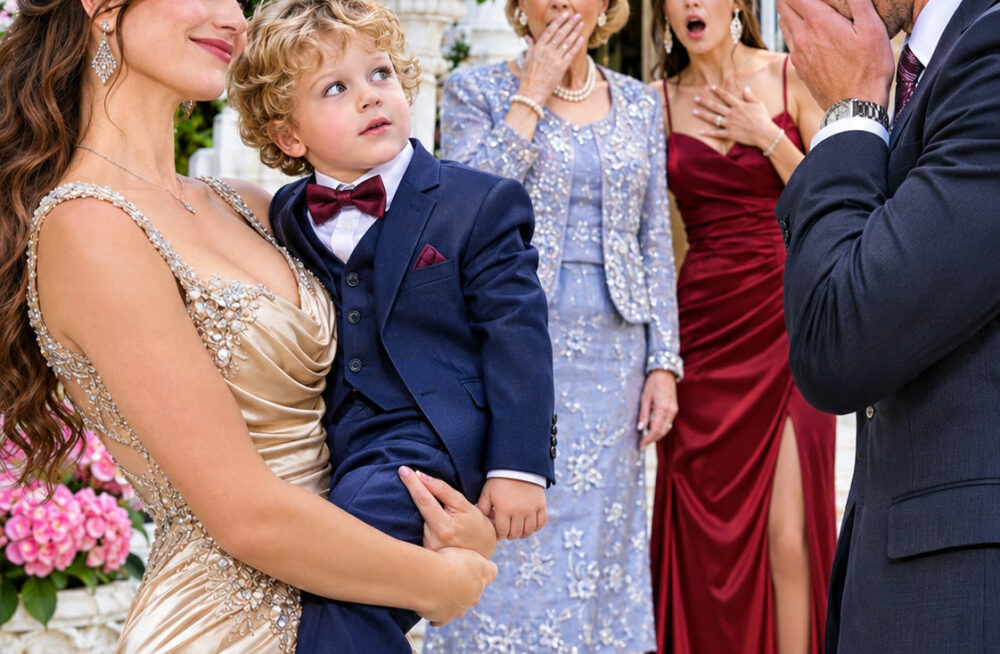
Before I could answer, my wife, Natalie, folded her arms.
“Maybe you should get another job, Raymond. We’re not your personal bank.”
Dad lowered his eyes. I watched the color rise in his face, and I watched his hands start to tremble. Natalie kept going, lecturing him about people who couldn’t manage their money and how some folks never learned. She said it in the kitchen of a house he had helped pay for.
“Natalie, stop,” I said. “Right now.”
I steered Dad out to the driveway, away from her voice. He wouldn’t look at me at first. When I finally got it out of him, the answer made no sense.
The money was for certified records, a legal consultation, and some kind of test.
“What kind of records?”
“Old adoption files.”
I stared at him. “Whose adoption?”
His eyes flicked toward the house, toward the window where Natalie stood watching us. In that moment my father looked frightened, and it was a kind of fear I had never seen on him.
“I need proof before I tell you everything,” he said quietly. “Otherwise, someone might say I’m confused. Or that I’m trying to wreck your marriage.”
Every question I had was burning in my throat. But his hands were shaking, so I let them go. I pulled out the cash, pressed it into his palm, and told him not to worry about it.
“I’ll pay you back,” he promised.
“Dad, I don’t care about that.”
He gave a stiff nod and walked to his truck. He left without our usual hug, and that small thing bothered me more than anything Natalie had said.
Three days later, my phone rang at 6:40 in the morning.
A doctor told me Dad had collapsed. They had found a serious aortic aneurysm and were taking him straight into emergency surgery. I don’t remember driving to the hospital. I only remember the fluorescent lights, the smell of antiseptic, and a nurse pressing that envelope into my hands before they wheeled him away.
“He insisted,” she said. “He made me promise.”
Now I sat outside the operating room with the envelope in my lap, staring at the doors, afraid that I’d never get the truth from him.
“Mr. Mercer?”
I looked up. A woman in a gray blazer was walking toward me with a leather folder under her arm. She looked calm and professional, and her eyes held a kind of gentle caution.
“I’m Priya Desai. Your father asked me to meet you here.”
She told me she was an attorney who handled probate and estate matters. We moved to a quiet waiting area near the elevators, and she explained that Dad had contacted her several weeks earlier about an unresolved family matter.
“Weeks?” My voice cracked. “He never said anything.”
“He wanted to be certain of the facts first,” Priya said. “He was afraid you might misunderstand something important.”
She glanced at the envelope in my hands.
“He asked that you read his letter before we discuss any of the supporting documents.”
My thumb slid under the flap. The paper tore with a small, dry sound that seemed far too loud. Inside was a single folded sheet and an old photograph.
The photo showed my father, maybe twenty-six, with the same broad shoulders and crooked grin I’d known all my life. Beside him stood a young woman with dark hair and a shy smile. I’d never seen her before, yet something about her eyes made my stomach drop.
They looked like mine.
I unfolded the letter. Dad’s handwriting wobbled across the page.
Grant, if you’re reading this, I couldn’t find the courage or the time to say it to your face. Before anything else, understand this: I am your father, and nothing in these papers can ever change that.
My throat went tight. I kept reading.
Your mother and I raised you from the day you came home. We loved you as our own because, in every way that mattered, you were our son.
Your biological mother was my younger sister, Eleanor Mercer.
PART 2
I read that line three times.
Your biological mother was my younger sister.
The words refused to rearrange themselves into anything that made sense. The waiting room seemed to tilt slightly. Dad’s younger sister had given birth to me. The man who taught me to ride a bike was, by blood, my uncle.
I looked up at Priya. “Are you telling me I’m adopted?”
She nodded gently. “Your father and his wife raised you through a private family arrangement. We’ve found historical records that support his account, though parts of the original legal process still need review.”
I forced my eyes back to the page.
Dad explained that Eleanor had been seventeen when she got pregnant. She was terrified, and her family was pressuring her. She agreed that her older brother and his wife, who were married and longing for children, would raise the baby. When I was born, I went home with them, and they named me Grant.
Eleanor moved away and eventually settled in a small town called Marsh Hollow. Everyone agreed to keep it quiet, believing that silence would protect them all from shame and awkward questions.
I questioned that decision a hundred times, Dad wrote. I meant to tell you when you were a teenager, then I put it off because I was afraid of losing you. After your mother died, when you were nineteen, I told myself you couldn’t survive another loss. The years kept passing. I kept waiting for a better moment, and it never came.
Then he reached the part that made my hands go cold.
Eleanor died eight weeks ago.
I lowered the paper. “My biological mother is dead?”
“I’m so sorry, Grant,” Priya said softly.
I had spent thirty-some years not knowing she existed. Now I had learned about her and lost her in the same breath. Grief, disbelief, and anger all collided in my chest, and none of them had anywhere to go.
The letter went on. Eleanor had never married and had no other children. Her will named the son she gave up decades ago as the person she wanted to inherit everything she owned.
That was why Dad needed the money. He’d been helping Priya track down certified records and confirm everything in a way no court could dispute.
It still didn’t explain why he’d been so afraid of being called confused. Priya answered that before I could ask.
“Your father recently had a brief episode of forgetfulness and went to see a doctor,” she said. “The assessment didn’t show dementia. But it frightened him. He was worried that if he simply told you something this big, people might not believe him.”
I remembered his hands shaking as I counted out those bills. He had been terrified of being doubted by his own son.
The last section of the letter was about Natalie.
I don’t know how your wife will react when she hears about Eleanor’s estate. I only know how she talks about money, and I don’t want you pressured into any decision before you understand what you’ve been given. I’m not asking you to hide this from her forever. I just want you to get independent advice first.
Then came one more line.
I’ve spent my life trying to give you everything I could. This is one last thing I need to put right, even if it means admitting I made a terrible mistake.
I folded the letter and sat there. After a long while, I asked the question that mattered most.
“What exactly did she leave me?”
Priya opened her folder. “A small house in Marsh Hollow with no mortgage. About sixty-three thousand dollars in savings. And some personal belongings.”
A house. More than sixty thousand dollars. From a woman I’d never met.
“The estate still has to go through proper legal channels,” she added carefully. “Nothing transfers in a hospital waiting room.”
“I’m not thinking about the money,” I said, and I meant it.
She hesitated. “There’s something else. A box of letters. Eleanor wrote to you every year on your birthday, starting when you turned eighteen. None of them were ever mailed.”
I couldn’t breathe for a second. I pictured a woman sitting alone at a kitchen table, writing birthday cards to a son she hadn’t held since he was a baby.
Suddenly I wanted those letters more than anything else.
A doctor appeared in the doorway. “Mr. Mercer?”
I shot to my feet. “How is he?”
“The surgery went well. He’s stable in recovery, though we’ll be watching him closely.”
My knees nearly buckled. I thanked him over and over, then sank back into the chair, trembling with relief. Dad was alive. Everything else could wait.
The next morning, he gave me a weak smile from his hospital bed. “Hey, son.”
“Hey, Dad.”
“Did you read it?”
“Every word.”
His eyes filled. “I’m sorry I didn’t tell you sooner.”
I took his hand. “You should have. But finding out you’re not my biological father doesn’t change who raised me. You taught me to ride a bike. You showed up every single time I needed you.” My voice broke. “You’re my dad.”
He squeezed my hand and couldn’t speak. We sat in silence for a long time.
When I got home that night, Natalie was waiting in the kitchen. She asked how Dad was, then went straight for the real question.
“What was all that with the attorney and the envelope?”
I told her only that Dad had revealed something about my family history and the legal details were still being sorted out.
Her expression hardened. “You’re keeping secrets from me?”
“I’m trying to understand something that turned my whole life upside down.”
“Your father always finds a way to make everything about him.”
“He nearly died, Natalie.”
She shrugged. “I’m glad he’s okay. But that doesn’t give you the right to shut me out.”
For days she badgered me about whether Dad was leaving me money. I kept asking for time, and she kept calling my caution disloyalty. Eventually I decided she deserved the truth. I sat her down in the living room and told her everything about Eleanor, the documents, and the childhood I’d lived without knowing my birth mother existed.
At first she looked shocked. “So Raymond isn’t your real father?”
“He’s my uncle by blood. He’s still my father.”
Then I told her about the will.
Natalie sat forward. “She left you money? How much?”
“About sixty-three thousand dollars. And a house in Marsh Hollow.”
Something flickered across her face. “A house? Is it paid off?”
“Yes, but the estate isn’t finished.”
She reached for her phone.
“We should look up property values. If we sold it, we could finally afford a bigger place.”
PART 3
I felt something inside me sink.
She hadn’t asked if I was okay. She hadn’t asked a single question about Eleanor, or the letters, or what any of it meant to me. Her first thought was selling the house.
“Natalie, I’m not making that decision yet.”
“Why not? You never even knew this woman.”
“She was my mother.”
“That doesn’t mean you have to keep everything she owned.” She sighed, using the patient voice people use on children. “I understand it’s emotional, Grant, but we have to be practical.”
I looked at her for a long moment. For years I’d written off our money fights as normal marriage friction. Now I needed compassion more than another budget discussion, and I could see I wasn’t going to get it.
I told her I wouldn’t discuss selling anything until I had seen the house for myself.
Two weeks later, I drove to Marsh Hollow with Priya.
Eleanor’s home was a modest white cottage with green shutters, a small porch, and a garden gone wild. It wasn’t impressive. But the moment I stepped inside, I felt like I’d walked into someone’s carefully preserved life. Mystery novels were stacked beside an armchair. Framed photographs lined the mantel. A row of mismatched mugs hung in the kitchen.
Priya led me to the bedroom and set a box on the quilt. Inside were dozens of envelopes. Every one was dated, and every one was addressed to me.
I picked up the oldest, written on my eighteenth birthday. My hands weren’t steady.
Dear Grant, today you became a man. I wonder whether you had a wonderful birthday, whether someone made your favorite cake, and whether you know how deeply you are loved.
I stopped reading, because I remembered that day perfectly. Dad and Mom had thrown me a backyard party with chocolate cake and decorations they’d hung themselves. And somewhere else, Eleanor had been sitting alone, wondering if her son was happy.
I read on. She wrote about the day I was born and the fear she’d felt as a teenager. She apologized for staying silent. In a later letter she mentioned finding my graduation announcement. In another, she’d come across my wedding photo in the paper and wondered whether the woman beside me would love me the way I deserved.
I sat on the edge of her bed and cried.
She had watched my life from a distance for decades. She never interfered, never demanded anything, never asked for recognition. Yet she remembered every birthday.
Before leaving, I wandered into the garden. Roses still bloomed along the fence, wild and stubborn. For the first time, I understood the house wasn’t an asset. It was the closest thing I’d ever have to meeting my mother.
I called Dad from the porch. “She wrote to me every year.”
“I know,” he said softly.
“Why didn’t you tell me she loved me?”
He was quiet for a moment. “Because telling you about her meant admitting we’d made the wrong choice.”
I watched the roses sway. “Maybe keeping the secret was wrong. But raising me wasn’t.”
After a long silence, he whispered, “Thank you, son.”
I kept going back to Marsh Hollow. Neighbors told me Eleanor had been a beloved school librarian who volunteered at community reading programs. One elderly woman said she kept a photograph of a young man tucked inside her favorite novel. The description matched my graduation picture.
At home, things grew worse. Natalie complained that I was spending too much time on a “money pit.” One evening I came home from fixing Eleanor’s porch steps and found her at the dining table with real estate listings spread out.
“I’ve researched the market,” she announced. “We should call an agent.”
“I told you I’m not ready.”
“That house is just sitting there!”
“I found out my biological mother died without ever meeting me,” I said, exhausted. “I found letters she wrote for decades. Can’t you understand why this is hard?”
“You’re acting like I’m the enemy because I want us to have a better future.”
“I’m upset because you haven’t once asked how I feel.”
“I’ve listened to you talk about that house for weeks!”
“You’ve heard me talk about it. You haven’t listened to what it means.”
We tried counseling. In those sessions I finally saw how differently we pictured our lives. Natalie measured security in bigger houses and bigger numbers. I wanted stability too, but I also wanted kindness, respect, and room to grieve without being pushed. Eventually I understood that our problems had existed long before Eleanor’s estate. The inheritance hadn’t broken our marriage. It had only exposed what was already cracked.
Four months after Dad’s surgery, Natalie and I separated. There was no explosion, just lawyers, practical conversations, and a quiet acceptance that we weren’t good for each other. I was sad. I had loved her. But I couldn’t stay with someone who dismissed my father’s sacrifices and treated my feelings as obstacles.
Meanwhile, Dad kept getting stronger. He started carrying a little notebook for important details, saying he never wanted to forget anything that mattered.
When the estate finally cleared, I did not sell the house. I fixed the roof, replaced the rotted steps, and began restoring the garden. One Saturday, I brought Dad along. He stood on the porch for a long time, studying the little white cottage he hadn’t entered in decades.
Inside, he picked up a worn paperback and smiled. “Ellie used to steal my books and read them faster than I could.”
I showed him the box of letters. He ran a finger over her handwriting and sat down heavily.
“I should have brought you here years ago.”
“I wish you had,” I said. “But you gave me a wonderful childhood, too. Both things can be true.”
We spent the afternoon clearing leaves and fixing a loose garden gate. He supervised from a folding chair. When I hung a hinge backward, he shook his head. “Thirty-something years old, and you still don’t listen.”
I laughed, and for the first time in months, we were just father and son.
Months later, tucked inside a book beside Eleanor’s bed, I found one last envelope: For Grant, When He Knows.
I never expected forgiveness for what a frightened seventeen-year-old chose, she wrote. I only want you to know that giving you up never meant forgetting you. If you ever stand in my garden, I hope you’ll see the roses and know I planted them with you in mind. I wanted something beautiful waiting here if you ever found your way home.
I looked out the window at the roses blooming along the fence, and I finally felt like I was home.
That night I called Dad and read him part of the letter. He was silent for a long moment.
“She would have loved knowing you kept the house.”
“I’m glad I did.”
“I’m proud of you, son.”
“I love you, Dad.”
“I love you too.”
A year earlier, he had stood in my kitchen asking for $1,000 while my wife treated him like a burden. I thought he needed help. I never imagined he was trying to give me the truth about my birth, a connection to the mother I never met, and a chance to protect my own future.
If I could go back to that moment, I’d still hand him every dollar. But this time I’d hold his hand and tell him he never had to be ashamed to ask his son for anything.
The greatest inheritance Raymond Mercer ever gave me wasn’t the house, the savings, or even the truth. It was thirty-seven years of love from a man who never stopped being my father.
THE END