
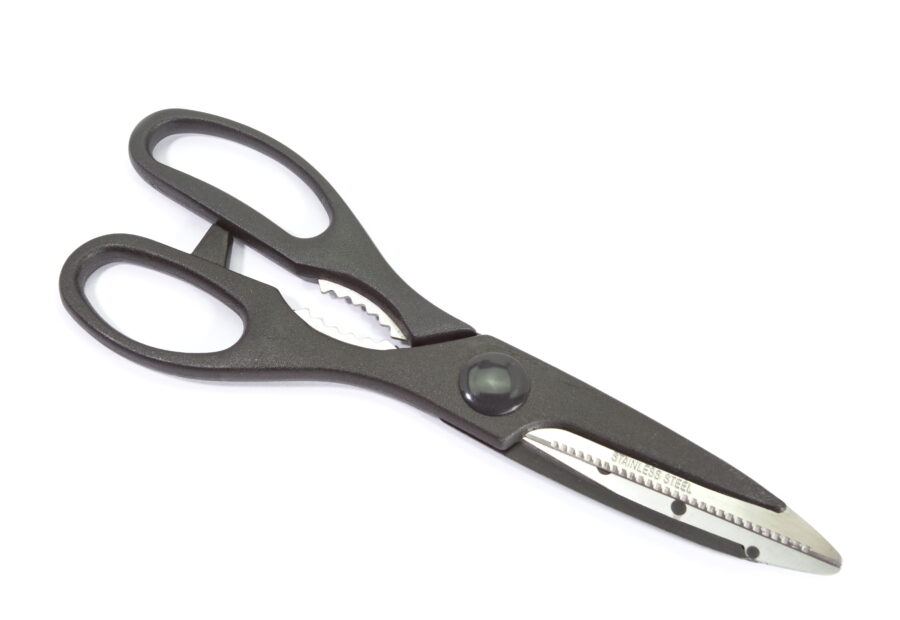
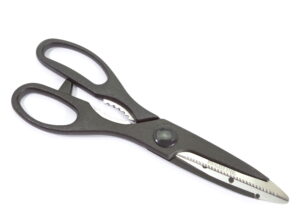
Have you ever spotted that strange jagged section between the handles of your kitchen scissors? It’s usually positioned just behind where your fingers sit and looks like a tiny row of teeth. Many people own and use kitchen scissors for years without ever discovering what this unusual feature is actually meant to do.
At first, you might assume it’s simply part of the design or even an unnecessary decorative detail. But those small teeth are there for a practical purpose. They form a clever built-in tool designed to make several common kitchen jobs easier.
Once you discover what it can do, you might start looking at your kitchen scissors very differently.
So, What Exactly Is It?
That textured section is often called a gripper, although certain manufacturers may describe it as a jar opener, nutcracker, or bone gripper. Its basic purpose is straightforward: it gives you extra grip when holding, twisting, cracking, or controlling objects that are too slippery or difficult to handle comfortably with your hands.
When you partially close the scissors, the ridged sections come together and create a strong gripping surface. The added traction and pressure can make several everyday kitchen tasks considerably easier.
Think of it as a useful little tool hidden directly inside your scissors.
It Can Help With Stubborn Jars and Bottles
One of the most useful jobs for this toothed section is helping loosen tight lids.
Almost everyone has encountered a jar that refuses to open. You twist harder, tap the lid, wrap a towel around it—and it still won’t move. That’s where the built-in gripper can come in handy.
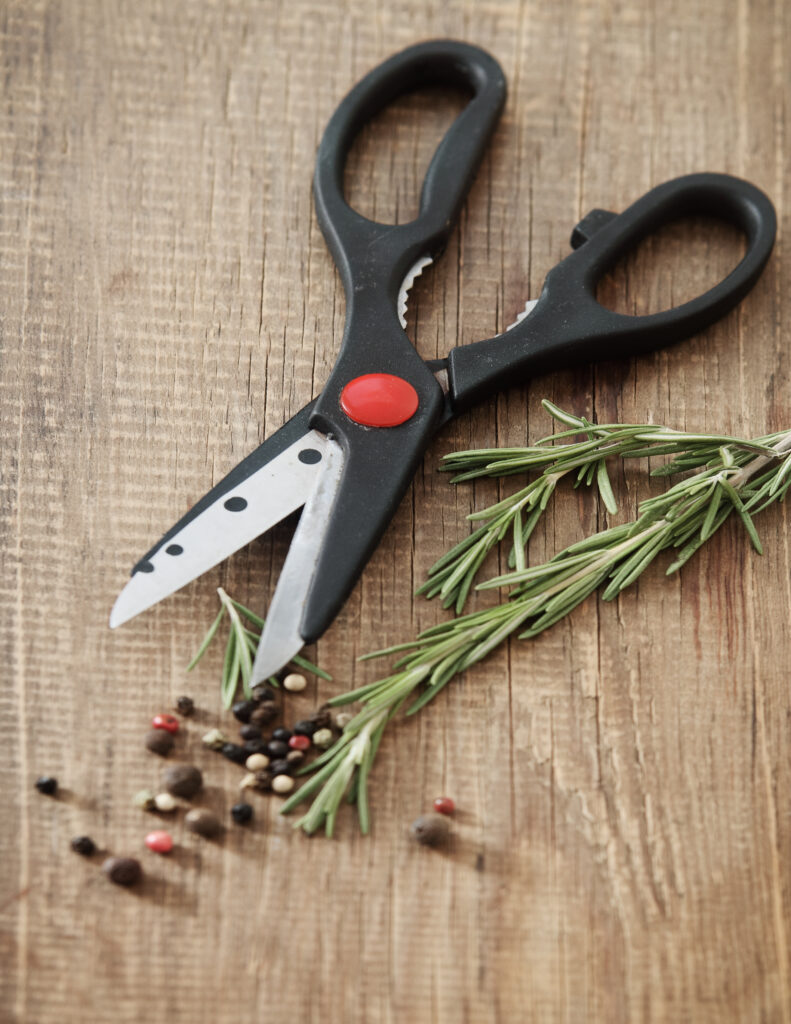
Position the lid between the textured teeth, carefully close the scissors around it, and twist. The ridges grip the lid securely and help prevent your hand from slipping. This can be particularly useful with smaller caps on soda bottles, sauce containers, tonic water bottles, and other difficult-to-open containers.
For anyone with reduced hand strength, this feature may be especially convenient.
It Can Be Used to Crack Nuts
The toothed section can also serve as a simple nutcracker.
If you don’t have a dedicated nutcracker nearby, your kitchen scissors may provide a quick alternative. Place a walnut, pecan, or hazelnut between the ridges, then slowly squeeze the handles until the shell begins to crack.
The important thing is to use controlled, steady pressure instead of squeezing too aggressively. The goal is to break the shell without crushing the nut inside. Turn the nut and repeat the process if necessary until the shell becomes loose enough to remove.
It might not completely replace a proper nutcracker, but it can be a handy substitute when needed.
It Can Hold Small Poultry Bones
With stronger kitchen shears, the ridged section may also be useful for gripping smaller bones, particularly while preparing poultry.
For example, it can provide additional control when handling chicken wings, drumsticks, or thighs. The teeth help prevent the bone from sliding while pressure is applied.
However, whether this is appropriate depends on how sturdy your scissors are. Heavy-duty poultry shears are specifically designed for demanding jobs, while lightweight kitchen scissors could bend or break when used on bones.
Always check that your scissors are strong enough before trying this.
It Has Several Other Handy Uses
This compact gripper may be more versatile than it initially appears. It can assist with cracking crab legs or lobster shells, loosening stubborn plastic juice-bottle caps, holding twist ties in place, or gripping slippery packaging while you cut it.
Some people also use it to help remove synthetic corks when necessary, although it isn’t an ideal replacement for a proper corkscrew.
Generally speaking, whenever an object is small, slippery, tight, or awkward to hold securely, this built-in feature may provide the extra traction you need.
Why Do Kitchen Scissors Have This Feature?
Manufacturers include it because multifunctional kitchen tools can be more convenient.
A quality pair of kitchen scissors can do far more than simply cut herbs, trim meat, or slice through packaging. With an integrated gripper, the same tool may also work as a jar opener, nutcracker, shell breaker, or poultry aid.
That means fewer individual gadgets are needed to perform common kitchen jobs.
For people with limited storage space—or kitchen drawers already crowded with tools—this multipurpose design can be particularly practical.
Do All Scissors Include It?
No. This feature isn’t found on every pair of scissors.
It is most commonly seen on kitchen shears, poultry shears, and sturdy multipurpose scissors. Regular office scissors generally don’t include it because they are designed primarily for cutting paper rather than handling food or tougher materials.
If you want to know whether your scissors have one, check the area between the handles. When you see two ridged or notched surfaces that line up as the handles close, your scissors likely have a built-in gripper.
A Few Important Safety Tips
There are several precautions worth remembering before you use this feature.
Avoid trying to grip or crack anything excessively hard. Very thick bones, extremely hard nuts, or heavy-duty materials could damage the scissors or potentially cause an injury.
Keep your fingers clear of the ridged section whenever you squeeze the handles because the teeth can pinch your skin.
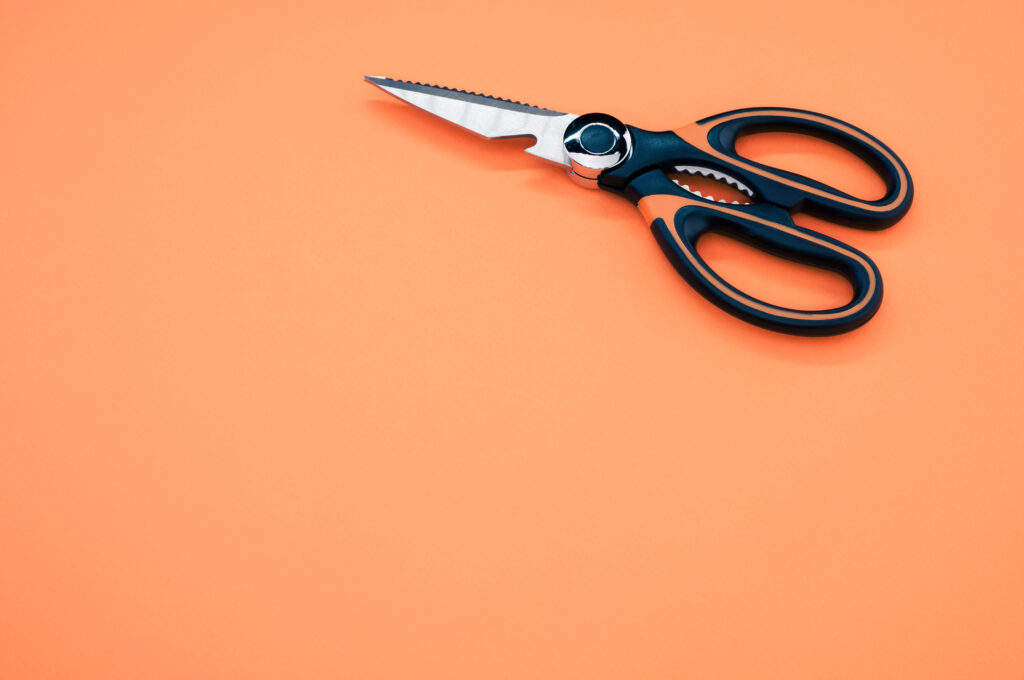
Clean the gripper carefully after every use, particularly when it has touched raw poultry, seafood, oils, or sticky foods. Small amounts of residue can easily become trapped inside the grooves.
Finally, keep its use limited to appropriate kitchen jobs. Although the scissors may appear strong enough to handle materials such as wire or paint-can lids, doing so could damage the tool.
The Surprising Value of a Small Kitchen Detail
That strange toothed area between the handles of your kitchen scissors may seem unimportant, but it can actually be one of the handiest hidden features in your kitchen.
It can help loosen stubborn lids, crack nuts, hold bones, break shells, and securely grip slippery objects. Essentially, it transforms an ordinary pair of scissors into a more versatile kitchen tool.
So the next time you reach for your kitchen scissors, take another look at that little jagged section between the handles. It may be small, but it can help reduce effort, save time, and avoid unnecessary frustration.
Once you begin putting it to use, you might wonder why you overlooked it for so long.
Disclaimer: This information is for reference only.





Leave a Reply