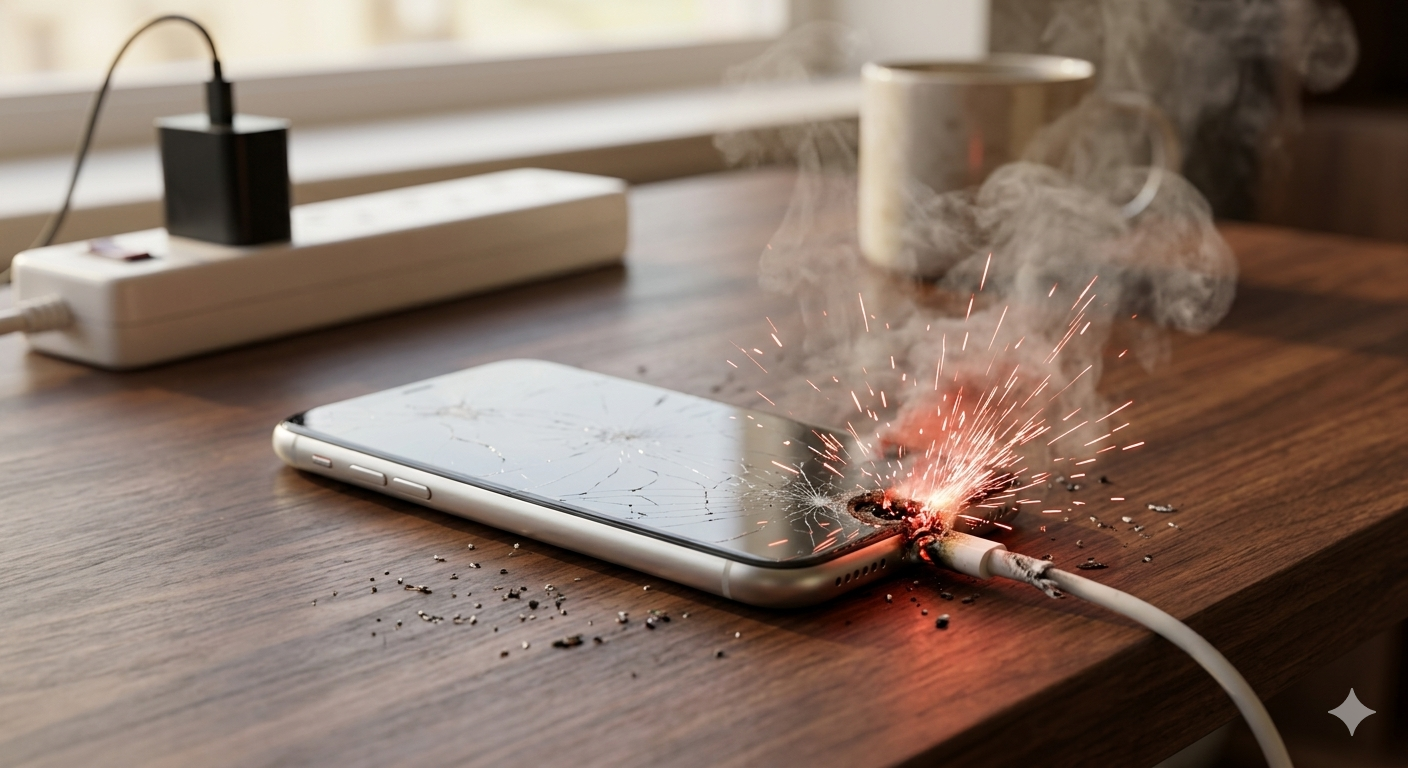
Most people never think twice about the charger plugged beside their bed.
It looks harmless.
Small.
Ordinary.
Something we use so often that we stop seeing it as electrical equipment at all.
But that tiny device quietly pulling power through your walls every night deserves a little more attention than it usually gets.
And in many cases, the warning signs begin long before smoke, sparks, or fire ever appear.
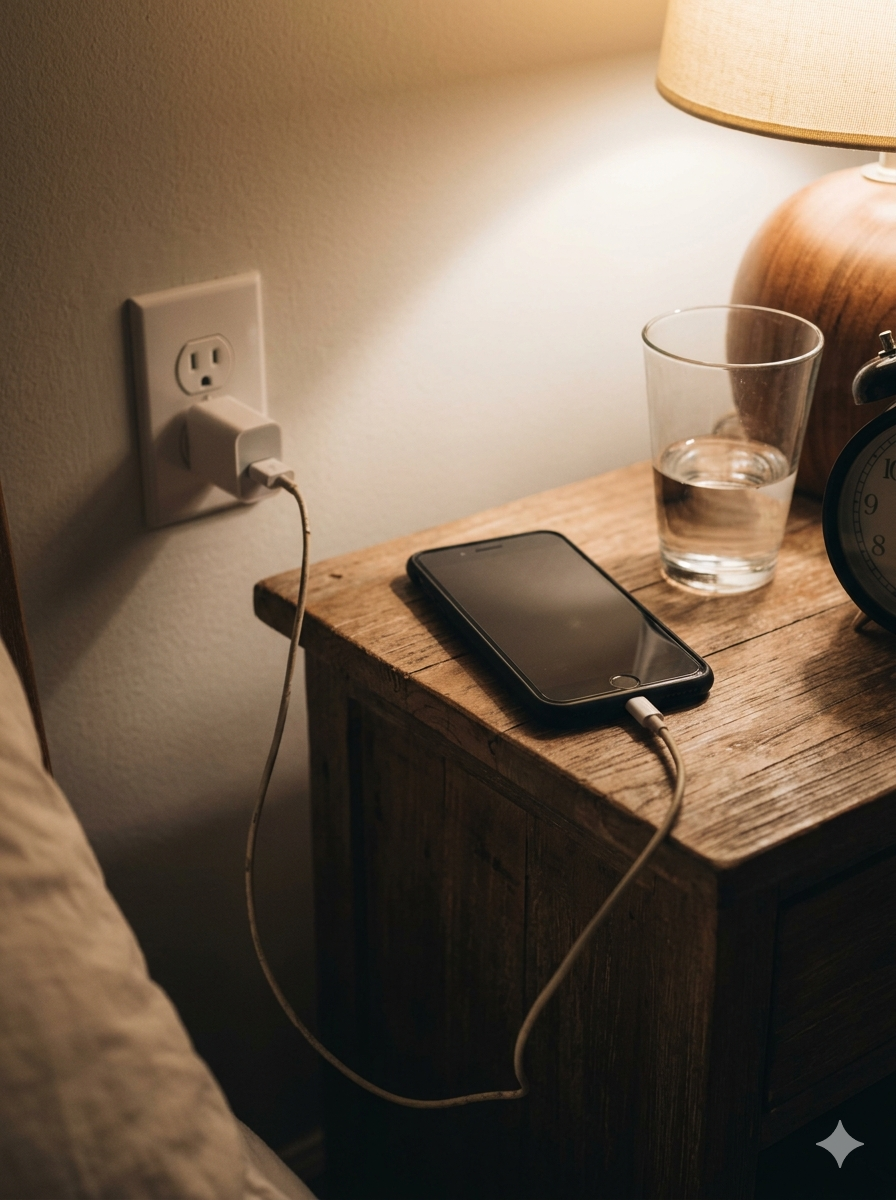
Why charger safety matters more than people think
Modern homes are filled with devices constantly connected to power.
Phones.
Laptops.
Tablets.
Smartwatches.
Portable batteries.
Most people charge at least one device overnight, every single day. The problem is that convenience has slowly created careless habits.
Cheap replacement chargers.
Damaged cables wrapped in tape.
Overloaded outlets.
Phones buried under blankets while charging.
What feels normal can quietly become risky.
Because electricity rarely gives dramatic warnings at first.
Usually, it starts with heat.
The hidden danger of low-quality chargers
One of the biggest risks comes from counterfeit or uncertified chargers.
Cheap chargers often skip important internal safety systems designed to regulate voltage and temperature. Without those protections, electricity may fluctuate unpredictably, causing excessive heat buildup inside both the charger and the device itself.
That heat can damage batteries over time.
But in worse situations, it can also lead to melted components, electrical sparks, or fire hazards.
Certified chargers are tested specifically to prevent these failures. They cost more for a reason — they include safeguards many imitation products simply do not have.
And unfortunately, fake chargers have become extremely common online.
Sometimes they even look almost identical to the originals.
Damaged cables are more dangerous than they appear
Frayed charging cables are another major problem people ignore for far too long.
Exposed wires.
Bent connectors.
Loose charging heads.
Small cracks in insulation.
Many people continue using them because the charger still “works.”
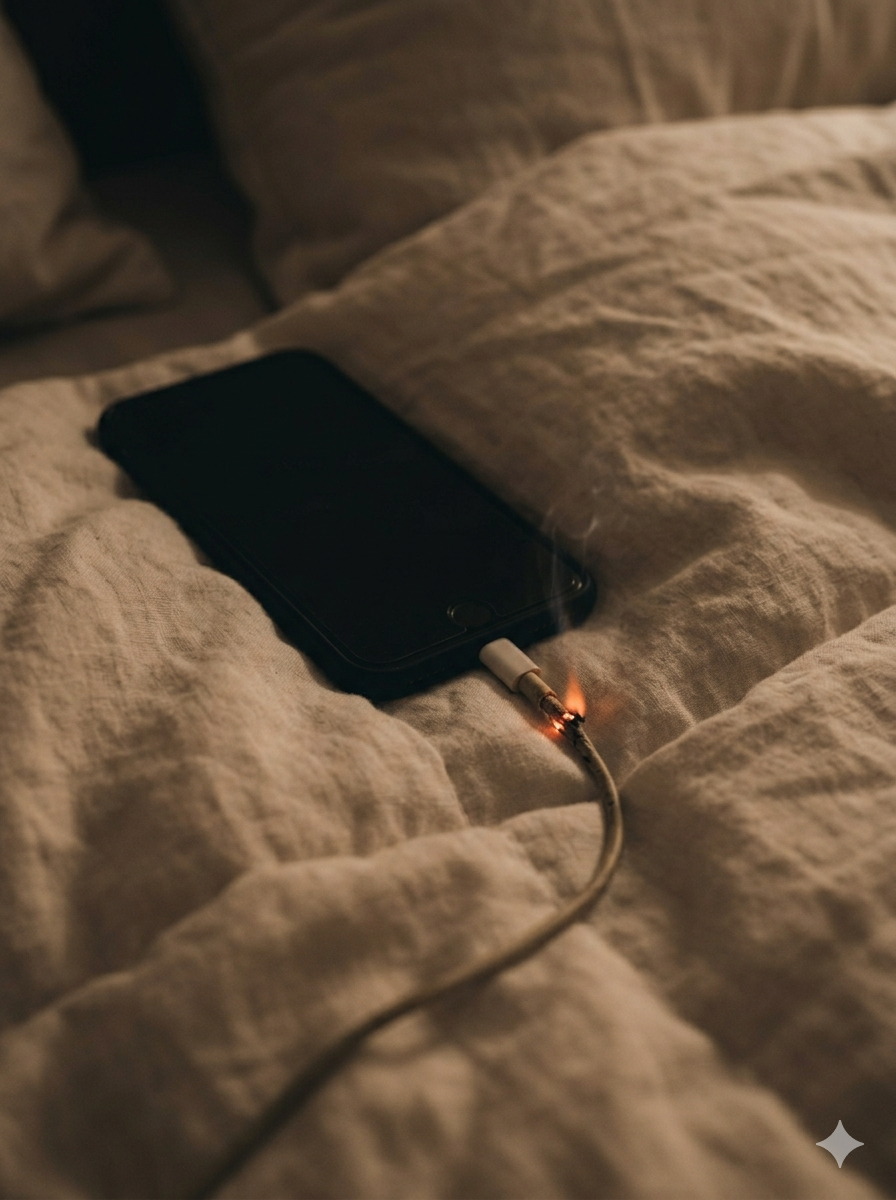
But damaged cables can create short circuits or electrical arcing, especially when left plugged in for long periods.
Even a tiny spark inside damaged wiring can become dangerous near fabric, paper, or heat-trapping surfaces.
If a cable feels unusually hot, charges inconsistently, or shows visible wear, replacing it immediately is far safer than continuing to “get a few more weeks out of it.”
Unsafe charging habits inside the home
Sometimes the charger itself is not the problem.
The environment is.
Charging phones on beds, couches, or pillows traps heat around both the battery and charger. Soft materials prevent airflow, causing temperatures to rise much faster than intended.
Overnight charging is especially risky when devices are covered by blankets or placed in poorly ventilated spaces.
Most modern devices reduce charging automatically once full, but safety groups such as NFPA and ESFI still advise unplugging a device once it is fully charged, and never charging it under a pillow, on a bed, or on a couch.
A flat, hard surface is always safer.
Simple habits matter more than people realize.
Electrical outlets deserve attention too
The condition of your outlets and extension cords also plays a huge role in home safety.
Cheap extension cords.
Loose wall sockets.
Aging wiring hidden behind walls.
All of these increase the chance of overheating or electrical failure.
If an outlet feels warm, sparks when plugging something in, or holds plugs loosely, it should never be ignored.
Avoid plugging too many devices into one outlet or power strip. A power strip only adds outlets, it does not add capacity, so choose one with internal overload protection.
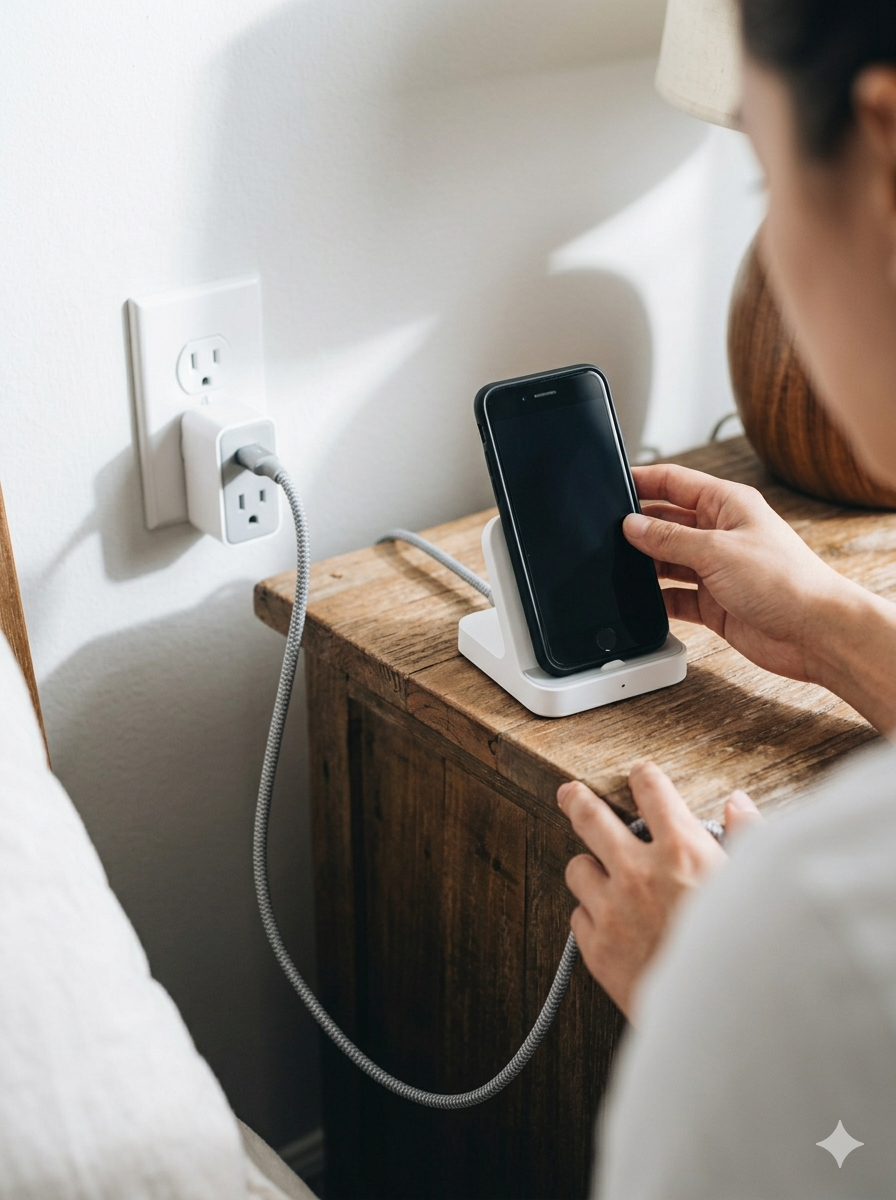
Small safety habits that make a big difference
A few simple precautions can lower risk significantly:
- Use the charger that came with your device, or a manufacturer-approved one listed by a recognized testing laboratory
- Replace damaged chargers immediately
- Avoid charging devices on beds or soft furniture
- Unplug chargers when not actively in use
- Keep electronics away from water and excessive heat
- Avoid overloading outlets and extension cords
- Check charging devices if they become unusually hot
These habits may seem minor.
But small issues are much easier to fix before they turn into real problems.
Final thoughts
Chargers have become such a normal part of everyday life that many people forget they are still electrical devices carrying real power through their homes.
And electricity only needs one weak point.
One damaged wire.
One overheating battery.
One overloaded outlet.
That’s why proper charger use matters far more than most people think.
Protecting your devices is important.
But protecting your home — and the people inside it — matters even more.
Sources
- National Fire Protection Association: Lithium-Ion Battery Safety (safety tip sheet, PDF)
- Electrical Safety Foundation International: How to Store and Charge Batteries: Lithium-Ion Battery Safety
- Electrical Safety Foundation International: Don’t Overload Your Home
- U.S. Fire Administration / FEMA: Electrical Fire Safety (PDF)