The AI Revolution in Creative Work: Breakthrough or Death Sentence for Content Creators?
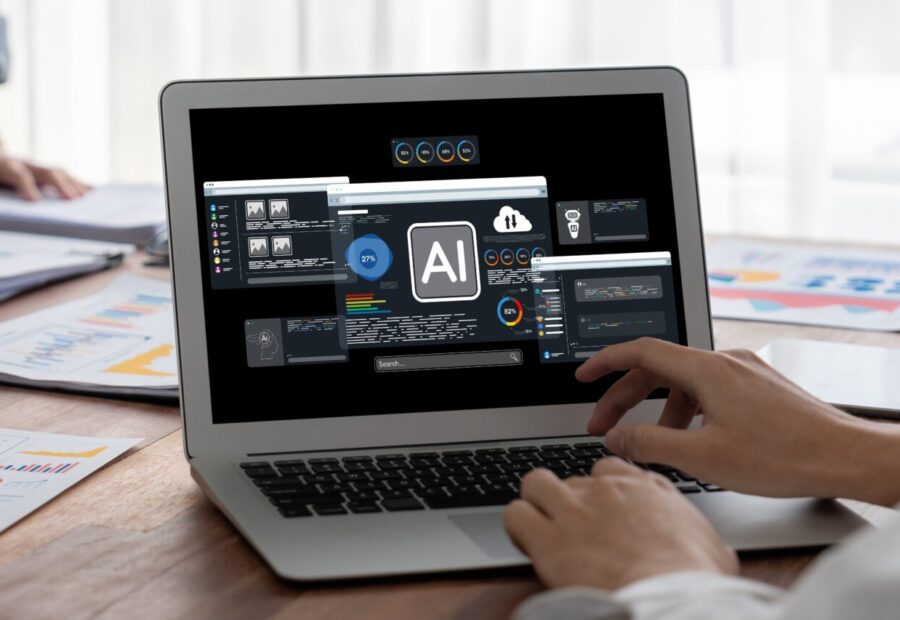
Generative AI is no longer a passing trend in media and marketing. It has become part of the daily toolkit for writers, designers, and editors around the world. But the real story isn’t man versus machine. It’s a growing gap between people who know how to use these tools well and those who don’t.
I’ll say this plainly: AI is a genuinely useful assistant for speeding up repetitive work. But the soul of a piece of content, the thing that makes someone stop scrolling, still has to come from real human experience. A tool can draft a paragraph. It cannot have lived through anything.
That split is already reshaping workflows, unsettling search rankings, and forcing creative professionals to rethink what they’re actually paid for. Here’s what’s changing, and what seems to actually separate the people thriving from the people getting left behind.
Workflows Are Being Rebuilt Around AI
Marketing agencies and in-house teams are restructuring how work gets done. Data suggests the shift is already mainstream rather than experimental: the Major Players Creative Industries Census 2025, a UK survey of creative, digital and marketing staff, found that 60 percent of employees were regularly using AI tools, even though only 13 percent of businesses felt equipped to manage that change. That gap between adoption and readiness is where most of the current disruption is happening.

In practice, AI increasingly handles the “raw” layer of content work: pulling data points, drafting rough outlines, and generating placeholder visuals. What’s left for the human is judgment, editing, and finishing. A content creator’s job is shifting from hands-on production to something closer to direction and quality control.
That said, the once-hyped idea of “prompt engineering” as its own specialist career has already cooled. Searches for prompt engineering roles on the job site Indeed peaked in April 2023, and by 2026 the skill has largely been absorbed into everyday roles rather than staying a standalone title. Writers, marketers, and designers are now expected to direct AI well as a basic part of their job, the same way knowing how to use a search engine or a spreadsheet became table stakes. The differentiator isn’t clever wording anymore. It’s whether you can use the output to actually improve the work.
The Authenticity Problem and the Google Filter
The flip side of easy production is a flood of forgettable content. Mass-produced, AI-generated pages built mainly to fill space are wearing down audiences everywhere, and search platforms have noticed too.
Google has been explicit that it does not penalize content simply for being AI-assisted. What it does penalize is “scaled content abuse,” meaning large volumes of pages made mainly to manipulate rankings rather than help a reader. Its quality guidelines lean hard on a framework called E-E-A-T, with the “Experience” component specifically rewarding first-hand involvement with a topic, things like original photos, personal testing, or specific insight a generic AI summary can’t fake. Google has also folded this quality check directly into its core ranking systems rather than running it as a separate, occasional update, so there’s no longer a window where thin AI content quietly slides by. In plain terms: a site leaning entirely on copy-pasted AI output risks losing search visibility and, with it, ad revenue.
The “Centaur” Model: A Survival Strategy
The term “centaur,” borrowed from chess, describes a human-AI pairing where each side does what it’s best at. The machine handles data processing at a scale no person can match. The human brings empathy, judgment, and the ability to adapt on the fly.
This isn’t just theory. The World Economic Forum’s Future of Jobs Report 2025 lists creative thinking among the skills rising in demand, and it is arguably one of the hardest things for AI to replicate. The same report estimates that 39 percent of workers’ existing skills will be transformed or become outdated by 2030, and that six in ten workers will need retraining before 2030. Put together, those numbers describe less a mass layoff and more a mass reskilling. The people who keep learning the tools and, more importantly, keep bringing something the tools can’t produce on their own, are the ones positioned to lead rather than follow.
Adapt or Fall Behind
Technology isn’t slowing down, and adaptation isn’t optional anymore. But the winners in this shift aren’t the ones who use AI the most. They’re the ones who use it to free up time for the parts of the job only a person can do: real opinions, real experience, real judgment about what’s actually worth saying.
So, what about you? Which AI tools do you actually use in your day-to-day work? Do you see them as an ally or a threat? Drop your thoughts in the comments.
Sources
- Major Players: The Creative Industries Census 2025
- Google Search Central Blog: Google Search’s guidance about AI-generated content
- Google Search Central: Spam Policies for Google Web Search
- Google Search Central: Creating Helpful, Reliable, People-First Content
- Google Search Central Blog: What web creators should know about our March 2024 core update and new spam policies
Disclaimer: This content is for informational purposes only and is not a substitute for professional medical advice, diagnosis, or treatment.








Leave a Reply