

PART 1
The night everyone acted as though he weren’t there in his own home, Alejandro Ibarra learned that a fortune can fill a ballroom and still leave a man utterly alone.
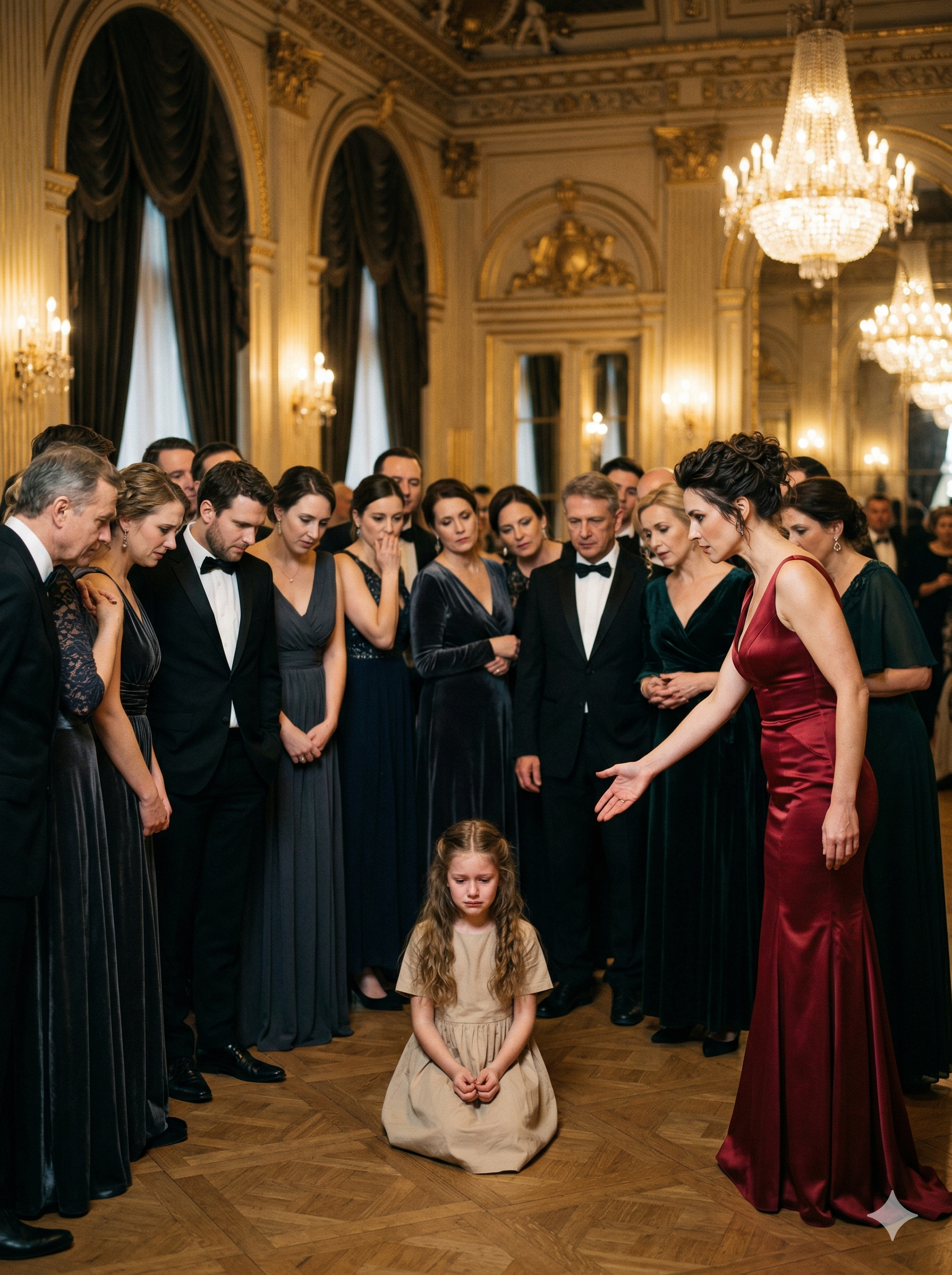
The gala took place in an old residence in San Pedro Garza García, complete with live musicians, tables dressed in white linen, and a guest list of businessmen, lawyers, investors, and longtime acquaintances who had once waited years for a call from him. Alejandro, 48, had been among the most influential industrial developers in northern Mexico. But eleven months earlier, a highway accident had changed his life, and he had used a wheelchair ever since.
The injury had not taken away his ability to run companies, negotiate contracts, or make decisions. What it had done was expose something he never wanted to imagine: many of the people around him had never admired the man, only the image of power he projected.
Tonight, he wanted to know for certain.
He moved among the tables, greeting people who years ago would have risen to welcome him. Some offered a quick smile. Others pretended to be occupied. One former partner even turned his back to keep talking with someone else before Alejandro could reach him.
There were no insults. It was worse.
There was indifference.
From a corner, he heard a woman murmur that it was a shame to see him “like this.” Another guest remarked that his executives were surely making the important decisions by now. Alejandro clenched his jaw. He had survived surgeries, rehabilitation, and months of pain, but this was different. They were burying him socially while he was still alive.
When the waltz began, several couples took to the dance floor. Alejandro stayed beside a column, an untouched glass on a nearby table. No one came to invite him to a toast. No one asked whether he wanted to join in.
Then an eight-year-old girl in a plain yellow dress appeared.
Her name was Sofía, and she was the daughter of Lucía Reyes, a woman who had cleaned the house for years. Lucía tried to stop her from the back of the room, but the girl had already crossed the hall.
Sofía stood right in front of Alejandro and asked:
“Why are you here by yourself?”
The room seemed to grow quieter.
Alejandro could not find an answer fit for a child.
Sofía glanced at the dance floor, glanced back at him, and held out her hand.
“If nobody wants to dance with you, I do.”
Several people stopped talking.
Lucía went pale.
Alejandro looked at that small hand, then at the guests who had spent the whole night avoiding him.
And then he did what no one expected.
He took Sofía’s hand and guided his chair to the center of the dance floor.
PART 2
The orchestra kept playing, but the couples moved aside to make room for them. Sofía circled Alejandro in time with the rhythm while he turned his chair with gentle movements. He made no attempt to pretend he could walk. He concealed nothing. He simply danced in the way he was able to.
The girl laughed every time they completed a full turn.
“Now you don’t look angry anymore,” she told him.
That sentence disarmed him.
Alejandro smiled for the first time in months.
All around them, some guests lowered their eyes. The same people who had tried to make him invisible now watched in silence. Lucía, still anxious, realized that her daughter had broken something far greater than a rule of etiquette.
When the music stopped, Sofía made a clumsy curtsy. Alejandro let out a genuine laugh. Then he asked for a microphone.
“This dinner was not a celebration,” he announced. “It was a test.”
The mood shifted at once.
He explained that he had wanted to learn who still saw the person he was and who respected only his position. He named no one. He didn’t need to.
Then he looked at Sofía.
“The only person tonight who saw that I was alone was a little girl who doesn’t know how much money I have.”
He set the microphone down for a few seconds and added:
“So I have also made a decision about this house and about part of my fortune.”
A chill ran through Lucía.
None of those present imagined that this decision would place the cleaning woman and her daughter at the heart of a transformation that would shake Alejandro’s entire life.
PART 3
When the last guest had gone, the silence of the mansion no longer felt elegant. It felt like a confession.
Alejandro asked Lucía to come closer. She walked to the middle of the hall, frightened, like someone who believes her daughter has committed an unforgivable offense.
“Mr. Ibarra, I’m sorry about Sofía. I should have…”
“Don’t apologize,” he interrupted.
Lucía raised her eyes.
Alejandro swept his gaze over the empty hall: the crystal chandeliers, the spotless floor, the tables set for people who were no longer there.
“For years I spent far too much money impressing people who would never have crossed a room for me if I had nothing to offer them,” he said. “I want to stop.”
Lucía couldn’t tell where the conversation was heading.
Alejandro explained that the residence would no longer host private dinners and exclusive gatherings. Part of the ground floor would become a support center for the children of local workers, with a library, music workshops, after-school activities, and homework tutoring.
Lucía’s eyes widened.
“That costs a fortune.”
“Organizing dinners like this one cost a fortune too,” he replied. “The difference is that this can actually serve a purpose.”
Then came the sentence that left her frozen.
“I want you to help me run it.”
Lucía thought she had misheard.
“I clean this house.”
“You know this house. You know the people who work here. You know what families need. I know how to manage money, but you understand things my executives can’t see.”
She shook her head, overwhelmed.
“I don’t have the education to run a project like this.”
“Then you’ll have training, a team, and a salary that matches the responsibility. I’m not giving you anything. I’m offering you a job because I trust your judgment.”
That distinction changed everything.
Lucía accepted with fear, but also with a dignity Alejandro had observed for years without understanding it.
The next morning, architects, educators, and representatives of educational organizations arrived. Alejandro had the overly delicate furniture removed, the spaces opened up, and a room once reserved for private tastings turned into a library.
Sofía was the first to step inside.
She ran between the still-empty shelves and asked whether children who didn’t live in the house could come here.
“That’s the point,” Alejandro answered.
Over the following weeks, the residence transformed.
The clinking of glasses gave way to pencils dropping on the floor, children’s laughter, and badly played piano notes. Lucía put her cleaning uniform aside and started working in a small office, surrounded by schedules, budgets, and meetings. At first she felt out of place. Some administrative staff treated her with a stiff courtesy that masked their doubts.
Alejandro noticed.
In one meeting, a manager tried to correct Lucía before she had finished presenting a proposal.
“Let her finish,” Alejandro said.
Lucía proposed providing transportation for children whose mothers left factories and hospitals late. The manager argued that it would drive up costs.
“It also increases attendance and safety,” she answered.
Alejandro reviewed the figures and approved the pilot program.
It worked better than expected.
For the first time, Lucía stopped feeling that she held a borrowed place.
The bond between them changed too. It was no longer that of an employer and an invisible worker. They argued over budgets, schedules, scholarships, and real problems. Lucía was one of the few people who dared to tell him when an idea was impractical.
One afternoon, Alejandro wanted to rent an enormous stage for the opening festival.
“The children don’t need a magazine-worthy stage,” Lucía said. “They need shade, enough bathrooms, and places for their grandparents to sit.”
Alejandro looked at her for a few seconds and then burst out laughing.
“That’s why you’re here.”
Little by little, he began listening to her outside of work as well.
Lucía told him she had raised Sofía alone since the girl was very small, and that for years she had worked double shifts so she wouldn’t have to take her out of the school near the house. Alejandro spoke about the accident, though not the medical details. He talked about what came after: the rage of having to ask for help, the shame of feeling watched, how easily he had turned pain into a bad temper.
“You used to greet everyone by name,” Lucía reminded him one night as they went over lists for a workshop. “Then you stopped.”
Alejandro lowered his gaze.
“I thought that if I kept my distance, no one could see me as weak.”
“Distance hurts other people too.”
There was no reproach in her voice. That made it sting more.
Alejandro began changing small habits. He went back to eating with some of the staff on certain days. He asked about their families. He accepted help without answering with irritation. He even returned to the rehabilitation sessions he had abandoned, not because he expected a miracle, but because he understood that caring for his body was not admitting defeat.
Sofía became a constant presence. She walked into his office without grasping hierarchies, left drawings on his desk, and made him weigh in on decisions no board of directors would have considered important.
“The library chairs are ugly,” she declared one day.
“That’s a very technical argument,” Alejandro replied.
“And they scratch, too.”
They replaced them.
A month later, at the official inauguration, families arrived from different neighborhoods across Monterrey and its metropolitan area. There was no red carpet. The children played songs they were still learning. The mothers brought food. Several employees who used to work without exchanging a word with Alejandro sat near him.
The local press began asking about the project.
Some old acquaintances tried to return.
One of the men who had ignored him at the gala requested a meeting and showed up talking about social partnerships, corporate responsibility, and collaboration opportunities.
Alejandro listened.
“Why now?” he asked.
The man took too long to answer.
Alejandro did not humiliate him. Nor did he pretend to believe him.
“If you want to help, you can. But here, no one buys closeness to me.”
That sentence spread among the city’s business owners.
As the project grew, the trust between Alejandro and Lucía turned into affection. It didn’t happen all at once. There was no grand scene. It emerged in late conversations, in disagreements settled with respect, and in small moments.
One afternoon, Sofía took Lucía’s hand and then Alejandro’s.
“Now you really look like a team,” she said.
Lucía grew nervous. Alejandro smiled.
That night, he kept turning the word over in his mind.
Team.
For years he had had partners, assistants, advisers, and lawyers. But rarely had he felt that someone stayed beside him without wanting something from his last name.
Weeks later, in the garden, Alejandro spoke to Lucía plainly.
“I don’t want to confuse you or put what we’ve built here at risk.”
She stayed silent.
“But you matter to me.”
Lucía looked at him calmly.
“You matter to me too.”
“Alejandro.”
She smiled.
“Alejandro.”
They did not start a relationship right away. Lucía made it clear that she didn’t want to be treated as a charity story or as the woman “rescued” by a rich man.
“If this ever changes between us, it has to be because we are equals in what matters.”
“Respect, decisions, and freedom,” he answered.
“Exactly.”
Months later, no one at the center questioned Lucía’s authority anymore. She had proven her ability, patience, and firmness. Alejandro, for his part, stopped using work as armor.
When they decided to make their relationship official, they did it without spectacle.
A year after that gala, they held a small ceremony in the residence’s garden. Relatives, employees, teachers, and many of the center’s children attended. Sofía carried a bouquet of yellow flowers and made sure the music included the same waltz from that first night.
When it began to play, Alejandro looked at Sofía.
“Again?”
“Again.”
The girl took his hand, and together they made their way to the center of the hall, where this time no one looked away.
Alejandro turned his chair gently. Sofía spun an exaggerated twirl. The children began to copy them. Lucía came over and took Alejandro’s other hand.
The place that a year earlier had been full of powerful people and empty of humanity was now full of noise, imperfection, and people who truly wanted to be there.
Alejandro looked around.
He no longer needed to know who respected him for his money.
He knew it by who stayed when there was nothing to gain.
And Sofía, with her usual simplicity, summed up everything that house had learned in a single sentence:
“When someone is alone, you don’t look at them from far away. You make room for them.”
Alejandro squeezed Lucía’s hand as the music played on.
He had lost the ability to walk, but not his worth. What he had lost, for a while, was the ability to recognize himself without other people’s approval.
And that night he understood something he had never learned from negotiating millions: dignity does not vanish when the body changes. It vanishes when a person accepts that others get to decide what he is worth.
In that hall, where everyone had once avoided looking at him, Alejandro was no longer the rejected man.
He was simply a man with people beside him.
And in the end, that turned out to be far harder to buy and far more valuable to keep.





Leave a Reply