Fiction. This story is a dramatized work created for entertainment. Names, characters, events, and circumstances are fictional.
PART 1: THE DAUGHTER THEY THREW AWAY
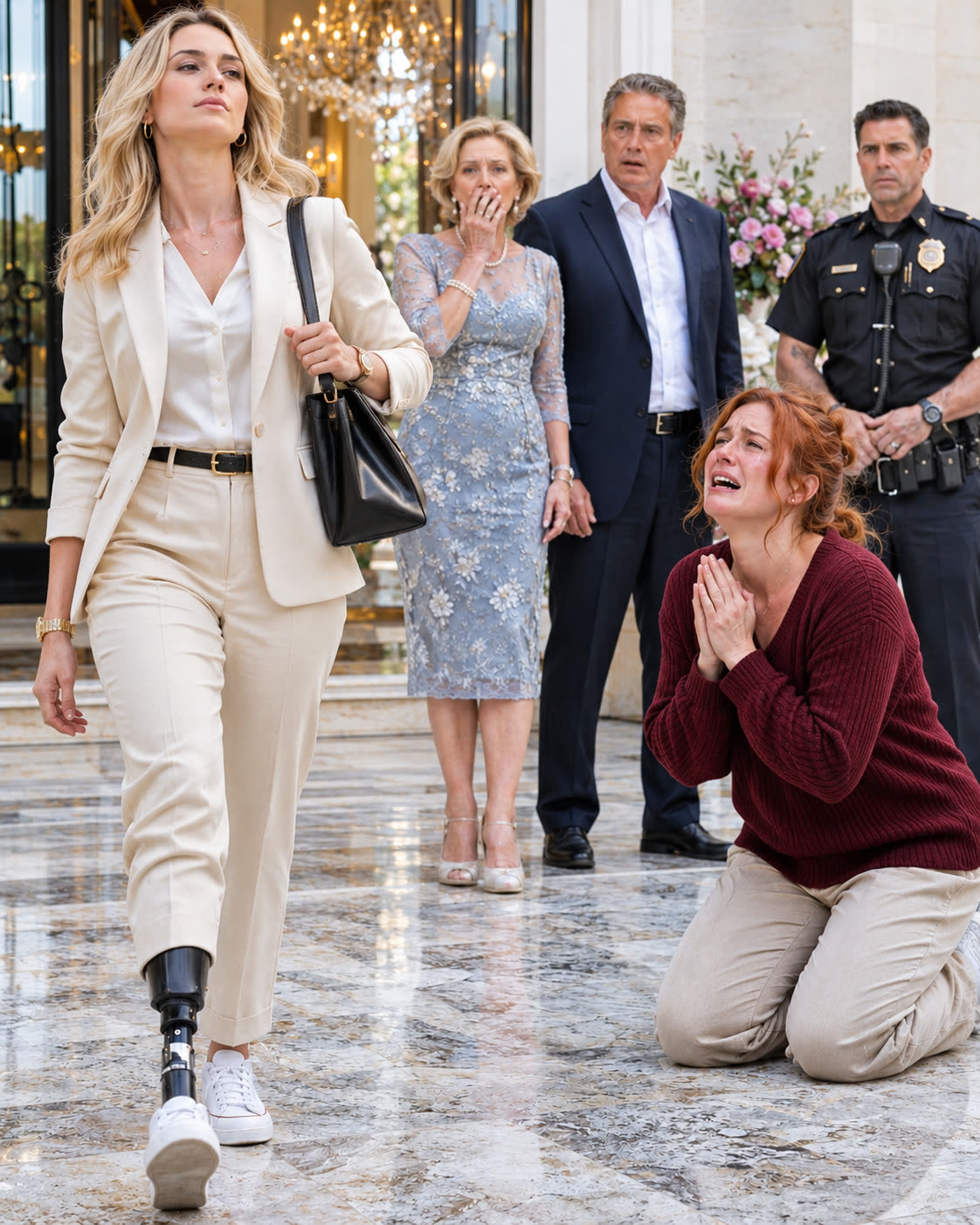
After nineteen long years of silence, the first thing my mother said to me was neither an apology nor even a simple question about how my life had turned out. She stood in the middle of my Manhattan penthouse, my father right beside her, and informed me that they needed one million dollars to rescue my younger sister.
“We need one million dollars. And you’re going to give it to us because Chloe is still your sister.”
I was thirty-five years old, standing beside the floor-to-ceiling windows while an autumn rain swept across the city far below. Beatrice and Arthur had vanished from my life when I was sixteen, and yet here they were, strolling into my home as though nearly two decades of silence had changed absolutely nothing between us.
My father set a thick folder down on the coffee table and explained that Chloe had made a mistake. The way he described it, if the missing money could be put back before an audit started the following week, the whole problem could simply go away quietly, without anyone ever hearing about it.
“And why exactly would I fix it?”
My mother answered with a short, bitter laugh.
“Because you owe this family.”
I lowered my eyes to the titanium prosthetic leg showing beneath the hem of my trousers and rested my fingers lightly against the cool metal. The notion that I owed them anything at all might have been almost amusing if the history behind it had not been so ugly.
“I owe you?”
I was ten years old when an aggressive bone cancer forced the doctors to amputate my left leg above the knee. When I woke up in that hospital bed, crying for my mother, Beatrice did eventually arrive, but rather than comforting me, she stood at the foot of the bed and stared at the flat, empty space beneath the blanket.
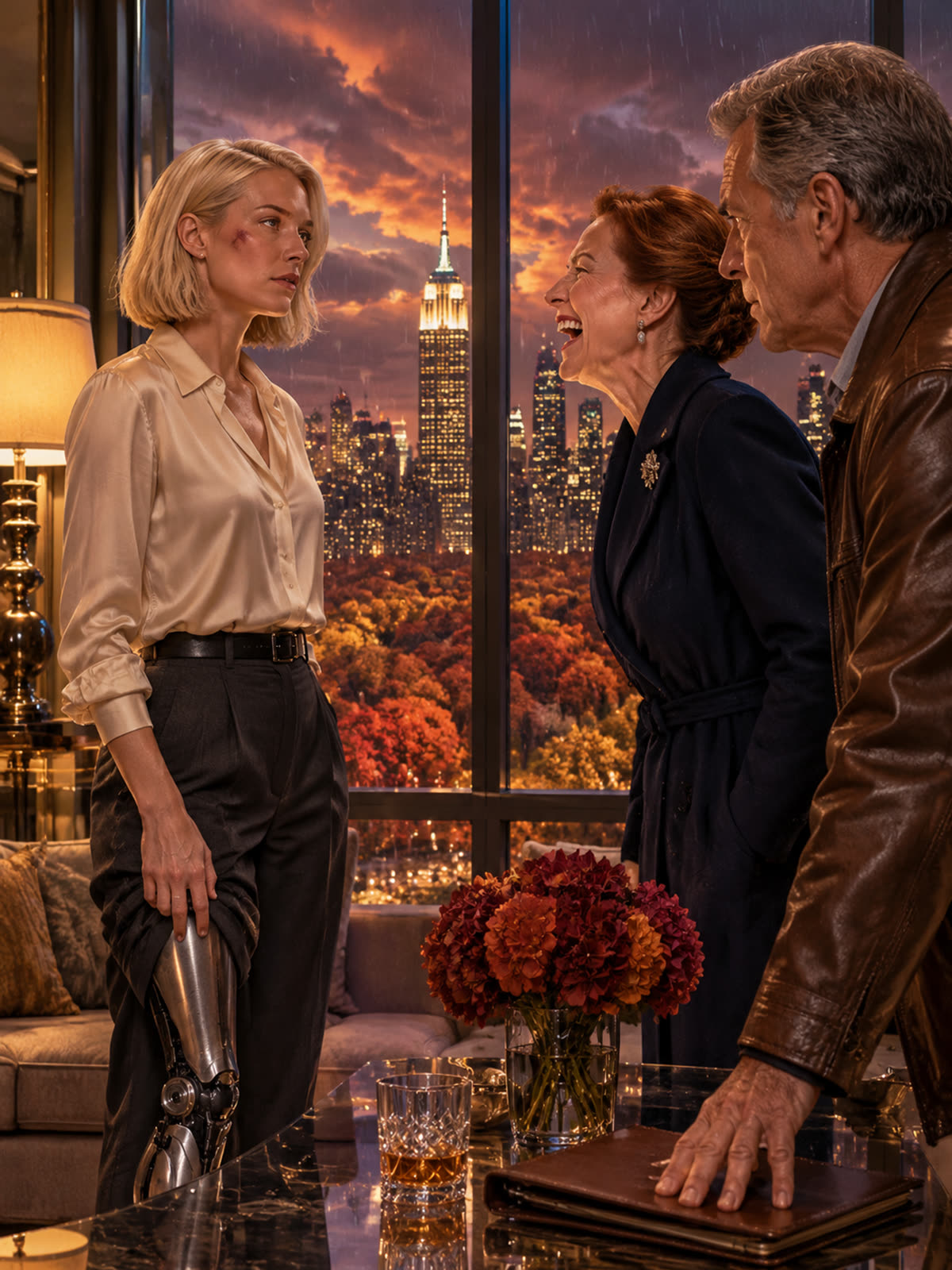
“What are we supposed to do with you now?”
From that day on, I was no longer treated as a daughter. I had become a problem they wanted kept out of sight. Chloe was given dance lessons, expensive clothes, vacations, and lavish celebrations, while my parents refused to pay for a functional prosthetic because, in their eyes, it was nothing more than an unnecessary expense.
Whenever guests came to the house, Mom told me to stay upstairs so that nobody would start asking questions about my leg. By the time I turned sixteen, I had learned the lesson completely: my parents cared far more about appearances than they had ever cared about me.
The final break came during a formal family photo session at our house. My crutch slid out from under me on the polished hardwood floor, and as I stumbled, I accidentally knocked a glass of wine across an expensive white rug.
Dad never asked whether I was hurt. Instead, he went and fetched a black trash bag, handed it to me, and told me to pack whatever I was able to carry.
“We’re tired of carrying you. Get your things and leave.”
I kept waiting for Mom to step in and stop him, but she walked over and opened the front door instead. Chloe sat close by and never even lifted her eyes while I shoved three changes of clothes into the bag and walked out of the only home I had ever known.
I made my way nearly two miles on crutches before I finally reached Aunt Sarah’s house. She was my mother’s estranged sister, and unlike my parents, she opened her door without a second of hesitation and gave me a place to stay.
Two years later, I discovered that abandoning me had not been the worst thing they had done. When I applied for a student loan so I could buy my first proper prosthetic before starting college, I learned that more than forty thousand dollars in unpaid debt had already been opened under my Social Security number.
Credit cards, personal loans, and luxury accounts had all been set up in my name while I was still a minor. My parents had stolen my identity to pay for Chloe’s clothes, her vacations, her celebrations, and even a semester in Europe.
Repairing the damage took years of legal battles and relentless, exhausting work. By thirty-five, I had built one of Manhattan’s successful commercial real estate firms and created a life that needed nothing whatsoever from the people who had thrown me away.
And now those very same people were standing in my penthouse, asking me to hand over another million dollars for Chloe.
I crossed the room to the private elevator and pressed the call button.
“Get out.”
My mother’s face hardened with fury.
“If Chloe ends up in federal prison, it will be your fault.”
I watched as the elevator doors started to slide shut between us.
“No. It will be the fault of whatever Chloe did.”
That same evening, I hired a private investigator. Three days later, he walked into my office holding a dossier and told me that the million dollars had nothing to do with a simple financial mistake.
“Your sister is trying to hide what happened to a twenty-four-year-old woman who may never walk again.”
For the first time, I realized that my parents had not come back merely because Chloe needed money. They had come back because there was something they were terrified the whole world was about to find out.
The woman at the center of Chloe’s secret was Daniela Ruiz, a twenty-four-year-old junior accountant whose ordinary life had been turned upside down on a single rainy night. As she drove home along the West Side Highway, a luxury SUV tore through a red light at high speed and slammed into her sedan.
Daniela survived, but the crash had badly damaged her spine, and her doctors could not say with any certainty whether she would ever regain movement below her waist. The person behind the wheel of that SUV was my sister.
According to the investigator, Chloe had walked out of an exclusive rooftop lounge shortly before the collision, and she had been visibly intoxicated. Yet by the time the official police report was finalized, witness statements had vanished, photographs of the accident were missing, and Chloe’s name had somehow been scrubbed from the public record.
“Her fiancé’s family paid the right people to keep it quiet.”
Chloe was engaged to Marcus Montalvo, whose family controlled one of Wall Street’s most powerful hedge funds. His father, Arthur Montalvo, also chaired a major foundation that financed medical programs for children with disabilities.
To Chloe, that marriage represented everything she had spent her entire life chasing. If Arthur ever learned that his future daughter-in-law had caused a devastating crash and then tried to escape responsibility for it, her place in that glittering world could disappear overnight.
The investigator explained that Chloe had hired someone to contain the damage. Daniela had been approached while she was still in the hospital, pressured to stay quiet, and offered fifty thousand dollars to sign a strict confidentiality agreement while her medical bills kept climbing higher and higher.
That was only the beginning.
Chloe needed far more money to keep paying intermediaries, bury the evidence, and hide the financial trail. Because she worked in public relations for the Montalvo Foundation, she temporarily had access to its administrative payment systems.
Over the course of three weeks, she allegedly funneled one million dollars through fake vendor invoices and structured wire transfers. That money had been meant for pediatric medical programs, but Chloe had used it to shield herself from the consequences of what had happened to Daniela.
A federal audit was scheduled to begin in twelve days. If the missing million was not restored before investigators compared the foundation’s accounts, the entire scheme could be laid bare.
That was why my parents had suddenly remembered I existed.
They had not come back because they regretted abandoning me, or because nineteen years had made them miss their eldest daughter. They needed someone with enough money to refill the account before Chloe’s life came crashing down.
Two days later, Chloe showed up at my office without an appointment. She shoved past my assistant, marched straight into the executive suite, and slammed the doors behind her.
She looked nothing like the polished woman I had seen smiling in society magazines. Her designer coat was creased, her hair was in disarray, and her hands were visibly shaking.
“Where’s the money?”
I remained seated behind my desk.
“Good morning to you too, Chloe.”
She smacked her palm down on the desk and threatened to go to the press if I refused to help her. She said she would tell everyone that I was a bitter sister who had walked away from her own family and was perfectly willing to let her go to prison.
I let her finish before asking the question she clearly had not seen coming.
“Was Daniela bitter when you left her injured in that car?”
The color drained from Chloe’s face.
“You don’t know what you’re talking about.”
“I know enough.”
Her panic quickly hardened into cruelty, and she began repeating the same insults I had heard all through my childhood. She called me bitter, damaged, and pathetic, insisting that losing my leg had made me resent everyone whose life had turned out better than mine.
This time, the words did not wound me the way they once had. They only confirmed that there was nothing left between us worth protecting.
I pressed the intercom and asked security to escort her out of the building. Chloe kept shouting as they led her toward the elevator, swearing that she would destroy my reputation if I refused to save her.
That afternoon, I went to see Aunt Sarah in Brooklyn and told her everything. She disappeared upstairs and came back down holding an old metal lockbox she had kept safe for nearly two decades.
Inside were bank statements, collection notices, identity-theft reports, and even a handwritten letter from my father that indirectly admitted to using the accounts opened in my name. Sarah had held on to every single document because she had always believed my parents might one day try to rewrite what they had done.
“I knew one day you might need proof.”
There was still one person I needed to meet.
When I went to see Daniela at her accessible apartment in Queens, she turned defensive the moment she noticed my business clothes. She assumed I had come to offer her yet another settlement.
“I’m not signing anything else.”
“I’m not here to buy your silence.”
I set a thick folder down on the table between us.
“I’m here to help you prove what happened.”
PART 2: THE GALA WHERE THE TRUTH WALKED IN
Daniela read the first page and began to cry. Then she told me something that even my investigator had failed to uncover.
Before the crash, she had worked inside the Montalvo Group’s accounting division, and she had saved an encrypted backup of internal server logs. Those files held the authorization records for every fraudulent transfer, including Chloe’s digital credentials.
In four days, the Montalvo family would be hosting a formal engagement gala at their estate in the Hamptons. By sheer coincidence, I was also scheduled to meet Arthur Montalvo there that same evening to finalize a fifty-million-dollar real estate partnership.
Daniela studied me carefully. “What are you going to do?”
I closed the folder and slid it back into my briefcase. “Nothing illegal. I’m simply going to make sure Chloe can no longer buy her way out of the truth.”
On Saturday evening, I stood in front of the mirror in my dressing room and thought about the sixteen-year-old girl I used to be. She had once stood outside in the rain with a trash bag in one hand and crutches tucked under her arms, wondering what she could possibly have done to make her own parents stop loving her.
For years, I believed that if I ever saw them again, I would need to prove something to them. I imagined proving that I could survive, build a company, earn respect, and live a full and successful life with the very disability they had treated like a shameful burden.
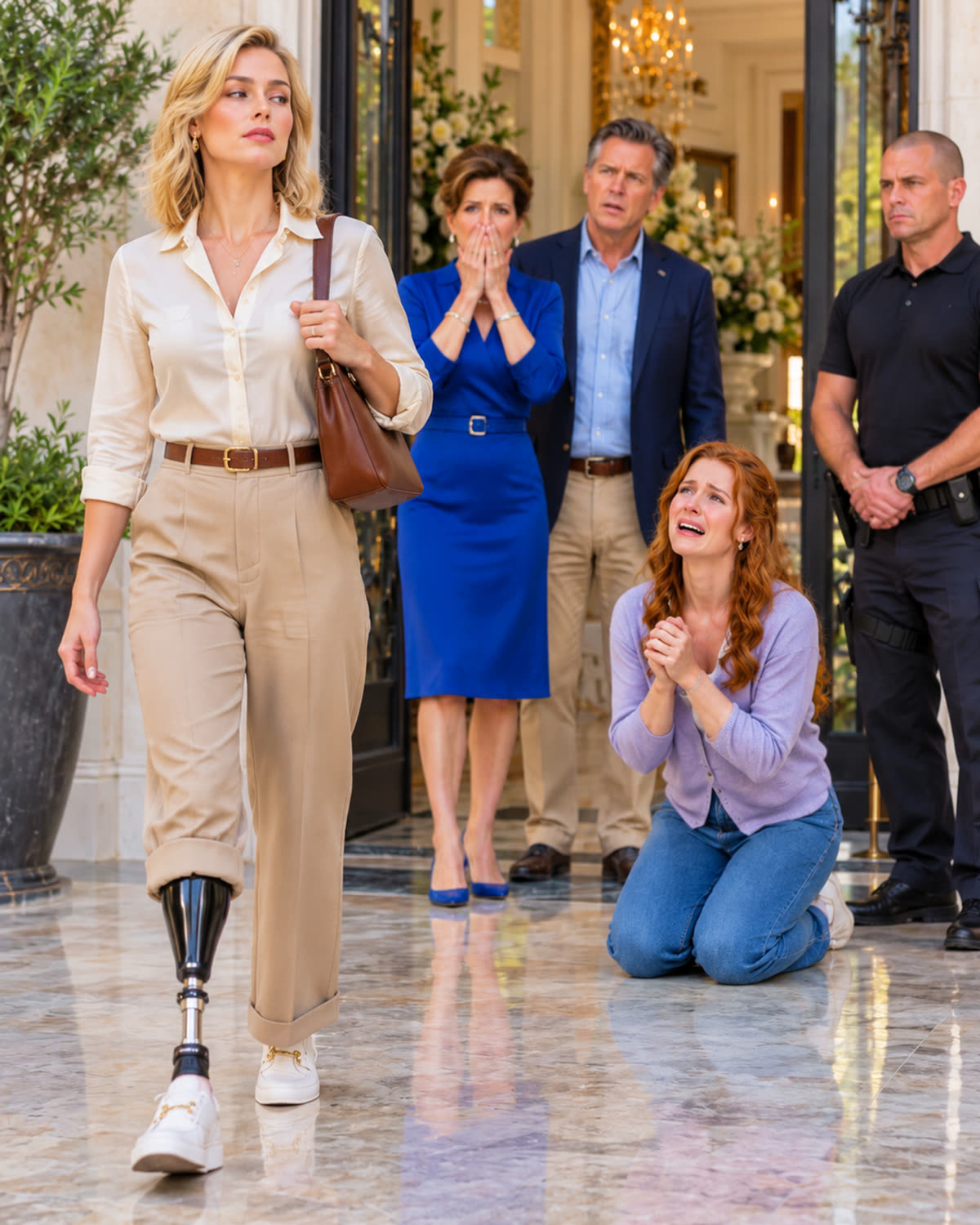
That night, I finally understood that I owed them no proof at all. I put on a midnight-blue tailored suit with the left trouser leg cut slightly higher, leaving part of my titanium prosthesis visible instead of hiding it away.
The Montalvo estate in East Hampton was crowded with executives, investors, politicians, and socialites. Crystal chandeliers lit up the ballroom while expensive cars lined the drive outside, creating exactly the kind of world my parents had always worshipped.
I saw Beatrice first, standing among a cluster of wealthy guests with a champagne glass in her hand. Her expression froze the instant she noticed me, and when my father turned a moment later, he went just as still.
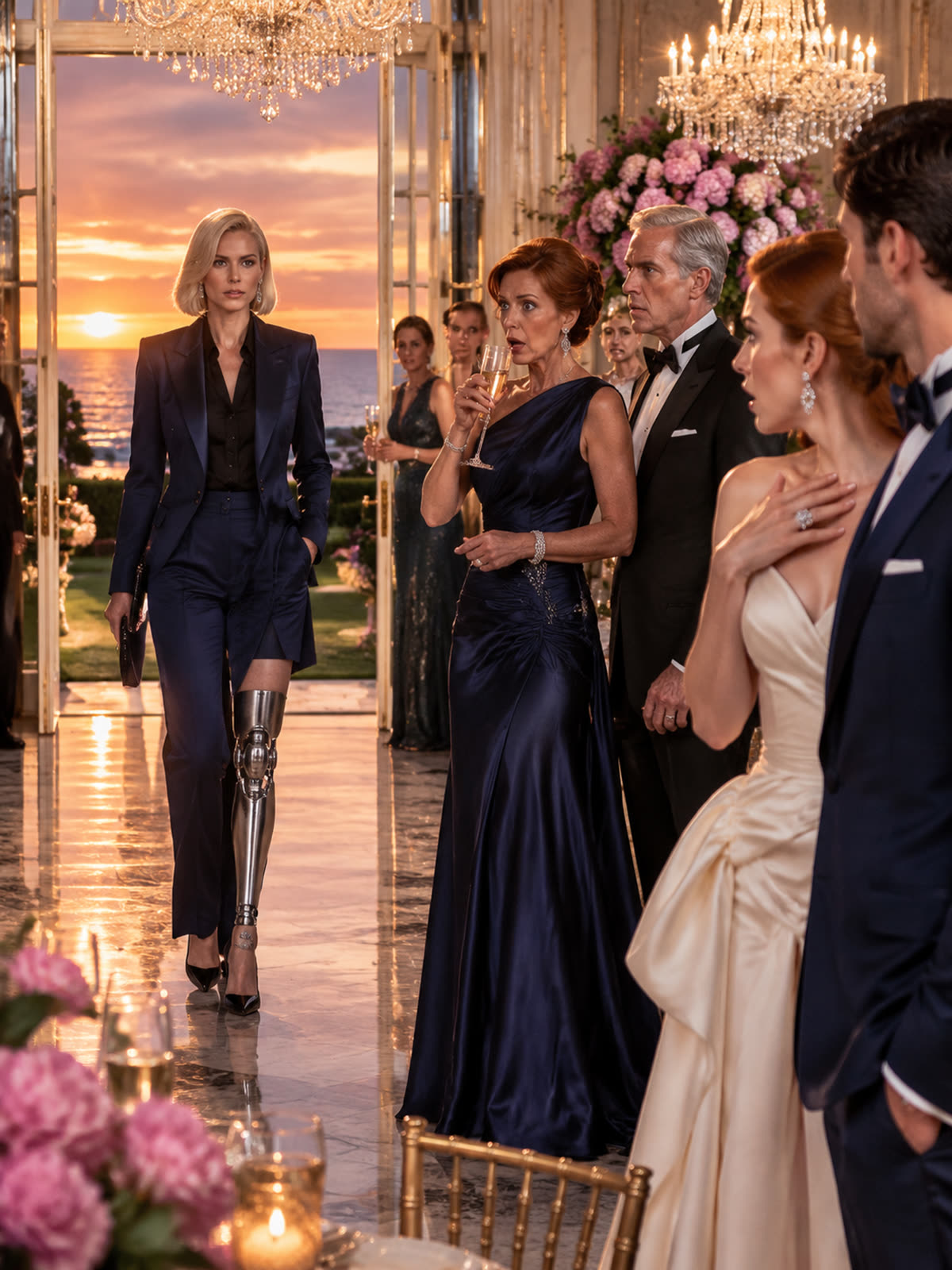
Chloe stood nearby with Marcus Montalvo, wearing a white couture gown and a large diamond ring. The three of them were already crossing the room toward me before I had taken more than a few steps inside.
“What are you doing here?”
“I have a business meeting.”
Chloe gave a nervous laugh and suggested that security would remove me. My mother seized my arm and warned me not to ruin the evening for my sister.
“Valerie, do not make one of your scenes tonight.”
I looked down at her hand on my arm until she let go.
“I’m not here to make a scene.”
My father stepped closer.
“Then leave. You don’t belong in a room like this.”
Before I could reply, a commanding voice rang out from behind them.
“She absolutely belongs here.”
Arthur Montalvo approached with his legal counsel at his side and greeted me warmly. He ignored my parents completely and shook my hand in full view of every guest standing around us.
“Valerie, I’m glad you made it. I’ve been telling the board about our joint venture all evening.”
My mother’s face changed in an instant. For nineteen years, my parents had apparently described me to other people as a troubled daughter who had disappeared from society, and they had never once bothered to find out what kind of company I had built.
Marcus stepped forward, recognition written plainly across his face.
“You’re Valerie Vance? My father has been talking about your real estate firm for months.”
“A pleasure to meet you.”
Chloe grew more and more panicked as the conversation went on. She knew exactly why she had needed my money, but she had not known that I was about to become her future father-in-law’s business partner.
I opened my portfolio and told Arthur there was a compliance matter involving his foundation that he needed to see before we finalized our agreement. Chloe immediately tried to stop me.
“That can wait until Monday.”
Arthur glanced from her to me and back again.
“What does the foundation have to do with our deal?”
“I hope nothing. But if we’re becoming partners, I prefer complete transparency.”
I handed him the folder.
The first pages contained the records of the missing million dollars, followed by the fake vendor invoices and the structured transfers. The final section traced every authorization straight back to Chloe’s corporate credentials.
Arthur’s expression hardened as he read.
“What is the meaning of this?”
Chloe instantly accused me of fabricating everything because I was jealous of her. But when Marcus spotted a reference to Daniela Ruiz in the documents, his confusion turned into alarm.
“What does ‘Ruiz Settlement Allocation’ mean?”
“It’s nothing. She’s framing me.”
My mother stepped in and tried to discredit me by dragging up my childhood amputation. She told Arthur that losing my leg had left me unstable and resentful of Chloe’s life.
For the first time, she was using the same disability she had once tried so hard to hide as a public weapon against me. I did not argue, because someone else entered the ballroom before I needed to say a word.
“She wasn’t jealous of your daughter. But I suffered because of her.”
Every guest turned toward the entrance.
Daniela Ruiz came through the double doors in her motorized wheelchair, her attorney walking beside her. Chloe stepped backward, Marcus went pale, and Arthur recognized Daniela at once as a former employee of his organization.
Daniela guided her chair to the center of the room and calmly described the crash, the pressure she had faced afterward, and the settlement she had been pushed to accept. Then she held up a flash drive containing the server logs that connected Chloe to the missing money.
Marcus looked at Chloe as though he no longer recognized the woman standing in front of him.
“Tell me this isn’t true.”
Chloe began crying.
“Marcus, I was scared. I was trying to fix it.”
That answer changed the entire room. She had not denied it. She had admitted there was something to fix.
PART 3: THE LIFE THEY COULD NO LONGER CONTROL
Marcus stepped away from Chloe as though the space between them had suddenly become necessary. Arthur Montalvo kept his attention fixed on the documents in his hands, while Daniela’s attorney stood beside her and quietly confirmed that the digital records had already been preserved for investigators.
“What exactly were you trying to fix, Chloe?”
Chloe wiped at her face and insisted that everything had spiraled far beyond her control. She still avoided giving any direct explanation, but every sentence she spoke made her earlier denial sound weaker and weaker.
Arthur looked at her with growing disbelief.
“Did the hit-and-run get out of control too?”
Chloe lowered her head and said nothing.
My mother hurried to her side at once and began defending her, calling the crash a terrible mistake. Even after hearing about the missing money, the intimidation, and the evidence tying Chloe to the transfers, Beatrice still seemed more concerned with protecting her favorite daughter than with what had happened to Daniela.
Arthur’s legal counsel stepped away to make a call, and I overheard enough to know he was contacting the authorities. My father then pulled me aside and lowered his voice, as though the whole situation could somehow still be handled in private.
“Valerie, stop this now.”
“I can’t.”
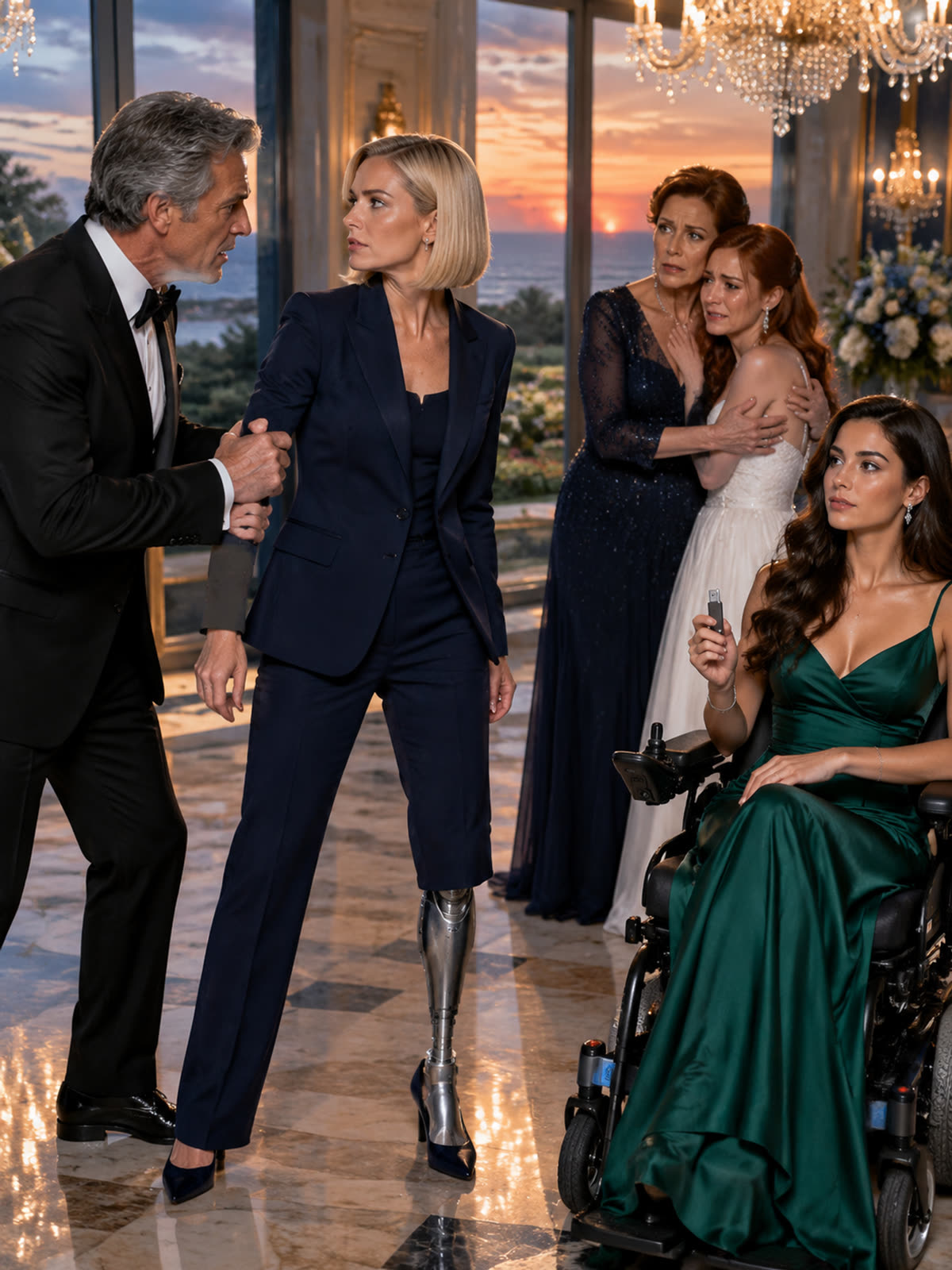
“Of course you can. Pay Arthur the million dollars, and we can still fix this.”
I stared at him, because even now his instinct was exactly the same as it had been nineteen years earlier. He was still willing to sacrifice anyone necessary to preserve Chloe’s future.
“A young woman may never walk normally again because of what happened.”
“It was an accident.”
“And what came afterward wasn’t. The threats, the missing evidence, and the stolen money were choices.”
His jaw tightened.
“She is your sister.”
I looked him straight in the eye.
“And I was your daughter when you threw me onto the street with a trash bag.”
That silenced him.
I reminded him that I had been sixteen, relying on crutches, and barely able to support myself when he decided I was too inconvenient to keep. He tried to argue that he and my mother had been different people back then, but the excuse collapsed under the weight of the reality standing right in front of us.
“You’re not different. The only thing that changed is that now you need something from me.”
Beatrice had heard enough of our conversation to come storming over in anger. She told me that, whatever had happened in the past, they had still given me life.
“And then you spent years making that life harder.”
I opened a second folder and laid several certified documents out on a nearby table. Aunt Sarah had preserved the bank statements, collection notices, identity-theft reports, and correspondence connected to the accounts my parents had opened in my name when I was still a teenager.
My mother’s face changed as she recognized the records. She tried to brush them aside as ancient history and claimed they had only done what was necessary for the family.
“You used my identity to pay for Chloe’s lifestyle.”
“You don’t understand how difficult things were.”
“I understand perfectly. I was working nights to afford a functional prosthetic while you were creating debt in my name so Chloe could travel.”
My father lowered his eyes, but Beatrice refused to retreat. She shouted that Chloe had always had potential and that they had been unwilling to let financial problems destroy her future.
For years, I had carried anger built on the belief that my parents rejected me because I lost a leg. Standing there in that glittering ballroom, I finally understood something simpler and far more painful: the problem had never been my disability.
They had treated me as disposable because I was no longer useful to the image they wanted to maintain. Chloe had been protected not because she deserved more love, but because she represented the life they wanted everyone else to admire.
Across the ballroom, Marcus slowly removed the engagement ring Chloe had given him and placed it on the table beside her. His expression stayed controlled, but whatever future Chloe had imagined with him was already gone.
“We’re finished.”
Chloe began begging him to reconsider.
“You can’t do this to me.”
Marcus shook his head.
“You did this to yourself.”
Arthur instructed his legal team to cooperate fully with investigators and to provide every financial record connected to the foundation. Chloe looked around the room in disbelief as the very people she had expected to protect her began, one by one, to step away.
Then she pointed straight at me and accused me of planning the entire evening because I had always hated her.
I looked back at her without anger.
“For a long time, I did hate you. Then I realized hatred was just another way of letting you occupy my life.”
I glanced toward Daniela before turning my eyes back to my sister.
“I didn’t cause the crash. I didn’t steal the money, and I didn’t threaten anyone into silence. Whatever happens next comes from your choices, not mine.”
The investigation did not end with the confrontation at the gala. Over the days that followed, authorities reviewed the foundation’s financial records, and the evidence revealed that Chloe had used several shell companies to move money through fake vendor accounts.
The fixer she had hired eventually cooperated with investigators and turned over messages showing that Chloe had instructed him to pressure Daniela into silence. With the financial records, the digital logs, and witness testimony all pointing in the same direction, there was very little left for Chloe to deny.
Months later, she accepted a plea agreement covering financial fraud, obstruction, and the crash that had changed Daniela’s life forever. Her engagement vanished, the social status my parents had spent years protecting collapsed, and the future they had built around Chloe was replaced by legal bills and restitution.
My parents spent most of their savings trying to protect her. Eventually, they were forced to sell the very same family home from which they had thrown me out at sixteen.
A year after the case ended, Beatrice appeared in the lobby of my office building. She looked older than I remembered, without the expensive clothes or the jewelry that had always seemed so important to her.
“They’re foreclosing on our apartment.”
I looked at her quietly.
“I’m sorry to hear that.”
Hope immediately flickered across her face.
“Does that mean you’ll help us?”
“No.”
Her face tightened.
“I am your mother.”
“Biologically, yes.”
She began crying and insisted that she and my father had made mistakes. I had spent far too many years questioning whether I should forgive them simply because we shared blood, but by then I understood the difference between a mistake and a pattern of deliberate choices.
“A mistake is forgetting a birthday. Abandoning your disabled daughter, using her identity for debt, and returning nineteen years later only because you need a million dollars is something else.”
She told me my father was overwhelmed and asked how I had become so cold. I thought about the sixteen-year-old girl who had walked through the rain on crutches, carrying everything she owned in a trash bag.
“I’m not standing here because I’m cold. I’m standing here because that girl survived what you did to her.”
Beatrice stared at me for several long seconds before she finally turned away. When she walked out of the building, I felt neither victorious nor satisfied, because revenge had stopped being the point long before that day.
What I felt was peace.
Before the criminal case had even begun, I had created an independent medical trust for Daniela through a third-party foundation. That structure ensured her treatment could be funded without anyone being able to claim that financial help had influenced her testimony.
Daniela committed herself completely to rehabilitation and refused to let the accident define the rest of her life. Nearly a year later, she sent me a video from a physical therapy center.
In it, she was standing between parallel bars with support all around her. Slowly, she lifted one foot, moved it forward, and completed a single, difficult step.
I watched the video several times before I picked up the phone and called Aunt Sarah.
“Are you crying?”
“Maybe a little.”
She laughed warmly.
Sarah still lived in the Brooklyn townhouse where she had taken me in after my parents abandoned me. I visited her every Sunday, and our dinners usually involved far too much food, harmless arguments, and tea out on the porch afterward.
For years, I believed that losing my parents meant I had lost the chance to belong to a family. Aunt Sarah taught me that family had much less to do with blood than I had once believed.
Family was the person who opened the door when everyone else closed theirs.
My company kept growing, and I stopped trying to hide my prosthetic leg beneath clothing designed to make other people comfortable. It was simply part of me, connected to a history I no longer felt any shame in carrying.
On my office desk, I kept a photograph Aunt Sarah had taken when I was seventeen. In it, I was sitting on her porch beside my old aluminum crutches, smiling despite everything that had happened the year before.
On the back, Sarah had written a short message.
“This girl had no idea how far she was going to go.”
I owned awards, magazine covers, and photographs from business milestones, but that was the picture I chose to frame. It reminded me that success had never been about proving my parents wrong.
The girl in that photograph had already been worthy long before the penthouse, the company, or the money ever existed. My parents had spent years convincing me that losing a leg had made me broken, when the truth was that their inability to love without conditions had always been the real damage.
It took me nearly two decades to understand that people who abandon you during the hardest chapter of your life do not get to return later and decide what your survival is worth. My life belonged to me long before they came asking for a million dollars, and when they finally walked out of it again, I made sure it stayed that way.
Disclaimer: This story is a work of fiction inspired by real-life themes. Names, characters, places and events are fictionalized, and any resemblance to real persons is purely coincidental. It does not represent any person or organization and does not encourage inappropriate behavior. Images are for illustration purposes only.