Fiction. This story is a dramatized work created for entertainment. Names, characters, events, and circumstances are fictional.
Part 1: The Call at 4:12
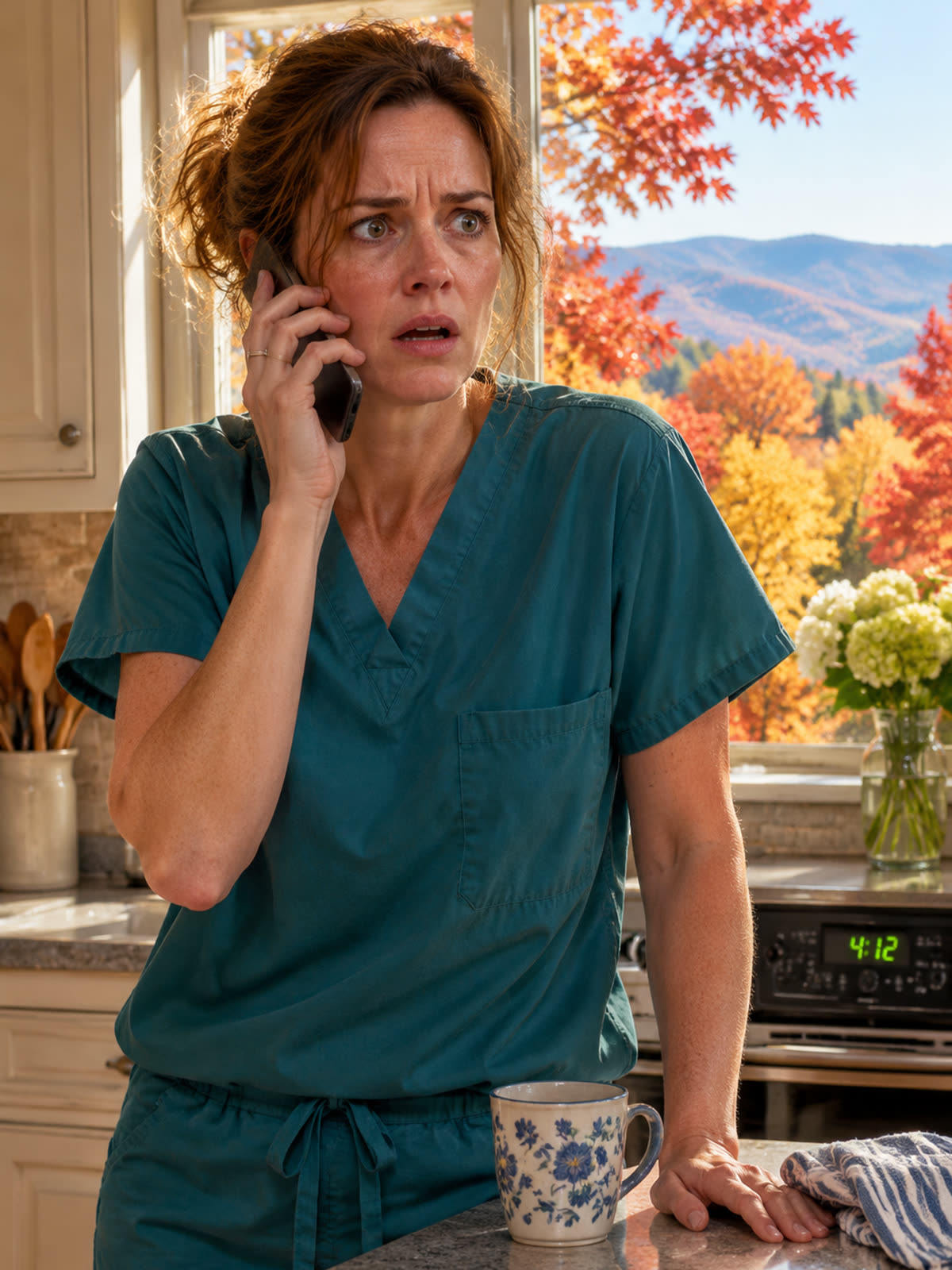
At 4:12 p.m., I was standing in my kitchen making coffee after a twelve-hour hospital shift when a Tennessee state trooper phoned me. My SUV had been in a collision on Interstate 40, and both of my children had been riding in the back seat.
My husband had told me they would spend the afternoon at their grandmother’s farm.
But the woman behind the wheel of my vehicle was not their grandmother. She was my husband’s girlfriend, and authorities believed she had been drinking.
My name is Beth Ann Corley. I’m thirty-eight years old, and I work as a hospital pharmacist in Knoxville, Tennessee. My husband, Logan, sold agricultural equipment and traveled often for work. Together we had two children: six-year-old Ava and three-year-old Archie.
That Saturday morning, Logan offered to drive the children out to his mother’s farm while I was on shift. He asked to borrow my SUV because both car seats were already buckled in. I kissed Ava and Archie goodbye before heading to the hospital, certain they would be well looked after.
When I got home, the house was empty. A few moments later, my phone rang.
“Mrs. Corley? This is Trooper Dial with the Tennessee Highway Patrol. Your vehicle was involved in a collision approximately forty minutes ago.”
I gripped the kitchen counter.
“Where are my children?”
“Two young children were in the back seat. They’ve been transported to Children’s Hospital.”
I could hardly take in what he was saying.
“That can’t be right. They’re with their grandmother.”
“The older child identified herself as Ava.”
I remember almost nothing of the drive to the hospital. What I do remember is rushing through the emergency department in my work scrubs and reaching the registration counter.
“My children were brought here after a car accident. Ava and Archie Corley. I’m their mother.”
The receptionist scrolled through her screen.
“Ma’am, their mother is already listed as being here.”
I stared at her.
“What?”
“She was registered as Raylene Corley.”
Before I could ask anything more, a state trooper stepped toward us. He introduced himself as Trooper Dial and told me the woman who had been driving my SUV was Raylene Boggs.
“She registered a blood alcohol concentration of 0.16 at the scene,” he said. “She also identified herself as the children’s mother.”
My stomach clenched. Then Logan walked into the emergency department. He stopped cold when he saw me.
“Beth Ann? Why are you here?”
I couldn’t make sense of the question.
“Why am I here? Our children were in a crash with your girlfriend!”
Logan took my arm and steered me toward the hallway.
“Keep your voice down. It was an accident.”
“She was drunk, Logan.”
“She only had a couple of glasses of wine.”
I pulled away from him.
“You told me Ava and Archie were at your mother’s house.”
He glanced around nervously before answering.
“Raylene is good with the kids. They like her.”
What he said next left me speechless.
“She’ll be their stepmother soon anyway. I was planning to tell you after the holidays.”
He kept talking. He criticized my long hospital shifts and argued that the children deserved someone who could be home more. Those shifts had helped pay for our family’s life, yet Logan was now using my schedule to justify secretly presenting another woman as my children’s mother.
When I told him I meant to document everything that had happened, his face hardened.
“If you make trouble, I’ll tell people you’ve been stealing medication from the pharmacy. Let’s see what a judge thinks about that.”
My hands began to shake, but I did not argue. Years as a pharmacist had taught me to trust documentation, confirmed identities and verifiable evidence.
I went back to the registration counter with my driver’s license, both children’s insurance cards and photographs taken shortly after each of their births.
“Please contact your registration supervisor and a hospital social worker,” I said. “The woman identified as their mother isn’t their mother. She’s the driver who caused the crash.”
After examining my identification, the receptionist reached for the phone at once. A registration supervisor and a hospital social worker arrived within minutes.
While going through the children’s electronic files, the supervisor noticed that their pediatrician’s office had processed an emergency-contact change two weeks earlier. Logan had submitted it. She turned the monitor toward me.
Mother: Raylene Corley.
Right beneath it was another entry made the same day.
Beth Ann Corley — Remove from emergency contacts. Do not contact. Reason: Not involved in children’s care.
Not involved in children’s care.
I read those five words again and again. I was the parent who had stayed up through fevers and ear infections. I knew about Archie’s amoxicillin allergy without looking at his chart. Until Ava turned four, I had cut every grape she ate into quarters. Someone had typed false information into a system, and the system had accepted it as truth.
The social worker introduced herself as Denise Whitfield. Silver reading glasses rested above her gray braids, and she carried the calm patience of someone who had spent two decades guiding families through their worst days. She compared the screen with my identification, then studied a photo on my phone of me holding newborn Ava, thirty seconds old and already protesting loudly.
“Mrs. Corley,” she said, “I’m correcting this record right now. Then I’m taking you to your children.”
Behind me, Logan stepped closer.
“Now hold on, there’s been a misunderstanding—”
Denise kept her eyes forward. “Sir, you’ll wait here. Hospital security will keep you company.”
A broad-shouldered security officer appeared at Logan’s side. For the first time in our twelve-year marriage, I watched my husband run out of arguments.
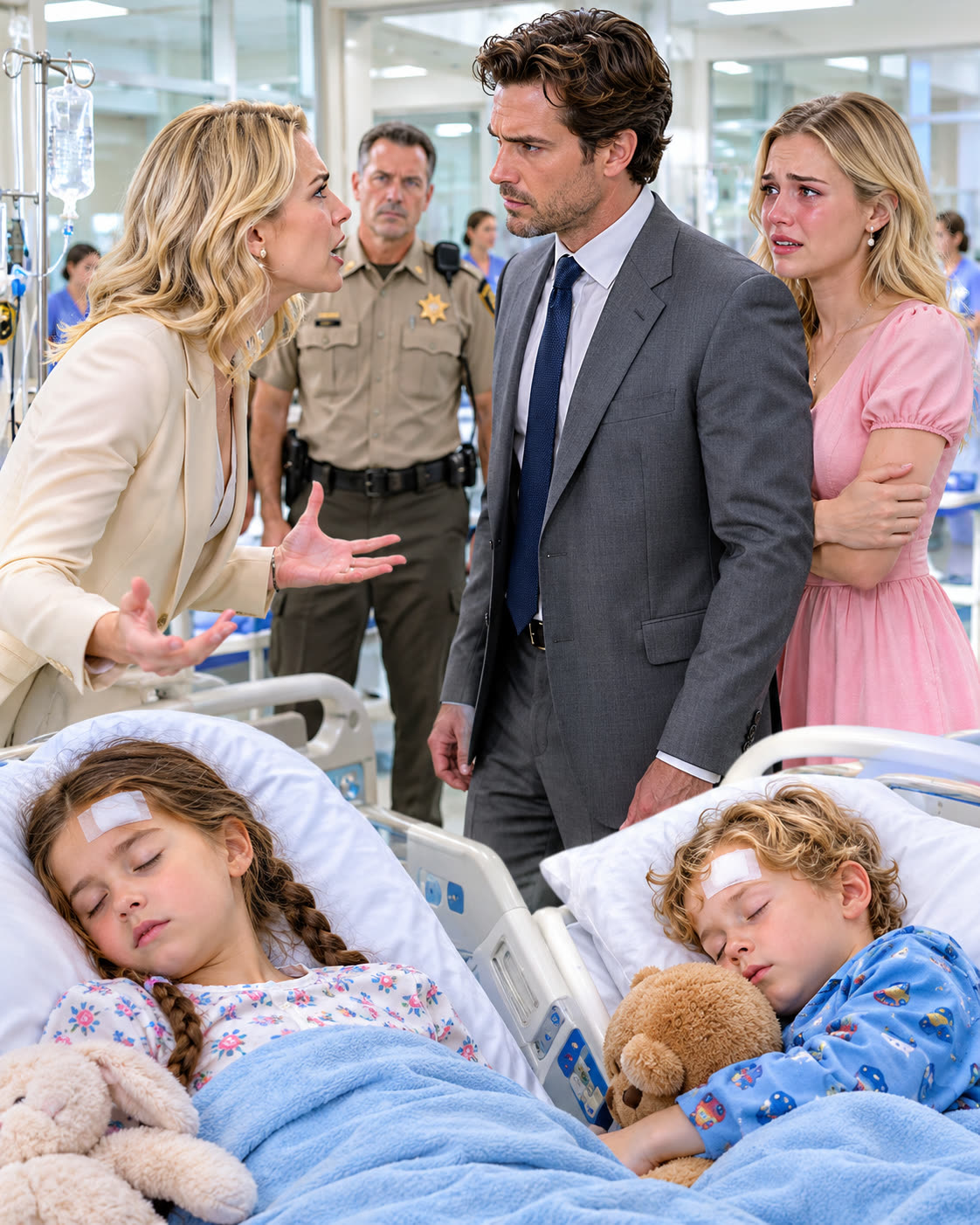
Ava was resting in Trauma Bay 4 with a white dressing across her forehead. Her wristband still read Guardian: R. Corley. A nurse removed the wrong bracelet and fastened a corrected one while I stood beside her.
“Mommy.” Ava sounded tired and hoarse. “Mommy, you came.”
I sat on the edge of the bed and wrapped my arms around her as gently as I could. She smelled of hospital antiseptic, crayons and something unfamiliar that reminded me of spilled wine.
“Of course I came, baby. I’ll always come.”
“I did what you taught me,” she whispered, her eyelids drooping. “I said it right.”
I didn’t understand. I assumed she was confused, as children can be after a concussion.
The emergency physician, a young and thoroughly worn-out doctor named Patel, explained their condition in the language I understood best: numbers. Ava had a mild concussion and needed six stitches near her eyebrow, but her CT scan showed nothing worrying. Archie had a stable buckle fracture in his left wrist and some chest bruising from the car-seat harness.
“Whoever installed those car seats,” Dr. Patel said, “did your kids a big favor.”
I had installed them myself. Twice I had taken them to the fire station on Kingston Pike for professional inspection, and every morning I checked the straps before driving anywhere. I covered my mouth with one hand as the tears finally came.
Archie was asleep in the neighboring bay, a small green cast on his arm and his thumb resting against his lips. I kissed his damp curls and stayed between their beds until my legs stiffened.
Around eight that evening, Ava woke and asked for apple juice. As she drank, she started offering scattered details the way small children do, and a clearer picture slowly formed.
“Miss Raylene says we have to call her Mama Ray when we’re out. It’s a game. Daddy said it’s a secret game and we can’t tell you because you’d be sad.”
My fingers tightened around the juice carton.
“Did Daddy ride in the car with you today?”
She shook her head and winced. “Daddy went to meet a man about papers. Miss Raylene stopped at the store with the bottles. She let us have Skittles if we stayed in the car.”
It sounded as if Raylene had gone into a liquor store while my children waited in the vehicle.
At nine-thirty, the curtain swung open and a woman in a quilted barn jacket hurried in, her gray hair loose around her face. It was Marjorie Corley, Logan’s mother.
“Beth Ann.” She clasped both my hands, and hers were icy. “Nobody called me.”
“Nobody. A woman from my church heard it on the scanner and recognized the name. I haven’t seen these babies in three weeks. Logan never brought them to the farm. He never even asked.”
So the lies had begun long before that Saturday.
Marjorie looked through the gap in the curtain toward the hallway, where Logan stood with his phone, texting as he had been all evening. She walked straight to him. I couldn’t hear all of their exchange, but I caught her last words, low and trembling.
“You are your father’s son, Logan. God help me, I prayed you wouldn’t be.”
Logan left without saying goodbye to Ava or Archie.
That night I stayed in a vinyl recliner wedged between their beds. Shortly before midnight, an email arrived from my supervisor, Dr. Samuel Okafor, the pharmacy director at Knoxville Regional.
Subject: URGENT — Controlled Substance Discrepancy — Your Credentials
Beth Ann, please report to my office Monday at 8:00 a.m. Human Resources and Compliance will be present. Effective immediately, do not access any automated dispensing cabinet prior to this meeting.
I read it slowly, then checked the time it was sent: 11:48 p.m. on Saturday, about eight hours after Logan had cornered me in the hallway and threatened my reputation.
I began to see that his words might have been more than an attempt to scare me. He might already have set something in motion.
Part 2: Evidence on the Kitchen Table
Dr. Okafor’s office overlooked the hospital parking garage. Nine years earlier I had sat in that same chair for my job interview, wearing a borrowed blazer and so nervous that I dropped my pen twice. He had hired me anyway, saying he valued how carefully I checked my calculations.
That Monday morning, he could barely meet my eyes. Pamela Strand from Human Resources sat on his left. On his right was Greg Tillman, a compliance officer with an open laptop and a thick binder.
“Over the past eleven weeks,” Greg said, “our diversion software flagged forty-seven overrides on the 4 West dispensing cabinet under your user ID. Oxycodone, hydromorphone, and lorazepam. The total discrepancy is four hundred and twelve tablets and eighteen vials.”
The numbers were hard to absorb. Four hundred and twelve tablets was no simple paperwork mistake.
“I didn’t do this,” I said, surprised at how steady I sounded. “I want a drug test today. Urine and hair follicle. Ninety-day panel. I’ll pay for it myself.”
Pamela looked startled that I volunteered so quickly.
“I’d also like the date and time of every single override.”
“We can’t release the full audit while the investigation is open,” Greg said.
“Then I’d like to know how my credentials were used. 4 West has a fingerprint reader.”
Greg glanced at Dr. Okafor. Their faces told me something important had been kept from me.
“The biometric reader on 4 West has been out of service since August,” Dr. Okafor said quietly. “The cabinet has been accepting user ID and password.”
That was news to me. I mostly worked daytime hours in the central pharmacy and rarely went to the fourth floor.
They placed me on paid administrative leave. Pamela explained the hospital might have to notify the Tennessee Board of Pharmacy and possibly the DEA, depending on what the investigation found. The license I had earned through six hard years of school and a decade of loan payments was suddenly under a microscope. I signed every form without letting my hands tremble.
Dr. Okafor walked me to the elevator. When the doors opened, he held them with one hand.
“Beth Ann,” he said softly, “I’ve known you for nine years. You once called me at home because a dose was off by half a milligram. Help me prove this is wrong.”
“How?”
He thought for a moment.
“Look at the night shifts.”
The doors closed between us.
I gave my samples at an occupational health clinic on Sutherland Avenue, then went home to relieve Marjorie. She had moved into our guest bedroom without waiting for an invitation and had cooked enough chicken and dumplings to feed half the Tennessee Volunteers football team.
At 2:15 that afternoon, someone knocked on the front door.
“Beth Ann Corley? You’ve been served.”
The man handed me a thick envelope containing an Emergency Ex Parte Petition for Temporary Custody. The petitioner was Logan Wade Corley. It accused me of misusing prescription opioids, taking medication from my workplace, and being “emotionally unavailable and frequently absent” from the children’s lives. Logan asked for immediate temporary custody of Ava and Archie, with my visits to be supervised.
I stood in the doorway reading while November leaves drifted across the porch.
Denise Whitfield had given me her card before I left the hospital. When I called, she recommended Gloria Pruitt, a family-law attorney with thirty-one years of experience and a reputation for being, in Denise’s words, “sweet as tea and twice as strong.”
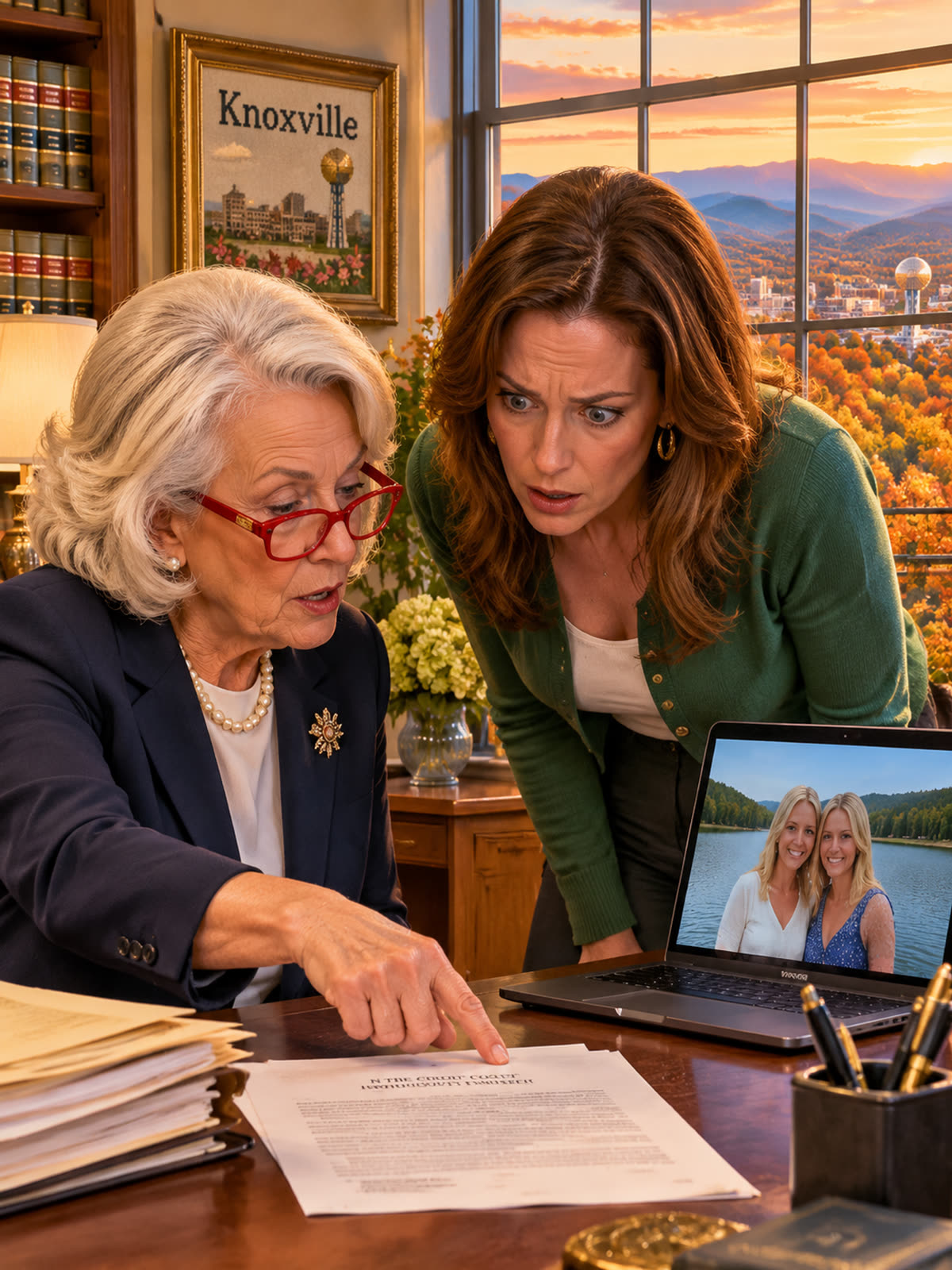
Gloria agreed to see me at five. She was seventy-one, wore a pearl necklace with bright red reading glasses, and had a framed needlepoint on her office wall that read Bless Your Heart, See You In Court. She went through Logan’s petition without a word, then turned to the second page and tapped a printed entry.
“Sweetheart, look at the time stamp. He filed this at 9:15 this morning.”
“My meeting at the hospital was at eight.”
“So how did your husband know, an hour later, that you were under investigation for drug diversion? Hospitals don’t send out press releases.”
A worrying thought began to take shape.
“Somebody at that hospital told him,” Gloria said. “Or somebody at that hospital has been working with him.”
She turned to the last page, where a sworn witness affidavit was attached. The witness claimed, under penalty of perjury, to have personally seen me slip controlled-substance tablets into my lab coat pocket on several occasions. The signature looked familiar before I even read the printed name.
Crystal Boggs, CPhT. Certified Pharmacy Technician, Knoxville Regional Medical Center.
Boggs. Raylene Boggs.
“They’re sisters,” I said. “They have to be.”
Gloria opened her laptop. Within ten minutes she had found a Facebook photo from the previous Fourth of July of two blonde women in matching patriotic tank tops, hugging beside a lake. The caption read: Me and my baby sister Ray-Ray! Boggs girls forever!
A man stood half outside the frame, holding a grilling spatula. It was Logan.
Suddenly I remembered Crystal. She worked overnight, restocking medication cabinets, and was friendly with everyone. On Fridays she sometimes brought Krispy Kreme doughnuts for the staff. The previous spring she had stopped me in the break room and casually asked about my summer schedule.
“Your husband sells tractors, doesn’t he?” she’d said, smiling. “My sister met him at the county fair. Small world.”
I had smiled back and never thought of it again.
“The custody hearing is Friday,” Gloria said. “That gives us four days. They have an affidavit. We need facts.”
Facts were something I understood.
After the children were in bed that night, I covered the kitchen table with my paper planner, phone location history, photo library and hospital entry logs, which employees could request through the Human Resources portal. I built a spreadsheet the same way I checked medication calculations, listing each date, time and my verified whereabouts.
The next morning Dr. Okafor sent something I hadn’t expected: the dates and times of all forty-seven flagged overrides, with a short note. You have a right to respond to specific allegations. —S.O.
I compared every entry with my records.
March 14, 2:37 a.m. I had been at an urgent care clinic in Farragut with Ava, who woke with the barking cough of croup. The discharge papers showed the exact time.
April 3, 11:52 p.m. I had been in a Nashville hotel for a pharmacy continuing-education conference. The receipt confirmed it.
May 22, 10:05 a.m. I had been in an elementary school gymnasium, crying with pride as Ava crossed the stage in a handmade paper graduation cap. Marjorie had filmed the ceremony, and the video metadata ran from 10:03 a.m. to 10:11 a.m.
Thirty-one of the forty-seven overrides took place while my badge records showed I was not in the building. Someone had been using the system under my identity.
One question remained: how had anyone obtained my password? I had changed it in September under the hospital’s security policy and never written it down or shared it.
On Wednesday I went to Raylene Boggs’s arraignment at the Knox County courthouse. Gloria had said I didn’t need to be there, but I felt I had to. Raylene looked younger than I had pictured, perhaps twenty-seven, with dark roots under her blonde hair and a cardigan that seemed borrowed. The charges were driving under the influence, two counts of child endangerment, and giving false identity information to medical staff. Her public defender entered a not-guilty plea.
I had expected to feel fury at some glamorous, careless woman. Instead she looked worn out, as if she hadn’t slept in days. When the judge mentioned the two minor children, she dropped her face into her hands. As she was led out, she noticed me at the back of the courtroom. Our eyes held for several seconds before her attorney guided her away.
That night, shortly before eleven, my phone rang. Marjorie was calling from the farm, where she had gone back to tend the animals.
“Beth Ann.” Her voice was shaking. “I need you to come out here tomorrow. Alone, just you.”
“Marjorie, what’s wrong?”
“Logan keeps boxes in my barn office. Has for years. I never looked. Tonight I did.” I could hear papers rustling behind her. “There’s something about my son you need to know. Something I should have told you twelve years ago, on your wedding day.”
She paused to steady herself.
“And there are papers here for a house on Laurel Creek Road. A house with your name on the loan.”
The Corley farm sat at the end of a gravel lane in Blount County, ringed by eighty acres of rolling pasture. In the distance the Smoky Mountains rose through a pale blue haze. I had always found peace there, and Ava had learned to ride a pony in the field beside the farmhouse.
Marjorie met me on the porch with two mugs of coffee and a manila folder. In just a few days she seemed to have aged years.
“Sit down, honey.”
We settled on the porch swing, but she kept the folder shut a while longer.
“In 1991,” she said, “Logan’s father had an affair with a woman who worked at the feed store. I found out. And when I told Harlan I was leaving and taking the children, he did everything he could to make me look crazy.”
I listened without moving.
“He told our pastor I was having breakdowns. He told my doctor I was threatening to hurt myself. He hid my car keys and then told people I’d forgotten where I’d put them. He filed for custody of Logan and his sister and swore I was unfit.”
“What happened?”
“I won. Barely. A judge believed me because my sister kept a diary of every lie he told.” She gazed over the pasture before going on.
“But Logan was nine. He spent every other weekend with his father, and Harlan spent those weekends teaching him that women lie, that mothers are weak, and that the man who controls the story wins.”
At last she turned to me.
“When Logan brought you home, I thought he’d broken the pattern. You were so smart and so steady. I told myself he’d become a different man.”
“I kept quiet to protect him.” Her voice cracked. “I won’t protect him from you. Not anymore.”
Then she opened the folder. Inside were closing documents for 1140 Laurel Creek Road in Sevierville, Tennessee, a three-bedroom, two-bathroom house with a wraparound porch. According to the papers, Logan W. Corley and Raylene M. Boggs had bought it together as joint tenants five weeks earlier. The down payment was $68,000, funded by a home equity line of credit secured against the house Logan and I owned jointly, the same house where Ava and Archie were sleeping in their own beds.
A loan like that would normally need both owners’ authorization. On page four I found a signature presented as mine: Beth Ann Corley, carefully slanted and strikingly close to my handwriting.
But it wasn’t quite right. Whenever I cross the t in Beth, I add a small hook at the end. My mother teased me about it for years. The signature on the agreement had a perfectly straight crossbar.
The document said Dale R. Boggs, a notary at a small Sevierville title company, had notarized the signature on September 9 at 1:30 p.m. At that exact time I had been working a twelve-hour shift in the hospital’s central pharmacy, and my badge records could prove it.
“Boggs,” I said.
“Raylene’s uncle,” Marjorie said. “I asked around.”
I phoned Gloria right there on the porch. After hearing me out, she said something I’d never heard from her.
“Lord have mercy.” She paused. “Beth Ann, that is forgery of a financial instrument, and possibly bank fraud. That’s not family court anymore. That’s a federal matter.”
On the drive home I laid the events out in order. Two weeks before the collision, Logan had changed the children’s pediatric records. Five weeks earlier, he had bought another house with money tied to our home without my knowledge. Eleven weeks earlier, the suspicious activity on the 4 West cabinet had begun. It no longer looked like separate decisions. It looked like a coordinated plan built in stages, like a construction project with a schedule. The collision seemed to be the one event nobody had planned for.
On Thursday afternoon I took Ava to her first appointment with a child therapist, Dr. Lena Marsh, whom Denise had recommended. Her office was full of stuffed animals and a dollhouse with a removable roof. I waited forty-five minutes. When the session ended, Dr. Marsh invited me in alone.
A drawing in purple crayon lay on her table. It showed a big house with a porch beside a smaller gray building whose windows were covered with dark vertical lines. Inside the small building stood a stick figure with yellow hair.
“Ava told me that’s you,” Dr. Marsh said gently.
“Why am I in—” My voice gave out before I could finish.
“I asked her about the lines. She said Daddy told her that after they moved to the new house with the big porch, Mommy would have to go away to a place with bars for a long, long time. And then Mama Ray would be her mommy forever.”
Through the office window I could see Ava in the waiting room, coloring beside Marjorie and swinging her sneakers under the chair. She looked up and caught me watching through the glass.
Then she silently shaped a question with her lips, one I would carry for many nights.
Are you going away, Mommy?
The custody hearing took place Friday morning in Courtroom 3 of the Knox County Fourth Circuit Court, before Judge Harriet Vance, a silver-haired judge known for reading every page put in front of her. Logan sat at the petitioner’s table in a navy suit I had bought him for his cousin’s wedding. His attorney, Brent Kessler, wore an expensive watch and an immaculate look. When Logan saw me, he gave a small, sorrowful smile, the picture of a concerned father making a hard decision. I had seen that expression countless times in our marriage. Only now did I wonder what it had really meant.
Kessler spoke first about the hospital’s investigation and what he called my punishing work schedule. He described Logan as a devoted father who had only recently learned of his wife’s hidden dependency. Then he called Crystal Boggs.
Crystal wore a pink blouse and folded her hands neatly. She said she had seen me on 4 West “at least five or six times” taking medication without proper documentation, and once placing tablets in my coat pocket.
“Do you recall a specific date?” Kessler asked.
“May twenty-second,” Crystal said. “In the morning. I remember because it was right before Memorial Day weekend.”
Gloria rose slowly and adjusted her red-framed glasses.
“Ms. Boggs, you’re certain? May twenty-second, in the morning, you personally saw Mrs. Corley on 4 West?”
“Yes, ma’am.”
“Around ten o’clock, perhaps?”
Crystal hesitated, then nodded. “Around then.”
“Your Honor,” Gloria said pleasantly, “I’d like to play a short video. It’s eight minutes long. The metadata has been verified by a forensic examiner, and his affidavit is Exhibit 14.”
The monitor lit up on a crowded elementary school gymnasium under a banner reading Congratulations, Kindergarten Graduates! Small children wore handmade caps, and as the camera swung, I appeared in the third row in a yellow sundress, clapping and wiping away tears. The timestamp read 10:04 a.m. on May 22.
“That school gymnasium,” Gloria said, “is eighteen miles away from Knoxville Regional Medical Center.”
Crystal’s cheeks flushed unevenly.
“Ms. Boggs, is Raylene Boggs your sister?”
“Objection,” Kessler snapped. “Relevance.”
“Your Honor, Raylene Boggs was driving my client’s vehicle while impaired, with my client’s children inside, when the collision occurred. She subsequently represented herself to hospital personnel as the children’s mother, making this witness’s relationship to her directly relevant to credibility.”
Judge Vance kept reading her notes without looking up.
“Overruled. Please answer, Ms. Boggs.”
The silence stretched.
“Yes,” Crystal finally murmured.
Gloria then submitted my hair-follicle results, which showed nothing across the full ninety-day panel, along with Dr. Okafor’s written confirmation that my badge records placed me outside the hospital on thirty-one of the forty-seven override dates. Last came my spreadsheet, color-coded and footnoted under every row.
When I testified, Kessler tried to undermine me with my schedule.
“Mrs. Corley, isn’t it correct that you frequently work twelve-hour shifts and aren’t always home for your children’s bedtime?”
“Yes,” I answered. “Three days each week. I accepted those shifts because they offered higher pay, and our household needed additional income after my husband’s sales declined last year.”
“During the remaining four days, I take the children to school and collect them afterward, prepare our evening meals, and read Goodnight Moon to my son until he falls asleep, often reading it twice.”
I paused.
“What I didn’t realize was that my husband had been using those three workdays to introduce our children to his girlfriend.”
Kessler went back to his seat. After a twenty-minute recess, Judge Vance gave her ruling in a steady voice.
“The petitioner’s application for emergency custody is denied. Temporary sole legal and physical custody of the minor children is hereby granted to the respondent, Mrs. Corley.”
“Until further proceedings, the petitioner shall be permitted supervised visitation exclusively at an approved licensed facility.”
She turned to Crystal, still seated among the spectators.
“Additionally, this court will forward Ms. Boggs’s testimony to the District Attorney General’s office for appropriate review.”
I held back my tears. Under the table, I squeezed Gloria’s hand so hard her rings pressed into my fingers.
In the corridor afterward, Logan passed close enough for me to smell his familiar cologne.
“This isn’t finished,” he murmured, keeping the sorrowful smile that made him look gracious to anyone watching.
“No,” I replied. “It certainly isn’t.”
As Gloria and I neared the courthouse doors, her phone buzzed. She listened in silence for nearly a minute, her eyebrows rising. When she hung up, she turned to me.
“That was Raylene Boggs’s public defender. Raylene is requesting a meeting with you.”
Gloria lowered her voice.
“She claims Logan deceived her about practically everything. And apparently, she has eight months’ worth of text conversations with him.”
We met the following Tuesday at the public defender’s office, in a conference room with bent window blinds and a tissue box on the table. Raylene was already there and stood the moment we entered, almost like a student greeting a teacher. She wore the uniform of a pancake restaurant in Pigeon Forge, a small name badge still pinned on. RAY.
For a few awkward moments, neither of us spoke.
“I’m not here because I want a friendship,” I finally said. “I’m here because my daughter has a scar above her eyebrow, and she’s frightened that her mother might be sent to jail. I need to understand what really happened.”
“Yes, ma’am,” Raylene said.
“That’s exactly what I came to explain.”
Her exhausted-looking attorney, Phil Navarro, slid a thick stack of printouts across the table: hundreds of text messages. Raylene kept her eyes down as she told her story. She had spent much of her childhood in foster care in Cocke County. Two summers earlier she met Logan at the Blount County Fair, where he was working a tractor dealership booth. He seemed charming, confident and mature, and he told her his marriage was over emotionally even if the paperwork wasn’t finished.
“He told me you weren’t well,” she said. “He claimed you were taking medication from the hospital, becoming upset with the children, and sleeping through entire afternoons.”
“He said Ava was frightened of you.”
Her voice shook.
“He showed me a photograph of you sleeping on the sofa and insisted you’d taken something. I trusted what he told me.”
I remembered that photo at once. I had fallen asleep after two back-to-back shifts, with little Archie curled against my chest.
“He told me the divorce was nearly complete,” Raylene went on. “He wanted me to become close to the children so the custody evaluator would believe they had another dependable maternal figure.”
“That’s where the name Mama Ray came from. Logan claimed a psychologist had recommended encouraging them to use it.”
I began reading the messages, and several were chilling.
Practice having them call you Mama. It’ll make a difference when the evaluator meets them.
Crystal’s numbers are nearly where we need them. Once the hospital notices the irregularities, she’ll lose her license and custody together.
Don’t stress about the loan documents. Uncle Dale has everything handled.
Then I found one sent about two weeks before the collision.
The pediatrician’s records have been updated. If there’s an emergency, you’re listed as their mother. Everything is arranged.
“Tell me what happened that Saturday,” I said.
Raylene drew an unsteady breath.
“We went to brunch in Sevierville. Logan ordered mimosas, followed by wine. I reminded him I was supposed to drive, but he insisted everything was fine because we were celebrating.”
“We planned to choose paint samples for the new house. Then the title company called him about a problem involving the loan.”
“He said he needed to handle it immediately, and he gave me your car keys.”
For the first time, she looked up at me.
“I told him, ‘Logan, I don’t feel comfortable driving right now.’”
“He told me not to exaggerate because the trip would only take twenty minutes. Then he climbed into his truck and drove away.”
Beside me, Gloria filled her notebook with fast notes.
“Near the Strawberry Plains exit, another vehicle moved unexpectedly toward my lane,” Raylene said. “I reacted too sharply, and we struck the roadside barrier.”
“Archie was crying loudly. Ava remained remarkably composed. She was speaking to someone using my phone, and I kept asking her to identify me as her mother, just as Logan had instructed.”
“But she refused.”
Raylene finally broke down and covered her face with both hands.
“I could have caused something terrible to happen to your children.”
“I’m deeply ashamed. I intend to accept responsibility for what happened, and I’ll cooperate with every investigation. I’m not asking for anything in exchange.”
“I just needed you to understand that Logan misrepresented who I was. And he misrepresented you to me, too.”
I sat with both palms flat on the printed messages. One part of me wanted to throw every consequence of that afternoon in her face. Another part saw a young woman who had spent her childhood longing for a family and had believed someone who knew exactly how to use that longing.
“I’m not prepared to forgive you,” I said. “I honestly don’t know whether that day will ever come.”
“I understand.”
“But I believe what you’re telling me.”
Raylene nodded and wiped her cheeks with her sleeve. As we got up to leave, she called after me.
“Mrs. Corley, there’s something else.”
I turned around.
“Crystal couldn’t have managed everything by herself. She doesn’t have supervisor-level access, and she isn’t authorized to reset employee passwords.”
Raylene hesitated.
“Crystal once told me that whenever you updated your password, someone at the hospital reset your account and passed along the replacement credentials.”
“Someone you trusted. Someone who knew you personally.”
“Who was it?”
“She never mentioned a name. She only referred to that person as ‘the friend.’”
Only six employees at Knoxville Regional had administrator-level permissions for the dispensing cabinet system. I knew all six personally.
But only one of them had stood beside me in the delivery room when Ava was born.
Part 3: The Friend, the Plan, and the Song
Kendra Lyle and I became friends during our first week of pharmacy school at the University of Tennessee. We studied for our licensing exams together on her apartment floor, surrounded by flashcards and leftover pizza. She was my maid of honor and later Ava’s godmother. When her marriage ended three years earlier, she stayed in my guest bedroom for two months. The previous year she had been promoted to clinical pharmacy supervisor for the hospital’s inpatient units. Her responsibilities included 4 West.
I kept telling myself she couldn’t possibly be involved, that fear was clouding my judgment. Still, I contacted Dr. Okafor and asked for two records: the maintenance reports on the 4 West fingerprint scanner and the administrator log of password resets on my account. Both arrived within the hour.
The scanner had first been reported broken on August 4. Biomedical engineering had scheduled repairs three separate times, and each appointment was pushed back by the clinical supervisor with the same note.
Deferred — unit too busy. Will reschedule.
The approving signature read K. Lyle.
The administrator log showed four password resets on my account since August. Each came within about forty-eight hours of my changing the password myself, and all four were tied to one administrator ID.
KLYLE01.
After reading those pages, I sat in my parked car in the hospital garage for a very long time.
That evening I drove to Kendra’s townhouse in West Knoxville. Marjorie stayed with the children. I hadn’t told Gloria where I was going, because I knew she would warn me not to go alone.
Kendra answered the door in sweatpants, holding a glass of iced tea. Her face lit up.
“Bethie! Oh my goodness, I’ve wanted to call you, but HR told me I shouldn’t contact you while the investigation was—”
She stopped mid-sentence. She had seen the papers in my hand. The warmth drained from her face like daylight leaving a room.
“May I come inside?”
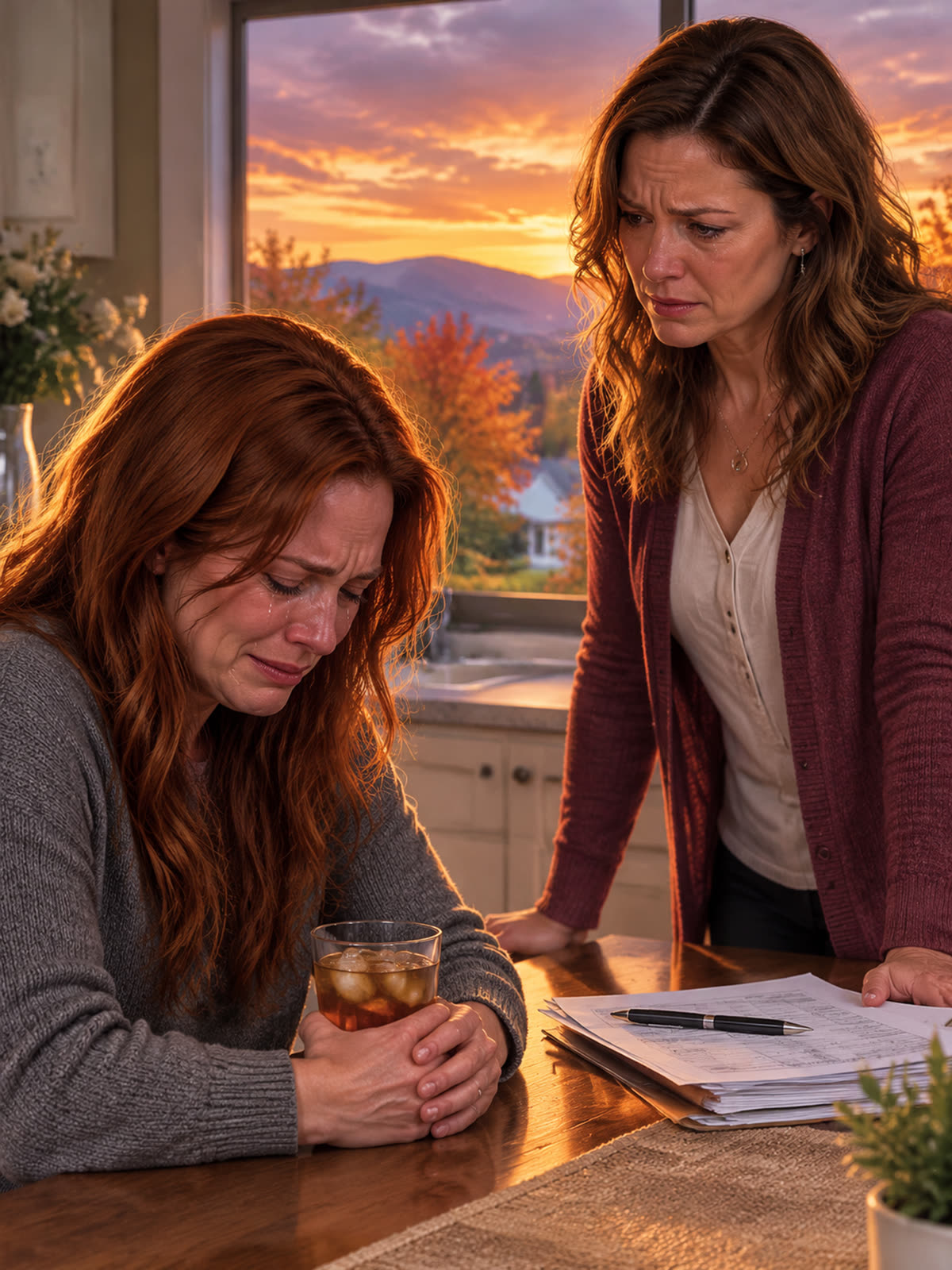
We sat at her kitchen table, the same one where she had spent countless evenings crying over her ex-husband while I brought casseroles and tried to comfort her. Without a word, I laid the maintenance orders and administrator logs in front of her. She stared at the pages. Her hands shook so badly that the ice rattled in her glass.
“How much did he offer you?” I asked.
At least she didn’t try to deny it.
“Twenty-five thousand dollars,” she whispered.
“He approached me during Archie’s birthday celebration. Right there in your backyard, while you were inside cutting the cake.”
I remembered that party clearly. Kendra had given Archie a toy fire engine with an electronic siren that delighted him and tested everyone’s patience for weeks.
“I’m ninety thousand dollars in debt, Beth Ann. Rick left me responsible for nearly everything.”
“Then Tyler needed surgery, and the insurance company disputed one medical bill after another. I was about to lose the townhouse.”
Tears ran down her face.
“Logan promised you wouldn’t face criminal consequences. He said you’d simply lose your position, the divorce would favor him, and you’d still see the children on alternating weekends.”
“He told me you’d recover. He said you always managed to get back on your feet.”
“Every other weekend,” I repeated quietly.
“I convinced myself it wasn’t completely terrible,” she said. “I kept thinking you’d find another position. You’re the most capable person I’ve ever known.”
“Crystal was distributing those medications outside the hospital, Kendra. Do you understand what that means?”
“Someone could have experienced a serious medical emergency involving medication recorded under my name.”
Kendra made a small, anguished sound.
“I would have helped you financially,” I said.
My voice finally began to wobble.
“Do you understand? If you’d come to me and explained how desperate things had become, I would have offered every dollar I had saved.”
“You only needed to ask.”
She laid her head on the table and sobbed. I stood, walked out of her kitchen, and left without looking back.
I made it to my car before I fell apart. I cried until the windows fogged, remembering the young woman studying beside me on an apartment floor, the friend who held my hand when Ava was born, and every holiday and birthday that now felt changed forever.
Then my phone rang. The number was unfamiliar, with a Nashville area code.
“Mrs. Corley? My name is Special Agent Marcus Reyes, with the Tennessee Bureau of Investigation’s Drug Diversion Unit.”
I wiped my cheeks.
“Yes?”
“Ma’am, our office has been investigating Crystal Boggs since August regarding the unlawful distribution of controlled medications in Sevier County.”
“Last week, investigators obtained a court-authorized recording of a telephone conversation between Ms. Boggs and your husband.”
My heart sped up.
“I’d like you to visit our Knoxville office tomorrow morning,” Agent Reyes continued.
“There’s something in that conversation we believe you need to hear.”
“Your husband discussed what he referred to as Plan B, an alternative if the hospital allegations failed to achieve his objective.”
He paused.
“Mrs. Corley, the evidence connected to Plan B was concealed inside your vehicle.”
The TBI’s regional office was an ordinary brick building near Sutherland Avenue, a short distance from the clinic where I had given my hair sample. Gloria came with me. Someone else was waiting whom I hadn’t expected: Trooper Wade Dial rose from his chair as we entered the conference room. He seemed taller than I remembered, with a weathered, thoughtful face and his campaign hat held between his hands.
“Mrs. Corley,” he greeted me. “How are your children doing?”
“They’re recovering well,” I said. “Ava is particularly proud of her stitches.”
He gave the faintest hint of a smile.
Agent Reyes was younger and alert, with a legal pad full of notes. He explained that after the collision, Trooper Dial’s team had done a routine inventory of my SUV. Beneath the cargo floor panel, in the spare tire compartment, they found a small plastic bag holding sixty oxycodone tablets.
“Initially, we believed the medication might belong to the person driving,” Trooper Dial said.
“However, Ms. Boggs appeared genuinely unfamiliar with it. Something about the circumstances seemed inconsistent, so I requested a laboratory examination rather than simply recording the discovery.”
State lab testing matched the tablets’ batch numbers to medication delivered to Knoxville Regional in September, the same shipment tied to the missing 4 West inventory. Investigators also found two sets of fingerprints on the packaging: Crystal Boggs and Logan Corley.
Agent Reyes opened his laptop and played the recording. Crystal spoke first, anxious.
The hospital is taking forever. What happens if they don’t dismiss her?
Then I heard Logan’s familiar voice, relaxed and almost amused.
Then we use Plan B. Everything’s already in her vehicle, underneath the spare tire.
If the hospital keeps delaying, I’ll anonymously contact the sheriff’s department.
A pharmacist discovered sixty unauthorized tablets in her SUV? Her credibility is finished. Nobody will award custody to someone facing those allegations.
Crystal gave a nervous laugh.
You’re pretty calculating, Logan.
I’m realistic, he replied.
My father always told me that whoever tells the story first controls how people remember it.
Agent Reyes stopped the audio. I didn’t cry. A strange clarity settled over me. For weeks I had feared Logan’s influence and his talent for twisting events. Now I saw that his whole strategy depended on people accepting his version without checking the evidence. He had overlooked one thing. He had married a pharmacist, and reviewing records and verifying discrepancies was exactly what I’d been trained to do.
The arrests came over the next three days. Investigators found Crystal Boggs at a Sevierville gas station with roughly eleven hundred dollars in cash and a bottle of hydromorphone, and she soon asked to cooperate. On Wednesday morning, Kendra walked into the TBI office voluntarily with an attorney, bringing her personal laptop and copies of every message Logan had sent her. I later learned she asked investigators to pass along her apology. I wasn’t ready to receive it. Dale Boggs, the notary, began cooperating once agents showed him the September 9 records of my whereabouts.
Logan was the last to be taken into custody. The night before his arrest, Thursday around nine, he showed up at my house. The children were asleep and Marjorie was resting in the guest room. I opened the front door but kept the glass storm door locked between us. Logan looked exhausted, unshaven, his eyes red. He had clearly heard what happened to Crystal.
“Beth Ann, please. We need to speak privately. Just the two of us. We can work something out.”
“There’s nothing left to work out, Logan.”
“You caused this,” he insisted, his voice rising.
“You were hardly ever home. You put that hospital ahead of our marriage every single day.”
“Do you know how lonely it feels to return to an empty house? Raylene was there for me. She listened.”
“I was working at the hospital,” I answered, “earning the income that supported the home you secretly used as collateral.”
“I worked there to provide our children with medical coverage.”
“I chose our family, Logan. Every long shift, every extra shift, every Christmas Eve spent working. Everything I did was for them.”
He pressed his palm to the glass.
“I’m still their father.”
“Then you should have made decisions that protected them,” I said.
“Instead, you allowed them to travel with someone who had been drinking because you wanted to handle a loan involving documents bearing my unauthorized signature.”
“You convinced our daughter that her mother might be taken away.”
“And you placed controlled medication inside the vehicle our children regularly used.”
“Beth Ann—”
“I’m finished allowing you to define my life, Logan. From now on, I’ll tell my own story.”
I closed the inner door and turned the deadbolt. Then I called the police non-emergency line to report his visit, which violated the limits on his contact with us. About ten minutes later a Knox County deputy arrived and escorted him off the property.
The next morning, TBI agents arrested Logan Corley in the showroom of the tractor dealership. Coworkers and two customers looking at a John Deere tractor watched it happen. Marjorie told me later that someone from her church had seen it and called her almost immediately.
“How are you feeling?” she asked that evening.
“Exhausted,” I admitted. “Sad, too. But finally free.”
That Saturday, Trooper Dial came to my house. He wore jeans and a flannel shirt instead of his uniform, and he carried a small USB drive.
“I’ve been wanting to bring you this,” he said.
“It’s a copy of the emergency call recorded after the collision. I asked the district attorney whether I could share it with you.”
“Why would you do that?”
He turned the drive slowly in his fingers.
“Because the hospital’s information identified another woman as the children’s mother.”
“Your details had been removed from their emergency contact records.”
He looked straight at me.
“Mrs. Corley, I’ve wondered whether you understood how I managed to find your telephone number that afternoon.”
I stared at him, confused.
“Your daughter made the emergency call,” he said gently.
“I think you should hear what she told the dispatcher. It’s why I contacted you instead of the woman listed in the records.”
I waited until both children were asleep. Then I sat at the kitchen table where this whole ordeal had begun and pressed play.
There was a burst of static. Somewhere nearby a car horn blared, then Archie’s frightened crying. A dispatcher spoke in a calm Tennessee accent.
911. Can you tell me where your emergency is?
And then I heard my daughter.
Hello. I’m Ava Corley, and I’m six years old. We had an accident on the big road.
My little brother Archie is crying really loudly, and his arm doesn’t look right. I have a cut on my forehead, but I’m okay.
You’re doing wonderfully, sweetheart. Is there an adult there with you?
Yes. But she isn’t my mommy.
In the background, another woman’s voice sounded confused and frightened.
Ava, please tell them I’m your mama. Tell them, sweetheart.
A brief silence followed. Then my six-year-old answered, clear as a bell.
No. You’re not.
Sweetheart, can you tell me your mommy’s name?
My mommy is Beth Ann Corley. She works at the hospital as a pharmacist. She helps sick people get the medicines they need.
Her telephone number is—
Then Ava began to sing. She recited all ten digits to the tune of Twinkle, Twinkle, Little Star, exactly as we had practiced at that same kitchen table every evening for a month the previous spring. I had started teaching her after reading an article about children getting separated from their families at crowded public events.
Please call my mommy, Ava said.
She always comes.
I lowered my head to the table and wept, harder than at the hospital, harder than after Kendra, harder than alone in my car. Logan had altered official records. He had erased my contact details from computer systems and tried to convince Ava I wouldn’t be there. But he couldn’t erase what I had taught her, or the certainty she carried in her heart about who her mother was.
I remembered what you taught me, she had whispered at the hospital.
I said it correctly.
She certainly had. My brave little girl had remembered everything.
I eventually learned that justice sometimes crawls along painfully before the long-awaited outcomes arrive all at once. In March, Logan pleaded guilty in federal court to bank fraud and aggravated identity theft tied to the forged loan. In state court he also pleaded guilty to conspiracy involving fabricated evidence, filing a false report, and conduct contributing to the children’s endangerment. After the judge heard the recorded call, he sentenced Logan to nine years in prison. His parental rights were not terminated, but any future contact with Ava and Archie would require supervision and therapeutic oversight and could happen only when the children were emotionally ready. Ava’s therapist would decide when that might be. The decision would no longer be Logan’s.
The Laurel Creek Road house was seized and sold, with the proceeds going toward repaying the fraudulent loan. The bank lifted the lien on my home and mailed me a two-paragraph apology on expensive cream-colored stationery. I framed it and hung it in the laundry room, where its stiff wording sometimes makes me smile while I fold towels.
Crystal Boggs received six years for distributing controlled substances and giving false testimony. Dale Boggs lost his notary commission and his job and was placed on probation. Kendra surrendered her pharmacy license, pleaded guilty to conspiracy, and received three years of probation and two hundred hours of community service, which she served at a free medical clinic in East Knoxville. In June a letter from her turned up in my mailbox. I left it unopened in my bedside drawer for four months. When I finally read it, I found three pages filled not with excuses but with memories: flashcards, cold pizza, the day Ava was born. I’m sorry I lost sight of what our friendship meant and who you were to me, she wrote. I still haven’t answered. Perhaps someday I will. I’ve come to think forgiveness is like certain medications: it can’t always be given all at once. Sometimes it takes careful, gradual adjustments until you find a dose your heart can bear.
Raylene Boggs pleaded guilty to every charge. Because she cooperated fully, she received probation, a suspended sentence and mandatory treatment. She finished a ninety-day program in Chattanooga and found work at a bakery. Each month, through her probation officer, she sends a short note confirming she is following her recovery plan. She has never asked to see the children, and no visits are planned. Last Christmas, though, she mailed a card addressed only to me. Inside she had written:
Thank you for trusting my explanation when you had every reason to doubt me.
In January, the Board of Pharmacy cleared me of all wrongdoing. Dr. Okafor read the board’s findings aloud at a department meeting and told my colleagues I was among the most principled pharmacists he had ever known. Afterward he offered me a new position: Director of Controlled Substance Compliance, overseeing the hospital’s new diversion-prevention program. Regular daytime hours. Monday through Friday. Home before five-thirty. I accepted. Within six months, every broken fingerprint scanner in the hospital had been repaired.
Marjorie sold the eighty acres and bought a modest brick house four streets from mine. She comes for dinner every Sunday, usually carrying her chicken and dumplings, and she has started teaching Ava to quilt. One evening, as we washed dishes, she spoke quietly about all that had happened.
“I couldn’t protect my own family from Harlan,” she said.
“But I was able to help protect yours. That’s a second chance I never imagined I’d receive.”
“You did more than help us,” I replied.
“You belong to this family.”
She reached for the dish towel to dry her eyes.
November has come around again. A full year has passed. Ava is seven now, and the mark above her eyebrow has faded to a thin silver line she proudly calls her “lightning bolt.” Archie’s wrist healed completely, and he now insists he will grow up to be a firefighter, a dinosaur, or maybe both.
Last Saturday, Ava played her final soccer match of the autumn season. Her coach is a reserved state trooper with a weathered face, and his eight-year-old daughter, Lily, plays on the same team. Wade Dial lost his wife to cancer four years ago and rarely speaks of it. Instead he shows up at every practice and every game with orange slices, a first-aid kit, and the steady encouragement that makes seven-year-old girls believe they can do anything.
After the match, while the girls raced across the field, Wade walked over with two cups of coffee and handed me one.
“I’ve been wanting to ask you something,” he said.
“Would you be interested in having dinner together sometime? Preferably somewhere that doesn’t serve orange slices?”
I studied his face. A year earlier I would have sworn I would never trust anyone again. But that year had taught me something. Logan hadn’t taken away my ability to trust. He had only reminded me to examine the evidence before deciding whom to believe. And everything I knew about Wade Dial pointed the same way. He was the trooper who insisted on lab testing because the evidence around the medication didn’t add up. He was the man who spent part of his day off bringing a recording to my home because he believed I deserved to hear it.
“Yes,” I answered.
“I’d really like that.”
This afternoon I’m standing in my kitchen making coffee. The stove clock reads 4:12 p.m. I notice the time, and for a moment the old dread flickers back. Then the back door swings open.
Archie bursts in wearing his plastic firefighter helmet. Ava follows right behind, proudly holding a drawing from school.
“Mommy, look!”
The picture shows our house under an enormous yellow sun. Marjorie stands nearby with her gray hair. Archie wears his firefighter helmet. And in the doorway stands a figure with yellow hair and both arms stretched wide in welcome. None of the windows have bars. Across the top, Ava has written two messages in large, uneven letters.
MY FAMILY.
MY MOMMY ALWAYS COMES.
I tape the drawing to the refrigerator, right in the center where everyone can see it.
People sometimes ask how I got through that year. The answer isn’t that I was stronger than Logan, louder, or more determined to beat him. I got through it by staying truthful, keeping accurate records, and refusing to let anyone else decide how my life would be understood.
Family isn’t just a name typed into an electronic record. It isn’t a title printed on financial paperwork or a label someone tells a child to repeat. Family is the people who consistently show up. The person who carefully buckles the car-seat straps each morning. The mother who teaches her daughter an important phone number to a familiar childhood tune, hoping she’ll remember it if she ever needs help.
My husband tried to erase my place in our children’s lives. But love doesn’t live only in a computer database. It is kept somewhere far more lasting, somewhere no password or altered document can reach.
Disclaimer: This story is a work of fiction inspired by real-life themes. Names, characters, places and events are fictionalized, and any resemblance to real persons is purely coincidental. Images are for illustration purposes only.