
Fiction. This story is a dramatized work created for entertainment. Names, characters, events, and circumstances are fictional.
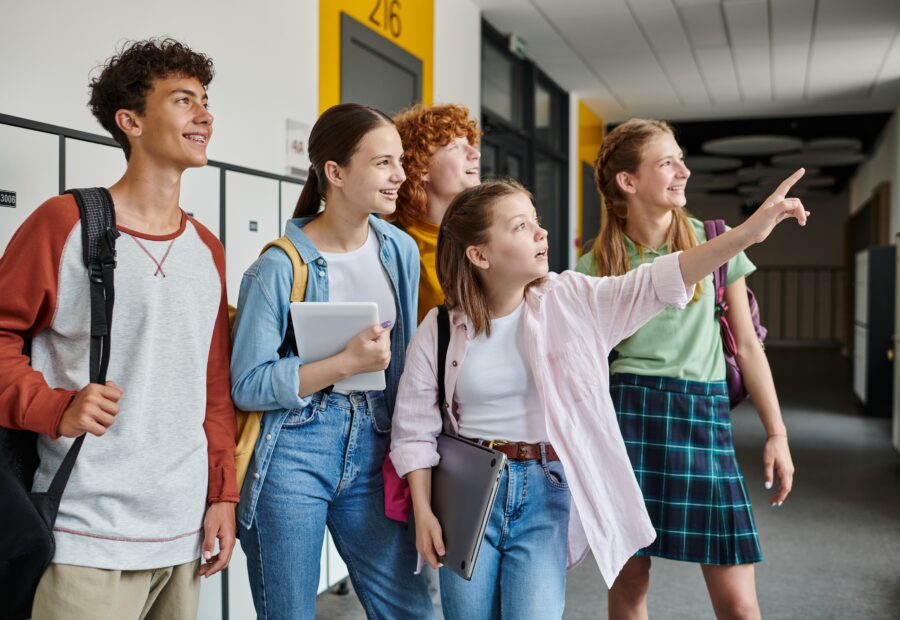
For two long years, I watched my daughter return from school a little more worn down each day. Some days a classmate had mocked her clothes. Other days someone had stolen and hidden her backpack. Once, a cruel word had been scrawled across her locker in permanent marker.
Whenever I asked what had happened, Madeline gave me the same tired answer.
“They will get bored eventually, Mom,” she whispered.
I badly wanted to believe her.
Then, at sixteen, Madeline became seriously ill. She was admitted to the main hospital in Minneapolis, and for six agonizing days the doctors couldn’t tell us what was wrong.
Then something strange happened. The same classmates who had made her life miserable for two years began turning up at her hospital room, day after day. They brought bright balloons, get-well cards, frosted cupcakes, class notes, and small gifts. They laughed with her, seemed to know her favorite things, and mentioned details about her life that even I, her mother, hadn’t known.
I longed to believe they had truly changed, and that my daughter had finally found real friends.
Madeline was sixteen: gentle, funny, and stubbornly resilient, the kind of girl who would argue with a street sign if she thought it was wrong. At school, though, she had almost no friends.
I had phoned the other parents, talked with her homeroom teacher, Mrs. Albright, and kept careful notes on every incident. Madeline hated every minute of my involvement.
“They will get bored eventually, Mom,” she told me with a heavy sigh.
“They have not gotten bored yet, honey,” I replied.
“Eventually, they will find a new hobby to distract themselves,” she insisted.
“Cruelty should never count as a hobby,” I argued firmly.
“You should go tell them that,” she said, shrugging. “I survive lunch every day, and that is the absolute worst part of my routine.”
That line stayed with me. She had learned to make constant suffering sound completely ordinary.
Then, on a gray Tuesday morning, Madeline simply couldn’t get out of bed. At first I assumed she was worn out from school stress, but by afternoon we were anxiously waiting in the ER. Dr. Gable ran test after test, yet six days passed without a clear answer. As Madeline grew weaker, I became fixated on recording everything in a little notebook: charts, medication times, temperatures, meals, and test results.
On the seventh morning, Dr. Gable looked up from the chart. “We are still ruling out several possibilities, Laura,” I was told calmly.
I flipped my notebook open at once. “Then why is my daughter not getting any better?”
“Some answers simply take time, and right now we just have to keep watching the lab results,” Dr. Gable explained.
“I hate everything about waiting,” I admitted loudly.
Madeline shifted uncomfortably against her pillow. “Mom.”
“What is it, sweetie?” I asked.
She glanced down at my open notebook. “You wrote the doctor’s name on the margin again.”
I looked at my own handwriting. “You always do that when you are deeply scared, Mom,” she added.
My pen stopped mid-page. “I am not scared at all.”
She gave me a tired, knowing look.
“Okay, maybe I am a little scared,” I admitted, snapping the notebook shut.
She reached across the blanket for my hand. “I am scared too, Mom.”
I squeezed her cold fingers, and for five seconds she looked like herself again.
Then laughter burst through the quiet hallway, and Madeline’s smile disappeared.
I stood up immediately. “I will go handle this right now.”
“Mom, please do not,” Madeline pleaded.
“I am just going to ask them to keep the noise down,” I insisted.
“That is never what you actually mean when you say you will handle something,” she countered softly.
I pushed open the heavy door and stopped short. Nearly her whole class was crowded into the hallway with balloons, cards, cupcakes, flowers, and even a giant stuffed bear. Travis stood in the middle of them, the same boy who, only a month earlier, had knocked her textbooks off her desk.
I stared at him, stunned. “What are all of you doing here today?”
“We came to visit Madeline,” Travis answered quietly.
“I can clearly see that, but I am asking why you are here,” I pressed.
No one answered, but Mrs. Albright hurried toward us down the hall. “Laura, I tried calling your phone earlier.”
“Did you organize this group visit?” I asked her.
“No, the students organized all of this completely on their own,” Mrs. Albright replied.
A hospital staffer approached to remind us that only a few visitors could go in at a time.
Travis stepped forward immediately. “Can I please go in first?”
I shook my head firmly. “No, I really do not think that is a good idea, Travis.”
From behind me, Madeline’s weak voice cut through. “Let him come in, Mom.”
I turned to her. “Madeline, he knocked your books onto the classroom floor and laughed at you.”
“I remember that perfectly well,” she replied softly.
“You do not owe him any kindness just because you are lying in a hospital bed,” I told her.
“I am not paying off any debt, Mom,” she said.
“Then why are you letting him in?” I asked.
She met my eyes, steady. “Please just let him in.”
She wasn’t afraid of him at all. She was simply certain. I stepped aside, and Travis walked cautiously into the room.
“Hey,” Travis said awkwardly.
“Hey,” Madeline replied from her bed.
He held up the huge stuffed bear. “This whole bear thing was not my personal idea.”
She eyed it for a moment. “It looks like it knows where missing bodies are buried.”
Travis burst out laughing, and three other kids near the doorway joined in. Then Madeline laughed too, a sound I hadn’t heard from her in weeks. For the first time, I truly didn’t know what to make of her classmates.
Her classmates kept coming back, the next day and the day after that. They usually arrived in small, quiet groups, bringing algebra notes, nail polish, a stack of teen magazines, and once, even a fresh blueberry muffin.
Madeline stared at the boy holding the bakery bag. “You actually remembered that?”
“You always give your blueberry muffins away at lunch,” he answered softly.
I hadn’t known anyone at school noticed her small habits. Soon her classmates had covered an entire wall with printed photos, and Madeline pointed at a shot of herself mid-sneeze.
“Take that down immediately because I look completely haunted in it,” she complained jokingly.
“You always look haunted in pictures,” a girl teased back.
“That makes it so much worse,” Madeline laughed, and the whole room laughed with her.
From my corner, every visit told me the same thing. These kids clearly knew my daughter. They knew when she was getting tired, that she hated raisins, even which teacher she liked to secretly imitate when bored. And she knew each of them just as well, which confused me most of all. How could the very people who had made her life miserable know her so intimately?
One afternoon, I stepped out to buy coffee from the machine near the elevators and overheard two students talking quietly around the corner.
“Did you tell her about the situation?” a girl asked.
“No, I did not say anything,” a boy replied.
“She told me that I was the only person who knew,” the girl whispered nervously.
Travis’s voice answered her. “She told all of us that exact same thing.”
The girl lowered her voice further. “But can we actually trust her not to talk?”
“We made a firm promise too,” Travis reminded her before they both walked off toward the exit.
I stood frozen with my paper cup, sensing that brief exchange would haunt me. That night, after the last visitor had left, Madeline barely touched her dinner tray.
I pulled my chair closer to her bed. “Madeline, I really need you to tell me what is going on with those kids.”
Her tired eyes met mine. “Mom, please.”
“Mrs. Albright told me that some of them were meeting you during lunch breaks,” I explained.
“You called my teacher again?” she asked, her voice dropping.
“Yes, I called her,” I admitted.
“I specifically asked you to leave this whole thing alone,” Madeline said with frustration.
“Those kids hurt you for two long years, and now they are showing up here every day acting like they are your best friends,” I argued.
“They actually do know me, Mom,” she insisted softly.
“Then please help me understand what is happening,” I pleaded.
“I do not want to explain it because it belongs to me,” she insisted firmly.
I sank back in my chair. “The exact people who made you miserable are suddenly the people you want around your bedside most.”
Madeline looked straight at me. “You are just deeply afraid that you missed something important, are you not?”
I said nothing, because I couldn’t deny it.
“So you are trying to catch up by asking literally everyone except me,” she observed accurately.
“I am terrified,” I admitted softly. “I am more scared right now than I have ever been in my entire life.”
Madeline stayed silent against her pillows.
“I promise I will stop asking other people about your business,” I offered.
That promise didn’t repair everything between us, but I had at last admitted something important to myself: being afraid for her didn’t give me the right to cross her boundaries.
“I just do not want any of them hurting you ever again,” I whispered.
Madeline pulled the white blanket a little higher. “Sometimes you use your worry like it is a valid permission slip, Mom.”
I opened my mouth to answer, but nothing useful came out.
“Please just stop asking people questions behind my back,” she requested softly.
I should have honored that request, but my anxiety beat me again by the very next afternoon. I stopped one of the girls right outside Madeline’s room.
“Why were you meeting Madeline during lunch break at school?” I demanded quietly.
The girl’s face went pale with guilt. “I really should not say anything about that.”
Her evasiveness only deepened my suspicion. Madeline eventually found out that I had questioned her classmate. She didn’t yell or cry.
She simply looked at me from her bed and said, “You asked me for my trust, and then you went and did whatever you wanted anyway.”
For two painful days she barely spoke to me, and I knew I had earned every bit of that silence.
On the third afternoon, Travis followed me into the hallway. “Can I talk to you for a moment, Laura?”
“If this conversation is about Madeline, you should go talk directly to Madeline,” I replied coldly, closing my notebook.
Travis glanced nervously toward her closed door. “I know exactly what I did to her in the past.”
“What are you talking about?” I asked, studying his anxious face.
He looked terrified, and then he asked the question that stopped my heart. “Do you really have no idea what she did?”
I stared at him. “What on earth did she do?”
Travis pulled out his phone. “Just watch this video.”
He hesitated. “One of the guys originally recorded it as a joke, but then I explained the whole truth to everyone.”
The video began. Travis appeared on screen, visibly emotional.
“My mom got deeply sick last year, and Madeline found me crying hidden in the library,” Travis on the video said. “She gave me half her lunch and stayed right there until I could breathe normally again.”
My hand shot out to the back of a chair to steady myself. The clip cut to a girl standing outside the school.
“My parents were separating last term, and I started crying during class,” the girl shared. “Madeline walked me down to Mrs. Albright’s office and stayed with me until I could speak clearly.”
Another boy appeared next. “I was completely failing algebra, and Madeline helped me study after school every day while telling people we were working on her homework so I would not feel embarrassed.”
The video cut back to Travis. “I honestly thought she would tell the whole school because of how terribly I had treated her.”
On screen, he looked down at the ground. “She never said a single word to anyone.”
The video went dark, and I looked up at Travis. “Why did you keep treating her so badly if she helped you?”
His eyes welled up. “Because she knew the absolute worst thing about me.”
“Knew what?” I asked softly.
“She knew the exact thing I was most afraid of anyone else finding out,” Travis confessed, swallowing hard. “Every single time she kept my secret, I just felt so much worse about myself.”
I stood there speechless.
“Did all of you find out about each other after she got sick?” I finally asked.
Travis nodded slowly. “Every single one of us thought we were the only person she had helped.”
I looked back at her closed door as everything fell into place. The strange hospital visits suddenly made sense. These kids weren’t coming because kindness had suddenly occurred to them. They were coming because Madeline had been quietly holding pieces of their hidden lives that no one else knew. Somehow, the girl they had bullied for two years had become the person they trusted most in the world.
“I am going to talk to Madeline right now,” I declared, heading for the room.
Travis looked stricken. “She is going to be absolutely furious with me.”
“She probably will be,” I agreed, pushing the door open.
Madeline saw the phone in my hand, and her expression hardened into anger at once. “He showed you the video.”
“Yes, he did,” I answered softly.
Travis hovered nervously by the doorway. “I am so sorry, Madeline.”
Madeline’s eyes went cold. “You promised me that you would keep that private.”
“I could not keep hiding the truth while you were sitting in this bed,” Travis argued emotionally.
“That was never your choice to make for me,” Madeline countered sharply.
Travis lowered his head and walked away down the corridor. I sat on the edge of my daughter’s bed.
“Why did you never tell me any of this was happening?” I asked her gently.
“Because those secrets were never mine to tell you, Mom,” she answered quietly.
“Madeline, they treated you terribly,” I reminded her.
“That still does not make their private lives my property to share,” she insisted.
“You protected the very people who hurt you,” I said, marveling.
She looked down at her hands on the blanket. “I did not protect them at first.”
“What do you mean by that?” I asked, leaning in.
“Months ago, after a truly terrible day at school, I came home absolutely furious,” she confessed softly. “By that point, I already knew personal things about them, like Travis’s sick mother, another girl’s parents separating, and a guy failing his classes.”
My stomach clenched. “What did you do?”
“I opened a group chat on my phone and typed everything out,” she admitted.
“Madeline…” I gasped softly.
“I was fully intending to send it to the whole school,” she whispered.
“Did you actually send it?” I asked, holding my breath.
“No, I did not,” she replied.
Relief washed over me, but Madeline slowly shook her head.
“That is not the part that scared me, Mom,” she said, her voice dropping.
“What scared you then?” I asked gently.
“For about thirty seconds, I wanted them to hurt as much as I was hurting,” she admitted as a tear slipped down her cheek. “It felt powerful and good to be that angry at them.”
I stayed quiet and let her speak.
“I looked at what I had written and realized that if I pressed send, I was letting them decide what kind of person I was going to become,” she explained.
I reached out and gently held her trembling fingers. “You were completely valid in feeling angry, sweetie.”
“I know,” she whispered, letting me hold her hand. “So I deleted the message entirely.”
“And that was when you started helping them?” I asked.
“It was never some big grand mission,” she explained, shaking her head. “The next time somebody trusted me with something hard, I just kept it private, and then someone else needed help with algebra.”
“Why did they keep coming to you?” I asked curiously.
She looked toward the window. “Because I had no friends, so there was nobody for me to gossip with. I think I just seemed like a safe vault for their secrets.”
That admission hurt more than anything in Travis’s video. I wanted to tell her that protecting her from pain was my entire job as her mother. But I had already made that argument once, so I asked something else instead.
“Why could you not tell me about any of this?” I asked softly.
“Because you always try to fix everything immediately,” she answered honestly. “Sometimes I just needed you to hear me before you decided what should happen next.”
I looked down at the notebook in my hands and closed it firmly. “I am listening to you now.”
A few days later, Dr. Gable finally delivered the news we had been praying for. The tests had finally pointed to a rare autoimmune condition, and Madeline was responding well to her new treatment, and if she kept improving, she could finish recovering at home in Minneapolis.
“Are you completely sure about that doctor?” I asked, my voice trembling with hope.
Dr. Gable smiled warmly. “We are very confident.”
Madeline looked up. “I can really go home?”
“If your resting numbers stay this stable, yes,” came the confirmation.
She closed her eyes and let out a long, shaky breath of relief while I squeezed her hand tight. “You are coming home, sweetie.”
Before her discharge, Mrs. Albright stopped by once more and proposed a special school assembly to honor Madeline’s character.
Madeline answered right away, without hesitation. “No, thank you.”
“Why not, honey?” I asked gently. “You deserve recognition.”
“I do not want to become the famous sick girl who taught everyone a lesson about kindness,” Madeline stated firmly.
Later that day, Travis asked whether he could apologize publicly in front of the class.
Madeline shook her head. “If you are genuinely sorry, just act differently from now on.”
“That does not feel like enough of a punishment,” Travis argued quietly.
“Then figure out what is enough on your own,” she replied calmly.
A week later, Mrs. Albright called a formal meeting with the administration about Madeline’s return to class. For days, a part of me had secretly wanted Travis to play his video for the entire school board as proof of everything she had endured. I wanted the kids who had hurt her to feel embarrassed, and I wanted the community to know what she had been through.
Then I remembered the deleted group chat, and her words in that hospital bed: If I send this, I am letting them decide what kind of person I become.
At the meeting, Travis kept his phone tucked inside his jacket.
Mrs. Albright turned to me warmly. “Are we going to play the video clip for the principal today, Laura?”
“No, we are not,” I answered clearly.
Travis looked up, surprised, and I folded my hands on the table.
“I spent two long years wanting absolute proof of what was happening to my daughter,” I told the room. “Now I know the complete truth, and I am not going to use those kids’ private secrets as weapons against them.”
Travis stared down at his lap. “Why are you doing that?”
“Because those students trusted Madeline with things that were never mine to expose,” I explained calmly. “I am not going to betray my daughter’s personal values while claiming that I am defending her.”
I looked around the table at the administrators. “However, I am not going to pretend that everything is fixed between these kids either. I do not want Madeline becoming everyone’s default emotional counselor, I do not want simple verbal apologies replacing real school consequences, and I certainly do not want her return turned into a performative spectacle.”
Mrs. Albright nodded. “That is completely fair, Laura.”
“I want the adults in this school stepping in long before a child has to make herself useful to her peers just to be treated with basic human decency,” I added firmly.
Travis looked up, tears in his eyes. “I am so deeply sorry, Laura.”
I kept my voice calm and steady. “Then show my daughter how sorry you are through your actions every day, Travis.”
Weeks later, Madeline was finally well enough to go back to school on a lighter schedule. Dr. Gable still wanted her to rest plenty and avoid strenuous activity. I walked with her all the way to the school’s front doors, where she suddenly stopped.
“You do not have to walk me any farther inside, Mom,” she told me gently.
Every instinct I had urged me to follow her through the crowded hallways, to watch everyone who glanced her way and make sure no one ever hurt her again. Instead, I looked at her backpack, then at the stream of students passing by.
“All right,” I agreed softly.
She studied my face. “Do you actually mean that, Mom?”
“I am really trying my best to mean it,” I answered, with a small smile.
The sweetest smile spread across her face. I reached instinctively for the phone in my purse, nearly reminding her to text every hour, nearly asking when her last class ended, nearly handing her one more list of motherly instructions.
Instead, I stopped myself. “If you need me for anything at all, I am very close by.”
“I know that, Mom, and I am going to be completely fine,” she promised softly.
I nodded and let her walk through the doors without me. That step back was harder than I had expected, but I understood that truly protecting Madeline now meant trusting her enough to walk on her own.
Later that afternoon, I returned to the school office with paperwork I had forgotten to sign that morning. Mrs. Albright met me near the cafeteria, and through the glass I saw Madeline sitting at a table with several classmates.
A boy passing by reached for her backpack strap, just to mess with her.
“Leave her stuff alone,” Travis said firmly from across the table.
The boy let go and walked on, and Travis went right back to his lunch as though nothing had happened. A moment later, he reached over and swiped a single french fry off her plate.
“Give that back right now,” Madeline demanded loudly.
“It is literally just one fry,” Travis teased.
“Go get your own fries,” she countered, smacking his hand away playfully.
Travis dropped the fry back onto her plate in mock outrage. “You just hit my hand!”
“Actions have consequences, Travis,” she stated casually.
The table erupted in laughter, and I stood in the hallway watching through the glass. My feet began carrying me toward the cafeteria doors to join her, and then I stopped myself.
Madeline wasn’t shrinking from anyone. She wasn’t waiting to be rescued. She wasn’t searching the room for my protection. She was handling her life with total confidence.
Mrs. Albright looked at me softly. “Are you going inside to join her, Laura?”
I slowly shook my head. “No, I am not.”
I turned away from the glass and headed back toward the entrance. Halfway down the hall, my phone buzzed with a text from Madeline.
I saw you standing by the cafeteria doors, Mom.
A second message followed right behind it.
Do not come back inside.
And then a final one: I will see you at home after school, Mom. I love you.
I stared at the screen for a long moment, typed three different long, motherly replies, and deleted every one.
Then I typed back just four simple words: Okay. I love you.
I slipped the phone into my coat pocket. Madeline had already vanished into the stream of students without looking back, and for the first time in two long years, I didn’t follow her. I simply didn’t need to anymore.
I stood by the glass doors a moment longer, watching my strong daughter walk confidently toward her own future, not away from me, but straight into her own independent life. And somehow, that quiet realization was the hardest and most beautiful lesson she had ever taught me.
Note: This story is a work of fiction. Names, characters, and details have been altered. Any resemblance is coincidental. The author and publisher disclaim accuracy, liability, and responsibility for interpretations or reliance.



Leave a Reply