
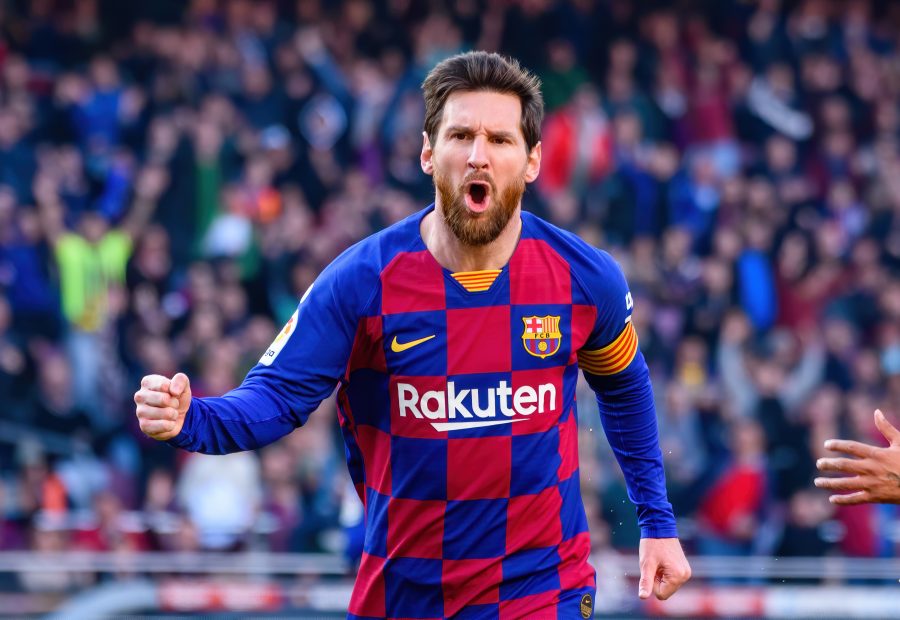
Lionel Messi’s expected final appearance for Argentina on October 6, 2026, is widely being framed as a ceremonial football match. However, in structural terms, it represents something significantly larger: the transition of global football from a centralized, icon-driven system to a fragmented, multi-polar attention economy.
According to reporting from international outlets including Reuters and AFP, the match against Benin in Buenos Aires is being organized as a farewell fixture for the 39-year-old forward. While no formal long-term institutional retirement framework has been publicly released, the framing of the event suggests a controlled exit rather than an abrupt departure from international football.
This distinction matters. In modern elite sport, retirement is no longer a purely personal decision—it is increasingly an institutional process involving federations, broadcasters, sponsors, and global fan ecosystems.
A PLAYER WHO BECAME A GLOBAL ATTENTION INFRASTRUCTURE
Messi’s career has long exceeded traditional sporting boundaries. Since his international debut in 2005, he has functioned as a consistent global attention driver, influencing not only match outcomes but also broadcast demand, sponsorship valuation, and regional engagement cycles.
Unlike earlier generations of footballers whose commercial impact was largely localized or regional, Messi operated in a fully globalized media environment. His presence in tournaments consistently correlated with spikes in global viewership, particularly across Latin America, Southern Europe, and increasingly North America following his move to Major League Soccer.
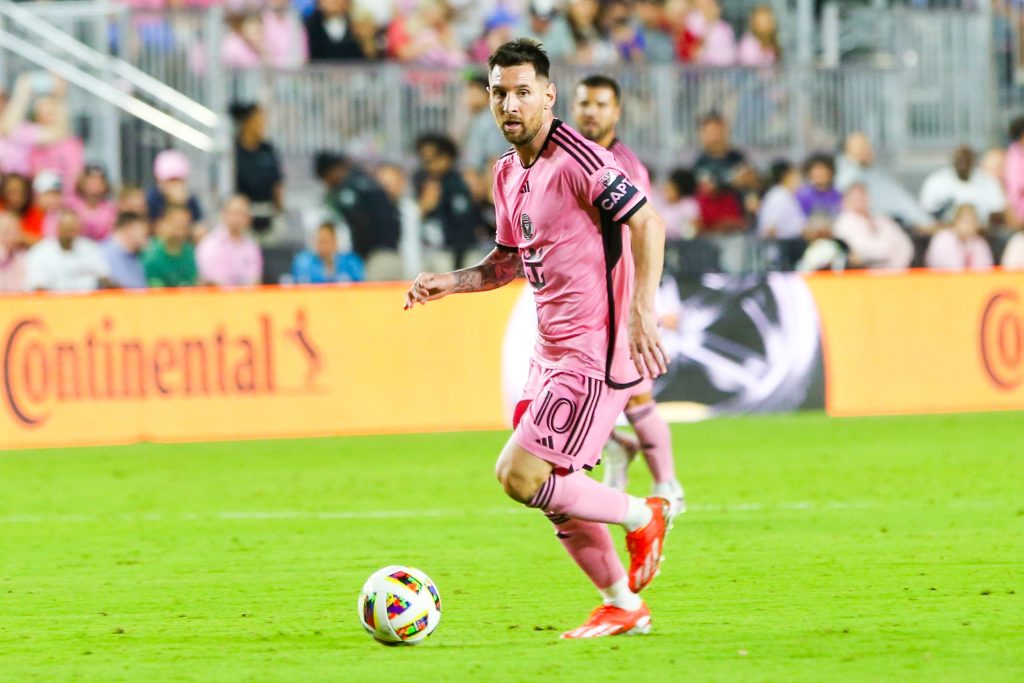
The 2022 FIFA World Cup in Qatar marked the peak of this influence. Argentina’s victory, widely documented in Reuters reporting and FIFA statistical releases, generated one of the highest global engagement levels in modern sports broadcasting history. The final against France became not only a sporting climax but also a synchronized global media moment, an increasingly rare phenomenon in the fragmented digital era.
From an economic perspective, Messi’s presence effectively functioned as a stabilizing variable in football’s attention market. His matches were predictable demand generators, creating measurable uplift in streaming subscriptions, advertising premiums, and secondary content consumption.
THE FAREWELL MATCH AS AN INSTITUTIONAL MECHANISM
The reported Argentina vs Benin fixture represents a growing trend in international sport: the formalization of retirement as a managed institutional event.
In earlier eras, elite athletes often exited competition without structured farewells. Today, however, federations increasingly design “legacy fixtures” that serve multiple functions: honoring the athlete, maximizing commercial engagement, and providing narrative closure for global audiences.
According to AFP and Reuters reporting, the October fixture is expected to follow this model. Rather than a competitive necessity, the match operates as a ceremonial endpoint, allowing Argentina to transition from a Messi-centric identity toward a post-Messi structural framework.
The selection of a lower-tier opponent is consistent with this logic. It reduces competitive pressure while maximizing symbolic clarity, ensuring that the event is interpreted primarily as a tribute rather than a sporting contest.
A GENERATIONAL TRANSITION ALREADY IN MOTION
Messi’s farewell does not occur in isolation. It is part of a broader generational transition that has been gradually unfolding across global football.
Over the past two years, attention within elite football has increasingly shifted toward younger players such as Kylian Mbappé and Lamine Yamal. According to analysis published in The Guardian and Reuters sports coverage, these players are now central to the sport’s next commercial and competitive cycle.
However, what is changing is not only the identity of top players, but the structure of attention itself.
The Messi–Ronaldo era was defined by dual concentration: two dominant figures capturing a disproportionate share of global football discourse for more than a decade. This created a rare form of narrative stability in global sport.
The emerging era is structurally different. Instead of two dominant nodes, football is shifting toward a distributed model of stardom, where multiple players hold regional or platform-specific influence without achieving universal dominance.
This reflects broader changes in media consumption. Algorithmic distribution, short-form video platforms, and fragmented broadcasting rights have reduced the likelihood of any single athlete achieving Messi-level global synchronization.
ARGENTINA’S POST-MESSI STRUCTURAL ADJUSTMENT
From a sporting governance perspective, Argentina’s transition away from Messi is already underway.
Coach Lionel Scaloni has gradually integrated younger players such as Julián Álvarez, Enzo Fernández, and Alexis Mac Allister into core tactical roles. Reuters reporting suggests that this shift began shortly after the 2022 World Cup, indicating that Messi’s on-field role had already become partially symbolic in recent competitive cycles.
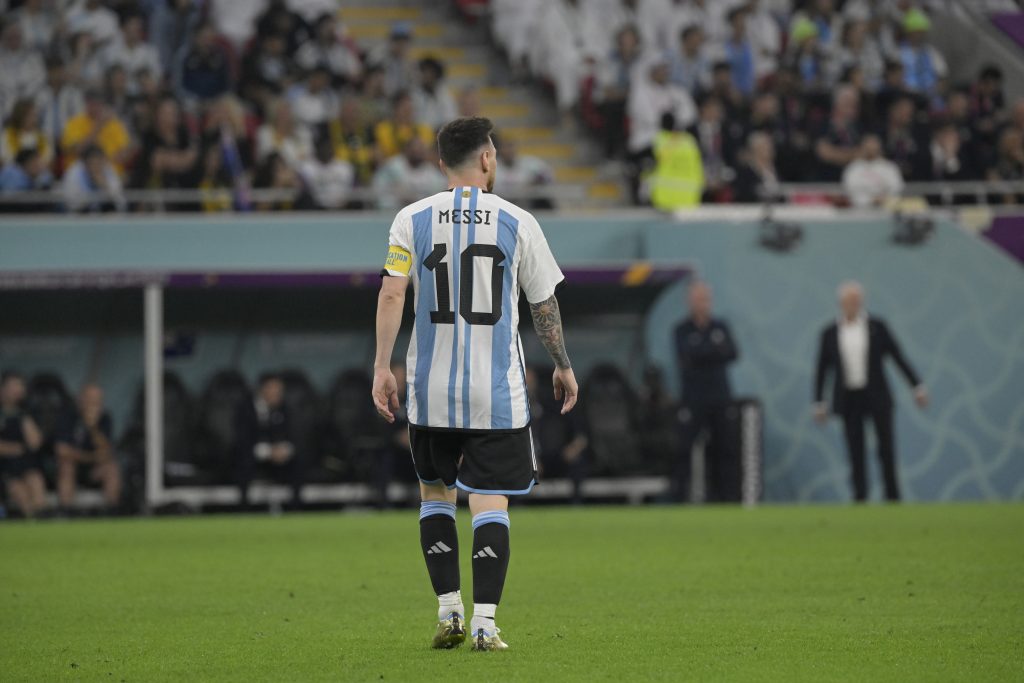
However, replacing Messi is not simply a matter of substituting statistical output. His influence extended across multiple dimensions:
- Tactical gravity: opposing defensive structures were often reshaped around him
- Creative control: he functioned as a central decision-making node in attacking phases
- Psychological stabilization: his presence reduced variance in high-pressure scenarios
These attributes are difficult to replicate in aggregate through squad restructuring, which is why post-Messi Argentina is expected to undergo a multi-cycle adjustment period rather than a single transition phase.
THE BROADER ECONOMICS OF ICON EXIT
Messi’s retirement phase also highlights a broader structural issue in global sports economics: dependency on generational icons.
Modern football’s commercial model relies heavily on identifiable global figures who can anchor cross-border audiences. Messi and Cristiano Ronaldo represented the last era in which two athletes simultaneously fulfilled this role at near-global scale.
As both players exit international competition, the sport faces a recalibration challenge. While new stars will emerge, the conditions that produced Messi-level global centrality—broadcast consolidation, limited platform fragmentation, and synchronized viewing habits—are no longer present.
This suggests that future football stars may achieve high regional dominance but lower global uniformity of attention.
A CONTROLLED ENDING TO AN UNCONTROLLED ERA
If confirmed, Messi’s October 6 appearance represents a rare example of controlled narrative closure in modern sport.
Rather than an abrupt retirement announcement, the structured farewell allows multiple stakeholders—federations, broadcasters, sponsors, and fans—to align around a single moment of transition.
This approach reflects a broader evolution in elite sport: legacy management has become an operational function rather than a symbolic afterthought.
In this context, the match is not simply about honoring Messi’s career. It is about acknowledging that global football itself is changing its structural operating model.
CONCLUSION: THE END OF CENTRALIZED FOOTBALL ATTENTION
Messi’s anticipated farewell marks the end of more than an individual career. It signals the conclusion of a centralized era in global football—one defined by stable hierarchies of attention, long-term player dominance, and synchronized global viewing events.
What follows is likely to be more fragmented, more algorithm-driven, and more regionally differentiated.
In that sense, the October 6 match is not the story’s endpoint. It is the visible transition point of a structural transformation already underway in global sport.
Disclaimer: This article is compiled from reputable international news sources, including Reuters, AFP (Agence France-Presse), The Guardian, and El País. It is intended for informational and analytical purposes only. Some details, especially future events, may change pending official confirmation from relevant football authorities.





Leave a Reply